“Oh this is a happy day, this is going to be a happy day!”
— Winnie's recurring optimistic declaration at the start of her day.


Sign in to track this book
Buried up to her waist and then her neck, Winnie, with her dwindling possessions and the sporadic company of her mostly unseen husband Willie, relentlessly, and with a smile, battles the encroaching earth and existential dread using only her words.
Winnie, a woman in her fifties, is buried up to her waist in a mound of scorched grass under a blazing sun. She is meticulously dressed and has a large black bag next to her. A bell rings, signaling her to wake. She begins her morning ritual, taking various items from her bag: a toothbrush, toothpaste, a comb, a mirror, and a revolver. She meticulously cleans her teeth, combs her hair, and looks at herself in the mirror, all while delivering a monologue about the 'happy days' she is experiencing despite her situation. She frequently calls out to her husband, Willie, who is out of sight behind the mound, and occasionally receives a grunted reply or sees his hand.
Winnie continues her monologue, focusing on the contents of her large black bag. She takes out a magnifying glass, examining her skin and a small ant, commenting on its activity. She then produces a music box, which she winds up and listens to with delight, humming along. Each item prompts her memories and observations about life, time, and her relationship with Willie. She thinks about the passage of time, her unchanging routine, and her constant need for Willie's presence, even if his responses are minimal. The revolver, always present, receives a casual, almost affectionate mention.
Throughout Act I, Winnie often tries to engage Willie, who is behind the mound, out of her direct line of sight. She asks him questions, makes comments, and requests confirmation, often receiving only grunts or a brief appearance of his hand or head. She recounts memories, such as their first kiss or a time she almost drowned, seeking his acknowledgment. Willie's responses are rare and often monosyllabic, highlighting his detachment and Winnie's isolation. Despite his minimal interaction, Winnie relies on his presence, finding comfort in knowing he is there, even if he offers little conversation or support.
Winnie's monologue includes recollections of their past life together, though her memories are often fragmented, contradictory, or embellished. She recalls an old couple named Shower and Cooker (or perhaps Shower and Spooner), a time when she was younger and more active, and various mundane events that she now elevates to significant moments. These memories fill the void of her present reality and construct a narrative of her 'happy days.' She often corrects herself or revises details, suggesting a fading grip on reality or a deliberate reshaping of her past to suit her current emotional needs. The contrast between her vivid internal world and her stagnant external reality is stark.
Despite being buried in a mound under a scorching sun, Winnie consistently declares her happiness, often repeating the phrase 'Oh, this is a happy day.' She finds joy in small rituals, like cleaning her teeth or listening to the music box, and in her continued existence. Her optimism is relentless, a deliberate choice to focus on the positive aspects of her incredibly limited life. This assertion of happiness, however, often feels forced or desperate, a coping mechanism against the overwhelming despair of her situation. She constructs her own reality of contentment, even as the physical evidence suggests otherwise.
In Act II, the bell rings again, and Winnie awakens to find herself buried up to her neck in the mound. Her arms are gone, making her unable to reach her bag or the revolver. Her physical limitations are far greater, yet her spirit remains remarkably similar. She still speaks with the same upbeat tone, though her words are now more focused on memory and observation, lacking physical interaction with objects. Willie is still behind the mound, his grunts even more infrequent. The sun is still blazing, and the sense of desolate time passing is intensified. Her routine of speech and memory is her only remaining activity.
With her physical capabilities severely diminished, Winnie's speech is her primary, almost sole, means of asserting her existence and maintaining a connection to the world, however tenuous. She continues her flow of words, recounting memories, observing the light, and addressing Willie. Her monologue is a defiant act against oblivion, a way to fill the silence and to convince herself and Willie that life continues. She finds comfort in the sound of her own voice and the structure of her daily pronouncements, even as her audience remains largely unresponsive. Her words are a lifeline in her static, increasingly confined world.
Towards the end of Act II, Willie, who has been largely inert and out of sight, makes a significant and arduous effort to crawl around the mound towards Winnie. He is dressed in a top hat and tails, suggesting a formal, almost ceremonial occasion. His movement is slow, painful, and difficult, requiring immense exertion. Winnie, noticing his approach, encourages him, believing he is coming to her. His goal, however, remains ambiguous. Is he coming to comfort her, to leave her, or to retrieve the revolver? His final, painful crawl is a moment of both hope and deep ambiguity.
In Act I, the revolver, named 'Brownie,' is treated almost as a familiar pet, an object Winnie cleans and places back in her bag. In Act II, however, with Winnie unable to reach it, its presence becomes more significant. Willie's slow, agonizing crawl towards Winnie brings him close to the bag and, presumably, the revolver. The gun's potential use, either by Willie or for Willie, hangs heavily in the air. Its symbolic weight shifts from a mere prop to a potential instrument of resolution, whether for escape, mercy, or an end to their suffering. Its final disposition is left unresolved, adding to the play's bleak uncertainty.
The play ends with Willie having completed his arduous crawl, positioning himself near Winnie, looking up at her. He is still in his formal attire. Winnie, observing him, asks if he is trying to kiss her, or perhaps to get the revolver. His final, unintelligible grunt, or perhaps a faint smile, leaves his intentions completely ambiguous. The audience is left with no clear resolution to their predicament or their relationship. The bell rings, signaling the end of the day or the play, leaving Winnie and Willie in their static, unresolved state, their 'happy days' continuing in their own peculiar, desperate way.
The Protagonist
Winnie's physical confinement increases, but her mental and verbal resilience remains largely unchanged, showcasing her unwavering, if desperate, commitment to 'happy days.'
The Supporting
Willie's physical presence becomes more pronounced, culminating in his difficult crawl, suggesting a potential, albeit ambiguous, shift in his engagement.
The play presents the human condition as inherently absurd, with characters facing an incomprehensible world and meaningless routines. Winnie's situation—buried in a mound under a relentless sun—is a literal example of this absurdity. Her relentless optimism and adherence to trivial rituals (brushing teeth, combing hair) in the face of such a dire, unchanging reality highlight the human need to impose meaning where none inherently exists. Beckett suggests that life, stripped of its conventional comforts, reveals its inherent lack of purpose, yet characters continue to 'play the game.'
“Oh this is a happy day, this will have been another happy day! After all. So far.”
Winnie consistently asserts her happiness, despite her increasingly dire circumstances. This theme explores how individuals construct their own reality, often through selective memory and deliberate optimism, to cope with suffering. Winnie's fragmented and often contradictory recollections of the past create a narrative of 'happy days' that may or may not be true. The play questions what happiness is: is it an objective state, or a subjective, self-willed illusion necessary for survival? Her constant repetition of 'happy days' becomes a mantra against despair, an act of self-deception that keeps her going.
“No, no, not a hope. Just to know that in theory at any rate you can still do the thing. Not that you will. No, no. But that nothing prevents you, in theory, from setting about it.”
Despite living in close proximity, Winnie and Willie experience deep isolation. Winnie's verbose monologues are met with Willie's grunts or silence, highlighting a fundamental breakdown in communication. Winnie talks 'at' Willie, rather than 'with' him, using him as a silent sounding board for her thoughts and memories. This lack of genuine connection highlights the inherent loneliness of the human experience, even within a marital relationship. Each character is trapped within their own world, struggling to bridge the gap to the other, making their shared existence a testament to both their interdependence and their ultimate solitude.
“Ah yes, if only I could touch you! You I mean, not the bag. I touch you with my eyes and with my mind. But with my body? No! I must not ask for too much.”
Winnie's life is defined by her meticulous daily rituals: brushing her teeth, combing her hair, examining her belongings, and her continuous monologue. These habits provide structure and meaning in an otherwise chaotic and meaningless existence. Even as her physical capacity diminishes (being buried up to her neck), she clings to the mental rituals of speech and memory. This theme suggests that habit is a powerful, perhaps even essential, mechanism for human survival, providing a sense of control and purpose when external circumstances offer none. The routines become a form of self-preservation against the encroaching void.
“Old things. Old things. (Pause.) Never any change. (Pause.) And yet... (Pause.) And yet I can't complain.”
A physical and symbolic representation of entrapment and decay.
The mound of scorched earth in which Winnie is buried is the central visual metaphor of the play. It serves as her prison, progressively engulfing her, symbolizing the irreversible decline and entrapment of the human condition. It also represents the barren, desolate landscape of their existence, a world stripped bare of natural beauty or comfort. Symbolically, it can be seen as the accumulation of life's burdens, the weight of time, or the slow, inevitable creep of death, physically limiting Winnie's world while her mind still desperately tries to expand beyond it.
A portable world of cherished objects, memories, and mundane rituals.
Winnie's large black bag contains all her cherished possessions – a toothbrush, comb, mirror, magnifying glass, music box, and revolver. These items are more than just props; they are prompts for her memories, tools for her daily rituals, and anchors to her sense of self. The bag represents her portable world, her last vestiges of control and comfort. Each item, particularly the revolver, carries symbolic weight, hinting at the past, present, and potential future. When she can no longer reach the bag in Act II, her loss of physical interaction with these objects highlights her increased helplessness.
An external, arbitrary signal dictating Winnie's wake and sleep.
The bell that rings to signal Winnie to wake up and go to sleep is an external, unseen force that controls her daily cycle. It represents the arbitrary, mechanistic nature of existence, where individuals are subject to forces beyond their control. It underscores Winnie's lack of agency and the repetitive, almost robotic quality of her life. The bell's ringing imposes a structure on her days, however meaningless, reinforcing the idea of a predetermined existence from which there is no escape, only a prescribed rhythm of waking and sleeping.
A recurring object symbolizing potential escape, violence, or an end to suffering.
The revolver, affectionately named 'Brownie' by Winnie, is a constant presence in her bag. Initially treated almost as a pet, it takes on increasing symbolic weight as the play progresses. It represents a potential exit from their predicament, either through suicide or mercy killing, or perhaps even an act of violence. Its ambiguity is key: it offers the possibility of an end to suffering, but its actual use is left unresolved. It hangs over the play as a silent question mark, a stark contrast to Winnie's 'happy days' rhetoric, highlighting the ever-present possibility of a definitive end to their absurd existence.
“Oh this is a happy day, this is going to be a happy day!”
— Winnie's recurring optimistic declaration at the start of her day.
“And now, for the first time in this long day, I can feel my heart pumping, my blood racing, my lungs panting.”
— Winnie describing the physical sensations she experiences, often in a detached manner.
“No, I wouldn't have it any other way. Not now. No. Not now.”
— Winnie reflecting on her predicament and seemingly accepting it.
“Ah yes, the old style. The old style. There is something to be said for the old style.”
— Winnie commenting on Willie's infrequent and often crude responses.
“To have been always what I am, and to have been always what I am not, and to have been always what I shall be, and to have been always what I shall not be.”
— Winnie's complex rumination on identity and being.
“What is it, Willie, what is it, do you want to play a game?”
— Winnie trying to engage Willie in an activity, often to pass the time.
“That is what I find so wonderful, that you are still there, that you are still there beside me.”
— Winnie expressing gratitude for Willie's continued, albeit minimal, presence.
“The earth is very still. It has not been so still for a long time.”
— Winnie observing her surroundings, often with a sense of quietude or stagnation.
“To think that it should come to this, that I should be stuck up to my neck in this here mound, and he, he should be able to crawl about.”
— Winnie's direct acknowledgment of her physical entrapment compared to Willie's relative freedom.
“There was a time when I could have sworn that I heard a voice, a human voice.”
— Winnie reminiscing about past sounds and experiences, highlighting her isolation.
“No, not a word. Not a word. Not a word from him. Not a sound.”
— Winnie lamenting Willie's silence and lack of interaction.
“Is there life still in this old body? I say, is there life still in this old body?”
— Winnie questioning her own vitality and existence.
“The bell. It's the bell. It's the bell for waking.”
— Winnie's automatic response to the bell that signals the start of her day, a symbol of her routine.
“Oh, this is a happy day, this is going to be a happy day. What a joy, what a joy.”
— Another instance of Winnie's enforced optimism, even in the face of her unchanging circumstances.
Ready to see how well you understood this book? Take our interactive quiz with 10 questions.
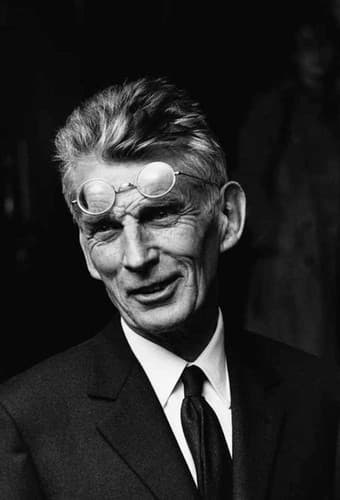
Samuel Barclay Beckett was an Irish novelist, dramatist, short story writer, theatre director, poet, and literary translator. His literary and theatrical work features bleak, impersonal and tragicomic experiences of life, often coupled with black comedy and nonsense. His work became increasingly minimalist as his career progressed, involving more aesthetic and linguistic experimentation, with techniques of repetition and self-reference. He is considered one of the last modernist writers, and one of the key figures in what Martin Esslin called the Theatre of the Absurd.

Ashley Antoinette
4.6

Mark McDonald
4.4
Luo Guanzhong
4.4

Mia McKenzie
4.3
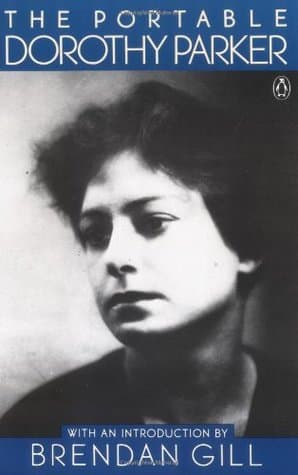
Dorothy Parker
4.3
Joaquim Maria Machado de Assis
4.3
James Thurber
4.2

Terry Kay
4.2