“That's the trouble with the world. We've got too many people on the top and not enough on the bottom.”
— Reflecting on societal imbalance and the working class struggle.

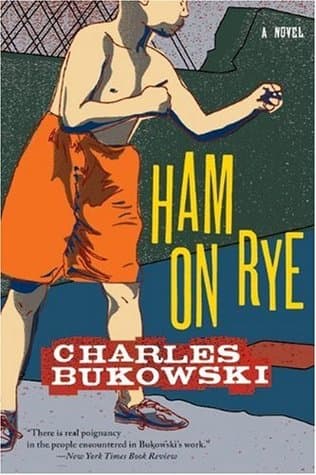
Sign in to track this book
In Depression-era Los Angeles, a perpetually bruised and pimply Henry Chinaski navigates an adolescence of alcohol, fleeting women, and the unexpected solace of D.H. Lawrence, all while grappling with the brutal absurdity of simply existing.
Henry Chinaski's earliest memories are of the oppressive atmosphere in his parents' Los Angeles home. His father, Henry Chinaski Sr., is a bullying, often violent man who constantly belittles Henry and subjects him to arbitrary punishments, like locking him out of the house. His mother, Emily, is passive and often enables his father's behavior, offering Henry little comfort. He attends elementary school feeling like an outsider, socially awkward and small. His only solace comes from occasional visits to the library, where he discovers books, providing a temporary escape from his bleak reality. This early period establishes Henry's deep sense of alienation and resentment toward authority.
As Henry enters his teenage years, he develops severe acne, covering his face and body with boils. This condition, combined with his awkward demeanor, makes him an outcast at school. Girls mock him, and even boys avoid him. His father responds by forcing painful, ineffective home remedies and public humiliation, blaming Henry for his appearance. The constant pain and social rejection deepen Henry's sense of worthlessness and anger. He retreats further into himself, finding solace in reading and the occasional illicit drink, which offers temporary numbness. His physical appearance becomes a constant reminder of his otherness.
During high school, Henry's drinking intensifies. He starts frequenting local bars with a fake ID, finding a temporary sense of belonging among other outcasts. Alcohol offers an escape from his self-consciousness and the harsh realities of his home life and school. He begins to purposefully antagonize his teachers and peers, finding satisfaction in his rebellion. His grades suffer, and his relationship with his father worsens, marked by increasingly violent confrontations. These experiences solidify his anti-establishment views and his reliance on drink, setting a pattern for his adult life.
Henry navigates high school as an outcast, but still wants connection. He forms a fleeting friendship with a fellow misfit named Frank, with whom he shares cynical observations and attempts at petty rebellion. He also has his first awkward encounters with girls, which are often humiliating and reinforce his feelings of inadequacy. One incident involves a disastrous attempt to take a girl to a dance, where his social ineptitude and appearance lead to further rejection. These painful experiences contribute to his understanding of human nature and fuel his growing misanthropy, even as they highlight his deep desire for acceptance.
The Great Depression casts a long shadow over Henry's formative years. His father, a former milkman, struggles to find work, often taking menial jobs and becoming more bitter. The family lives in constant fear of poverty, with arguments over money a frequent occurrence. Henry sees firsthand the desperation and hopelessness that grip many around him, reinforcing his cynical view of society and the American dream. He sees how economic hardship can crush the spirit, and this observation solidifies his rejection of conventional aspirations and his understanding of life as a struggle.
After a lackluster graduation from high school, Henry finally leaves his parents' house, a move he sees as liberation. However, freedom quickly becomes aimlessness and struggle. He takes on a series of dead-end jobs — working in a dog biscuit factory, a pickle factory, and various other manual labor positions. He drifts from cheap rooming house to cheaper rooming house, constantly broke and often hungry. His experiences in these jobs expose him to the harsh realities of working-class life and the exploitation of laborers. He continues to drink heavily, finding solace in the bottom of a bottle and in the company of other marginalized figures he meets.
Amidst his drifting and drinking, Henry's love for literature deepens. He spends countless hours in public libraries, devouring books by authors like D.H. Lawrence, John Fante, and Knut Hamsun. These writers, with their raw and honest portrayals of life, resonate deeply with Henry's own experiences and worldview. He begins to feel a desire to express himself through writing, seeing it as a potential escape from his bleak existence and a way to articulate the pain and absurdity he observes. This newfound ambition provides a glimmer of purpose in an otherwise desolate life, though the path to becoming a writer seems daunting.
Henry's interactions with women remain largely transactional and unfulfilling. He has brief, often awkward sexual encounters, typically with prostitutes or women he meets in bars. These relationships lack emotional intimacy and often leave him feeling more isolated. He struggles to connect on a deeper level, his self-consciousness and cynicism acting as barriers. These experiences reinforce his belief that genuine connection is elusive, and he often retreats into his own world, finding more comfort in books and alcohol than in the complexities of human relationships. Each encounter further solidifies his view of love and intimacy as unattainable.
As the novel progresses, Henry's life settles into a grim routine. He moves from one squalid room to another, from one menial job to the next, with heavy drinking as his constant companion. He frequently finds himself without money, sometimes resorting to petty theft or scrounging for food. The despair of his situation is palpable, yet he rarely expresses it openly, instead internalizing his suffering and observing the world with detached cynicism. This period highlights the relentless grind of poverty and the numbing effect of alcohol, as Henry struggles to find meaning or stability in a world that seems determined to crush him.
Throughout his early adulthood, Henry's contempt for conventional society, authority, and the 'normal' way of life grows stronger. He frequently gets into arguments or physical altercations, often fueled by alcohol, with landlords, employers, or strangers in bars. He sees hypocrisy and superficiality everywhere and refuses to conform. His interactions are often characterized by a defiant, confrontational attitude. This rejection is not merely rebellious; it stems from a deep belief that society is corrupt and meaningless, and that the only authentic path is one of individual struggle and defiance, even if it leads to further isolation.
As the narrative concludes, Henry Chinaski remains a solitary figure. While he has experienced various jobs, brief encounters, and moments of despair, he has not formed any lasting, meaningful connections. His loneliness is a pervasive theme, punctuated by his reliance on alcohol and literature as his primary companions. The world has proven to be brutal and indifferent, and Henry has adapted by building walls around himself, observing humanity with a cynical eye. The novel leaves him on the cusp of his writing career, still struggling, but with an understanding that his suffering and observations might form the basis of his art.
The Protagonist
Henry transforms from a victimized child into a hardened, cynical young man who embraces his outcast status, finding a voice and purpose through his eventual commitment to writing.
The Antagonist/Supporting
His character remains largely static, a consistent source of oppression and a catalyst for Henry's rebellion.
The Supporting
Her character remains static, serving as a representation of passive suffering and failed maternal comfort.
The Supporting
Frank appears briefly, serving as a reflection of Henry's early rebellious tendencies before fading from the narrative.
The Mentioned
Its influence is constant, defining the economic and social conditions of the narrative.
The Mentioned
His influence is a constant, guiding presence for Henry's literary aspirations.
The Supporting
Her character is static, serving as a brief example of Henry's transient employment.
The Supporting
These characters are largely static, highlighting Henry's pattern of unfulfilling relationships.
From his earliest childhood, Henry Chinaski is an outsider, feeling disconnected from his family, peers, and society. His abusive home life, severe acne, and cynical worldview isolate him, driving him to seek solace in books and alcohol. This theme shows in his inability to form lasting relationships, his preference for solitary activities like reading, and his constant sense of being 'other.' Even when surrounded by people, such as in bars or workplaces, Henry often feels profoundly alone, observing humanity from a distance. His alienation becomes a defining characteristic, shaping his resilience and his eventual path as a writer.
“I was an outcast. I was always an outcast. The more I tried to be like them, the more they hated me. I was a freak.”
The novel is set against the Great Depression, and poverty is a relentless force shaping Henry's life. His father's struggles with unemployment and the family's constant financial insecurity highlight the harsh realities of economic hardship. Henry sees how poverty can crush spirits, make people desperate, and strip away dignity. The 'American Dream' is a cruel illusion, particularly for the working class. Henry's experiences with dead-end jobs and transient living reinforce his cynicism about societal promises and his rejection of conventional aspirations, leading him to embrace a life outside the mainstream.
“It was a Depression, all right. The Depression had been going on for years and it was going to go on for years more. It was a good thing to be born into if you wanted to learn about life.”
Henry Chinaski's life is a continuous act of rebellion against authority and societal norms. From defying his abusive father to antagonizing teachers and rejecting conventional jobs, he constantly pushes back against expectations. His drinking, his choice of literature, and his desire to write are all forms of defiance against a world he perceives as hypocritical and oppressive. This rebellion is not always conscious or political; it often stems from a visceral rejection of anything that seeks to control or diminish him. It is his way of asserting his individuality and maintaining a sense of self in a hostile environment.
“They all wanted me to be something I wasn't. They wanted me to be a good boy, a good student, a good worker. But I couldn't be any of those things.”
Despite the misery and aimlessness, Henry's journey is a search for an authentic self. He rejects the superficiality he sees in others and in societal expectations, often choosing a path of hardship and isolation in pursuit of what feels real. His discovery of literature, particularly authors who write with raw honesty, becomes a catalyst for this search. Alcohol, while destructive, also helps remove inhibitions and confront harsh truths. His experiences, no matter how brutal, forge his unique voice and perspective, ultimately leading him toward writing as the truest expression of his authentic self.
“I was looking for something, anything, that felt real. Everything else felt like a lie.”
While Henry's early life is dominated by drinking and despair, art, specifically literature, is a redemptive force. His hours spent in public libraries, devouring books by authors like D.H. Lawrence, provide an escape, an education, and a sense of connection he lacks in real life. These books not only introduce him to different worlds and ideas but also validate his own feelings of alienation and anger. The realization that writing can express his brutal experiences and observations eventually gives his life purpose, transforming his suffering into potential art. This theme highlights how creativity can arise from the darkest of circumstances.
“The library saved me, not my parents, not the schools, not the church. The library.”
The story is told entirely from Henry Chinaski's subjective, raw, and unvarnished perspective.
The novel is narrated in the first person by Henry Chinaski, allowing readers direct access to his thoughts, feelings, and cynical observations. This unfiltered voice is characterized by its bluntness, dark humor, and lack of sentimentality, mirroring Bukowski's signature style. The first-person perspective immerses the reader in Henry's internal world, making his alienation and suffering deeply personal. It also allows for subjective interpretations of events, as Henry's biases and resentments color his descriptions of other characters and situations, reinforcing his role as an unreliable yet compelling narrator.
The narrative traces Henry Chinaski's development from childhood into early adulthood.
Ham on Rye functions as a dark Bildungsroman, chronicling Henry Chinaski's formative years from early childhood through his twenties. The novel focuses on his psychological and moral growth, or lack thereof, as he navigates a brutal home life, social ostracization, poverty, and his earliest experiences with alcohol, sex, and work. While it follows the traditional structure of a coming-of-age story, it subverts the typical positive trajectory, depicting a protagonist who becomes hardened and cynical rather than integrated into society. His 'education' comes from the streets and bars, not formal institutions.
Alcohol serves as both a destructive coping mechanism and a temporary escape from reality.
Alcohol is a pervasive symbol throughout the novel, representing Henry's primary coping mechanism for dealing with pain, loneliness, and the harshness of his life. It is both destructive, leading to poor decisions and further despair, and paradoxically, a source of temporary solace and courage. It allows him to numb his feelings, interact with others, and briefly escape the anxieties of his existence. The act of drinking, often alone or with other outcasts, symbolizes his rejection of conventional society and his embrace of a self-destructive yet authentic path.
Henry's severe acne symbolizes his internal and external alienation and suffering.
Henry's debilitating acne is a powerful and recurring motif. It is not merely a physical ailment but a symbol of his profound otherness and the internal torment he experiences. The boils and sores on his face and body make him physically repulsive to others, leading to social ostracization and deepening his sense of self-loathing. It represents the visible manifestation of his suffering and isolation, a constant reminder of his inability to fit in. His father's cruel reactions to it further underscore the theme of abuse and the lack of compassion in Henry's life.
“That's the trouble with the world. We've got too many people on the top and not enough on the bottom.”
— Reflecting on societal imbalance and the working class struggle.
“I was an observer, and I liked it that way. I was a spectator of my own life.”
— Describing his detached perspective on his own experiences.
“The world was a great put-on. The world was a put-on, and I was on the put-on.”
— Feeling disillusioned with the superficiality of life.
“How in the hell could a man enjoy being awakened at 6:30 AM, by an alarm clock, leap out of bed, dress, force-feed, shit, piss, brush teeth, comb hair, and fight traffic to get to a place where essentially you made money for someone else and were asked to be grateful for the opportunity?”
— Questioning the absurdity and drudgery of the typical working life.
“I felt like I was living in a dream, and not a very good one.”
— Expressing a sense of unreality and dissatisfaction with his life.
“I didn't want to be a man. I wanted to be a worm.”
— A desire to escape the burdens and expectations of humanity.
“Alcohol is probably the greatest of all problem solvers.”
— A sardonic take on his reliance on alcohol as a coping mechanism.
“It was impossible to get a bad education in our schools. It was impossible to get a good one either.”
— Critiquing the mediocrity and ineffectiveness of the education system.
“I was just another body, another statistic, and I liked it that way. It was a good way to be.”
— Finding comfort in anonymity and being unremarkable.
“People are strange: they are constantly angered by trivial things, but on a grand scale, they are silent.”
— Observing human behavior and its misplaced priorities.
“The only good thing about a man is that he can die.”
— A dark and nihilistic reflection on human existence.
“I was going to be a great writer. I was going to be the greatest writer of all time. I was going to write a book that would change the world.”
— Early aspirations and grandiose dreams of literary success.
“There was no answer, there was never any answer. There was only the next thing.”
— A sense of futility and the endless, unmeaning progression of life.
“It was a good life, if you didn't weaken.”
— A defiant and resilient statement about enduring hardship.
Ready to see how well you understood this book? Take our interactive quiz with 10 questions.
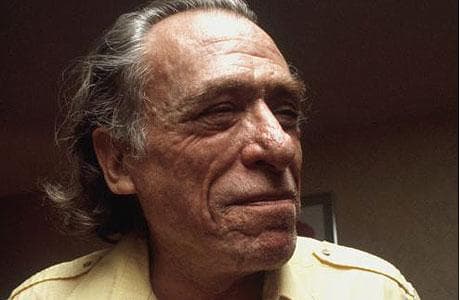
Charles Bukowski was a prolific German-American poet and novelist, often celebrated for his raw, autobiographical style. His notable works include 'Notes of a Dirty Old Man,' 'Factotum,' and 'Ham on Rye,' which vividly depict the gritty realities of working-class life and his own struggles with alcohol and poverty. Bukowski's unflinching prose and anti-establishment themes have cemented his status as a counter-culture icon.

Ashley Antoinette
4.6

Mark McDonald
4.4
Luo Guanzhong
4.4

Mia McKenzie
4.3
Dorothy Parker
4.3

Joaquim Maria Machado de Assis
4.3

James Thurber
4.2

Terry Kay
4.2