“All of them, all of the living and all of the dead, were in a box, a box of darkness, a box of eternity.”
— From 'The Blue Hotel' by Stephen Crane, reflecting on the bleakness of human existence.

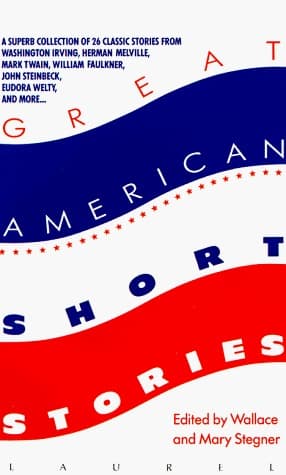
Wallace Stegner (1957)
Genre
Fiction
Reading Time
1200 min (approx. 20 hours, highly variable per story)
Key Themes
See below
Sign in to track this book
This collection traces the American short story from early folk tales to modern narratives, showing its changing spirit.
Rip Van Winkle, a kind but lazy villager in a pre-Revolutionary War Dutch settlement in the Catskill Mountains, is nagged by his wife, Dame Van Winkle. He prefers hunting, fishing, and telling stories at the village inn over farm work. To escape his wife's scolding, he walks into the mountains with his dog, Wolf. There, he meets a mysterious man in old Dutch clothes carrying a keg. Rip helps the man carry the keg to a hollow, where he finds a group of silent men playing ninepins. After drinking some of their strong liquor, Rip falls into a deep sleep and wakes up twenty years later to a world he barely knows.
The unnamed narrator is called to the remote, decaying mansion of his childhood friend, Roderick Usher. Roderick suffers from a mysterious mental illness, made worse by the similar illness of his twin sister, Madeline. Roderick believes the house itself, with its crumbling appearance and dark pond, has a life that affects his family. As the narrator tries to comfort Roderick, Madeline's condition worsens, and she appears to die. They bury her in a vault inside the house, but Roderick's mental state declines further, marked by extreme sensitivity and fear. The narrator observes the oppressive atmosphere, strange art, and unsettling music Roderick creates, all adding to a sense of impending doom.
The narrator, asked by a friend, looks for a Reverend Leonidas W. Smiley in a mining camp. Instead, he hears from Simon Wheeler a long, rambling story about Jim Smiley, a man who loved to gamble on anything, from dogfights to chicken fights. Wheeler's story focuses on Smiley's prized frog, Dan'l Webster, whom Smiley trained to jump higher than any other. Smiley is so sure of Dan'l's skills that he bets a stranger forty dollars on a jumping contest. While Smiley gets a frog for the stranger, the stranger fills Dan'l Webster with quail shot, making him unable to jump. The stranger wins the bet, outsmarting Smiley.
Peyton Farquhar, a civilian planter and Confederate supporter, stands on a railroad bridge in Northern Alabama, a noose around his neck, about to be hanged by Union soldiers. As the soldiers prepare, Farquhar's thoughts race, focusing on his family and a strong wish to escape. The plank beneath him is removed, and he falls. The rope breaks, and he plunges into the water below. He unties his bonds, dodges bullets, and swims to shore, escaping his pursuers. He starts a long, hard journey through a dark, unknown forest, driven by the hope of seeing his wife and children. He reaches his home, greeted by his wife, only for the story to abruptly return to reality.
Four men—the captain, the oiler (Billie), the cook, and the correspondent—are adrift in a small dinghy off the coast of Florida after their steamship, the Commodore, sinks. The captain is hurt but remains calm and gives orders. The oiler and the correspondent take turns rowing, and the cook bails water. They face huge waves, cold, hunger, and tiredness, constantly looking for a lighthouse or a rescue boat. They bond through their shared experience, feeling a deep connection and understanding nature's indifference. Despite their desperate situation, they hold onto hope, discussing their chances of survival and the irony of their plight as they fight the sea.
Sylvia, a shy nine-year-old girl, lives with her grandmother in a remote New England forest, far from city life. She spends her days herding a cow named Mistress Moolly and exploring the woods, growing close to nature. One evening, she meets a charming young ornithologist looking for a rare white heron for his collection. He offers Sylvia ten dollars if she can lead him to the bird's nest. Sylvia is drawn to the hunter and the money, but she also feels a strong need to protect the wild creatures she knows. She finds the heron's nest high in a pine tree, but after a night of thought, she makes a silent choice.
A confident but inexperienced man travels alone through the brutal, sub-zero Yukon wilderness, with only his husky for company. He ignores an old-timer's warnings about traveling alone in such conditions. His goal is to reach a mining camp by six o'clock. The man is most concerned about the extreme cold, which he underestimates, relying on his practical skills rather than instinct. He falls through ice, getting his feet wet, and needs a fire to prevent frostbite. His first attempts to build a fire fail when a branch dumps snow on his small flames. As the cold gets worse, his fingers freeze, making it impossible to light matches or gather kindling, leading to a desperate fight for survival against nature.
Della and Jim Dillingham Young are a young couple in love but struggling financially, living in a small New York City apartment. With Christmas coming, Della wants to buy Jim a good present but only has $1.87. She has one treasure: her long, beautiful hair, which reaches below her knees. Jim owns a cherished gold watch, a family heirloom, but lacks a chain for it. In a selfless act, Della sells her hair to a wig maker for twenty dollars to buy Jim a platinum fob chain for his watch. When Jim comes home, he reveals his own sacrifice: he sold his watch to buy Della a set of ornate combs for her beautiful hair, leaving them both with useless gifts but a deep understanding of their love.
The story tells of the life and death of Emily Grierson, a reclusive spinster from a prominent Southern family, from the townspeople's view. After her father dies, Emily becomes even more isolated. She starts a relationship with Homer Barron, a Northern foreman, but he mysteriously vanishes. The town notices a terrible smell from her house, but nothing is done. Emily becomes a complete recluse, refusing to pay taxes and eventually dying in her old, decaying mansion. After her funeral, the townspeople break down a locked door in her house and find Homer Barron's decaying body in a bed, next to an impression on a pillow and a single strand of Emily's gray hair.
In a small, seemingly perfect American village, the annual lottery is a long-held tradition, looked forward to by the community. On a summer morning, the villagers gather in the town square, children playing, adults chatting. Mr. Summers, the lottery official, arrives with the black wooden box holding the slips of paper. The head of each household draws a slip. Bill Hutchinson draws the marked slip, meaning his family will be in the second stage. Then, each member of the Hutchinson family—Bill, his wife Tessie, and their three children—draws a slip. Tessie Hutchinson protests, saying the drawing was unfair, but her pleas are ignored. She draws the slip with the black spot, and the villagers, including her own family, stone her to death, keeping their brutal tradition.
Sarty Snopes, a ten-year-old boy, sees his sharecropper father, Abner Snopes, accused of barn burning in a justice-of-the-peace court. Abner is a bitter, violent man who feels constantly wronged by the wealthy landowners he works for, showing his anger through arson. Sarty is torn between his wish for truth and justice and his strong, fearful loyalty to his family. After Abner is told to leave the county, the family moves to another farm. Abner immediately ruins a rug in the new landlord's house and is charged to pay for it. He plans to burn down Major de Spain's barn. Sarty, unable to stand his father's destructive acts any longer, warns de Spain and then runs into the night, hearing gunshots behind him, signaling a clear break from his family.
A grandmother, her son Bailey, his wife, and their three children (June Star, John Wesley, and the baby) start a road trip from Georgia to Florida. The grandmother, a meddling and self-righteous woman, tries to convince Bailey to visit an old plantation she remembers in Tennessee instead. She secretly brings her cat, which causes a car accident when it escapes its basket. Stranded on a dirt road, the family is approached by three men, led by The Misfit, a famous escaped convict. The Misfit and his henchmen murder the family one by one. The grandmother tries to appeal to The Misfit's sense of decency and religion, believing she can save them, but her pleas fail. In her last moments, she has a brief, unclear moment of grace before being shot.
The Protagonist
Rip transforms from a henpecked husband into a revered village elder, a living relic of the past who finds peace in his new role.
The Protagonist/Antagonist (to himself)
Roderick descends further into madness and paranoia, culminating in his and his sister's demise, and the collapse of his ancestral home.
The Supporting/Central Figure of the Anecdote
Smiley remains static in his gambling obsession, ultimately being outsmarted.
The Protagonist
Farquhar's physical reality remains fixed on the gallows, while his psychological arc takes him on a journey of desperate escape and homecoming, only to return to his final moment.
The Protagonist/Narrator
The Correspondent moves from a detached observer to a participant in a shared human struggle, gaining a profound understanding of life's fragility and the power of brotherhood.
The Protagonist
Sylvia, through her moral choice, solidifies her identity as a protector of nature, choosing the wild over human gain.
The Protagonist
The Man's arc is a tragic descent from overconfidence to desperate struggle, ending in his inevitable demise.
The Protagonist
Della's act of sacrifice reveals the depth of her love, making her a symbol of selfless devotion.
The Protagonist/Central Figure
Emily's life is a slow, tragic decline into madness and morbid reclusiveness, culminating in the shocking discovery after her death.
The Protagonist/Victim
Tessie's arc is a swift and brutal descent from casual participant to scapegoat and victim.
The Protagonist
Sarty moves from conflicted loyalty to a definitive break from his father's corrupting influence, choosing justice over familial obligation.
The Protagonist
The Grandmother's arc is a journey from self-absorption and superficial piety to a moment of grace and empathy in the face of death.
This theme looks at how humans struggle against nature's powerful, often uncaring forces. In 'The Open Boat,' the four men fight the sea, which is shown as beautiful but indifferent to their survival. They learn that nature is neither good nor bad, just unconcerned. Similarly, in 'To Build a Fire,' the Yukon wilderness acts as an opponent, its extreme cold slowly taking the man's life, highlighting his overconfidence in underestimating its power. Both stories show how small and vulnerable humans are when facing vast natural forces, suggesting that survival often needs humility and understanding one's place in nature.
“When it occurs to a man that nature does not regard him as important, and that she feels she would not lose her time breaking the small living thing by hand, it is a poignant discovery.”
This theme explores how the past—personal, family, or societal—deeply affects characters and communities. In 'A Rose for Emily,' Emily Grierson is trapped by her family's aristocratic past and the decaying traditions of the Old South, leading to her isolation and morbid secret. Her refusal to accept change and her literal clinging to the past (Homer Barron's body) are central. 'The Lottery' is a chilling example of the harm caused by blindly following tradition, where an old, brutal ritual is kept simply because 'it's always been done.' The villagers hold onto the lottery despite its horrific outcome, showing how tradition can override reason and morality. 'Rip Van Winkle' also shows the deep impact of a changed past, as Rip struggles to match his memories with a new, post-revolutionary America.
“The people had done it so many times that they only half listened to the directions; they all knew the ritual.”
This theme looks at the complex moral nature of humans and their capacity for both bad acts and moments of grace. In 'A Good Man Is Hard to Find,' the Grandmother, initially self-centered and hypocritical, has a brief, unclear moment of grace just before her death by The Misfit. Her thought that 'He might have been one of my own children' suggests a break from her judgmental nature and a glimpse of universal love. The Misfit, a chilling example of nihilism, struggles with the idea of Jesus and the lack of clear moral lines. This story questions simple ideas of good and evil, suggesting that even in extreme depravity, a moment of spiritual awakening can occur. 'Barn Burning' also explores this through Sarty's moral fight against his father's destructive evil.
“She was a good woman, ... if it had been somebody there to shoot her every minute of her life.”
This theme explores the psychological and social distances that separate individuals from others and from society. In 'The Fall of the House of Usher,' Roderick and Madeline Usher are completely isolated in their decaying mansion. Their physical and mental decline is made worse by their seclusion and the oppressive atmosphere of their ancestral home. Their isolation is both a symptom and a cause of their madness. Emily Grierson in 'A Rose for Emily' shows extreme social isolation, living as a recluse after her father's death and Homer Barron's disappearance. Her resistance to change and her refusal to interact with the modern town lead to her deep loneliness and the shocking secret she keeps. These stories show how isolation can cause psychological decay, unusual behaviors, and a desperate clinging to one's own reality, however distorted.
“I was forced to fall back upon the primitive images of the family, and to remember that the Usher race, for several generations, had always been noted for a peculiar sensibility of temperament, displaying itself, at length, in a long line of an ancestry of high intellectual power, coupled with an almost morbid acuteness of the senses.”
This theme explores the hopes and realities of American life, often showing the failures, struggles, and darker sides of seeking happiness and wealth. While not all stories are explicitly about the 'dream,' many touch on the disappointment or harsh realities faced by ordinary people. 'The Gift of the Magi,' though heartwarming, is set against poverty in New York City, where a young couple struggles to live, showing the economic challenges many face. 'Barn Burning' clearly portrays the exploitation of sharecroppers and the class conflict in seeking land and stability, with Abner Snopes's anger leading to destructive acts. These stories often reveal the gap between idealized American values and the often grim, unequal experiences of its citizens.
“One dollar and eighty-seven cents. That was all. And sixty cents of it was in pennies. Pennies saved one and two at a time by bulldozing the grocer and the vegetable man and the butcher until one’s cheeks burned with the silent imputation of parsimony that such close dealing implied. Three times Della counted it. One dollar and eighty-seven cents. And the next day would be Christmas.”
A story within a story, often used to introduce a narrator or set a specific tone.
This device involves a narrative that encloses or 'frames' one or more other narratives. In 'The Celebrated Jumping Frog of Calaveras County,' the narrator's quest for information about Reverend Leonidas W. Smiley serves as the frame for Simon Wheeler's long, rambling anecdote about Jim Smiley and his frog. This allows for a distinct shift in voice and perspective, moving from the educated, somewhat detached narrator to Wheeler's folksy, colloquial storytelling. The frame story also highlights the humor in the narrator's frustration and the unexpected digression, making the central tale more engaging and character-driven.
A narrator whose credibility is compromised, intentionally or unintentionally.
An unreliable narrator casts doubt on the veracity of the events being recounted, forcing the reader to question what is real. In 'An Occurrence at Owl Creek Bridge,' the narrative seemingly depicts Peyton Farquhar's miraculous escape from hanging, only to reveal in the final paragraph that the entire escape was a vivid, desperate hallucination occurring in the instant before his death. This device creates a powerful twist, emphasizing the psychological intensity of the moment of death and the mind's capacity for self-deception. It plays with the reader's trust, making the ultimate truth more impactful and horrifying.
Hints or clues about future events in the story.
Foreshadowing subtly prepares the reader for later developments, building suspense and dramatic irony. In 'The Lottery,' early descriptions of the black box being 'shabby' and 'splintered,' and the children gathering stones, hint at the darker nature of the ritual, even amidst the cheerful atmosphere. Tessie Hutchinson's late arrival and her initial jovial attitude also subtly foreshadow her later, desperate protests. In 'To Build a Fire,' the old-timer's warning about not traveling alone in extreme cold directly foreshadows the man's fatal mistake. This device creates a sense of impending doom and makes the shocking climaxes more impactful.
The use of objects, people, or ideas to represent something else.
Symbolism imbues elements of a story with deeper meaning, enriching its themes. In 'The Fall of the House of Usher,' the decaying mansion itself symbolizes the Usher family's physical and psychological deterioration, with its fissure mirroring their own internal cracks. The black tarn reflects the house, suggesting a dark, subconscious connection. In 'A Rose for Emily,' Emily's decaying house symbolizes the crumbling aristocracy of the Old South and her own resistance to change, while the strand of gray hair found at the end symbolizes her morbid attachment to the past and the passage of time. These symbols amplify the stories' themes of decay, isolation, and the weight of history.
“All of them, all of the living and all of the dead, were in a box, a box of darkness, a box of eternity.”
— From 'The Blue Hotel' by Stephen Crane, reflecting on the bleakness of human existence.
“No man is an island, entire of itself; every man is a piece of the continent, a part of the main.”
— From 'A Good Man Is Hard to Find' by Flannery O'Connor, though often misattributed, it captures the interconnectedness of humanity.
“The past is never dead. It's not even past.”
— From 'A Rose for Emily' by William Faulkner, highlighting the inescapable influence of history and tradition.
“It was a dark and stormy night.”
— From 'Paul's Case' by Willa Cather, a classic opening line, setting a mood of impending doom or dramatic events.
“I was born in a cross-fire hurricane.”
— From 'The Swimmer' by John Cheever, a metaphorical opening suggesting a turbulent beginning to life.
“So we beat on, boats against the current, borne back ceaselessly into the past.”
— From 'Babylon Revisited' by F. Scott Fitzgerald, a poignant reflection on the struggle to move forward while being pulled back by past mistakes.
“Man is a creature of hope and invention, both of which can be extinguished by fear.”
— From 'The Lottery' by Shirley Jackson, exploring how fear can suppress human potential and reason.
“He knew that he was going to die, and he knew that he was going to die soon.”
— From 'An Occurrence at Owl Creek Bridge' by Ambrose Bierce, a stark realization of mortality in a moment of crisis.
“The world breaks everyone, and afterward, some are strong at the broken places.”
— From 'The Snows of Kilimanjaro' by Ernest Hemingway, a powerful statement on resilience and the aftermath of trauma.
“It is a truth universally acknowledged, that a single man in possession of a good fortune, must be in want of a wife.”
— From 'The Secret Life of Walter Mitty' by James Thurber, a playful nod to a classic opening, setting a tone of domesticity and fantasy.
“Death is the mother of beauty.”
— From 'The Chrysanthemums' by John Steinbeck, reflecting on how the ephemeral nature of life can make beauty more profound.
“I could not stop for Death – He kindly stopped for me – The Carriage held but just Ourselves – And Immortality.”
— From 'A Worn Path' by Eudora Welty, a poetic reference to the journey towards the end of life, imbued with a sense of acceptance.
“We are all in the gutter, but some of us are looking at the stars.”
— From 'The Open Boat' by Stephen Crane, a quote about finding hope and beauty in dire circumstances.
“You never really understand a person until you consider things from his point of view… until you climb into his skin and walk around in it.”
— From 'Barn Burning' by William Faulkner, emphasizing the importance of empathy and perspective.
Ready to see how well you understood this book? Take our interactive quiz with 10 questions.
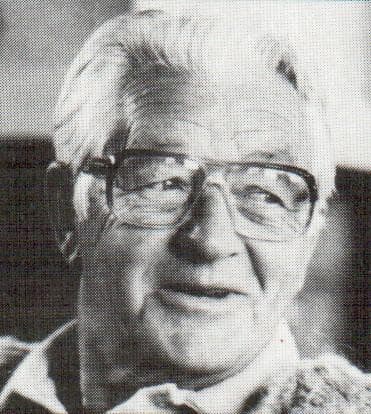
Wallace Earle Stegner was an American novelist, short story writer, environmentalist, and historian, often called "The Dean of Western Writers". He won the Pulitzer Prize in 1972 and the U.S. National Book Award in 1977.

Ashley Antoinette
4.6

Mark McDonald
4.4
Luo Guanzhong
4.4
Mia McKenzie
4.3

Dorothy Parker
4.3

Joaquim Maria Machado de Assis
4.3

James Thurber
4.2

Terry Kay
4.2