BookBrief
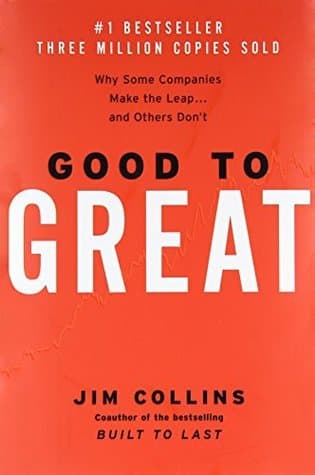
Good to Great: Why Some Companies Make the Leap... and Others Don't cover
Archivist's Choice

Good to Great: Why Some Companies Make the Leap... and Others Don't

James C. Collins (2001)

Genre

Business / Entrepreneurship / Leadership / Finance / Self-Help

Reading Time

300 min

Key Themes

See below

Track Your Reading

Sign in to track this book

Learn how average companies became great, outperforming the market through disciplined leadership, strategic focus, and a culture of continuous improvement, based on five years of research.

Core Idea

Good to Great explores how certain companies transitioned from being merely good to achieving lasting, superior results that significantly exceeded the general market. Through careful research comparing 'good-to-great' companies with 'comparison' companies, the book identifies timeless principles and practices. These practices allowed these organizations to achieve and maintain their success. The book argues that greatness comes from a specific type of leadership, strategic focus, and cultural discipline, rather than from circumstances, industry, or radical innovation.
Reading time
300 min
Difficulty
Medium
✓ Read this if...
You are a business leader, manager, entrepreneur, or student of organizational success looking for empirically-backed principles to drive sustained company performance and understand what truly separates great companies from merely good ones.
✗ Skip this if...
You are seeking a quick-fix management fad, a purely theoretical academic treatise without practical application, or if you prefer a more narrative-driven business history over a research-heavy, principle-focused analysis.

Core idea

The central argument and framework that powers the entire book.

Good to Great explores how certain companies transitioned from being merely good to achieving lasting, superior results that significantly exceeded the general market. Through careful research comparing 'good-to-great' companies with 'comparison' companies, the book identifies timeless principles and practices. These practices allowed these organizations to achieve and maintain their success. The book argues that greatness comes from a specific type of leadership, strategic focus, and cultural discipline, rather than from circumstances, industry, or radical innovation.

At a glance

Reading time

300 min

Difficulty

Medium

Read this if...

You are a business leader, manager, entrepreneur, or student of organizational success looking for empirically-backed principles to drive sustained company performance and understand what truly separates great companies from merely good ones.

Skip this if...

You are seeking a quick-fix management fad, a purely theoretical academic treatise without practical application, or if you prefer a more narrative-driven business history over a research-heavy, principle-focused analysis.

Key Takeaways

1

Level 5 Leadership: Humble Willpower

Great leaders combine extreme personal humility with intense professional will.

Quote

Level 5 leaders channel their ego needs away from themselves and into the larger goal of building a great company. It’s not that Level 5 leaders have no ego or self-interest. Indeed, they are incredibly ambitious—but their ambition is first and foremost for the institution, not themselves.

The most surprising finding was the type of leadership in good-to-great companies. Instead of charismatic, dominant figures, the research found 'Level 5 Leaders.' These individuals combine strong resolve with personal humility. They are committed to the company's long-term success, often crediting triumphs to external factors or their team, and taking personal responsibility for failures. Their ambition is for the company, not their own fame, creating a powerful, sustainable leadership model that inspires rather than dictates. This di...

Supporting evidence

Collins's team found that 10 out of 11 good-to-great companies had Level 5 leaders, exemplified by individuals like Darwin Smith of Kimberly-Clark, who transformed the company into the world's leading paper products company despite starting as a lumber mill.

Apply this

Aspiring leaders should cultivate humility by focusing on the organization's mission above personal recognition, and demonstrate unwavering professional will by making tough decisions for long-term benefit, even when unpopular.


level-5-leadershiphumilityprofessional-will
2

First Who, Then What

Prioritize getting the right people on the bus before deciding where to drive it.

Quote

The good-to-great companies… first got the right people on the bus, the wrong people off the bus, and the right people in the right seats—and then they figured out where to drive it.

Good-to-great companies understand that human resources are their most valuable asset. They focus on hiring, developing, and keeping excellent talent, even before defining their strategy. This 'first who, then what' approach means that with the right people, they will adapt to market changes, innovate effectively, and solve problems together, no matter the specific challenges. In contrast, comparison companies often prioritize strategy, trying to motivate or manage less-than-ideal staff, which leads to constant turnover and poor execu...

Supporting evidence

When Wells Fargo faced deregulation, its CEO Carl Reichardt and president Paul Hazen focused on building a strong team of disciplined, talented managers rather than immediately formulating a new strategy. This team then successfully navigated the changing landscape.

Apply this

Leaders should dedicate significant time to recruitment and talent assessment. When facing strategic shifts, resist the urge to immediately jump to strategy; instead, ensure you have the best possible team in place first, and empower them to contribute to the strategic process.

talent-managementhuman-capitalteam-building
3

Confront the Brutal Facts (Yet Never Lose Faith)

Maintain unwavering belief in your ultimate success while honestly facing the harshest realities.

Quote

You must maintain unwavering faith that you can and will prevail in the end, regardless of the difficulties, AND at the same time have the discipline to confront the most brutal facts of your current reality, whatever they might be.

This concept, known as the Stockdale Paradox, is important for dealing with uncertainty and achieving greatness. Good-to-great leaders can hold two seemingly opposing ideas at once: an unwavering belief in their eventual success and a commitment to facing the harsh realities of their current situation, no matter how bad. They avoid wishful thinking and address problems directly, using data and open discussion to make decisions, rather than falling into denial or false optimism. This realistic optimism allows them to adapt and innovate...

Supporting evidence

Admiral Jim Stockdale, a prisoner of war in Vietnam for eight years, attributed his survival to this mindset: those who believed they'd be out by Christmas often died of a broken heart, while he faced the brutal reality of his indefinite captivity but never lost faith he would eventually prevail.

Apply this

Create an organizational culture where bad news travels fast and is openly discussed. Encourage dissent and constructive debate to expose challenges, while simultaneously reinforcing the long-term vision and belief in collective capability.

stockdale-paradoxresiliencerealistic-optimismtransparency
4

The Hedgehog Concept

Simplify your strategy to one core idea you're passionate about, excellent at, and can profit from.

Quote

A Hedgehog Concept is a simple, crystalline concept that flows from a deep understanding of the intersection of three circles: 1. What you are deeply passionate about. 2. What you can be the best in the world at. 3. What drives your economic engine.

The Hedgehog Concept is about finding simplicity. Instead of being a fox, who knows many things and pursues many goals, good-to-great companies are hedgehogs. They know one big thing and stick to it. They simplify their strategy into a single, main idea that comes from answering three key questions: What are we passionate about? What can we be the best in the world at? What drives our economic engine (profit per X)? This single focus helps them allocate resources effectively, make consistent decisions, and avoid chasing trends, leadin...

Supporting evidence

Walgreens, for example, transformed by focusing on 'the best, most convenient drugstores with high profit per customer visit,' rather than diversifying into general merchandise like many competitors.

Apply this

Leaders should facilitate an intensive, iterative process to identify their organization's unique Hedgehog Concept. This requires disciplined questioning and honest self-assessment, not just brainstorming. Once identified, every strategic decision should align with this core concept.

strategic-focuscore-competencysimplicitydifferentiation
5

A Culture of Discipline

Combine a disciplined culture with an ethic of entrepreneurship for powerful results.

Quote

When you combine a culture of discipline with an ethic of entrepreneurship, you get the magical alchemy of great results.

Discipline is not about authoritarian control; it is about disciplined people, thought, and action. Good-to-great companies build a culture where individuals are disciplined enough to follow the Hedgehog Concept and other core principles without excessive supervision. This does not stop creativity; instead, it creates a structure where entrepreneurial spirit can grow. Employees are given freedom and responsibility, but within a clear system of values and goals. This differs from comparison companies that either lack discipline or have...

Supporting evidence

Nucor, a steel company, instilled a culture where employees had significant autonomy but were held accountable for clear performance metrics, leading to high productivity and profitability.

Apply this

Establish clear values and a well-defined Hedgehog Concept. Empower employees with responsibility and autonomy, but ensure accountability for results within those agreed-upon boundaries. Avoid bureaucracy; instead, foster self-discipline.

organizational-cultureaccountabilityempowermententrepreneurial-spirit
6

Technology Accelerators

Technology is an accelerator of momentum, not a creator of it.

Quote

Good-to-great companies never used technology as the primary means of igniting a transformation. Every good-to-great company that seriously considered technology pioneers or even early adopters used technology as an accelerator of momentum, not a creator of it.

Good-to-great companies are not necessarily technology pioneers, but they apply chosen technologies to their Hedgehog Concept wisely. They make technology decisions with a clear strategy, asking if a technology directly serves their main purpose and economic engine. They avoid adopting technology just for the sake of it or out of fear of being left behind. Instead, they use technology to improve their existing momentum and competitive advantages, making them more efficient, effective, and scalable. This disciplined approach prevents e...

Supporting evidence

Wells Fargo was not a technology pioneer in banking, but it was an early and effective adapter of technology to support its Hedgehog Concept of 'running a bank like a business, with a focus on profit per employee.'

Apply this

Before investing in new technology, clearly define how it directly supports your Hedgehog Concept and existing strategic momentum. Avoid chasing shiny new objects. Evaluate technology as a tool to amplify your strengths, not to compensate for fundamental weaknesses.

technology-strategyinnovationstrategic-alignmentdigital-transformation
7

The Flywheel Effect

Greatness is built by accumulating small, consistent efforts over time, not through a single breakthrough.

Quote

No matter how dramatic the end result, the good-to-great transformations never happened in one fell swoop. There was no single defining action, no grand program, no one killer innovation, no solitary lucky break, no 'Aha!' moment. Rather, it was an arduous, relatively slow, and deliberate process of pushing a giant heavy flywheel, turn by turn.

The change from good to great is not sudden, but a gradual process. It is like pushing a giant, heavy flywheel: at first, it takes a lot of effort to get it moving, but with consistent, disciplined pushes in the same direction, it eventually gains momentum and spins faster and stronger. Each successful initiative, good decision, and satisfied customer adds to this momentum, making later efforts easier and more effective. This understanding prevents the 'doom loop' of radical, inconsistent change programs that waste resources and disco...

Supporting evidence

Circuit City, a comparison company, embarked on numerous radical change programs and restructurings that ultimately led to its demise, contrasting sharply with the incremental, disciplined build-up seen in good-to-great companies.

Apply this

Focus on consistent, disciplined execution of your Hedgehog Concept. Celebrate small wins to build momentum and reinforce positive behaviors. Resist the urge for radical, sudden overhauls, and instead commit to continuous improvement and sustained effort.

momentumcontinuous-improvementsustained-effortorganizational-change
8

Build-Up-Breakthrough Cycle

The flywheel gains momentum through a disciplined build-up phase followed by visible breakthroughs.

Quote

The good-to-great companies followed a pattern of build-up followed by breakthrough. They didn’t skip the build-up and jump straight to breakthrough.

The Flywheel Effect involves a distinct build-up phase where the organization prepares for future success, followed by a breakthrough where the accumulated momentum becomes clear. The build-up includes disciplined effort in areas like Level 5 leadership, getting the right people, facing hard facts, and refining the Hedgehog Concept. This period might not show immediate, dramatic results, but it is important for establishing strong foundations. Once this foundation is solid, and the flywheel has enough pushes, the breakthroughs—marked ...

Supporting evidence

Fannie Mae spent years in a disciplined build-up phase under David Maxwell, methodically changing its culture and focus, before experiencing a remarkable breakthrough in profitability and market dominance.

Apply this

Recognize that significant transformation requires a patient, dedicated build-up phase. Don't prematurely expect or demand breakthroughs. Invest in foundational elements like talent, culture, and strategic clarity, understanding that these efforts will eventually compound into visible success.

strategic-planningexecutionorganizational-developmentlong-term-vision
9

Beyond the Good-to-Great Framework

The principles are timeless but require continuous application and adaptation.

Quote

The principles are simple, but their application is not easy. It requires a tremendous amount of discipline and commitment to stay true to the underlying concepts year after year, decade after decade.

While the Good-to-Great framework provides strong principles, Collins emphasizes that these are not one-time fixes. They require ongoing, consistent application. The world changes, markets evolve, and even great companies can fail if they lose their discipline or stray from their core Hedgehog Concept. The lasting lesson is the need for constant vigilance, humility, and a commitment to the fundamental elements that drive sustained greatness. It is a continuous journey of disciplined thought and action, not a destination. Leaders must ...

Supporting evidence

Collins later explored why some great companies decline in 'How the Mighty Fall,' reinforcing that complacency and deviation from core principles are often the culprits.

Apply this

Regularly revisit and re-evaluate your organization's adherence to the Good-to-Great principles. Foster a culture of continuous learning and critical self-assessment to prevent complacency. Understand that greatness is maintained through consistent effort, not past achievements.

sustainabilityorganizational-resiliencecontinuous-learningstrategic-evolution

Critical analysis

Notable Quotes

Good is the enemy of great.

The opening and foundational premise of the book.

We've all heard the adage that people are your most important asset. Nonsense. The right people are your most important asset.

Highlighting the importance of having the right talent, not just any talent.

First Who, Then What.

The core concept of getting the right people on the bus (and the wrong people off) before deciding where to drive it.

Level 5 leaders channel their ego needs away from themselves and into the larger goal of building a great company. It's not that Level 5 leaders have no ego or self-interest. Indeed, they are incredibly ambitious—but their ambition is first and foremost for the institution, not themselves.

Describing the highest level of leadership identified in the study.

Confront the brutal facts (yet never lose faith).

Known as the 'Stockdale Paradox,' emphasizing the need to acknowledge reality while maintaining optimism.

A culture of discipline is not a principle of business; it is a principle of greatness.

Explaining that sustained performance comes from disciplined people, thought, and action.

The good-to-great companies made a series of good decisions that accumulated one upon another, leading to a spectacular cumulative result. They were not one-hit wonders.

Illustrating that great results come from consistent, deliberate actions, not a single breakthrough.

The Hedgehog Concept: three intersecting circles: (1) what you are deeply passionate about, (2) what you can be the best in the world at, and (3) what drives your economic engine.

Defining the core strategic concept for good-to-great companies.

Technology accelerators: Good-to-great companies think differently about technology. They avoid technology fads and instead become pioneers in the application of carefully selected technologies.

Explaining how great companies use technology strategically rather than reactively.

Momentum is a powerful force. Getting it started requires a lot of energy, but once it's rolling, it can be sustained with less effort.

Relating to the 'Flywheel Effect,' where consistent effort builds cumulative momentum.

The good-to-great companies did not have a 'killer app,' nor were they particularly innovative in terms of new product ideas. They were innovative in terms of how they applied existing technologies and how they organized their business to deliver superior value.

Dispelling the myth that breakthrough innovation is always the key to greatness.

The ultimate throttle on growth for good-to-great companies is not markets, or technology, or competition, or products. It is the ability to get enough of the right people.

Emphasizing that talent acquisition and retention are the primary limiting factors for growth.

There is no single defining action, no grand program, no one killer innovation, no solitary lucky break, no magic moment. Rather, it was an arduous, relatively slow, and deliberate process of applying a consistent set of ideas, applied with rigor and discipline.

Summarizing the overall journey of good-to-great companies.

Quiz

Test Your Knowledge

Ready to see how well you understood this book? Take our interactive quiz with 10 questions.

10
Questions
~5
Minutes
?
Best Score

Key Questions (FAQ)

The book investigates how some companies successfully transition from being merely 'good' to achieving sustained 'great' performance, identifying the universal characteristics and practices that enable this leap.

About the author