“I am an old man, and I have seen a great many troubles, but I have always been able to trust in the Lord.”
— Reflecting on his life and faith in old age.

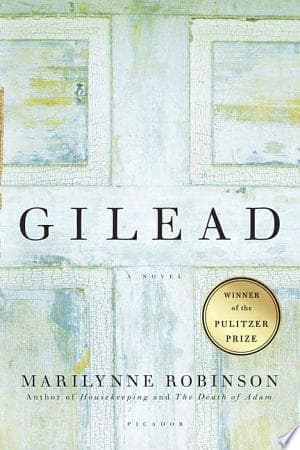
Marilynne Robinson (2004)
Genre
Fiction
Reading Time
420 min
Key Themes
See below
Sign in to track this book
An aging Iowa pastor writes a letter to his young son, sharing his family's abolitionist history, his faith, and the quiet moments of an ordinary life.
Reverend John Ames, a seventy-seven-year-old minister in Gilead, Iowa, knows his life is ending due to a heart condition. He starts writing a long letter to his seven-year-old son, Robert (Robby), as a legacy. He wants his son to know him, as Robby will likely grow up without a father. Ames thinks about his simple life, his calling, and his love for his young wife, Lila, and their son. He wants to share wisdom, family history, and his thoughts on faith, hoping to guide Robby through life and help him understand his heritage. The letter shows his faith, his views on people, and his acceptance of death.
Ames explores his family history, focusing on his grandfather and father. His grandfather, an abolitionist preacher, moved from Maine to Kansas to fight slavery, even taking part in the violence of Bleeding Kansas and serving in the Union Army, where he lost an eye. He was a man of action, conviction, and sometimes violence. In contrast, Ames's father was a gentle, pacifist minister who struggled to accept his father's militant past. Ames remembers his father finding his grandfather's hidden pistol and blood-stained shirts, reminders of a violent past that troubled the pacifist minister. This tension between righteous anger and peaceful belief shapes Ames's thoughts on faith.
Ames thinks about his first marriage to Louisa, a quiet and devoted woman. He describes their simple, happy life, built on shared faith and church routines. Sadly, Louisa died in childbirth, along with their infant daughter. This loss left Ames a widower for many decades, shaping his solitary life and deepening his understanding of grief. He did not remarry until much later. The memory of Louisa and their lost child highlights his gratitude for Lila and Robby, seeing them as an unexpected second chance at family, a gift in his old age that he values even more because of his past sorrow.
Reverend Ames shares details of his lifelong friendship with Reverend Boughton, a Presbyterian minister and his closest friend. Their bond is a key part of Ames's life, marked by respect, shared theological discussions, and deep affection. The story then moves to the unexpected return of Jack Boughton, Reverend Boughton's troubled youngest son, who is also Ames's namesake. Jack has a history of causing problems, disappearing for long periods, and failing to meet expectations, bringing much sadness to his family. His return to Gilead, after years away and rumors of abandonment, creates a quiet tension for Ames, who sees Jack with hope, suspicion, and an almost fatherly protectiveness because of his friendship with Jack's father.
Jack Boughton's presence in Gilead creates a subtle but constant unease for Ames. Despite wanting to see the best in Jack, Ames cannot shake a sense of worry. He watches Jack's quiet manner, his intelligence, and his apparent efforts to fit back into the community, but he also remembers Jack's past wrongs and the pain he caused his family. Ames worries especially about Jack's interactions with his young wife, Lila, and son, Robby. He struggles with the Christian command to forgive versus his instinct to protect his family. Ames's inner thoughts show his difficulty in reconciling Jack's past reputation with his current, mysterious behavior, looking for signs of true change or hidden motives.
Ames tells how he met and married Lila, a woman much younger than him, who came to Gilead with a mysterious past, having faced hardship. He admits she was, in many ways, an outsider, and her background remains mostly unspoken between them. Despite the age difference and her past, Ames describes their marriage as a great blessing, full of deep love and understanding. Lila's quiet strength, her capacity for love, and her simple faith have brought immense joy to Ames's later years, making him feel truly blessed after decades alone. He marvels at the unexpected grace of their union and the miracle of their son, Robby.
One evening, Jack Boughton makes a surprising request: he asks to be baptized. This moves Ames deeply, who sees it as a possible sign of Jack's repentance. During their talk, Jack confesses to Ames, revealing his deep feeling of unworthiness, his past mistakes, and his belief that he is a 'bad seed.' He speaks of a woman and child he abandoned, expressing regret and a sense of being beyond help. While Ames offers spiritual advice and emphasizes God's grace, Jack's confession remains somewhat unclear, leaving Ames with a lingering sense of Jack's suffering and his complex brokenness. The baptism, though performed, does not fully ease Ames's worries about Jack's future or true intentions.
Throughout his letter, Ames often thinks about grace and forgiveness, especially concerning Jack Boughton. He struggles with the command to offer unconditional love and forgiveness, even to those who seem undeserving, against his human instincts of caution. He questions how well one can truly understand another's heart and intentions. Ames reflects that divine grace is freely given, not earned, and that human judgment often falls short. He tries to extend this grace to Jack, even as he battles his own doubts, seeing himself as a flawed vessel of God's love, trying to live his faith in a complex world.
Beyond family history and personal worries, Ames fills his letter with many thoughts on theology and philosophy. He discusses God, the meaning of life, the beauty of nature, and the sacredness he finds in everyday life—a sunset, a conversation, a growing plant. He sees God's presence in simple things, believing that the 'ordinary' is often where the divine appears most powerfully. His thoughts are rooted in his Calvinist tradition but are also personal and poetic, showing a man who has spent a lifetime thinking about faith. He encourages Robby to find wonder and meaning in the world, to see the miraculous in the everyday.
The main theme of the letter is Ames's deep love for his young son, Robby, and his wife, Lila. Every thought, every piece of advice, every story is shaped by his wish to leave a meaningful legacy for Robby. He expresses his sadness at leaving them but also his deep gratitude for the joy they brought into his life. He often speaks directly to Robby, offering blessings, urging him to be kind, thoughtful, and faithful. Ames's love for Lila is equally clear, a quiet devotion he cherishes as an unexpected gift in his old age. His desire to protect and guide them, even after his death, drives his careful and heartfelt writing.
After a period of quiet presence in Gilead, Jack Boughton eventually leaves again, almost as quietly as he arrived. His departure leaves Reverend Ames with a mix of relief and lingering questions. Ames never fully settles his feelings about Jack—whether he was truly changed, found peace, or would continue his pattern of troubled wandering. The ambiguity of Jack's character and his final fate remains a central tension in Ames's story, showing the complexities of human nature, forgiveness, and the limits of understanding. Ames's last thoughts on Jack are tinged with hope for his salvation and a persistent sorrow for his apparent inability to find lasting peace.
As the letter continues and Ames's health declines, he finds a calm acceptance of his coming death. He sees it not with fear, but with a quiet expectation of reuniting with God and his loved ones who have passed. His faith provides comfort, and he finds peace knowing he has lived a life of purpose and love. The letter ends with Ames giving a final blessing to Robby, sharing his deepest hopes for his son's future—that he will live a life of joy, faith, and meaning. He expresses his lasting love for Robby and Lila, confident in God's care for them, and finds comfort in the continuation of life and faith through his son.
The Protagonist
Ames moves from a quiet contemplation of his impending death to a profound, peaceful acceptance, solidifying his spiritual legacy for his son while grappling with complex interpersonal challenges.
The Supporting
Lila's arc is less central, but she provides a grounding presence, representing unexpected grace and profound domestic love in Ames's life.
The Supporting
Robby's arc is in the future; he is the recipient of a legacy that will shape his understanding of his father and heritage.
The Supporting
Boughton remains a steadfast friend, his character serving as a stable point of reference and support for Ames.
The Antagonist/Supporting
Jack's arc is one of unresolved struggle; he seeks some form of redemption but ultimately remains enigmatic and departs without a clear resolution to his internal or external conflicts.
The Supporting/Mentioned
His story is recounted history, establishing a legacy of passionate faith and moral conviction that impacts subsequent generations.
The Supporting/Mentioned
His story is recounted history, providing a contrast to his father's militancy and shaping Ames's understanding of faith and action.
The novel is a reflection on legacy, as John Ames, facing death, wants to leave a spiritual and personal inheritance for his young son. He shares family history, theological insights, and life lessons, dealing with the short nature of human life and the wish for something to last. His writing is an act of love to overcome death, ensuring his son knows him. This is clear on every page, from his detailed stories of his grandfather's abolitionist passion to his own quiet observations of the world, all meant for Robby's future understanding.
“I will try to tell you all I can about myself, since I will not be here to tell you myself.”
These central theological ideas are explored through Ames's ministry and his personal struggles, especially concerning Jack Boughton. Ames constantly thinks about divine grace—its freeness, its mystery—and the human ability to forgive. He tries to offer grace to Jack, despite his own suspicions and fears, showing Christian ideals even when it is hard. The tension between strict principles and boundless grace is a main conflict for Ames, reflecting the complexities of living one's faith.
“It is a strange thing, but when you are older, you will come to see that it is not in the grand gesture that God reveals himself, but in the ordinary.”
The novel closely examines the complex ties between fathers and sons and how legacies—both spiritual and personal—are passed down and sometimes challenged across generations. Ames tells of the dynamic between his fiery abolitionist grandfather and his pacifist father, highlighting their different views of faith and action. He then thinks about his own role as a father, trying to distill his life's wisdom for Robby. The strained relationship between Reverend Boughton and his son Jack further shows the challenges and heartaches in this theme, illustrating how children often carry their parents' burdens and blessings.
“A man's father is a man's father. The one who gave you life. You owe him. You owe them all.”
Ames consistently finds deep spiritual meaning and beauty in the ordinary parts of life. He describes sunsets, a plant growing, a simple meal, or a quiet conversation with a reverence that makes these everyday experiences sacred. For Ames, God is not just in grand miracles or church services but is woven into daily existence. This theme encourages a deep appreciation for the present moment and a spiritual sense that finds wonder and grace in the seemingly unremarkable, turning the ordinary into a constant source of revelation.
“This is an interesting planet. It has not been without a history. It has not been without a future. It has not been without its graces.”
Despite Ames's many years of solitude after his first wife's death, the novel ultimately shows the power of love and companionship. His deep, quiet love for Lila, his much younger second wife, and the profound joy he finds in fatherhood with Robby, are central to his thoughts. He marvels at the unexpected grace of their arrival in his life, seeing them as a divine gift that completes him. His lasting friendship with Reverend Boughton also highlights the importance of human connection and intellectual camaraderie, showing that love, in its various forms, sustains life.
“I have been loved, in this old age, by a beautiful woman, and I have a child.”
The entire novel is structured as a long letter from John Ames to his son.
The epistolary format allows for deep introspection and a highly personal, intimate tone. It enables Ames to directly address his son, imparting wisdom, recounting history, and expressing his deepest fears and hopes without the need for traditional plot progression. This device creates a sense of immediacy and authenticity, drawing the reader into Ames's consciousness and making them privy to his private thoughts, theological musings, and emotional struggles. It also emphasizes the theme of legacy, as the letter itself is the tangible inheritance Ames leaves for Robby.
The narrative unfolds as John Ames's free-flowing thoughts and reflections.
The novel largely functions as an extended interior monologue, capturing the meandering, associative nature of Ames's thoughts. He moves seamlessly between present observations, past memories, theological ponderings, and direct addresses to his son. This device allows for a rich exploration of Ames's inner life, his complex emotional landscape, and his intellectual process. It mirrors the way an elderly mind might reflect on a lifetime of experiences, creating a deeply immersive and contemplative reading experience that prioritizes character and thematic depth over external action.
Water imagery frequently appears, often tied to themes of purification, renewal, and the passage of time.
Water imagery is subtly woven throughout the narrative, contributing to its spiritual and reflective atmosphere. The most explicit example is Jack Boughton's request for baptism, symbolizing a potential for purification and new beginnings, though its efficacy remains ambiguous. Ames also frequently observes rain, rivers, and other forms of water, which evoke themes of cleansing, the flow of life, and the passage of time. These natural elements often serve as catalysts for Ames's theological musings, connecting the physical world to deeper spiritual truths and the cycles of existence.
Ames's deteriorating health and explicit mentions of his impending death.
From the very beginning, Ames explicitly states that he is writing the letter because he is dying. His references to his heart condition, his age, and his limited time serve as constant reminders of his impending mortality. This omnipresent foreshadowing imbues the entire narrative with a sense of urgency and poignancy. It elevates the significance of every reflection and memory, as Ames consciously curates his final thoughts and lessons for his son, making the act of writing a race against time and a profound act of love and legacy.
“I am an old man, and I have seen a great many troubles, but I have always been able to trust in the Lord.”
— Reflecting on his life and faith in old age.
“It is a better thing to be a good man than to be a great man.”
— Discussing the virtues and values he holds dear.
“Sometimes I feel like I'm seeing the world through a screen door, and the screen is God.”
— Contemplating the presence of God in everyday life and his perception of it.
“Love is not a feeling, it is a covenant.”
— Considering the nature of love, particularly in marriage and family.
“This is an interesting planet. It has not been without its problems.”
— A somewhat understated observation about the world's complexities.
“I have always been a man who loved to read, and I have always been a man who loved to think.”
— Describing his lifelong intellectual pursuits and passions.
“There are some things you can't understand until you're old. There's a wisdom that comes with time.”
— Musing on the unique insights gained through experience and aging.
“A man can do worse than to be a preacher. He can be a politician.”
— A lighthearted, yet pointed, comparison of professions.
“The Lord works in mysterious ways, and sometimes those ways are very direct.”
— Reflecting on divine intervention and the unexpectedness of life.
“Every human soul is a divine creation, and therefore worthy of respect.”
— Expressing a fundamental belief in the inherent dignity of all people.
“I have known sorrow, and I have known joy. And I have learned that they are often intertwined.”
— Observing the cyclical and interconnected nature of human emotions.
“There is a holiness to the ordinary, if you only have the eyes to see it.”
— Encouraging a mindful appreciation for the sacredness in everyday life.
“Sometimes the best way to understand something is to write it down.”
— Explaining his motivation for writing his reflections for his son.
“The world is full of wonders, and it is a privilege to be alive to witness them.”
— Expressing gratitude for existence and the beauty of the world.
Ready to see how well you understood this book? Take our interactive quiz with 10 questions.

Marilynne Summers Robinson is an American novelist and essayist. Across her writing career, Robinson has received numerous awards, including the Pulitzer Prize for Fiction in 2005, National Humanities Medal in 2012, and the 2016 Library of Congress Prize for American Fiction. In 2016, Robinson was named in Time magazine's list of 100 most influential people. Robinson began teaching at the Iowa Writers' Workshop in 1991 and retired in the spring of 2016.

Ashley Antoinette
4.6

Mark McDonald
4.4
Luo Guanzhong
4.4
Mia McKenzie
4.3

Dorothy Parker
4.3

Joaquim Maria Machado de Assis
4.3
James Thurber
4.2

Terry Kay
4.2