“Kissing your hand may make you feel very very good but a diamond and sapphire bracelet lasts forever.”
— Lorelei Lee's famous line about the value of jewelry over romance.

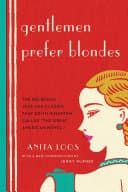
Anita Loos (2014)
Genre
Fiction
Reading Time
150 min
Key Themes
See below
Sign in to track this book
In a Jazz Age diary, Lorelei Lee, a pragmatic 'dumb blonde,' navigates Europe's elite, charming millionaires and upending societal expectations with her witty pursuit of a glamorous life.
Lorelei Lee, a charming and practical showgirl from Little Rock, Arkansas, begins her diary entries by describing her trip to Europe. She travels with her less refined but equally lively friend, Dorothy Shaw. The trip is funded by Gus Eisman, a Button King and one of Lorelei's many admirers, who has given her money to 'educate' herself abroad. Lorelei's main goal, however, is to find a wealthy husband. She carefully records her expenses and the gifts she receives, always with an eye on financial security. On the ship, she quickly gets the attention of several gentlemen, including Mr. E. R. Spoffard, a New York millionaire known for his moral views, and Sir Francis Beekman, a British aristocrat.
In London, Lorelei continues to seek wealthy benefactors. She particularly likes Sir Francis Beekman, who gives her expensive gifts, especially a large diamond tiara. However, Lorelei's practical nature leads her to often pawn or sell gifts for cash, which she records without shame. Sir Francis's wife eventually finds out about the affair and the missing tiara, causing a public scandal that Lorelei sees as an inconvenience. Despite the social mistake, Lorelei stays calm, always focusing on her financial well-being and the next opportunity.
Lorelei and Dorothy move to Paris, where Lorelei's reputation for attracting wealthy men precedes her. She continues to record her lavish lifestyle, detailing her shopping trips and the generous allowances from her various admirers. A misunderstanding happens when Lorelei is accused of theft after she 'borrows' money and jewels from a gentleman's safe, believing them to be gifts or a loan. This leads to a comical encounter with the French legal system. Lorelei navigates it with her innocent charm, avoiding serious consequences, mostly because of her ability to appeal to men in power.
To 'cure' her nerves (and perhaps for a change of scenery), Lorelei travels to a German spa town. Here, she meets a number of influential and wealthy people, further expanding her network of potential benefactors. Among them is a wealthy German film producer who takes an interest in her. More importantly, she gets a telegram from Mr. Gus Eisman, her original patron, who has followed her to Europe. Gus, seeing Lorelei's unique appeal and perhaps tired of the chase, proposes marriage. Lorelei, always practical, considers the proposal for the financial security and social standing it offers, not just for love.
Lorelei, with Dorothy still with her, returns to America to prepare for her wedding to Gus Eisman. Her engagement to such a prominent millionaire causes a stir in society, especially among Gus's more traditional friends and family. Lorelei, however, is not bothered by their judgments, always focusing on the practical benefits of her upcoming marriage. She continues to record her observations on wealth, social status, and men's behavior, keeping her innocent yet shrewd perspective. Dorothy, meanwhile, continues to offer a grounded, often cynical, contrast to Lorelei's detached pragmatism.
The novel ends with Lorelei's marriage to Gus Eisman. The wedding is a grand event, solidifying Lorelei's position as a wealthy socialite. Despite societal scrutiny and initial skepticism from some, Lorelei achieves her goal of marrying a millionaire. Her diary entries conclude shortly after the wedding, leaving the reader with the impression that Lorelei has successfully navigated the complexities of love, money, and social climbing on her own terms. She remains the same charmingly naive yet calculating individual, always prioritizing financial security and a comfortable life, which is part of her unique character.
The Protagonist
Lorelei begins as a showgirl dependent on benefactors and successfully marries a millionaire, securing her desired financial and social standing.
The Supporting
Dorothy remains largely unchanged, serving as a foil to Lorelei and a voice of common sense amidst the extravagance.
The Supporting
Gus transforms from a mere patron to Lorelei's husband, fulfilling her primary objective.
The Supporting
Sir Francis serves as a temporary suitor and a means for Lorelei to acquire valuable jewels.
The Supporting
Spoffard's initial moralistic stance is softened by Lorelei's charm, showcasing her universal appeal to wealthy men.
The Mentioned
Serves as an obstacle in Lorelei's acquisition of jewels, but ultimately fails to impede her progress.
The Mentioned
A minor character who exemplifies Lorelei's widespread appeal to men of various ages and backgrounds.
Lorelei's entire journey and decisions are driven by her pursuit of wealth. She carefully records every gift, allowance, and potential financial gain in her diary, seeing marriage as the ultimate business deal for her future. Her famous line, 'Diamonds are a girl's best friend,' sums up this theme, as she values material possessions and financial stability above all else. This theme is clear in her interactions with Gus Eisman, Sir Francis Beekman, and her constant calculations of what each man can provide.
“A girl with a good mind can improve her self very much by culture and reading and so I beleive in it very much.”
Lorelei Lee uses her feminine charm, beauty, and perceived innocence to get men to provide for her. She is a shrewd strategist, understanding male psychology and using societal expectations of women. She never directly demands, but subtly guides men to offer her what she wants, making them feel like generous benefactors. This power shows in how she manages multiple suitors and handles legal troubles with her 'damsel in distress' act, always coming out ahead and with more money.
“A gentleman always prefers a blonde.”
The novel plays with the 'dumb blonde' idea, showing Lorelei as seemingly naive and unsophisticated, yet revealing her to be intelligent and calculating. Her diary entries, written with charming grammatical errors and simple observations, hide a sharp mind focused on her goals. This contrast is central to the book's humor and irony. While society, and many of the men she meets, see her as a simple beauty, the reader sees her true, practical intellect.
“I mean when a girl is in a taxi cab all alone with a gentleman, a gentleman always thinks of things that a girl would not think of.”
The book offers a satirical look at American and European high society during the Jazz Age, especially regarding class mobility and the role of women. Lorelei, from humble beginnings in Little Rock, uses her 'assets' to move up the social ladder, showing the superficiality and hypocrisy of the wealthy elite. Her journey shows how charm and ambition, more than birthright or education, can be strong tools for social advancement, especially for women in a patriarchal society. The reactions of established society members to Lorelei further illustrate this theme.
“It is not that I am not democratic, but when a girl has once been to Paris, she can not go back to America and get along with any of the gentlemen.”
The entire novel is presented as Lorelei Lee's personal diary entries.
The novel is entirely told through Lorelei Lee's diary entries. This device provides direct access to her thoughts, observations, and unique voice. The misspellings and grammatical errors in her writing are intentional, enhancing her 'dumb blonde' persona while ironically revealing her shrewd intelligence. This perspective allows the reader to understand Lorelei's true motivations and calculations, creating a humorous contrast between her outward appearance and her inner pragmatism. It's crucial for establishing the book's satirical tone and Lorelei's distinctive character.
The pervasive use of verbal and situational irony, particularly in Lorelei's observations.
Irony is the cornerstone of the novel's humor and social commentary. Lorelei's seemingly naive observations are often laden with unintentional (or perhaps feigned) irony, revealing deeper truths about society, men, and her own manipulative strategies. For example, her discussions of 'culture' and 'education' are ironic given her true focus on wealth. The contrast between her innocent presentation and her calculating actions is a constant source of ironic amusement, allowing Loos to critique societal norms without didacticism.
Lorelei embodies and subverts the stereotypical 'dumb blonde' character.
Lorelei Lee is presented as the quintessential 'dumb blonde' – beautiful, charming, and seemingly unintelligent. However, this archetype is a clever façade. Loos uses this device to subvert expectations, revealing Lorelei to be highly intelligent, pragmatic, and masterful at manipulating others to achieve her goals. This subversion challenges traditional notions of female intelligence and power, showing how a woman can use perceived weakness as a strength in a male-dominated world. It is central to the book's enduring appeal and feminist undertones.
Dorothy serves as a contrasting character to highlight Lorelei's unique traits.
Dorothy Shaw acts as a foil to Lorelei Lee. Her more cynical, outspoken, and less materialistic nature highlights Lorelei's unique blend of innocence and pragmatism. Dorothy's grounded perspective and preference for 'real' men over rich ones provide a contrast that emphasizes Lorelei's single-minded pursuit of wealth. Through their interactions, the reader gains a more nuanced understanding of Lorelei's character and the different paths women could take in the Jazz Age, while also providing comedic relief.
“Kissing your hand may make you feel very very good but a diamond and sapphire bracelet lasts forever.”
— Lorelei Lee's famous line about the value of jewelry over romance.
“I always say that a girl never really looks as well as she does on board a steamship, or even a yacht.”
— Lorelei reflecting on her travels and appearance.
“So I really think that American gentlemen are the best after all, because kissing your hand may make you feel very very good but a diamond and sapphire bracelet lasts forever.”
— Lorelei's conclusion about American men and their gifts.
“I think that every girl should have a career. My career is being beautiful.”
— Lorelei's view on her own profession and societal expectations.
“Fun is fun but no girl wants to laugh all of the time.”
— Lorelei's observation on the balance between enjoyment and seriousness.
“I always say that brains are an asset, if you hide them.”
— Lorelei's advice on intelligence and social strategy.
“So I told him that I thought that a girl with brains ought to do something else with them besides think.”
— Lorelei discussing the practical use of intelligence.
“I really believe that American men are the best in the world because they are so generous.”
— Lorelei praising American men for their material generosity.
“So I always say that a girl's best friend is her mutter.”
— Lorelei's humorous take on the importance of a mother's advice.
“I think that a girl should be two things: classy and fabulous.”
— Lorelei's personal motto on how a woman should present herself.
“So I always say that love is a thing that can make you do a lot of things that you would not do if you were not in love.”
— Lorelei reflecting on the irrationality of love.
“I really think that a girl should be careful about what she says when she is angry, because she might say something that she will be sorry for.”
— Lorelei's practical advice on emotional control.
“So I always say that a girl should not marry a man unless she is sure that she can get along without him.”
— Lorelei's cynical view on marriage and independence.
“I think that a girl should be like a butterfly. Pretty to see, hard to catch.”
— Lorelei's metaphor for feminine allure and elusiveness.
Ready to see how well you understood this book? Take our interactive quiz with 10 questions.

Corinne Anita Loos was an American actress, novelist, playwright and screenwriter. In 1912, she became the first female staff screenwriter in Hollywood, when D. W. Griffith put her on the payroll at Triangle Film Corporation. She is best known for her 1925 comic novel, Gentlemen Prefer Blondes, and her 1951 Broadway adaptation of Colette's novella Gigi.

Ashley Antoinette
4.6

Mark McDonald
4.4
Luo Guanzhong
4.4

Mia McKenzie
4.3

Dorothy Parker
4.3
Joaquim Maria Machado de Assis
4.3
James Thurber
4.2

Terry Kay
4.2