BookBrief
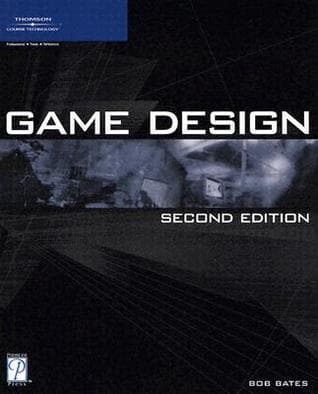
Game Design cover
Archivist's Choice

Game Design

Bob Bates (2004)

Genre

Reference / Technology

Reading Time

350 min

Key Themes

See below

Track Your Reading

Sign in to track this book

This guide takes you from a game's first idea through development to its release.

Core Idea

Game design is an ongoing process focused on creating fun player experiences within real-world limits. It requires understanding gameplay, player behavior, and clear communication. The product is improved through testing and feedback. Success depends on managing scope, good documentation, and teamwork, all while handling the business side of publishing to deliver a finished, marketable game.
Reading time
350 min
Difficulty
Medium
✓ Read this if...
You are an aspiring game designer, student, or junior developer looking for a comprehensive, practical guide to the fundamental principles and processes of game creation from conception to release. It's especially useful for understanding the broader context of game development beyond just coding or art.
✗ Skip this if...
You are an experienced game designer or developer seeking advanced, niche topics, or a highly theoretical academic discourse on game studies. This book focuses on foundational, practical advice for commercial game development rather than deep dives into specific technical implementations or cutting-edge design trends.

Core idea

The central argument and framework that powers the entire book.

Game design is an ongoing process focused on creating fun player experiences within real-world limits. It requires understanding gameplay, player behavior, and clear communication. The product is improved through testing and feedback. Success depends on managing scope, good documentation, and teamwork, all while handling the business side of publishing to deliver a finished, marketable game.

At a glance

Reading time

350 min

Difficulty

Medium

Read this if...

You are an aspiring game designer, student, or junior developer looking for a comprehensive, practical guide to the fundamental principles and processes of game creation from conception to release. It's especially useful for understanding the broader context of game development beyond just coding or art.

Skip this if...

You are an experienced game designer or developer seeking advanced, niche topics, or a highly theoretical academic discourse on game studies. This book focuses on foundational, practical advice for commercial game development rather than deep dives into specific technical implementations or cutting-edge design trends.

Key Takeaways

1

The Core Loop is King

A game's fundamental activity must be intrinsically fun and endlessly repeatable.

Quote

The core mechanic of a game must be fun in and of itself, and it must be something players want to do again and again.

Bates says that at the center of every successful game is a "core loop" – a main action or set of actions players do repeatedly. This loop is not just a technical process; it is the game's promise of fun. If jumping, shooting, solving, or exploring is not enjoyable on its own, no amount of story, graphics, or extra features can save it. Think of the satisfying sound of hitting a ball in tennis, or the exact timing needed for a perfect jump in a platformer. This core must be strong, engaging, and give immediate feedback. It should pull...

Supporting evidence

Bates frequently refers to the importance of early prototyping and testing of core mechanics, citing examples of games where the basic interaction was polished until it felt right, even in a rudimentary form.

Apply this

When brainstorming a game concept, strip away all extraneous features and ask: 'Is the absolute core interaction fun for an hour, for ten hours, for a hundred?' Prototype this core interaction first, even with placeholder art, and iterate until it feels compelling. For example, if designing an RPG, test the combat system in isolation before building out quests or lore.


core-mechanicgameplay-loopprototyping
2

Design for the Player, Not Yourself

Game designers must shed personal biases and deeply understand their target audience.

Quote

You are not your audience. Designing a game for yourself is a recipe for commercial disaster.

Bates teaches a difficult but important lesson: designers must set aside their own likes and design for a specific player group. This does not mean giving up artistic vision, but making sure that vision connects with a real market. Designers often assume everyone shares their interests or skill levels. However, successful games serve a clear audience, understanding what drives them, their challenges, and their preferred experiences. This needs market research, player testing, and a willingness to change based on feedback, even when it...

Supporting evidence

Bates discusses the importance of demographic analysis and user testing, where feedback from target players reveals flaws or missed opportunities that the design team, too close to the project, overlooked.

Apply this

Before starting development, clearly define your target audience (age, interests, skill level). During development, conduct regular playtesting with members of this audience. Actively listen to their feedback and be prepared to make significant design changes based on their experiences, rather than defending your initial ideas.

target-audienceuser-experienceplaytesting
3

The Iterative Spiral of Perfection

Game development is a continuous cycle of design, prototype, test, and refine.

Quote

Game design is not a linear process. It's an iterative spiral, constantly refining and improving.

Bates strongly supports an ongoing development model. He rejects the idea of a perfect "waterfall" plan where every detail is decided at the start. He argues that game design is about discovery; you do not truly know if something works until players use it. This means constant cycles of designing a feature, building a simple version, testing it with players, getting feedback, and then improving the design based on what was learned. This "spiral" approach allows for flexibility, corrections, and finding fun in unexpected ways. It recog...

Supporting evidence

Bates details various development methodologies, favoring agile and iterative approaches over rigid, traditional waterfall models, citing their ability to adapt to unforeseen challenges and player feedback.

Apply this

Break down your game into small, manageable features. For each feature, follow a mini-cycle: design it on paper, build a quick prototype, have others (or yourself) playtest it, gather feedback, and then revise the design. Repeat this process for every element of your game, from core mechanics to UI, until it feels polished.

agile-developmentiterationgame-development-process
4

Documentation is Not Optional

Comprehensive design documents are vital for clarity, communication, and project success.

Quote

Without proper documentation, a game project is a ship without a rudder, drifting aimlessly.

Even with ongoing design, Bates firmly states that good documentation is necessary. Game Design Documents (GDDs), technical design documents, art guides, and other written communications are the base of a clear development process. These documents do several important things: they ensure everyone on the team understands the game's vision and mechanics, prevent costly mistakes, keep a record of decisions, and act as a reference for future changes. Without them, teams risk unclear communication, too many extra features, and a confused u...

Supporting evidence

Bates includes detailed templates for various design documents (GDD, technical design, level design) and explains their purpose and necessity, drawing on his experience in managing large development teams.

Apply this

Even for small projects, create a living Game Design Document. Start with the core concept and expand it as development progresses. Ensure all team members contribute to and regularly consult these documents. Use version control for all documentation. Don't view it as busywork; view it as essential communication.

game-design-documentproject-managementcommunication
5

Scope is the Silent Killer

Overambitious feature lists are the primary cause of project delays and cancellations.

Quote

The graveyard of game development is littered with the corpses of projects that tried to do too much.

Bates gives a clear warning about the dangers of too many extra features. Designers and teams often like too many ideas, leading to an ever-growing list of features that becomes impossible to deliver within real time and money limits. This "feature creep" or "scope creep" is a main reason for project delays, over budget spending, and eventually, cancellation. He argues that it is much better to deliver a smaller, finished, and complete game than an ambitious, unfinished mess. Strict prioritizing, a clear idea of what a "Minimum Viable...

Supporting evidence

Bates recounts common industry anecdotes and his own experiences where projects spiraled out of control due to an inability to manage or reduce the proposed feature set, leading to burnout and failure.

Apply this

Before development, define your 'must-have' features (MVP). Categorize all other ideas as 'nice-to-have' or 'stretch goals.' Be ruthless in cutting features that don't directly serve the core fun or fit within your timeline/budget. Regularly review scope and be prepared to make hard decisions to simplify.

scope-creepproject-managementminimum-viable-product
6

The Importance of Good Feedback

Effective feedback is specific, actionable, and focused on improving the game.

Quote

Feedback is a gift, but only if it's delivered and received in a way that allows for improvement.

Bates spends time on how to give and get feedback, seeing it as a key part of ongoing design. He separates helpful criticism from just opinions. He says that useful feedback is specific (pointing out exact problems), actionable (suggesting real solutions or areas to explore), and given to improve the game, not just to complain. Equally important is the designer's ability to get feedback without getting defensive, to listen carefully, and to find patterns from many testers instead of reacting to every single comment. The goal is to fin...

Supporting evidence

Bates provides examples of poorly phrased feedback versus effective feedback, often in the context of playtesting sessions, and offers guidelines for conducting productive feedback sessions.

Apply this

When giving feedback, focus on 'what' is happening and 'why' it might be a problem, rather than just 'I don't like it.' Suggest potential solutions if possible. When receiving feedback, listen without interrupting, ask clarifying questions, and look for recurring themes rather than getting bogged down in individual complaints. Thank the giver.

playtestinguser-feedbackcommunication
7

Story Serves Gameplay (Usually)

In most games, narrative should enhance the mechanics, not dictate them.

Quote

While story can be powerful, it should generally serve the gameplay, not the other way around. Players play games to play, not just to read a book.

This is a striking but important point from Bates: while good stories are valuable, for many games, the story's main job is to give context and reason for playing the core game. He warns against "story creep" where a complex plot hides or limits the interactive parts. Players play games for control, challenge, and direct interaction. A story that forces long cutscenes, limits player choice, or creates frustrating gameplay just to serve a plot often turns players away. The best game stories often come from player actions or are smoothl...

Supporting evidence

Bates contrasts games that prioritize gameplay with those that prioritize story, noting that games like 'Tetris' or early 'Super Mario Bros.' succeed purely on mechanics, while story-heavy games must carefully integrate narrative to avoid interrupting play.

Apply this

When designing, always consider if a story element enhances or detracts from the player's agency and fun. Can the narrative be conveyed through gameplay mechanics? Can choices made in gameplay directly impact the story? Avoid long, unskippable cutscenes or lore dumps that break the flow of interaction.

narrative-designgameplay-firstplayer-agency
8

The Publisher's Perspective

Understanding the business side of publishing is crucial for developers seeking success.

Quote

A great game concept is only half the battle. You also need to understand how the game gets to market.

Bates expands beyond pure design to include the business realities of the industry. He gives a useful look into the publisher-developer relationship, explaining how publishers review ideas, fund projects, market games, and distribute them. For new and independent developers, understanding the publisher's view – their need for market success, clear goals, and a return on investment – is most important. This includes understanding marketing budgets, intellectual property rights, and the details of contract talks. A great game idea can f...

Supporting evidence

Bates includes detailed sections on pitching games, understanding publishing contracts, marketing strategies, and the roles of various business personnel within a publisher's organization.

Apply this

Research publishers that align with your game's genre and scope. Prepare a professional pitch deck that clearly outlines your game concept, target audience, competitive analysis, team, and a realistic budget/timeline. Be prepared to discuss the commercial viability of your project, not just its creative merits.

game-publishingbusiness-developmentintellectual-propertypitching
9

Don't Forget the Polish

The final 10% of development often takes 90% of the effort, but defines quality.

Quote

The difference between a good game and a great game often comes down to the amount of polish applied in the final stages.

Bates emphasizes that the "polish" phase, often undervalued and rushed, is very important for a game's success. This is not just about fixing bugs, though that is part of it. Polish involves refining every small detail: how movement feels, how responsive controls are, how clear the UI is, the impact of sound effects, the subtle animations, and the overall look. These many small improvements, minor individually, together make a game go from just working to truly enjoyable and immersive. It is the difference between a game that feels "r...

Supporting evidence

Bates often references the 'feel' of successful games, attributing it to meticulous attention to detail in areas like animation blending, audio feedback, and user interface responsiveness.

Apply this

Allocate significant time and resources in your development schedule specifically for polish. Create a 'polish checklist' for every feature. Focus on micro-interactions: how does pressing a button feel? Is the feedback clear? Are transitions smooth? Actively seek out and address minor annoyances that accumulate for players.

quality-assuranceuser-experiencegame-feel
10

Teamwork Makes the Dream Work (or Breaks It)

Effective team dynamics and clear roles are as vital as individual talent.

Quote

A game is never made by a single person. It's the product of a diverse team, and how they work together is paramount.

While often focusing on design ideas, Bates consistently returns to the people involved: the development team. He argues that even with excellent individual designers, programmers, and artists, a lack of team unity, clear communication, and defined roles can stop a project. Conflicts, misunderstandings, and ego battles are common problems in creative work. Bates stresses the need for strong leadership, mutual respect, and processes that help collaboration rather than hurt it. Understanding each other's fields, respecting expertise, an...

Supporting evidence

Bates includes interviews with various industry professionals who consistently highlight the importance of team chemistry, clear leadership, and effective communication pipelines in successful projects.

Apply this

Foster an environment of open communication and respect within your team. Clearly define roles and responsibilities for each team member. Implement regular check-ins and feedback sessions. Address conflicts proactively and ensure everyone feels heard and valued, contributing to a shared vision.

team-managementcollaborationcommunicationleadership

Critical analysis

Notable Quotes

The greatest games are those that make you feel something.

Discussing the emotional impact of games beyond mere mechanics.

Story is not a game mechanic. It's a layer on top of the game mechanics.

Distinguishing between narrative and core gameplay systems.

If the player doesn't understand what's going on, it's not their fault, it's yours.

Emphasizing the designer's responsibility for clear communication and intuitive design.

Never mistake a longer game for a better game.

Warning against equating game length with quality or value.

The secret to good game design is to make the player feel smart, not to prove how smart you are.

Advising designers to empower players rather than show off their own cleverness.

Technology enables, but it doesn't define the fun.

Highlighting that while technology provides tools, the core fun comes from design.

A game is a series of interesting choices.

A foundational definition of what constitutes engaging gameplay.

Playtesting is not about finding bugs; it's about finding fun.

Redefining the primary goal and focus of playtesting sessions.

The first 30 seconds of your game are the most important.

Stressing the importance of the initial player experience and onboarding.

Don't design for the average player; design for the ideal player.

Encouraging designers to envision their target audience's desires and capabilities.

Difficulty should be a ramp, not a wall.

Metaphorically explaining effective difficulty scaling and player progression.

Innovation for innovation's sake often leads to a worse product.

Cautioning against novelty without purpose or consideration for player experience.

Your game will be played on someone else's hardware, in someone else's home, with someone else's distractions.

A reminder to consider the diverse and often imperfect real-world player environments.

The designer's job is not to solve problems, but to create interesting problems for the player to solve.

Defining the core role of a game designer in crafting challenges.

Quiz

Test Your Knowledge

Ready to see how well you understood this book? Take our interactive quiz with 10 questions.

10
Questions
~5
Minutes
?
Best Score

Key Questions (FAQ)

Game design is the art and science of creating the rules and content of a game, defining the player experience. It's crucial because it forms the blueprint for development, ensuring a cohesive, engaging, and commercially viable product.

About the author

Bob Bates

Bob Bates is a renowned game designer and author. His seminal work, 'Game Design,' has become a foundational text for aspiring game developers. With decades of experience in the industry, Bates offers practical insights and theoretical frameworks crucial for understanding the art and craft of game creation.