“The only way to avoid the infernal round of being a victim or an executioner is to become a voyeur.”
— A philosophical reflection on the roles people play in society and violence.

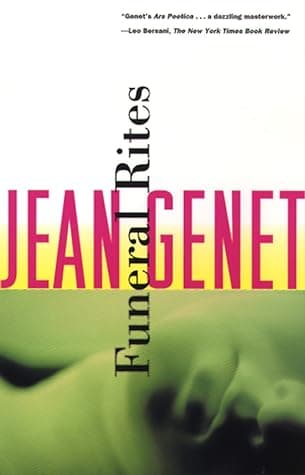
Sign in to track this book
After Paris is liberated, a grieving Genet navigates his desires, mourning his Resistance lover while lusting after the Fascist who may have betrayed him, blurring the lines between elegy and macabre obsession.
The story begins with the narrator, Genet, dealing with the recent death of his lover, Jean D., a young Resistance fighter killed during the liberation of Paris. Jean was shot by a German soldier named Riton, a French collaborator. This loss sends Genet into deep grief, but also starts a complex, perverse obsession. Instead of pure sorrow, Genet feels drawn to Riton, the murderer, and begins to fantasize about him, mixing his love for the dead Jean with a dark, erotic fascination for the enemy. This initial shock sets the stage for the novel's look at the fluid lines between love, hate, sex, and death, as Genet's mind starts to create elaborate, often disturbing, scenarios.
Genet's grief for Jean quickly turns into an intense, almost worshipful, focus on Riton, the collaborator and Jean's killer. He imagines Riton not just as a soldier, but as a figure of raw, brutal masculinity, with an almost divine, destructive power. Genet carefully builds Riton's physical appearance, actions, and inner world, often projecting his own desires and perversions onto him. This imagined Riton becomes a central character in Genet's mind, a dark mirror to the lost Jean. The narrator explores Riton's life as a member of the French militia, a German collaborator, and a man driven by a complex mix of loyalty, fear, and desire for power, all seen through Genet's sensual and often grotesque view.
Driven by his growing obsession, Genet creates an elaborate fantasy involving Riton, Jean, and himself. This vision is not simple mourning, but a macabre, erotic scene where the boundaries of life and death, love and hate, completely blur. He imagines Riton defiling Jean's body, and then, in a perverse twist, Genet himself joining in this imagined act, finding a strange, dark pleasure in the violation. This scene is a prime example of Genet's unique blend of the sacred and the profane, where murder and defilement mix with a highly charged, sexual longing. The fantasy helps Genet cope, allowing him to process his grief and desire in a way that defies common morality.
Amidst Genet's dark fantasies, Jean's mother appears, representing a more conventional and socially acceptable form of grief. She mourns her son with deep, maternal sorrow, clinging to his memory with a purity that contrasts sharply with Genet's transgressive imaginings. Genet observes her, sometimes with detached curiosity, sometimes with understanding, but remains separate from her experience. Her grief highlights the unique and often disturbing nature of Genet's own mourning, showing his distance from societal norms and his embrace of a more complex, perverse emotional world. She reminds him of the 'normal' world from which Genet has deliberately distanced himself.
Genet expands his focus beyond Riton to include other collaborators, especially Erik and Paolo. These characters are also shown with a mix of revulsion and erotic fascination, serving as further extensions of Genet's exploration of betrayal, power, and forbidden desire. Erik, a younger, more effeminate collaborator, embodies a different aspect of collaboration, tied to vulnerability and a desperate search for belonging. Paolo, a more brutal figure, reinforces the theme of violent masculinity. Through these characters, Genet looks deeper into the psychology of those who align with the enemy, showing them not as simple villains, but as complex individuals driven by various motivations, often mirroring Genet's own internal conflicts and desires for transgression.
Genet often places the sacred next to the profane, often setting scenes in brothels and other marginalized spaces where traditional morality is inverted. He describes these environments with careful, almost religious, detail, making them places of deep spiritual and emotional revelation. The brothel, in particular, becomes a symbolic space where bodies are bought and sold, but also where a strange form of communion and self-discovery can happen. Genet finds a perverse holiness in these places, seeing in prostitution and degradation a reflection of humanity's rawest desires and the potential for a different kind of transcendence. This reinforces his rejection of common morality and his search for meaning in the forbidden.
The novel's narrative structure is fluid and non-linear, often moving between Genet's own first-person thoughts, imagined dialogues with the deceased Jean, and elaborate internal monologues from Riton's perspective. Genet fully enters the minds of his characters, blurring the lines between author, narrator, and subject. This allows him to explore the psychological complexities of each figure, giving voice to their desires, fears, and justifications. These shifts create a dreamlike quality, where reality and fantasy are indistinguishable, and where the reader is constantly challenged to figure out whose voice is speaking and what their true motivations are. This technique emphasizes the subjective and very personal nature of Genet's exploration of love, loss, and betrayal.
The 'funeral rites' of the title are not traditional ceremonies but Genet's act of writing this novel. By creating his elaborate fantasies, his detailed descriptions of Riton and the collaborators, and his re-imagining of Jean's death, Genet performs a unique and very personal mourning ritual. Writing becomes a way to preserve Jean's memory, even if in a distorted, perverse form, and to turn his grief into something creative and lasting. Through these written 'rites,' Genet tries to reconcile his conflicting emotions, find meaning in loss, and elevate the marginalized and transgressive to a position of deep significance, ultimately finding a form of perverse transcendence.
Throughout the novel, Genet provocatively explores the appeal of treason and betrayal, showing collaborators not just as villains but as figures with a certain dark glamour. He finds an erotic charge in their defiance of societal norms, their willingness to align with the enemy, and their embrace of violence. For Genet, treason is not just a political act but a deep psychological and spiritual transgression that offers a perverse form of liberation. He enjoys dissecting the motivations of figures like Riton, Erik, and Paolo, suggesting that their choices, however wrong, come from a complex interplay of desire, power, and a rejection of common morality, mirroring Genet's own fascination with the forbidden.
A main theme of the novel is the seamless connection of love and hate. Genet's deep love for Jean is linked with his morbid, erotic fascination for Riton, Jean's killer. He suggests that these seemingly opposite emotions are not separate but different expressions of intense passion. Loving and hating can both be acts of possession and obsession. By blurring these boundaries, Genet challenges conventional understandings of human emotion, arguing that in extreme situations, love can turn into a form of hate, and hate can carry an underlying, perverse love. This complex emotional landscape is at the heart of Genet's unique worldview and his rejection of simple moral divisions.
Genet's story is a constant act of transgression, deliberately breaking moral, social, and sexual boundaries. He finds beauty and truth in what society calls ugly, sacredness in the profane, and love in hate. He explores homosexuality, collaboration, violence, and death with an unflinching gaze, not shying away from the most disturbing aspects of human experience. This transgression is not just for shock value but is central to Genet's philosophical goal: to show the arbitrary nature of societal norms and to find a deeper, more authentic truth in the marginalized and the forbidden. His work invites readers to look beyond common morality and embrace the complexity of human nature.
The historical setting of Paris during its liberation from German occupation serves as a vivid and turbulent background for Genet's internal drama. The chaos, violence, and shifting loyalties of this period reflect the moral and emotional turmoil within Genet's mind. The city, with its streets running with blood and its population dealing with betrayal and heroism, becomes a symbolic landscape reflecting the novel's themes of conflict, death, and the blurred lines between good and evil. While external events are important, Genet mainly uses them as a catalyst and a stage for his deeply personal and psychological exploration, rather than focusing on a purely historical account.
The Protagonist
Genet transforms his personal grief and trauma into a powerful, transgressive work of art, finding a unique form of mourning and self-expression through his perverse fantasies.
The Supporting/Idealized Figure
Jean's physical arc is complete before the novel begins; his character arc is in how he is continually re-imagined and re-contextualized by Genet's evolving grief and obsession.
The Antagonist/Object of Desire
Riton's 'arc' is entirely constructed within Genet's mind, evolving from a figure of hatred to one of intense, perverse erotic desire and symbolic importance.
The Supporting
Her arc remains static, representing enduring, traditional grief, serving primarily as a contrast to Genet.
The Supporting
Erik's character is largely static, serving as an extension of Genet's exploration of collaboration and forbidden desire.
The Supporting
Paolo's character is largely static, representing an archetypal figure of violent collaboration within Genet's fantasies.
Genet blurs the usual lines between love and hate, suggesting they are not opposing forces but two intense forms of human passion. His deep love for the deceased Jean D. is linked with his morbid, erotic fascination for Riton, Jean's killer. He finds a perverse love in imagining Riton's violence and even wants to participate in it. This theme shows in Genet's detailed fantasies where Jean and Riton come together in a macabre, erotic dance of death and desire, illustrating how extreme emotions can change and merge. The narrator's internal thoughts constantly shift between idealizing Jean and desiring Riton, showing this complex fusion.
“My love for Jean was so great that it had to encompass his murderer, his death, his defilement.”
Genet finds a powerful, sensual charge in death, violence, and degradation. He eroticizes murder, the defilement of the body, and the brutal power dynamics between people. Riton's act of killing Jean is not just violence but becomes a catalyst for Genet's highly sexualized fantasies, where death mixes with orgasm and spiritual transcendence. This theme appears vividly in the imagined scenes of Riton's brutal acts and Genet's own desire to join in, turning the macabre into a source of perverse pleasure and spiritual revelation. The very idea of 'funeral rites' is inverted to become a celebration of this dark eroticism.
“The more I imagined the filth, the degradation, the crime, the more I was filled with a holy ecstasy.”
Genet consistently crosses moral, social, and sexual boundaries, finding beauty, truth, and even sacredness in what society considers ugly, profane, or forbidden. He elevates criminals, prostitutes, and collaborators to a position of deep importance, seeing in their defiance of norms a unique spiritual freedom. The novel is full of inversions: the brothel becomes a sacred space, betrayal a form of loyalty, and death a catalyst for erotic awakening. This theme challenges common morality, arguing that true spiritual understanding can be found by embracing the marginalized and the perverse, shown by Genet's almost religious devotion to Riton.
“I had to love evil, to make it my good, to identify myself with it so completely that I would be able to transcend it.”
The novel itself shows the transformative power of imagination and writing. Genet uses his creativity to process grief, transform trauma, and build an elaborate inner world where he can control and explore his deepest desires and fears. The 'funeral rites' are ultimately the words on the page, the stories Genet invents to mourn Jean and to understand his own complex mind. Through writing, he can bring the dead back to life, embody the killer, and find a perverse reconciliation, showing how art can be a strong tool for dealing with extreme emotional states and for building alternative realities.
“My book was a funereal rite. I was burying Jean, and in the same gesture, I was giving birth to a monster.”
The setting of World War II and the French Resistance highlights betrayal and loyalty, but Genet explores these ideas in a very personal and often inverted way. Riton and the other collaborators are figures of ultimate betrayal to their nation, yet Genet finds a perverse loyalty in their commitment to their chosen path, however destructive. He challenges the simple divisions of 'good' and 'evil' in wartime, suggesting that motivations for both loyalty and betrayal are complex and deeply human. His own 'betrayal' of Jean's memory by obsessing over Riton further complicates this theme, blurring the lines between personal and political allegiance.
“The traitor, by the very act of betraying, had created a new form of allegiance, a secret, dark brotherhood.”
The narrator's subjective and highly imaginative perspective distorts reality.
Genet employs an unreliable narrator who openly admits to constructing elaborate fantasies and projections. The reader is constantly aware that what is being described is not necessarily objective reality but a highly personal, often perverse, interpretation of events. This device blurs the lines between fact and fiction, memory and imagination, forcing the reader to question the truth of the narrative and to delve into the narrator's psychological landscape rather than focusing on external events. It allows Genet to explore taboo subjects without being constrained by conventional realism, emphasizing the subjective nature of truth and emotion.
The narrative flows freely between thoughts, memories, and fantasies.
The novel utilizes a stream of consciousness style, mirroring the chaotic and fluid nature of Genet's mind. Thoughts, memories of Jean, elaborate fantasies about Riton, philosophical reflections, and descriptions of the war-torn Parisian landscape all merge seamlessly. This non-linear structure reflects the intensity and complexity of Genet's grief and obsession, allowing for a deep exploration of his internal world without the constraints of traditional plot progression. It immerses the reader directly into the narrator's subjective experience, making the emotional and psychological journey paramount.
Objects, characters, and actions carry deeper, often inverted, meanings.
Genet heavily employs symbolism and metaphor to convey his complex themes. Riton, for instance, symbolizes not just a killer but also brutal masculinity, forbidden desire, and a perverse form of divinity. Jean symbolizes lost innocence and pure love. The city of Paris, particularly during the Liberation, becomes a metaphor for the moral chaos and shifting loyalties within Genet's own mind. Even physical acts, like defilement or prostitution, are imbued with symbolic spiritual significance, transforming the mundane and the profane into vehicles for profound philosophical and emotional exploration, often inverting their traditional meanings.
Contrasting elements are placed side-by-side to highlight their interconnectedness.
Genet frequently juxtaposes seemingly opposing elements: love and hate, life and death, sacred and profane, beauty and ugliness, hero and traitor. This device serves to break down conventional binaries and reveal the complex, often contradictory nature of human experience. For example, the purity of Jean's memory is juxtaposed with the imagined depravity of Riton, and the conventional grief of Jean's mother is contrasted with Genet's transgressive mourning. This constant interplay of opposites underscores the novel's central argument that these elements are not distinct but rather deeply intertwined and interdependent.
“The only way to avoid the infernal round of being a victim or an executioner is to become a voyeur.”
— A philosophical reflection on the roles people play in society and violence.
“Each man dreams of the woman he will be, and each woman of the man she will be.”
— A contemplation of gender identity and idealized self-perception.
“Beauty is a quality of things that, by their mere existence, make us feel that they are in their proper place.”
— An aesthetic definition of beauty, linking it to inherent rightness.
“I recognized in him a brother, but a brother who was my enemy.”
— Describing the complex relationship with a character who embodies both familiarity and opposition.
“To betray is to create a void, a space where something else can grow.”
— A controversial view on betrayal, suggesting its transformative potential.
“The dead are more powerful than the living because they are beyond our reach and thus beyond our control.”
— A reflection on the power of the deceased and the living's inability to influence them.
“There is no freedom but the freedom to choose one's own chains.”
— A cynical take on freedom, implying that choice often leads to new forms of confinement.
“My greatest sin was to have loved what others hated.”
— A personal confession highlighting the protagonist's transgressive affections.
“Only in the shadow can one truly see the light.”
— A paradoxical statement about perception, suggesting that darkness is necessary for appreciating light.
“The world is a stage, and we are all actors playing roles we did not choose.”
— A theatrical metaphor for life, emphasizing predestination or lack of agency.
“Hatred is a form of love, distorted and turned inward.”
— An exploration of the complex relationship between extreme emotions.
“To be alone is to be free from the gaze of others, and thus truly oneself.”
— A meditation on solitude as a path to authenticity.
“The more I loved him, the more I wanted to destroy him.”
— A dark expression of destructive love, revealing its violent undertones.
“Every object has a soul, and some objects are more profoundly evil than men.”
— A personification of inanimate objects, attributing moral qualities to them.
“Tears are the language of the soul when it can no longer speak.”
— A poetic description of tears as a form of non-verbal communication of deep emotion.
Ready to see how well you understood this book? Take our interactive quiz with 10 questions.
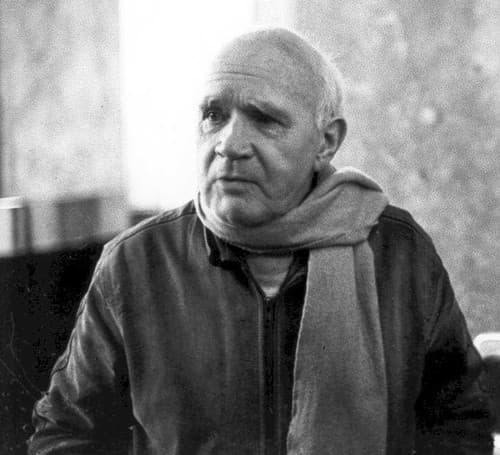
Biography coming soon.

Ashley Antoinette
4.6

Mark McDonald
4.4
Luo Guanzhong
4.4
Mia McKenzie
4.3
Dorothy Parker
4.3
Joaquim Maria Machado de Assis
4.3
James Thurber
4.2

Terry Kay
4.2