“Beware; for I am fearless, and therefore powerful.”
— The creature confronts Victor Frankenstein, asserting his strength and independence.


Mary Shelley (2007)
Genre
Science Fiction
Reading Time
600 min
Key Themes
See below
Sign in to track this book
A brilliant but reckless scientist's pride unleashes a sentient, grotesque being into the world, forcing him to confront the monstrous results of his creation before its deep loneliness erupts into vengeful destruction.
The novel opens with letters from Captain Robert Walton to his sister, Margaret Saville. Walton, an ambitious explorer, is on an expedition to the North Pole, driven by a desire for discovery and glory. His ship becomes ice-bound. During this isolation, his crew spots a colossal figure on a dog sled in the distance. A few days later, they discover another sled and a nearly frozen, emaciated man, Victor Frankenstein, adrift on an ice floe. Walton's crew brings Victor aboard. After recovering slightly, Victor recounts his extraordinary and tragic life story to Walton, who sees in Victor a kindred spirit in ambition, yet also a warning.
Victor Frankenstein describes his privileged upbringing in Geneva, Switzerland. He is the eldest son of Alphonse and Caroline Beaufort Frankenstein, with an adopted sister, Elizabeth Lavenza, and younger brothers, Ernest and William. His early life is marked by affection and intellectual curiosity. However, a childhood encounter with the works of Cornelius Agrippa, Paracelsus, and Albertus Magnus sparks an interest in outdated alchemy and natural philosophy. Upon entering the University of Ingolstadt, he initially dismisses modern science, but a lecture by Professor Waldman reignites his passion, directing him towards chemistry and anatomy. He becomes consumed by the desire to discover the principle of life itself.
Driven by ambition to create life, Victor spends months in secret, neglecting his studies, family, and health. He isolates himself in a remote apartment, collecting body parts from dissecting rooms, charnel houses, and slaughterhouses. He works tirelessly, fueled by a delusion of grandeur, to animate a being of colossal stature. On a dreary November night, he finally brings his creation to life. However, the moment the Creature's yellow eyes open, Victor is overwhelmed by repulsion and horror at the monster he has wrought. He flees his laboratory, abandoning his creation, and falls into a feverish illness, nursed back to health by his friend Henry Clerval.
After recovering from his illness, Victor receives a letter from his father informing him of the brutal murder of his youngest brother, William. Filled with dread, Victor returns to Geneva. As he approaches the city, he glimpses the Creature in a lightning storm near the spot where William's body was found, immediately realizing his creation is the murderer. However, he cannot reveal this without exposing his horrific secret. The family's servant, Justine Moritz, is falsely accused and convicted of William's murder due to circumstantial evidence, including a locket found in her pocket. Despite Victor's and Elizabeth's desperate attempts to save her, Justine is executed, deepening Victor's guilt and despair.
Tormented by his conscience, Victor retreats to the Alps. There, he is confronted by his Creature, who demands that Victor listen to his story. The Creature recounts his initial confusion and discovery of his senses, his rejection by humanity, and his secret observation of the De Lacey family. Through watching them, he learns language, history, and human emotions, developing a deep sense of loneliness and despair. He reveals how his attempts to approach the blind patriarch, De Lacey, were met with violence and fear by Felix and Agatha. The Creature then demands that Victor create a female companion for him, promising to leave humanity alone and live in isolation with her.
Reluctantly, Victor agrees to the Creature's demand, driven by a desire to ease the suffering he caused and to protect humanity. He travels to England with Henry Clerval, ostensibly for scientific research, but secretly to gather materials for the second creation. He isolates himself on a remote island in the Orkneys. As he works, he is plagued by doubts: what if the female Creature is more malicious? What if they breed and create a 'race of devils' to plague the earth? Overcome by these fears and the horror of repeating his mistake, Victor destroys the half-finished female Creature in front of the horrified Monster.
The Creature, witnessing the destruction of his promised companion, is consumed by rage and despair. He vows vengeance on Victor, proclaiming, 'I will be with you on your wedding-night!' Victor, after disposing of the remains of the second creature in the sea, is caught in a storm and drifts to the shores of Ireland. There, he is immediately accused of murder. To his horror, the victim is his friend, Henry Clerval, found strangled. Victor suffers another mental breakdown, realizing the Creature's terrible fulfillment of his threat. Though eventually acquitted due to lack of evidence, Victor is broken by Henry's death.
Victor returns to Geneva, a shadow of his former self, haunted by the Creature's threat. Despite his deep foreboding, he proceeds with his marriage to Elizabeth, hoping to protect her. On their wedding night, while Victor searches the house for the Creature, believing the threat was against him directly, the Creature sneaks into the bridal chamber and strangles Elizabeth. Alphonse Frankenstein, unable to bear the successive tragedies, dies of grief shortly after. With his family destroyed, Victor dedicates his life to hunting down and destroying his creation, driven by a burning desire for revenge and an unbearable burden of guilt.
Victor embarks on a relentless pursuit of the Creature, tracking him across Europe, through Russia, and finally into the desolate wastes of the Arctic. The Creature, in turn, leaves clues and taunts, drawing Victor further into the frozen wilderness. Exhausted, weak, and close to death, Victor is eventually rescued by Robert Walton's ship, the very scene where the novel began. On board, Victor recounts his entire tragic story to Walton, warning him against unchecked ambition. Despite Walton's pleas, Victor remains fixed on his quest for revenge until his last breath, urging Walton to continue the hunt if he should fail.
Shortly after Victor's death, the Creature appears in the cabin, mourning over his creator's body. Walton, initially horrified, is compelled to listen as the Creature expresses his great sorrow and despair. He reveals that his acts of violence were born from loneliness, rejection, and the agony of being unloved. He confesses his remorse for the pain he caused Victor and admits that his existence has been one of perpetual suffering. Having lost his only connection to the world, however hateful, the Creature declares his intention to travel to the northernmost pole to self-immolate, ensuring that no trace of his wretched existence remains. He then leaps from the ship and disappears into the darkness of the Arctic.
The Protagonist
Victor transforms from an ambitious, naive student into a guilt-ridden, vengeful recluse, ultimately dying in pursuit of his creation.
The Antagonist/Secondary Protagonist
The Creature evolves from an innocent, sentient being seeking acceptance to a vengeful, murderous monster, finally expressing profound despair and self-loathing.
The Supporting
Elizabeth remains a consistent figure of love and innocence, ultimately becoming a tragic victim of the Creature's revenge.
The Supporting
Henry remains a steadfast, morally upright friend whose life is tragically cut short by the Creature's revenge.
The Supporting
Alphonse endures increasing personal tragedy, culminating in his death from grief.
The Supporting
Caroline's life is cut short early in the narrative, but her influence on Victor's moral upbringing is significant.
The Supporting
Walton begins as an ambitious explorer like Victor but learns from Victor's tragic story, choosing compassion over unchecked ambition.
The Supporting
Justine is a blameless character who becomes a tragic victim of circumstance and the Creature's malice.
The Mentioned
William's brief life ends tragically, serving as the catalyst for the Creature's revenge and Victor's deeper despair.
Victor Frankenstein's relentless pursuit of scientific glory, without considering the ethical or moral implications, drives the tragedy. His ambition to 'play God' and create life blinds him to the responsibilities that come with such power. He is so consumed by his work that he neglects his health, family, and social connections. The Creature's existence and subsequent vengeful acts are direct results of Victor's ambition and his failure to take responsibility for his creation. Robert Walton, initially sharing Victor's ambitious drive, ultimately learns from Victor's warning and chooses compassion over glory, turning his ship around.
“'Learn from me, if not by my precepts, at least by my example, how dangerous is the acquirement of knowledge and how much happier that man is who believes his native town to be the world, than he who aspires to become greater than his nature will allow.'”
A core theme is the responsibility of a creator for their creation. Victor, horrified by the Creature's appearance, immediately abandons it, failing in his duty as a 'parent.' This act of abandonment is the root cause of the Creature's suffering, loneliness, and eventual turn to violence. The Creature's subsequent murders are a desperate cry for recognition and companionship, or a vengeful response to being cast out. Victor's refusal to acknowledge his responsibility, even after the Creature confronts him, perpetuates the cycle of suffering. The Creature, in turn, feels abandoned by both Victor and society, leading to his own irresponsibility in his violent acts.
“'I was his Adam, but I was rather the fallen angel, whom thou drivest from joy for no misdeed.'”
The Creature's physical appearance immediately evokes fear and disgust in every human he encounters, leading to his deep isolation. Despite his initial benevolent nature and desire for connection, he is repeatedly rejected, attacked, and driven away. This constant prejudice, based solely on his outward form, warps his character, transforming him from a sensitive, intelligent being into a vengeful monster. His observation of the De Lacey family shows the cruelty of human judgment, as they are kind to him until they see his face. The novel argues that societal prejudice and the inability to look past appearances can create monsters out of otherwise innocent beings, condemning them to a life of solitude and despair.
“'Everywhere I see bliss, from which I am irrevocably excluded. I am an outcast in the world forever.'”
The novel explores whether the Creature is inherently evil (nature) or if his monstrous behavior is a result of his abandonment and the cruel treatment he receives (nurture). Initially, the Creature is innocent and capable of good, learning language and empathy through observation. His turning point occurs after repeated rejection and violence from humans, culminating in the De Lacey family's horrified reaction. This suggests that his 'monstrousness' is a learned response, a product of his environment and the lack of nurturing he receives from his creator and society. Victor's failure to provide guidance or companionship directly contributes to the Creature's malevolent development.
“'I was benevolent and good; misery made me a fiend. Make me happy, and I shall again be virtuous.'”
Frankenstein explores the ethical boundaries of scientific pursuit. Victor's scientific endeavors are driven by a desire for knowledge and glory, but he fails to consider the moral implications of creating life and the subsequent responsibility. The novel questions whether there are some secrets of nature that humanity should not tamper with. Victor's creation is a triumph of science, but its horrific results show the dangers of scientific progress divorced from ethical considerations. Shelley suggests that while knowledge is powerful, it must be wielded with wisdom, foresight, and an understanding of its potential impact on humanity and the natural world.
“'You have created a monster, and he will hunt you down.'”
A story within a story, providing multiple perspectives and layers of narration.
The novel employs a frame narrative structure, beginning and ending with letters from Robert Walton to his sister. Within Walton's letters, Victor Frankenstein narrates his life story to Walton. Finally, within Victor's narrative, the Creature recounts his own experiences. This layered structure allows for multiple perspectives on the events and characters, creating ambiguity and inviting the reader to question the reliability of each narrator. It also emphasizes the theme of isolation, as each narrator is telling their story to a solitary listener, and highlights the transmission of knowledge and caution from one individual to another.
The use of letters to tell the story, particularly in the opening and closing sections.
The novel opens and closes with a series of letters written by Robert Walton to his sister, Margaret Saville. This epistolary format immediately establishes a sense of intimacy and immediacy, drawing the reader into Walton's world and his discovery of Victor. It also provides a clear, external perspective on Victor's tragic tale, as Walton acts as a witness and recorder. The letters serve to frame the main narrative, allowing Shelley to introduce themes of ambition and isolation before Victor's story begins, and to provide a concluding reflection after his death.
Characters who contrast with each other to highlight specific qualities.
Mary Shelley effectively uses foil characters to deepen the thematic exploration. Henry Clerval, with his love for poetry, nature, and humanitarian studies, serves as a direct foil to Victor Frankenstein's obsessive, isolated, and morally ambiguous scientific pursuits. Robert Walton, initially sharing Victor's ambition for discovery, acts as a foil by ultimately learning from Victor's tragic example and choosing a more humane path. Even the Creature, in his initial innocence and desire for connection, serves as a foil to the monstrousness of human prejudice and Victor's irresponsibility.
Atmospheric and thematic elements creating suspense, horror, and psychological tension.
Frankenstein incorporates numerous Gothic elements, contributing to its pervasive atmosphere of dread and horror. These include isolated settings (Ingolstadt laboratory, remote island, Arctic wastes), terrifying supernatural encounters (the animated Creature), psychological torment (Victor's guilt and madness), dark secrets, and grotesque imagery (the Creature's appearance, the charnel house). The constant storms, gloomy weather, and desolate landscapes amplify the emotional states of the characters and underscore the dark nature of the events unfolding, creating a sense of foreboding and the sublime.
Nature reflecting and influencing the emotional and moral states of characters.
Nature plays a significant symbolic role throughout the novel, often mirroring the characters' internal states or providing temporary solace. The sublime beauty of the Alps, for instance, offers Victor a brief respite from his torment, yet it is also where he confronts the Creature. Violent storms and desolate Arctic landscapes often accompany moments of intense emotional turmoil or tragedy, such as William's murder or Victor's final pursuit. Nature, in its grandeur and indifference, highlights humanity's smallness and the destructive power unleashed by Victor's unnatural creation, contrasting with the 'unnatural' act of the Creature's animation.
“Beware; for I am fearless, and therefore powerful.”
— The creature confronts Victor Frankenstein, asserting his strength and independence.
“Life, although it may only be an accumulation of anguish, is dear to me, and I will defend it.”
— The creature expresses his will to live despite his suffering and isolation.
“I ought to be thy Adam, but I am rather the fallen angel.”
— The creature compares himself to biblical figures, highlighting his rejection and moral ambiguity.
“Nothing is so painful to the human mind as a great and sudden change.”
— Victor reflects on the turmoil caused by his creation of the monster.
“If I cannot inspire love, I will cause fear.”
— The creature, rejected by society, decides to instill terror instead of seeking affection.
“The world was to me a secret which I desired to divine.”
— Victor describes his youthful curiosity and passion for uncovering nature's mysteries.
“Learn from me, if not by my precepts, at least by my example, how dangerous is the acquirement of knowledge.”
— Victor warns Walton about the perils of unchecked scientific ambition.
“I was benevolent and good; misery made me a fiend.”
— The creature explains how societal rejection transformed him into a monster.
“The companions of our childhood always possess a certain power over our minds which hardly any later friend can obtain.”
— Victor reflects on the enduring influence of early friendships, like with Clerval.
“A human being in perfection ought always to preserve a calm and peaceful mind and never to allow passion or a transitory desire to disturb his tranquillity.”
— Victor advises on the ideal state of mind, contrasting with his own turbulent emotions.
“I have love in me the likes of which you can scarcely imagine and rage the likes of which you would not believe.”
— The creature expresses his complex emotions of love and anger to Victor.
“The fallen angel becomes a malignant devil. Yet even that enemy of God and man had friends and associates in his desolation; I am alone.”
— The creature laments his utter isolation compared to even Satan in Paradise Lost.
“Seek happiness in tranquillity and avoid ambition, even if it be only the apparently innocent one of distinguishing yourself in science and discoveries.”
— Victor's final advice to Walton, cautioning against the pursuit of glory.
“I am malicious because I am miserable.”
— The creature directly links his malevolence to his profound unhappiness.
Ready to see how well you understood this book? Take our interactive quiz with 10 questions.
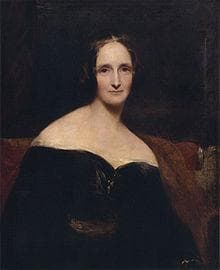
Biography coming soon.