“My father always said that a man’s word was his bond, and that you couldn’t trust a man who didn’t keep his word. He also said that you couldn’t trust a man who didn’t have a word to keep.”
— Socrates Fortlow reflecting on his father's wisdom.

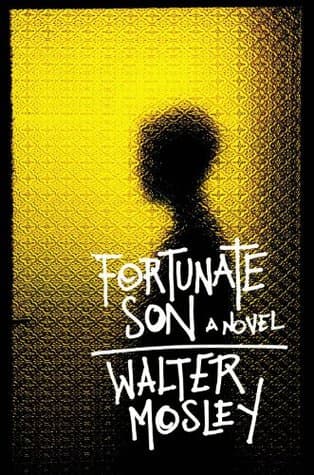
Walter Mosley (2006)
Genre
Mystery
Reading Time
626 min
Key Themes
See below
Sign in to track this book
Two brothers by bond, one privileged and one facing hardship, follow different paths until they reunite to confront a common enemy, revealing what fortune and resilience truly mean.
The story begins by introducing Eric and Tommy as young boys in a unique, commune-like home in New York City. Eric, a white boy, is physically perfect and seems to have good luck, while Tommy, a Black boy, has a clubfoot and various health issues. Despite their different lives and races, they form a strong, brotherly bond. Their home includes Tommy's mother, Annie, a kind and spiritual woman, and Eric's neglectful, often absent mother, Mrs. Fricke. Their early years feel like a family, even if unconventional, with Annie acting as a mother to both boys, giving Eric the stability and love his own mother often withheld. Tommy's resilient spirit and Eric's protective nature define their early relationship.
A fire destroys their apartment building, a moment that shatters their childhood. During the chaos, Annie, Tommy's mother, dies trying to save others. This tragedy leaves Tommy an orphan, and Eric, though physically unharmed, deeply affected by the loss of Annie, who was more of a mother to him than his own. Afterward, the boys are separated. Eric's wealthy, indifferent father, Mr. Fricke, takes him to live a privileged life. Tommy, with no family left, enters the foster care system, starting a difficult journey through different homes and institutions. The fire separates their paths dramatically, setting the stage for their individual struggles and growth.
After the fire, Eric is raised in great wealth by his father, Mr. Fricke, and his new stepmother, Mrs. Fricke (a different woman from his biological mother). Despite having every comfort, Eric is emotionally neglected and grows to distrust others. His father, a powerful and manipulative businessman, trains Eric to be his successor, focusing on control and ambition over real human connection. Eric becomes skilled in the competitive world of finance but remains isolated, haunted by the loss of Annie and Tommy, and unable to form meaningful relationships. He feels an internal emptiness, a contrast to his perfect outward life, always searching for something he cannot name.
Tommy's life after the fire is very different from Eric's. He moves through a difficult foster care system, from one challenging place to another. Despite his clubfoot and the trauma of losing his mother and Eric, Tommy stays optimistic and resilient. He experiences poverty, prejudice, and violence, but these hardships strengthen him. He learns to rely on his keen observation skills and inner strength, developing a unique, spiritual view of life, often guided by his mother's teachings. He finds comfort in small acts of kindness and appreciates simple things, always feeling 'lucky' despite his circumstances.
Years later, Eric, now successful but emotionally empty, is deep in his father's business empire. His father, Mr. Fricke, is aging and ill, leading to a power struggle within the company. Eric is expected to take over, but he questions the morality of his father's dealings. He feels trapped by expectations and the luxurious life he leads. His relationships are superficial, and he struggles with growing disillusionment and a vague desire for something more real, something like the connection he once shared with Tommy and Annie. This period marks a point where Eric begins to internally resist his planned life.
Tommy, having survived and thrived despite his difficult upbringing, has built a purposeful life. He works in his community, using his street smarts, empathy, and unique perspective to help those in need, especially the marginalized. He has a reputation for being wise and perceptive, often seeing the truth others miss. His clubfoot, once a hardship, is now part of his identity, contributing to his strength and compassion. He works outside conventional systems, driven to create positive change and uphold the values of kindness and community his mother taught him. He remains content with his simple life.
Through events connected to his father's business, Eric finds himself in a situation that brings him into Tommy's world. Tommy, through his work, meets someone connected to Eric's life, leading to their reunion. The meeting is initially unsettling, as both men have changed, but their deep childhood bond quickly reappears. They recognize each other despite the years and different lives. This reunion is important for both, giving Eric a glimpse of the real connection he has missed and reminding Tommy of a crucial part of his past, reigniting hopes for understanding and shared purpose.
As Eric and Tommy spend more time together, they start to gather disturbing information about Mr. Fricke's business. Tommy's ability to notice subtle details and Eric's insider knowledge of the corporate world are very helpful. They uncover a conspiracy of illegal activities, corruption, and exploitation, all directed by Mr. Fricke. The investigation shows that the 'good fortune' Eric inherited is built on deceit and harm. The brothers realize that their shared past and different experiences give them a unique view to expose the truth, putting them against Eric's powerful and ruthless father.
As Eric and Tommy dig deeper into Mr. Fricke's illegal operations, the danger grows. They realize they are not just dealing with a corrupt businessman, but with dangerous people who will do anything to protect their secrets. Eric's privileged background becomes a liability, as he is now a target in his own father's world. Tommy's street smarts and ability to blend in become crucial for their survival. They face threats, intimidation, and attacks, forcing them to rely completely on each other. The stakes become very high, as their lives and the lives of those they care about are put at risk by their pursuit of justice.
The story's climax sees Eric and Tommy directly confront Mr. Fricke and his associates. Using their combined strengths – Eric's strategic mind and Tommy's intuitive understanding of people – they expose the full extent of the conspiracy. The confrontation is intense, both physically and emotionally, especially for Eric, who must face the truth about his father. The brothers succeed in dismantling a large part of Mr. Fricke's empire, bringing justice to some of his victims. The resolution involves sacrifice, but it allows both Eric and Tommy to find new peace and purpose, having completed their shared mission.
Afterward, Eric, stripped of his inherited wealth and illusions, finds liberation and true fortune. He begins to rebuild his life, seeking real connections and using his skills ethically. He sheds the emotional armor he wore, finally allowing himself to feel and connect. Tommy, still the 'fortunate son,' continues his work helping others, his spirit strong and his compassion deepened by the experience. Their bond, once lost, is now stronger, showing lasting loyalty and love. They both show that true fortune is not in material wealth, but in resilience, integrity, and meaningful human connection, continuing to support each other.
The Protagonist
Eric transforms from an emotionally stunted, privileged man into a liberated individual who understands true fortune lies beyond material wealth, finding redemption through his bond with Tommy.
The Protagonist
Tommy maintains his resilient, optimistic spirit throughout his arduous life, ultimately using his unique insights to help others and confront injustice alongside Eric.
The Supporting
Annie's character remains a guiding spiritual force, even after her death, shaping Tommy's resilience and serving as a touchstone for Eric's longing for genuine connection.
The Antagonist
Mr. Fricke's character remains consistently self-serving and corrupt, ultimately facing the consequences of his actions as his empire is exposed by his son and Tommy.
The Mentioned
Her character has no significant arc, serving primarily as a background element to establish Eric's early emotional deprivation.
The Supporting
Her character remains static, representing the emotional emptiness of Eric's adult privileged life.
The Mentioned
These characters serve as episodic obstacles and catalysts for Tommy's growth in resilience and independence.
This theme is central to the novel, comparing material wealth with inner resilience and real human connection. Eric, born into 'good fortune,' is emotionally poor and distrustful, while Tommy, born into hardship, feels 'lucky' every day through his strong spirit, empathy, and ability to find joy in simple things. The story argues that true fortune is not what one owns, but one's character, relationships, and view of life. This is clear when Eric, despite his wealth, feels empty, and Tommy, despite his poverty, feels rich in spirit, especially after the fire separates them and their lives diverge.
“Tommy, motherless and impoverished, has nothing, but feels lucky every day of his life.”
The strong bond between Eric and Tommy forms the emotional core of the novel. Despite their racial differences, economic disparities, and years apart, their childhood connection lasts and provides the strength needed to confront injustice. Their relationship shows the power of chosen family and loyalty, beyond outside circumstances. Their reunion is not just a plot point, but a spiritual return home for both, allowing Eric to heal his emotional wounds and Tommy to reaffirm his sense of belonging. The strength of their shared history becomes their greatest asset against Mr. Fricke.
“In spite of remarkable differences, Eric and Tommy are as close as brothers.”
The novel explores how unchecked power and vast wealth can corrupt people and institutions, mainly through Mr. Fricke. His empire is built on exploitation and deceit, and his pursuit of control makes him emotionally bankrupt and morally compromised. Eric's initial entrapment in this world shows how privilege can be a gilded cage, isolating people from real human experience. The story suggests that such power often comes at the cost of one's humanity and the well-being of others, creating a system of injustice that only those outside its influence, like Tommy, can truly see and challenge.
“Eric, the golden youth, is given everything but trusts nothing.”
Tommy's character embodies resilience and optimism in the face of extreme difficulty. Despite a physical disability, losing his mother, and the harsh realities of foster care, he maintains a positive outlook and a strong inner spirit. His ability to find beauty and purpose in hard times contrasts sharply with Eric's struggles despite his privileged life. This theme emphasizes the human ability to not just survive, but to thrive and keep one's humanity even when stripped of all material comforts, showing that true strength comes from within.
“Tommy, a lame black boy, cursed with health problems, yet he remains optimistic and strong.”
A catastrophic event that serves as the primary catalyst for the boys' separation and divergent paths.
The fire that destroys the boys' shared home and claims Annie's life is a pivotal plot device. It acts as the inciting incident, forcibly separating Eric and Tommy and sending them down vastly different life paths. Symbolically, it burns away their shared innocence and the communal life they knew, setting the stage for their individual struggles and growth. It also serves as a traumatic memory that binds them, even in separation, and ultimately motivates Eric's later search for something lost.
The narrative structure that juxtaposes Eric's privileged life with Tommy's impoverished existence.
This device is fundamental to the novel's thematic exploration of 'fortune.' The story unfolds by presenting Eric's life of luxury and emotional emptiness in stark contrast to Tommy's life of hardship and spiritual richness. This parallel structure allows the reader to constantly compare and contrast their experiences, reinforcing the central theme that true fortune is not material. It builds anticipation for their eventual reunion and highlights how their different paths uniquely equip them to confront their common enemy.
An archetypal antagonist who embodies the corrupting influence of power and wealth.
Mr. Fricke serves as the primary antagonist and a key plot device. He represents the systemic corruption and moral decay that Eric must ultimately confront and reject. His manipulative nature and vast criminal enterprise drive a significant portion of the plot, providing the external conflict that reunites the brothers and gives their combined efforts a clear objective. He is the embodiment of the false 'fortune' that Eric inherits, forcing Eric to question his values and seek a more genuine path.
Tommy's physical disability, serving as a symbol of his initial adversity and later, his unique strength.
Tommy's clubfoot is more than just a physical ailment; it's a symbolic plot device. Initially, it marks him as 'cursed' by fortune and contributes to the hardships he faces in the foster system and a prejudiced world. However, it also becomes a source of his unique resilience and perspective. It forces him to develop inner strength and observe the world differently, contributing to his wisdom and empathy. It highlights how perceived weaknesses can become strengths, aligning with the theme of true fortune.
“My father always said that a man’s word was his bond, and that you couldn’t trust a man who didn’t keep his word. He also said that you couldn’t trust a man who didn’t have a word to keep.”
— Socrates Fortlow reflecting on his father's wisdom.
“Sometimes you just gotta do what you gotta do, even if it ain’t what you wanna do.”
— Socrates contemplating a difficult decision.
“The world ain't fair, and it ain't never gonna be. But that don't mean you gotta stop tryin' to make it a little less unfair.”
— Socrates offering a perspective on justice and effort.
“A man without hope is a man already dead, even if he still walkin’ around.”
— Socrates reflecting on the importance of hope.
“You can’t fix everything, but you can always try to fix something. And sometimes, that’s enough.”
— Socrates considering the limits and impact of individual actions.
“Fear ain't nothin' but a shadow. And a shadow can't hurt you unless you let it.”
— Socrates advising someone grappling with fear.
“The past is like a dog that keeps comin' back to bite you if you don't learn how to keep it on a leash.”
— Socrates on the enduring influence of past events.
“Love ain't always pretty, but it's always somethin' worth fightin' for.”
— Socrates reflecting on the complexities of love.
“You ain't really livin' until you got somethin' to die for.”
— Socrates pondering the meaning of life and purpose.
“A lie ain't just a lie. It's a hole you dig for yourself, and the deeper it gets, the harder it is to climb out.”
— Socrates discussing the nature and repercussions of dishonesty.
“Sometimes the best thing you can do for somebody is just listen. Really listen, with your heart, not just your ears.”
— Socrates emphasizing the importance of active listening and empathy.
“The world ain't gonna give you nothin'. You gotta go out and take it, or make it for yourself.”
— Socrates's pragmatic view on self-reliance and ambition.
“Every man got a story. And every story got a lesson, if you just open your eyes and your mind to see it.”
— Socrates appreciating the narratives and wisdom in others' lives.
Ready to see how well you understood this book? Take our interactive quiz with 10 questions.

Biography coming soon.