“The only difference between a madman and a genius is that the madman's ideas are never appreciated.”
— Dialogue by Finn, reflecting on societal perception.

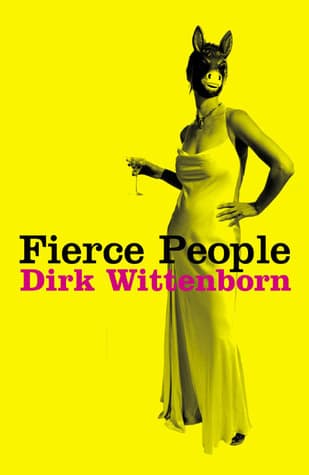
Dirk Wittenborn (2002)
Genre
Fiction
Reading Time
700 min
Key Themes
See below
Sign in to track this book
Fifteen-year-old Finn Earl discovers the most dangerous jungle isn't in National Geographic, but within the opulent, savage society of Vlyvalle, New Jersey, where he and his mother must battle for their survival.
Fifteen-year-old Finn Earl, an aspiring anthropologist, lives with his free-spirited mother, Liz, in a cramped New York City apartment. Liz, a masseuse recently fired from her job, decides they need a fresh start. She accepts an offer from a wealthy client, Ogden C. Osborne, to live on his sprawling estate in Vlyvalle, New Jersey, where she will work as his personal masseuse. Finn is initially reluctant, preferring the urban jungle and his father, a renowned but absent anthropologist researching in the Amazon. He sees the move as a temporary inconvenience, hoping to eventually join his father, but soon finds himself in a world far stranger than he anticipated, filled with the peculiar rituals and customs of the ultra-rich.
Upon arriving at the Osborne estate, Finn immediately notices the opulence and the peculiar inhabitants. He meets Mrs. Osborne, a seemingly fragile but shrewd woman, and their grandchildren, Maya and Todd. Maya, near Finn's age, is beautiful and enigmatic. Todd is a boorish and entitled bully. Finn tries to navigate this new social landscape, observing Vlyvalle residents through his anthropological studies, comparing their behaviors to the 'fierce people' his father studies. He attends a private school where students are equally privileged and often cruel, highlighting the stark contrast with his previous life. His attempts to fit in meet with curiosity, condescension, and hostility from his peers.
Finn quickly becomes fascinated with Maya, who at first seems aloof but gradually shows him a different side of Vlyvalle. Their conversations often involve her family's strange dynamics and the community. However, Todd, Maya's cousin, sees Finn as an unwelcome intruder and makes it his mission to torment him. Todd's bullying is relentless, from verbal taunts to physical assaults, and he often uses his family's influence to make Finn's life difficult. Finn, trying to maintain his anthropological detachment, struggles to understand Todd's cruelty. This reinforces his view of Vlyvalle as a 'savage' environment where social hierarchies are strictly enforced and power dictates behavior.
Liz is invited to a formal dinner party hosted by the Osbornes, where Finn is also expected to attend. The event is a grand spectacle of wealth and social performance. Yet, beneath the polished surface, Finn observes a web of intricate social rituals, unspoken rules, and underlying resentments. He witnesses the Vlyvalle elite's condescending attitudes towards Liz, who, despite her beauty and charm, is an outsider due to her working-class background. The party ends in a tense confrontation, exposing the fragile nature of relationships within the family and community. Finn feels more alienated than ever, seeing Vlyvalle as a place where appearances are everything and genuine connection is rare.
One evening, Finn overhears a commotion and witnesses a disturbing scene: Todd is sexually assaulting Maya. This event shatters Finn's anthropological detachment and forces him to confront the brutal realities hidden beneath Vlyvalle's civility. He is horrified and unsure how to react, paralyzed by fear and shock. The incident leaves a profound impact on him, marking a significant loss of innocence and forcing him to question his previous observational stance. It highlights the vulnerability of those within the community, even the privileged, and exposes the dark undercurrents of power and abuse that permeate this seemingly idyllic world. Maya, deeply traumatized, becomes even more withdrawn.
Following the assault, the Osborne family, especially Mrs. Osborne, tries to cover up the incident, prioritizing their reputation and social standing over Maya's well-being. Maya is sent away to a 'special' school, effectively silencing her and removing her from the immediate scene. Finn, deeply troubled by what he witnessed, struggles with the moral implications of his silence. He feels immense guilt for not intervening or reporting the crime, but also understands the power dynamics at play. Liz, sensing something is amiss, is kept in the dark about the true nature of Maya's departure, highlighting the family's intricate web of secrets and their willingness to protect their own at any cost, even at the expense of justice and truth.
The trauma of witnessing Maya's assault and the subsequent cover-up deeply affects Finn. His anthropological perspective, which previously allowed him to observe and rationalize human behavior, now feels inadequate and complicit. He grapples with immense guilt for his inaction and the feeling that he has failed Maya. He begins to question his studies and the ethical responsibilities of an observer. The 'fierce people' he once studied from a distance now feel terrifyingly real and personally threatening. This internal conflict marks a turning point for Finn. He can no longer remain a detached observer but must confront the harsh realities of human cruelty and his own place within them.
While Finn struggles internally, Liz, initially unaware of the family's full secrets, begins to notice signs of dysfunction and unease. She observes the strained relationships, Maya's sudden disappearance, and Finn's increasingly withdrawn and troubled demeanor. Though she doesn't know the specifics of the assault, she senses a deeper malaise within the Osborne family. Her protective instincts for Finn grow stronger, and she starts to question her decision to move to Vlyvalle. This growing awareness sets the stage for a potential confrontation, as Liz, despite her initial naivety, is not one to ignore injustice indefinitely, particularly when it affects her son.
Amidst his despair, Finn connects with the estate's groundskeeper, a working-class man who sees through the Vlyvalle elite. This relationship offers Finn a brief respite and a sense of genuine connection outside the superficial world of the Osbornes. However, this glimmer of hope is short-lived. Finn discovers that Liz has begun a sexual relationship with Ogden C. Osborne, a revelation that deeply disturbs and disgusts him. This betrayal, coupled with his mother's apparent complicity in the Osborne's world, further isolates Finn and shatters his remaining illusions about his family and the possibility of finding solace or escape within Vlyvalle. He feels utterly alone and adrift in a world he no longer understands.
The accumulated traumas and betrayals eventually become too much for Finn. He can no longer tolerate the hypocrisy, the cruelty, and his mother's entanglement with Ogden. Liz, finally realizing the true toxicity of their situation and recognizing Finn's profound distress, makes the difficult decision to leave Vlyvalle. They pack their belongings and depart from the Osborne estate, leaving behind the opulent but morally corrupt world. While they physically escape, the emotional and psychological scars of their time in Vlyvalle remain. Finn carries the weight of what he witnessed and his own perceived inaction, forever altering his perspective on humanity and society. The experience marks a painful transition from innocence to a more cynical understanding of the world.
After leaving Vlyvalle, Finn tries to process his experiences and reconcile them with his anthropological aspirations. He struggles to apply his academic theories to the raw, personal brutality he witnessed. The 'fierce people' are no longer abstract subjects of study but real individuals capable of immense cruelty and profound vulnerability. He grapples with the realization that savagery is not confined to remote tribes but exists within the most seemingly civilized societies. His academic pursuits become a way to understand, or at least categorize, the trauma. He reflects on the nature of power, privilege, and the human capacity for both good and evil, forever changed by his involuntary immersion into the 'fierce' world of Vlyvalle.
The Protagonist
Finn transforms from a detached observer to a participant scarred by the brutal realities of human cruelty, losing his innocence and gaining a more cynical understanding of society.
The Supporting
Liz moves from naive optimism about Vlyvalle to a realization of its moral corruption, prompting her to finally prioritize Finn's well-being over her own comfort.
The Supporting/Antagonist
Ogden remains largely static, a consistent representation of the story's themes of power and corruption, his actions driving much of the plot's conflict.
The Supporting
Maya is initially an object of Finn's fascination, but her tragic experience transforms her into a symbol of the innocent victim of Vlyvalle's 'fierce' society.
The Antagonist
Todd remains a consistently cruel and unrepentant character, serving as a catalyst for much of the novel's conflict and a symbol of the destructive nature of unchecked power.
The Supporting
Mrs. Osborne's character remains largely consistent, acting as the embodiment of the family's desire to maintain appearances and suppress uncomfortable truths.
The novel questions the traditional understanding of 'savagery' by comparing Finn's anthropological studies of remote tribes with the behaviors of the wealthy elite in Vlyvalle. Finn expects to find civilization in New Jersey, but instead discovers a world where power, privilege, and social Darwinism dictate interactions. This leads to extreme cruelty, manipulation, and moral depravity. The 'fierce people' are not just in the Amazon; they are the people in designer clothes living in sprawling mansions. This theme is evident in Finn's observations of Todd's bullying and the Osborne family's cover-up of Maya's assault, showing that barbarism can exist within the most refined social structures.
““The fiercest tribe I ever encountered was not in the Amazon, but in the suburbs of New Jersey.””
Finn's journey is one of a loss of innocence. He arrives in Vlyvalle as a curious, somewhat naive observer, armed with academic theories about human behavior. The brutal reality of Maya's assault, the family's subsequent cover-up, and his mother's entanglement with Ogden shatter his idealistic worldview. He must confront the dark underside of human nature, realizing that evil and injustice are not abstract concepts but tangible forces that can personally affect him and those he cares about. This loss is marked by his inability to remain a detached observer and his struggle with guilt and disillusionment, as seen in his internal turmoil after witnessing Maya's trauma.
““I had come to study fierce people, but I had become one of them, a silent witness to their savagery.””
The novel shows how immense wealth and unchecked privilege can lead to moral decay and a distorted sense of accountability. The Osborne family and the Vlyvalle community operate under a different set of rules, where their social standing allows them to commit egregious acts without consequence. Todd's bullying, Ogden's manipulative behavior, and Mrs. Osborne's silencing of Maya all stem from a belief that their wealth protects them from justice. This theme highlights how privilege can insulate individuals from the consequences of their actions, fostering a culture of entitlement and moral relativism, where reputation is valued above truth and human decency.
““Wealth, I discovered, was not just a shield; it was a weapon, wielded with casual cruelty.””
Finn's role as an aspiring anthropologist forces him to grapple with the ethical dilemmas of observation versus intervention. He tries to maintain scientific detachment, viewing the Vlyvalle residents as subjects for study. However, witnessing Maya's assault forces him to confront the moral imperative to act. His inaction, born partly from fear and shock, leads to profound guilt and questions his entire anthropological framework. The novel explores the fine line between objective observation and complicity, suggesting that in the face of injustice, silence can be a form of participation. This theme is central to Finn's internal conflict and his eventual disillusionment with his detached academic approach.
““To observe without acting, I learned, was to become a part of the observed, entangled in their crimes.””
Beneath the polished facade of the Osborne family is a dysfunctional and secretive household. The novel exposes the hidden abuses, betrayals, and cover-ups that are meticulously maintained to preserve appearances. Maya's assault and the family's effort to silence her are central to this theme, showing how familial loyalty can be twisted into complicity and how secrets can fester, causing immense harm. Finn's own family dynamic, with his absent father and his mother's naive choices, also contributes to this theme, showing how even loving relationships can be strained by external pressures and internal flaws.
““Every family, I realized, was its own tribe, with its own fierce rituals and unspoken laws, often more brutal than any jungle.””
Finn's perspective as an aspiring anthropologist frames the narrative and themes.
Finn's ambition to become an anthropologist and his habit of viewing the world through this academic lens serve as a primary plot device. It allows the author to draw direct parallels between the 'savage' tribes his father studies and the 'civilized' elite of Vlyvalle. This device creates dramatic irony, as Finn initially expects to find refinement but instead uncovers a more insidious form of barbarism. It also provides a framework for Finn's internal conflict, as his detached observational approach clashes with the traumatic realities he witnesses, forcing him to re-evaluate his understanding of humanity and the ethics of his studies.
Finn and Liz's status as outsiders highlights the peculiarities and dangers of Vlyvalle.
The device of Finn and Liz being 'fish out of water' in the exclusive Vlyvalle community is crucial for exposing the social dynamics and moral failings of its inhabitants. Their working-class background and unconventional lifestyle stand in stark contrast to the rigid, opulent world of the Osbornes. This outsider perspective allows Finn to observe the Vlyvalle residents with a critical eye, highlighting their eccentricities, superficiality, and underlying cruelty that might be invisible to those fully immersed in the culture. Their vulnerability as outsiders also makes them targets for the established power structures, increasing the stakes and tension of their experiences.
The Osborne estate represents the gilded cage and hidden darkness of Vlyvalle.
The sprawling, opulent Osborne estate functions as a significant symbolic plot device. On the surface, it represents wealth, prestige, and idyllic beauty. However, as the story progresses, it becomes a gilded cage, trapping its inhabitants in a cycle of dysfunction and moral compromise. The hidden corners, the seemingly pristine grounds, and the lavish interiors all conceal dark secrets and acts of cruelty, mirroring the hypocrisy of the family itself. The estate symbolizes how outward appearances can mask profound internal decay, and how wealth can create an environment where abuses are easily hidden and perpetrators shielded from consequences.
Finn's anthropologist father represents an idealized, distant escape and a source of disillusionment.
Finn's absent father, a renowned anthropologist researching in the Amazon, serves as a significant plot device. He represents an idealized escape for Finn, a world of 'pure' anthropological study far removed from the complexities of Vlyvalle. Finn's longing to join him underscores his initial desire for detachment and academic understanding. However, the father's absence also highlights Liz's vulnerability and Finn's own need for a male role model. Ultimately, the father's distant, theoretical study of 'fierce people' contrasts sharply with Finn's traumatic, lived experience, leading to Finn's disillusionment with the romanticized notion of anthropology and the realization that savagery is closer to home than he imagined.
“The only difference between a madman and a genius is that the madman's ideas are never appreciated.”
— Dialogue by Finn, reflecting on societal perception.
“Money doesn't buy happiness, but it certainly buys a more comfortable form of misery.”
— Observation by Finn about his privileged yet troubled upbringing.
“We're all just trying to find a place where we belong, even if that place is completely made up.”
— Finn pondering the human need for belonging and identity.
“The rich are different from you and me. They have more money. And more problems they create for themselves.”
— A cynical take on the wealthy elite, a recurring theme.
“Sometimes the most dangerous people are the ones who seem the most civilized.”
— Finn's realization about the true nature of some of the 'fierce people' he encounters.
“You can't escape who you are, no matter how far you run or how many new identities you try to create.”
— Internal thought by Finn, struggling with his past and self-perception.
“Love is a battlefield, and sometimes the casualties are the ones who loved the most.”
— A poignant reflection on the complexities and pains of romantic relationships.
“The world isn't fair, and expecting it to be is the fastest way to disappointment.”
— A harsh but realistic lesson Finn learns through his experiences.
“Everyone has a mask they wear. It's only when the mask comes off that you see who they really are.”
— Finn observing the performative nature of social interactions.
“Ignorance is bliss, until it's not. Then it's just a reason to get hurt.”
— A reflection on the consequences of naivete in a dangerous world.
“Privilege is a cage, gilded and comfortable, but a cage nonetheless.”
— Finn understanding the limitations and expectations that come with his privileged background.
“The truth is rarely simple, and often inconvenient.”
— Finn grappling with complex situations and uncomfortable revelations.
“We invent stories to make sense of the chaos, to give meaning to the meaningless.”
— A philosophical musing by Finn about human storytelling and coping mechanisms.
Ready to see how well you understood this book? Take our interactive quiz with 10 questions.

Ashley Antoinette
4.6

Mark McDonald
4.4
Luo Guanzhong
4.4
Mia McKenzie
4.3

Dorothy Parker
4.3

Joaquim Maria Machado de Assis
4.3

James Thurber
4.2
Terry Kay
4.2