“Man is a creature that lives on contradiction, a creature that is only itself in the process of becoming something else.”
— A central philosophical idea explored throughout the novel, particularly concerning the nature of identity and form.

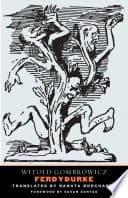
Witold Gombrowicz (2012)
Genre
Fiction
Reading Time
640 min
Key Themes
See below
Sign in to track this book
A writer is forcibly regressed to schoolboy antics by a diabolical professor, plunging him into a hilariously grotesque world that skewers the absurdities of conformity and immaturity.
Józio, a writer nearing thirty, feels immature and unformed. He struggles with his latest work and is plagued by an existential dread of being incomplete. This internal crisis is abruptly externalized when Professor Pimko, a caricature of academic authority, invades Józio's room. Pimko, obsessed with reducing adults to their 'true' childlike state, declares Józio immature and forcibly drags him back to school. Józio, despite his age, cannot resist this bizarre imposition, succumbing to the professor's will and the overwhelming pressure to conform to the role of a schoolboy, beginning his journey into a world of forced adolescence and manufactured innocence.
At school, Józio is plunged into a world of exaggerated immaturity. He observes the students, particularly the 'greenhorns' like Miętus, and the 'purity' of Gałkiewicz. The school environment is a microcosm of Gombrowicz's critique of form, where students and teachers alike perform roles. Pimko orchestrates a staged debate between Miętus, who champions authenticity and 'being one's self,' and Syphon, who embodies traditional values and 'purity.' This debate, however, is not about genuine intellectual exchange but about reinforcing established forms and the 'purity' that Pimko and the other teachers wish to impose, showing the performative nature of their education system and the suppression of genuine individuality.
The staged debate escalates into a physical and symbolic battle. Miętus, representing the desire for authenticity and crude reality, provokes Syphon, the embodiment of refined, 'pure' academic form, by trying to 'pull faces' at him. This act is an attempt to strip away Syphon's cultivated facade and expose a more primal, 'immature' self. Syphon defends his 'purity' with equal ferocity, leading to a wrestling match that is both ridiculous and deeply symbolic. The other students and teachers, including Pimko, become entangled in the chaotic brawl, revealing the inherent violence and absurdity lurking beneath the veneer of civilized education. The entire episode shows the conflict between imposed form and suppressed individuality.
Following the chaos at school, Pimko decides Józio needs a new environment for his 're-education.' He places Józio as a lodger in the Młodziak household, a family who embody superficial modernity. The Młodziaks—Mr. Młodziak, an engineer; Mrs. Młodziak, a progressive intellectual; and their daughter, Zuta, a 'modern girl'—pride themselves on their avant-garde views, their lack of traditional 'form,' and their embrace of all things new. Józio, however, quickly perceives their modernity as another rigid, albeit inverted, form. Their attempts to be open-minded and unconventional become just as stifling and performative as the traditionalism they claim to reject, further illustrating the inescapable nature of 'form' in society.
Zuta Młodziak, the daughter, is a central figure in Józio’s and Miętus's experience. She represents the ideal 'modern girl' – emancipated, athletic, and free from traditional constraints. Both Józio and Miętus are drawn to her, for different reasons. Józio is intrigued by her seemingly unformed nature, her embodiment of a new kind of 'innocence' or lack of 'form,' while Miętus, still yearning for authentic connection, sees her as a potential escape from the artificiality he despises. Their fascination with Zuta highlights the novel's exploration of desire, purity, and the elusive nature of genuine selfhood in a world dominated by superficial appearances and imposed identities.
Józio and Miętus, disillusioned with the Młodziaks' performative modernity, plan to expose Zuta's 'impurity' and, by extension, her parents' hypocrisy. Their goal is to prove that Zuta, despite her 'modern' facade, is just as susceptible to conventional desires and 'form' as anyone else. Józio, with Miętus's help, orchestrates a situation where Zuta will be caught with two admirers, one a 'pure' student and the other a crude, 'unformed' commoner. The intent is to shock the Młodziaks and reveal the cracks in their carefully constructed 'modern' identity, bringing down their entire edifice of progressive pretense and demonstrating the pervasive influence of 'form' on even the most 'emancipated' individuals.
The night of the planned revelation arrives, and Józio's intricate scheme unfolds with unexpected and chaotic results. He arranges for both the 'pure' student, Kopyrda, and the rough, 'unformed' commoner, Pyzdra, to appear in Zuta's room. The plan, intended to expose Zuta's 'impurity' and the Młodziaks' hypocrisy, quickly devolves into a farcical melee. The Młodziaks, upon discovering the scene, are utterly humiliated. Their carefully cultivated image of modern, open-minded parents shatters as they react with shock, outrage, and embarrassment. The incident exposes the fragility of their 'modern' form and the deep-seated conventionality beneath their progressive veneer, causing their carefully constructed world to collapse into disarray.
After the catastrophic events at the Młodziak household, Józio and Miętus, seeking to escape the repercussions and the pervasive 'form' of urban society, decide to flee to the countryside. They head to Józio's aunt and uncle's estate, hoping to find a simpler, more 'natural' existence away from the suffocating artificiality of the city. Their journey is driven by a desire for authenticity and an escape from the imposed roles and identities that have plagued them. However, they soon discover that the countryside, far from being a haven of genuine 'unformedness,' is merely another arena where different, equally rigid, forms and social conventions are at play, proving the inescapable nature of 'form' in any human environment.
Upon arriving at Józio's aunt and uncle's estate, Józio and Miętus encounter a new, equally stifling set of social 'forms' embodied by the aristocratic family and their servants. The aunt and uncle, though seemingly traditional, are also trapped in their own set of performative roles and expectations. Miętus, still obsessed with achieving genuine connection, tries to 'fraternize' with the stable boy, an act that is seen as scandalous and deeply transgressive by the family. This attempt to bridge social divides and break down class 'forms' highlights his continuous struggle against societal artifice, while Józio observes the inherent absurdity and inescapable nature of social structures, regardless of the setting.
The tension at the estate culminates in a chaotic and symbolic act of rebellion. After a series of misunderstandings and escalating absurdities, Józio, in a desperate and somewhat inexplicable move, abducts his young cousin, Lena. This act is a final, grand gesture against the pervasive 'form' that he feels is suffocating everyone, including himself. He literally carries her off, a physical manifestation of his desire to escape and perhaps even to rescue someone from the clutches of imposed identity. The abduction is a final, desperate attempt to break free from the cycle of immaturity and artificiality, leaving the reader with a sense of the futility and absurdity of his struggle.
The Protagonist
Józio begins as an unformed adult and is forcibly regressed to a schoolboy, only to find that every environment, from school to modern households to the countryside, imposes new, inescapable 'forms' upon him, ultimately failing to achieve true freedom or self-definition.
The Antagonist
Pimko remains static, a symbol of unyielding 'form' and an instigator of chaos, consistently imposing his will and worldview on others without personal change.
The Supporting
Miętus consistently rebels against 'form' and seeks authentic connection, ultimately failing to escape the pervasive influence of societal structures.
The Supporting
Syphon remains a steadfast symbol of 'purity' and conformity, his 'form' unbroken despite external chaos.
The Supporting
Mrs. Młodziak's 'modern' facade is utterly shattered by the end of her involvement, exposing her underlying conventionality and emotional fragility.
The Supporting
Zuta begins as an idealized 'modern girl' and becomes an unwitting pawn in Józio and Miętus's schemes, her perceived 'purity' ultimately compromised and exposed.
The Mentioned
Kopyrda remains a static character, a symbol of youthful 'purity' used and discarded by the narrative.
The Mentioned
Pyzdra is a static character, serving as a symbolic representation of the 'unformed' against the 'pure'.
The central theme of 'Ferdydurke' is the inescapable nature of 'form' (gęba) – the masks, roles, and identities imposed by society and often adopted by individuals. Gombrowicz argues that true authenticity is impossible because every interaction and social context forces a 'form' upon us, reducing us to an artificial, often immature, state. Józio's forced regression to schoolboy status by Professor Pimko is the most direct manifestation of this. Even the 'modern' Młodziaks, who pride themselves on rejecting convention, are shown to be trapped in their own rigid 'form' of progressiveness. The novel suggests that even in rebellion, one is merely adopting a new 'form'.
“For there is no escape from form, and there is no escape from gęba.”
Gombrowicz critiques both rigid tradition and superficial modernity, presenting them as equally absurd and stifling. Professor Pimko embodies outdated, pedantic tradition, forcing a childish 'purity' onto his students. Conversely, the Młodziak family represents a hollow modernity, where progressive ideas are adopted as another set of rigid 'forms' rather than genuine liberation. The novel suggests that neither adherence to the past nor a superficial embrace of the new offers true freedom. Both are presented as equally performative and ultimately lead to a lack of genuine selfhood, trapping individuals in an endless cycle of artificiality and pretense.
“He knew that the world was ugly, but he did not know it was ugly in such an ugly way.”
A core tension in the novel is the struggle between an individual's desire for authenticity and the societal pressure to perform prescribed roles. Characters like Miętus actively seek to break through 'form' and connect on a raw, authentic level, as seen in his attempts to 'fraternize' with the stable boy. Józio, while more passive, also yearns for an unformed self. However, the novel consistently demonstrates that genuine authenticity is elusive, as every attempt to break free from one 'form' often leads to the adoption of another. Society forces individuals to wear 'masks' (gęba), making every interaction a performance.
“Man is a creature that must always be made, and that is why he must always be unfinished.”
The novel explores the violence inherent in the imposition of 'form' and identity. Pimko's forced 'infantilization' of Józio is a symbolic act of violence, stripping him of his adult self. The school scenes escalate into physical brawls (Miętus vs. Syphon), demonstrating the aggression that underlies the maintenance of 'purity' and the suppression of individuality. Even the Młodziaks' 'modernity' is a form of violence, as they impose their progressive ideals on Zuta and others. This theme highlights how societal expectations can be just as brutal and dehumanizing as physical assaults, forcing individuals into roles against their will.
“For man is not what he is, but what he is made by others.”
A metaphorical term for the mask, role, or 'form' imposed by society or adopted by an individual.
Gęba is the central symbolic concept in 'Ferdydurke'. It represents the 'face' or 'mug' that society slaps on individuals, reducing them to a particular role or identity, often an immature one. It also refers to the internal 'mask' or persona that people adopt to navigate social interactions. For example, Professor Pimko imposes the 'gęba' of a schoolboy on Józio, while the Młodziaks wear the 'gęba' of modernity. The concept illustrates the inescapable nature of social conditioning and the artificiality of human identity, where true, unformed selfhood is perpetually elusive.
The forced regression of adults to a childlike state.
Infantilization is a core plot device, most explicitly seen in Professor Pimko's abduction of Józio and his re-enrollment in school. This literal regression to childhood serves as a powerful metaphor for how society and its institutions (like education) can strip individuals of their maturity and autonomy, reducing them to passive, impressionable beings. It highlights the power dynamics between authority figures and individuals, and how 'maturity' itself can be an imposed 'form' rather than a natural state. The device allows Gombrowicz to explore the absurdity of social roles and the arbitrary nature of age and identity.
The use of exaggerated, distorted, and illogical elements to expose societal flaws.
Gombrowicz employs the grotesque and absurd throughout 'Ferdydurke' to satirize and critique societal norms. The characters, situations, and dialogues are often exaggerated, illogical, and comically distorted, such as Pimko's grand pronouncements, the staged school debate devolving into a wrestling match, or Józio's abduction of his cousin. This device serves to break down conventional realism, allowing the author to expose the inherent ridiculousness and hypocrisy lurking beneath the surface of 'normal' society. The absurdity makes the critique sharper and more memorable, forcing the reader to confront the illogical nature of human behavior and social structures.
The use of contrasting pairs (e.g., purity/impurity, tradition/modernity) to highlight conflict and the inescapability of 'form'.
The novel frequently utilizes binary oppositions to structure its critique. Examples include the clash between Miętus (representing raw authenticity/impurity) and Syphon (representing refined 'purity'/tradition), or the Młodziaks' 'modernity' against traditional values. These oppositions are rarely truly resolved; instead, they often collapse into chaos or reveal that one extreme is merely another 'form' of the other. This device emphasizes the idea that society is trapped in a cycle of opposing 'forms,' and that escaping one often means falling into the trap of another, reinforcing the central theme of the inescapability of 'gęba'.
“Man is a creature that lives on contradiction, a creature that is only itself in the process of becoming something else.”
— A central philosophical idea explored throughout the novel, particularly concerning the nature of identity and form.
“For man is bound to man by form, more than by love or hate.”
— A key statement on how societal structures and imposed roles ('form') dictate human interaction more profoundly than genuine emotion.
“Oh, to be immature! To be green! To be fresh! To be forever in the process of becoming!”
— The protagonist, Józio, often yearns for a state of perpetual immaturity and freedom from adult 'form'.
“The greatest torment of our lives is that we are condemned to eternal youth, to eternal formlessness.”
— A paradoxical reflection on the burden of avoiding fixed identity, suggesting that perpetual becoming can also be a curse.
“He who loves is always a child, for he never grows old with the object of his love.”
— A reflection on the nature of love and its ability to preserve a certain immaturity or timelessness in the lover.
“There is no escape from the human face, it pursues you everywhere.”
— Symbolizes the inescapable influence of others' perceptions and the 'form' they impose upon you.
“Always, always, one must be in the process of making a face, because a face, once made, is already dead.”
— Emphasizes the dynamic, ever-changing nature of self-presentation and the danger of fixed identity.
“Youth is a terrible thing, for it is the time when one is most vulnerable to the opinions of others.”
— Józio's experience in the school highlights how young people are particularly susceptible to being shaped and defined by their peers and teachers.
“Culture is like a sticky flypaper, once you're on it, you can't get off.”
— A critique of the inescapable and often stifling nature of cultural norms and expectations.
“The most important thing is to be unripe, to be still green, to be still becoming.”
— A recurring motif advocating for a state of perpetual potentiality over fixed maturity.
“Every human encounter is a battle for form.”
— Highlights the constant struggle to impose one's own identity or resist the identity imposed by others in social interactions.
“We are condemned to be modern, which means we are condemned to be immature.”
— A commentary on modernity, suggesting that contemporary life prevents individuals from achieving a stable, mature identity.
“Only through others do we become ourselves, but in becoming ourselves, we are always becoming someone else's idea of us.”
— A nuanced exploration of the dialectic between self-creation and external influence on identity.
“The mouth of a child, which is so innocent, can also be the mouth of a monster, for it is always forming.”
— Reflects on the inherent potential for both innocence and monstrosity in the unformed, emphasizing the constant process of becoming.
Ready to see how well you understood this book? Take our interactive quiz with 10 questions.
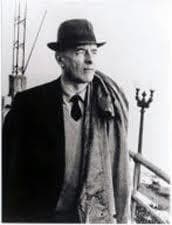
Witold Marian Gombrowicz was a Polish writer and playwright. His works are characterised by deep psychological analysis, a certain sense of paradox and absurd, anti-nationalist flavor. In 1937, he published his first novel, Ferdydurke, which presented many of his usual themes: problems of immaturity and youth, creation of identity in interactions with others, and an ironic, critical examination of class roles in Polish society and culture.

Ashley Antoinette
4.6

Mark McDonald
4.4
Luo Guanzhong
4.4

Mia McKenzie
4.3
Dorothy Parker
4.3
Joaquim Maria Machado de Assis
4.3

James Thurber
4.2
Terry Kay
4.2