“The only reason people want to be rich is so they can be free. The only reason people want to be famous is so they can be loved.”
— Thinking about the motivations behind human desires.

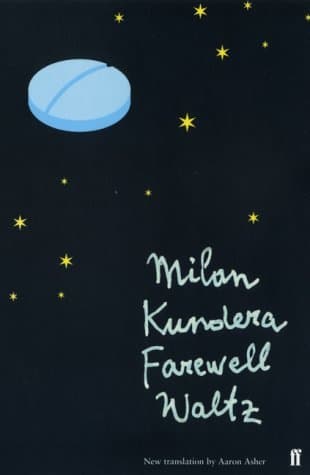
Milan Kundera (2023)
Genre
Fiction
Reading Time
240 min
Key Themes
See below
Sign in to track this book
At a fertility spa, a jazz trumpeter's one-night stand leads to a five-day mix-up of mistaken paternity, jealous lovers, and philosophical jokes, showing how modern life has stripped us of tragedy.
The novel begins with jazz trumpeter Klima getting a phone call from Ruzena, a young nurse. She says she is pregnant and thinks he is the father, after a brief meeting at a fertility spa. Klima, who is married, panics. He goes back to the spa, a private medical center, hoping to convince Ruzena to end the pregnancy. When he arrives, he meets various characters, including Dr. Skreta, the spa's gynecologist, and Jakub, an elderly political prisoner getting ready to leave the country. The air is thick with hidden desires and tensions, setting the stage for a series of connected events.
Klima's jealous wife, Kamila, unexpectedly arrives at the spa, having grown suspicious of his frequent absences. Her presence immediately increases Klima's worry and forces him to keep up a detailed lie to hide his affair with Ruzena. Kamila's sharp mind makes it hard for Klima to avoid her questions, and her emotional nature threatens to reveal his secret at any moment. Meanwhile, Ruzena's equally possessive boyfriend, Franta, is also at the spa, adding another layer of possible conflict. The characters are now caught in a complex web of lies, jealousy, and unspoken desires, with the spa acting as a pressure cooker.
Jakub, the former political prisoner, is getting ready to leave the country. He decides to host a farewell party at the spa, inviting several residents, including Klima, Kamila, and Dr. Skreta. During the party, Jakub gives a seemingly harmless gift: a bottle with a liquid he claims can cause a peaceful death. He says it is a symbol of ultimate freedom from pain. This dark offering adds a philosophical tone to the party and plants a seed of danger, as the bottle is later left alone, its contents a silent threat in the spa's chaotic setting.
Felix, a rich and charming American, arrives at the spa, drawn by its reputation. He quickly falls for Ruzena, seeing her as innocent and naturally beautiful. Felix's open admiration and pursuit of Ruzena add another layer to Klima's problem, as it gives Ruzena another suitor and possibly weakens Klima's attempts to control the story of her pregnancy. Kamila, already upset by Klima's evasiveness, watches Felix's attention to Ruzena with growing suspicion and anger, further fueling her jealousy and making her more determined to find out the truth about her husband's actions.
Dr. Skreta, the spa's gynecologist, is consumed by his ideas on fertility and having children. He sees reproduction as a scientific and almost sacred act, often ignoring normal ethics. His clinic is a center for unusual treatments and experiments, and he secretly wants to be the father of many children, often through unusual ways. His focus on creating life, along with his willingness to manipulate situations, makes him a key and morally unclear character in the unfolding drama. His clinic becomes a place for both hope and manipulation, where the idea of fatherhood is questioned and redefined.
Amidst the rising tension and confusion, the bottle of poison that Jakub gave at his farewell party is accidentally drunk. The exact details of how it happened are unclear at first, adding to the chaotic mood. This incident turns the comedic story into a potentially tragic one, greatly raising the stakes. The characters must face the grim reality of the situation, and the immediate aftermath is marked by panic, accusations, and a desperate search for an antidote. The accidental poisoning is a sharp reminder of how fragile life is and the unforeseen results of seemingly innocent actions within the spa's confined world.
Ruzena, after much thought and influence from various characters, makes a decision about her pregnancy. Her choice, whether to keep the child or end it, has big effects on Klima. No matter her final decision, Klima must face the moral weight of his actions and the possible results of his cheating. He struggles with guilt, responsibility, and the realization that his casual meeting has changed several lives forever. The outcome of Ruzena's decision becomes a turning point for Klima, forcing him to rethink his relationships and his own moral compass, pushing him towards a deeper understanding of commitment and consequences.
Kamila, through her persistent searching and sharp observation, eventually uncovers the full truth about Klima's affair with Ruzena and the resulting pregnancy. The discovery shatters her trust and leads to a dramatic and emotional fight with Klima. Her jealousy, which had been hidden, explodes into a painful display of betrayal and hurt. The confrontation forces Klima to face the results of his lies, and the emotional impact deeply affects their marriage. This scene is a critical turning point in their relationship, as they must now deal with the damage to their trust and decide the future of their union.
Felix, the rich American, steps into the escalating chaos not just as an observer but as an active participant, driven by his mix of playboy charm and saintly kindness. He tries to offer comfort and a different view to the upset characters, especially Ruzena and Kamila. Felix, with his philosophical thoughts and real concern, tries to guide the situation towards a more positive end, focusing on forgiveness and finding meaning beyond the immediate trouble. His presence offers a glimmer of hope and a contrast to the more cynical or manipulative characters, suggesting that even in the midst of absurdity, there is room for understanding and grace.
As the immediate crisis of the poisoning and the paternity argument begins to settle, the characters are left to deal with the aftermath of their connected fates. The events at the spa have changed their lives and relationships forever. The final scenes show some characters leaving, some staying, but all carrying the lasting marks of their experiences. The novel ends with a bittersweet feeling, where the initial silly elements give way to a deeper thought on love, betrayal, freedom, and the inherent absurdity of human existence. The 'farewell waltz' symbolizes both an end and a continuation, a dance of life's unpredictable turns.
The Protagonist
Klima begins as a self-absorbed artist but is forced to confront the moral implications of his infidelity, leading to a grudging acceptance of responsibility.
The Supporting
Kamila's initial jealousy evolves into a painful confrontation with betrayal, forcing her to re-evaluate her marriage and her own strength.
The Supporting
Ruzena navigates the pressures and manipulations of others, ultimately making a decision about her pregnancy that defines her agency.
The Supporting
Dr. Skreta remains steadfast in his radical views on procreation, highlighting the dangers of ideological obsession.
The Supporting
Felix, initially an observer, becomes a compassionate intervener, offering solace and an alternative perspective to the entangled characters.
The Supporting
Jakub, a man accepting his fate, offers profound philosophical insights on freedom and death, acting as a catalyst for reflection.
The Supporting
Franta's possessive love for Ruzena remains largely unchanged, highlighting the immutability of certain human emotions.
Kundera explores the idea that in the modern world, grand, meaningful tragedy has been replaced by a farcical, almost comical absurdity. Characters like Klima, despite their struggles, often find themselves in ridiculous situations, weakening any chance for deep suffering. Jakub's thoughts on the 'right to tragedy' highlight this loss, suggesting that modern life makes real human problems seem trivial. The mistaken poisoning, for example, could be very sad, but it has a slapstick element, stopping it from being truly tragic.
“The modern world has taken away our right to tragedy.”
A main tension in the novel is the conflict between individual freedom, especially sexual freedom, and the responsibilities that come with it. Klima shows this struggle, wanting the freedom to follow his desires without consequences, yet finding himself caught by Ruzena's pregnancy. Jakub's idea of ultimate freedom, even the freedom to die, contrasts with the more ordinary responsibilities that tie the other characters. The choices Ruzena, Klima, and even Dr. Skreta make about life and having children constantly force them to weigh personal desires against the moral and social duties that come with their actions.
“What is freedom if not the right to choose your own end?”
These strong emotions form the complex web of relationships at the spa. Kamila's fierce jealousy of Klima's cheating drives much of what she does, while Franta's possessiveness over Ruzena adds another layer of tension. Klima's betrayal of Kamila, and his later attempts to manipulate Ruzena, show how destructive deceit is in close relationships. The novel examines how love can be tied to control and how betrayal can break trust, making characters question the very basis of their connections. The emotional chaos shows how fragile human bonds are.
“Jealousy is nothing but the struggle for possession.”
Dr. Skreta's character is central to this theme, as his radical and questionable methods at the fertility spa show a desire to control and manipulate the process of life itself. His focus on increasing birth rates and his willingness to interfere in Ruzena's pregnancy highlight the dangers of scientific arrogance. The novel questions the ethics of using medical advances to serve personal goals and explores the blurred lines between healing and manipulation. This theme is further explored through Klima's attempts to influence Ruzena's decision, showing how individuals can try to control the lives of others.
“To give life is the greatest power a man can wield.”
A secluded, almost surreal location that serves as a microcosm for human desires and moral dilemmas.
The spa functions as a pressure cooker, bringing together a disparate group of characters and intensifying their interactions. Its isolated nature allows for secrets to flourish and for eccentric behaviors to go unchecked. As a fertility spa, it inherently deals with themes of life, procreation, and the human body, providing a direct backdrop for Dr. Skreta's radical theories and Ruzena's pregnancy. The confined space amplifies the farcical elements and the sense of impending chaos, making it a perfect stage for Kundera's 'comedy of errors' with serious undertones.
A seemingly symbolic gift that becomes a literal instrument of potential tragedy and a catalyst for plot progression.
Introduced by Jakub as a symbol of ultimate freedom and the 'right to choose one's end,' the bottle of poison initially serves a philosophical purpose. However, its subsequent accidental ingestion transforms it into a literal plot device, injecting immediate danger and high stakes into the narrative. It forces the characters to confront mortality and the unforeseen consequences of their actions. The poison's presence elevates the story from a mere comedy of manners to a black comedy, blurring the lines between the absurd and the tragic, and highlighting the fragility of life amidst human folly.
The use of misunderstandings and deliberate deception to drive the plot and create comedic and dramatic tension.
The entire premise of Ruzena's pregnancy, and Klima's attempts to deny or conceal his paternity, relies heavily on misinformation and deceit. Klima constantly fabricates stories to hide his infidelity from Kamila, while Dr. Skreta subtly manipulates Ruzena. The mistaken consumption of the poison also stems from a misunderstanding. These instances of mistaken identity and deliberate misinformation create both farcical situations and dramatic tension, propelling the plot forward and exposing the characters' flaws and vulnerabilities. It underscores how easily truth can be obscured and how human actions are often based on incomplete or false information.
“The only reason people want to be rich is so they can be free. The only reason people want to be famous is so they can be loved.”
— Thinking about the motivations behind human desires.
“He understood that the world was a tragedy, but a tragedy that could be lived with a certain lightness.”
— Jakub's reflections on life's inherent sorrow.
“The heaviest of burdens is therefore simultaneously an image of life's most intense fulfillment. The heavier the burden, the closer our lives come to the earth, the more real and truthful they will be.”
— A philosophical musing on the nature of burdens and reality.
“Humanity's true moral test, its fundamental test, consists of its attitude towards those who are at its mercy: animals.”
— Dr. Havel's thoughts on morality extending beyond human interaction.
“A person who is not afraid of death is afraid of nothing.”
— Jakub contemplating the ultimate fear and its implications.
“The past is a foreign country; they do things differently there.”
— Though more famously associated with L.P. Hartley, Kundera frequently explores the alien nature of the past, here through the characters' attempts to reconcile with their histories.
“Love is the longing for the half of ourselves we have lost.”
— Jakub's romantic and philosophical definition of love.
“Every person is a mystery, a universe. And to try to understand another person is to try to understand the universe itself.”
— Reflections on the complexity of human beings and relationships.
“To live is to be a stranger, to be a foreigner, to be an exile.”
— A character's sense of alienation and displacement.
“The only way to escape the weight of the world is to dance.”
— A character finding solace and freedom in physical expression.
“What is serious in life is often ridiculous, and what is ridiculous is often serious.”
— A reflection on the absurdities and paradoxes of human existence.
“We can never know what to want, because, living only one life, we can neither compare it with our previous lives nor perfect it in our lives to come.”
— Jakub's musings on the singular nature of life and the impossibility of true choice.
“The more a man is in love, the more he is afraid of the woman he loves.”
— Jakub's observation on the vulnerability inherent in deep affection.
“Happiness is the longing for repetition.”
— A character's cynical view on the nature of happiness and desire for the familiar.
Ready to see how well you understood this book? Take our interactive quiz with 10 questions.
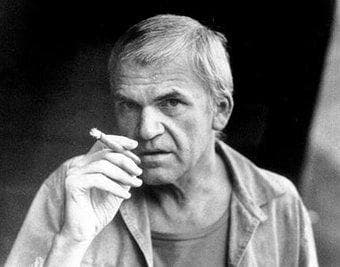
Milan Kundera is a Czech-born French writer. Kundera went into exile in France in 1975, acquiring citizenship in 1981. His Czech citizenship was revoked in 1979 and restored in 2019. He "sees himself as a French writer and insists his work should be studied as French literature and classified as such in book stores".

Ashley Antoinette
4.6

Mark McDonald
4.4
Luo Guanzhong
4.4

Mia McKenzie
4.3
Dorothy Parker
4.3

Joaquim Maria Machado de Assis
4.3

James Thurber
4.2

Terry Kay
4.2