“The past is a foreign country; they do things differently there.”
— A common saying, often used by the protagonist to reflect on the pre-Collapse world.

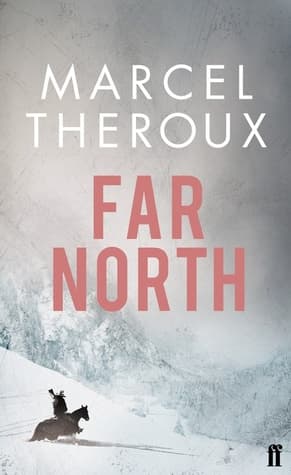
Marcel Theroux (2009)
Genre
Science Fiction
Reading Time
360 min
Key Themes
See below
Sign in to track this book
In a frozen, post-apocalyptic world, a lone sheriff saves books and patrols ruins until a mysterious refugee starts a dangerous quest north, forcing her to confront humanity's collapse and the haunting beauty of a world reclaiming itself.
Makepeace lives alone in the desolate, snow-covered ruins of what was once a busy city, now known only as 'the city.' She acts as a self-appointed sheriff, though there is no one left to govern. Her days are spent finding useful items, repairing her snowmobile, and carefully writing her thoughts in a journal. She finds comfort in salvaged books, especially Shakespeare, and remembers her father's sayings. The world has 'gone north,' a phrase that describes the environmental collapse and societal breakdown that led to her isolated life. Her routine is about survival and thinking, broken by the harsh realities of the arctic wilderness that has consumed civilization.
One day, while on patrol, Makepeace discovers a crude shelter in the wilderness. Inside, she finds a young, thin woman, barely alive. This discovery breaks Makepeace's long-held belief that she is the last human alive in her region. The woman, whom Makepeace names 'the refugee,' is suffering from exposure and malnutrition but carries a small, intricately carved bird figurine. Makepeace brings her back to her shelter, gives her warmth and food, and nurses her back to health. The refugee speaks a language Makepeace doesn't understand, but her presence sparks hope and curiosity about the outside world.
After the refugee recovers, she indicates that there are other people to the north. Makepeace, whose world had shrunk to her ruined city, feels a renewed purpose. Driven by the refugee's existence and her own deep need for connection, she decides to embark on a dangerous journey into the vast, unknown northern expanse. She outfits her snowmobile, packs supplies, and arms herself, preparing for the dangers of the frozen landscape and potentially hostile human encounters. The refugee, unable to travel quickly due to her weakened state, is left behind with provisions, a decision that weighs heavily on Makepeace.
Makepeace eventually finds a stockaded village, a sharp contrast to her desolate solitude. She is met with suspicion and hostility by the villagers, who are wary of outsiders. Their leader, a stern woman, questions Makepeace, asking about her origins and intentions. Makepeace observes their simple, self-sufficient life, their fear of the unknown, and their rigid social structure. She realizes that the world has not just collapsed but has reorganized into small, isolated, and often fearful communities. Despite the initial tension, Makepeace is allowed to stay for a short time, trading her scavenged goods for food and information.
While in the village, Makepeace meets a lone trader, a man who travels between settlements. He recognizes the bird figurine that Makepeace still carries, identifying it as an artifact from a distant, highly organized camp to the far north. The trader speaks vaguely of a place where 'the old ways' are practiced and where 'they work with the light.' This information strengthens Makepeace's decision to continue her journey in that direction, believing it to be the origin of the refugee and potentially a place with answers. The trader also gives her a compass, a vital tool for navigation in the featureless landscape.
Continuing her journey, Makepeace faces the full brutality of the arctic environment. She endures blizzards, dangerous ice, and the constant threat of hypothermia. Her snowmobile breaks down repeatedly, forcing her to rely on her cleverness and strength to make repairs. She learns to hunt and fish to survive, sharpening her wilderness skills. During this difficult part of her journey, she often questions her purpose, fighting loneliness and despair, but the image of the refugee and the hope of finding others keeps her going. She barely escapes falling through thin ice, a stark reminder of her vulnerability.
After weeks of travel, Makepeace finally finds the camp described by the trader. It is a highly organized, technologically advanced settlement, powered by geothermal energy and using advanced hydroponics. However, the initial impression of a thriving community quickly sours. She discovers that the camp is run by a charismatic but ruthless leader, who maintains control through strict discipline and fear. The inhabitants, including the refugee, are effectively prisoners, forced to work on mysterious projects involving salvaged pre-collapse technology, especially focused on harnessing an unknown energy source.
Makepeace is reunited with the refugee, who is now working within the camp. Through observation and careful interaction, Makepeace learns that the camp's leader is trying to re-establish an advanced civilization, but at a great human cost. The 'work with the light' involves trying to reactivate an ancient, powerful energy generator, whose true purpose and dangers are not fully understood, even by the leader. Makepeace realizes that the refugee, along with others, is being exploited for their labor and knowledge, and that the camp's ambition could lead to catastrophic consequences, repeating past mistakes.
Horrified by the camp's true nature and the oppressive conditions, Makepeace decides to help the refugee and other captives escape. She begins to carefully observe the camp's routines, security, and weaknesses. She discreetly communicates with the refugee and other sympathetic individuals, starting a rebellion. Her plan involves using her knowledge of the wilderness and her resourcefulness to create a diversion and allow an escape route into the harsh but freeing northern landscape. The stakes are very high, as failure means certain punishment or even death.
Makepeace puts her escape plan into action. A tense confrontation with the camp's leader occurs, where Makepeace challenges his authority and the ethics of his ambition. Amidst the chaos of the confrontation, she creates a diversion, allowing the refugee and a small group of other prisoners to flee into the snowy wilderness. The escape is full of danger, as the camp guards pursue them. Makepeace, using her knowledge of the terrain and her hunting skills, helps the group navigate the treacherous landscape, fighting off pursuers and battling the elements.
The group of escapees, led by Makepeace, continues their difficult journey away from the oppressive camp. They face starvation, frostbite, and the constant threat of being recaptured. Makepeace uses her leadership skills to keep morale up and ensure everyone's survival, sharing her knowledge of foraging and shelter-building. The refugee, now more confident and resilient, plays a key role in supporting the group. They eventually find a more remote and sheltered area, where they begin to establish a new, smaller, and more equal community, built on cooperation and respect for the environment, rather than exploitation.
In their new settlement, Makepeace, the refugee, and the others begin to build a sustainable life. They learn to live in harmony with the harsh environment, using salvaged materials and adapting old survival techniques. Makepeace, no longer just a solitary sheriff, becomes a foundational figure in this new community, sharing her wisdom and resilience. She finds a sense of belonging and purpose she never thought possible. The future is still uncertain and challenging, but there is a strong sense of hope and the promise of a truly human future, built on shared values and mutual support, in the desolate beauty of the far north.
The Protagonist
Makepeace transforms from a solitary survivor guarding a dead city to a leader who actively seeks and builds a new, sustainable community.
The Supporting
From a helpless survivor, she becomes a resilient member of Makepeace's new community, finding her voice and agency.
The Supporting
A static character who serves as a plot device to advance Makepeace's journey.
The Antagonist
A static character who embodies the dangerous pursuit of power and control, ultimately challenged by Makepeace.
The Mentioned
His influence remains constant, a moral anchor for Makepeace.
The Supporting
They serve as a snapshot of post-collapse humanity, illustrating the challenges of rebuilding trust and society.
The Supporting
From oppressed workers, they become active participants in building a new, free community.
Makepeace begins the novel in deep isolation, believing herself to be the last survivor. The discovery of the refugee breaks this solitude and sparks a strong desire for human connection. Her dangerous journey north, enduring extreme conditions and facing hostile encounters, is a quest for community. This theme ends with her decision to lead the escapees and help establish a new, cooperative settlement, showing that even in a desolate world, humanity's need for belonging continues. The formation of this new 'family' at the end of the book highlights the importance of shared purpose and mutual support.
“My father had an expression for a thing that turned out bad. He'd say it had gone west. But going west always sounded pretty good to me. After all, westwards is the path of the sun. And through as much history as I know of, people have moved west to settle and find freedom. But our world had gone north, truly gone north, and just how far north I was beginning to learn.”
The novel clearly shows the harsh realities of survival in a post-apocalyptic, frozen world. Makepeace's daily life shows human resilience, as she scavenges, repairs, and adapts to the extreme environment. Her journey through blizzards and over dangerous ice shows her physical and mental strength. The existence of the stockaded village and the technologically advanced camp, despite their flaws, also highlights humanity's drive to survive and rebuild. This theme is not just about physical endurance but also the resilience of the human spirit to find hope and purpose amid great loss, as seen in Makepeace's strong optimism.
“I had been alone for so long that I didn't know if I would ever be able to speak normally again. My voice would be the sound of a stone rolling across a frozen lake.”
The story explores the idea that humanity's drive for technological advancement and control can lead to its downfall. The pre-collapse world's 'gone north' state is implied to be a result of ecological devastation. The Camp Leader's attempt to reactivate ancient, powerful technology, despite its unknown dangers and the exploitation of his people, is a warning. He prioritizes scientific ambition over human well-being, repeating past mistakes. Makepeace's eventual rejection of this model and her choice to build a simpler, more ethical community highlights the novel's criticism of unchecked power and the need for humility in the face of nature.
“He wanted to rebuild the world, but he wanted to rebuild it in his own image, and that was a dangerous thing.”
Makepeace's dedication to saving books, especially Shakespeare, and her careful journaling emphasize the importance of preserving knowledge and understanding history. Her father's sayings, passed down through generations, provide a moral framework. The Camp Leader's misuse of pre-collapse technology, without fully understanding its implications, contrasts sharply with Makepeace's respect for the past. The novel suggests that while the physical world may crumble, the lessons of history and the wisdom in stories are vital for rebuilding a better future. Makepeace's act of writing her own story is an act of preserving history and meaning.
“Books were like embers. They had the power to start a fire, if you knew how to fan the flames.”
The arctic landscape itself is a main character, showing both unforgiving harshness and deep beauty. The novel explores how humanity has both damaged and adapted to nature. The 'gone north' world is a consequence of environmental collapse, forcing survivors to live in a more primitive, yet often more harmonious, relationship with the land. Makepeace's deep understanding and respect for the wilderness are key to her survival and ultimately guide her towards a sustainable way of life. The story suggests that true redemption lies in recognizing our place within, not above, the natural world, and learning to live in balance with it.
“The north had taken everything, but it had also given something back: clarity. The world was stripped bare, and what remained was true.”
Makepeace's first-person narration, often framed as journal entries, provides direct access to her thoughts and the world's history.
The entire novel is narrated in the first person by Makepeace, often presented as her journal entries. This device allows for deep introspection, revealing her philosophical nature, her memories of her father, and her personal interpretations of the post-apocalyptic world. It grounds the fantastical elements in a human, relatable perspective and provides a subjective history of the collapse. The journal also serves as a means for Makepeace to process her experiences and maintain her sanity in isolation, making her a reliable, albeit solitary, observer of her world.
A small, symbolic object that acts as a crucial clue and a link between characters and locations.
The intricately carved bird figurine, carried by the refugee, serves as a significant plot device. It is the first tangible evidence Makepeace finds that connects the refugee to a larger community. Later, the trader recognizes it, providing Makepeace with the direction and purpose for her journey north. Symbolically, the bird represents hope, freedom, and the enduring human capacity for art and meaning, even in a desolate world. Its presence consistently guides Makepeace's quest for answers and connection.
The extreme, desolate northern environment functions as a character, antagonist, and symbol.
The far north is more than just a setting; it actively shapes the narrative and the characters' struggles. Its harshness acts as a constant antagonist, testing Makepeace's resilience and forcing her to adapt. It dictates the pace of travel, the availability of resources, and the nature of human settlements. Symbolically, it represents both the desolation of a collapsed world and the potential for a stripped-down, authentic existence. The vast, empty spaces emphasize Makepeace's isolation but also offer a canvas for new beginnings, highlighting nature's power to reclaim and reshape.
Salvaged remnants of the old world that drive conflict and represent past mistakes.
Throughout the novel, Makepeace scavenges remnants of the pre-collapse world – books, tools, and parts for her snowmobile. These artifacts are practical necessities for survival. However, the most significant use of this device is at the northern camp, where the leader is attempting to reactivate a large, powerful energy generator from the old world. This technology represents the hubris of the past and the potential for humanity to repeat its mistakes, creating a central conflict around whether to rebuild using the old ways or forge a new, more sustainable path.
“The past is a foreign country; they do things differently there.”
— A common saying, often used by the protagonist to reflect on the pre-Collapse world.
“If you want to understand a thing, you must first understand its beginning.”
— Jon pondering the origins of the Collapse and the current state of the world.
“There are no atheists in foxholes, and no communists in breadlines.”
— A cynical observation on human nature and survival in desperate times.
“Hope is a dangerous thing. It can drive a man mad, or it can keep him alive.”
— Jon reflecting on his own motivations and the hope he carries for finding others.
“The greatest trick the devil ever pulled was convincing the world he didn't exist. The second greatest was convincing it that the past didn't matter.”
— A philosophical musing on the importance of history and memory in a post-apocalyptic world.
“Sometimes, the only way to move forward is to let go of what you think you know.”
— Jon's internal struggle with preconceived notions about the world and the people he encounters.
“Silence can be a weapon, and it can be a shield.”
— Describing the desolate landscape and the protagonist's solitary existence.
“The truth is rarely pure and never simple.”
— Jon's realization that the history of the Collapse and its aftermath is complex and multi-layered.
“What defines us is not what we have, but what we do with what we have left.”
— A reflection on resilience and resourcefulness in a world of scarcity.
“Every man has his breaking point. The trick is to not find yours.”
— Jon's internal monologue about enduring hardship and maintaining sanity.
“The world had ended, not with a bang, but with a whisper of ice and a sigh of forgotten dreams.”
— A poetic description of the slow, environmental collapse that led to the current state.
“To be truly alone is to understand the vastness of the world and the smallness of oneself.”
— Jon's experience of profound solitude in the desolate Arctic landscape.
“Sometimes, the ghosts of the past are more real than the people in the present.”
— Jon grappling with memories of the pre-Collapse world and the few survivors he meets.
“The greatest freedom is to have nothing left to lose.”
— A cynical yet liberating thought from Jon, having lost almost everything in the Collapse.
Ready to see how well you understood this book? Take our interactive quiz with 10 questions.

Biography coming soon.