“The only completely satisfying revenge is to become a better person.”
— Anthony Beavis's reflection on personal growth.


Aldous Leonard Huxley (2022)
Genre
Fiction
Reading Time
480 min
Key Themes
See below
Sign in to track this book
Through Anthony Beavis's fragmented memories and changing views, 'Eyeless in Gaza' examines a generation's intellectual and spiritual problems as it deals with pacifism, promiscuity, and finding purpose before a war.
The novel starts with adult Anthony Beavis looking at old photographs, which begins a non-linear trip through his past. We meet his childhood friend Brian Foxe; they shared school and holiday experiences. A painful memory involves Anthony and Brian finding a dog caught in a trap, suffering greatly. Anthony, out of fear and a misguided try at mercy, shoots the dog. This decision haunts him. Brian sees this, and it hints at the moral problems and the effects of their actions on others that will shape their later lives. The story moves between these early memories and Anthony's present, showing his distant and cynical view of the world.
As an adult, Anthony Beavis is a successful writer and intellectual, but he is very detached from true emotional connection. He has several affairs, most notably with Helen Ledwidge and Joan Thursley, treating relationships casually. His intelligence protects him, letting him observe human foolishness without truly taking part or committing. He goes to social events, having clever but empty conversations. This time in his life shows his struggle with meaninglessness and his inability to form lasting bonds, a direct result of his past and his cynical philosophy. He seeks pleasure and intellectual fun, but a deep sense of emptiness remains.
The story slowly reveals what happened to Brian Foxe, Anthony's childhood friend. Brian, a sensitive and idealistic young man, struggles deeply with the moral compromises and hypocrisy he sees in the world, especially after a disappointing experience in the Spanish Civil War. His relationship with Helen Ledwidge, which Anthony also affects, adds more complexity. Finally, overcome by despair and feeling betrayed, Brian commits suicide. This event is a major turning point for Anthony. While at first he processes it with his usual intellectual distance, Brian's death forces Anthony to confront the effects of his own emotional distance and how his actions (or lack of them) affected his friend, beginning to break down his cynical facade.
Anthony's affair with Helen Ledwidge is a complex and destructive relationship. Helen is passionate but somewhat unstable, deeply affected by her own emotional problems. Anthony, while intellectually interested in her, treats her with some coldness and manipulation, using her for his own satisfaction without real emotional investment. This affair overlaps with Brian's life and adds to his despair, as Helen's feelings are split and her emotional state worsens. Anthony's casual cruelty toward Helen shows his moral failures and his inability to empathize, further isolating him in his intellectual world. Their interactions involve power imbalances and emotional exploitation.
Anthony meets his uncle, James Beavis, a man who lives a life of spiritual discipline and pacifism, rejecting the pleasure-seeking and intellectual pursuits that define Anthony's world. James lives simply, following his principles, and supports non-violence and a deeper connection to people. Anthony first meets these ideas with his usual skepticism, but James's calm belief and the stark difference in his lifestyle start to break down Anthony's defenses. James does not preach but lives his philosophy, offering Anthony a look at another way to find meaning and satisfaction beyond superficial pleasures and intellectual games. This guidance subtly plants doubts about Anthony's current path.
Mark Rampion, a writer and artist, is an important intellectual opposite and friend to Anthony. Rampion supports a balanced approach to life, embracing both mind and body, art and nature, without giving in to strictness or pure pleasure-seeking. He criticizes Anthony's intellectual distance and his habit of living only in his head, urging him to engage with the world more fully and truly. Rampion's philosophy, often shown through lively discussions and observations, represents a vibrant view that challenges Anthony's cynical outlook. While Anthony respects Rampion, he at first finds it hard to adopt this more balanced approach into his own life, struggling to give up his ingrained habits of distance.
After Brian's suicide and the general emptiness of his relationships, Anthony has a deep moral crisis. The intellectual games and casual affairs that once defined his life now seem meaningless. He begins to question his distant, cynical philosophy, seeing its destructive effect on himself and others. The memory of the dog in the trap, Brian's death, and his treatment of Helen combine into an unbearable weight. This inner turmoil shows a big change, as Anthony starts to truly look for a different way of living, moving beyond mere intellectual curiosity to a sincere desire for moral and spiritual change. He feels very unhappy with his past and present.
Driven by his crisis, Anthony begins to explore Eastern philosophy, especially ideas of non-attachment and inner peace, greatly influenced by his uncle James's example. He starts to meditate and purposely develops a sense of detachment from worldly desires and ego-driven pursuits, but this time with a spiritual rather than cynical aim. This new path involves a conscious effort to overcome his past emotional coldness and embrace compassion. He tries to connect his intellectual understanding with a more intuitive, complete way of being. This change is not quick or easy, but it marks a committed effort to rebuild his life on ethical and spiritual foundations, moving away from the purely intellectual and pleasure-seeking. He aims for a deeper, more meaningful life.
As Europe's political situation worsens and war seems likely, Anthony's new philosophy of pacifism and non-violence is tested. He actively takes part in anti-war movements and supports peace, often facing skepticism and ridicule from his former intellectual friends. This commitment is not just theoretical; it involves public action and a willingness to stand by his beliefs despite social pressure. His change is clear in his willingness to act directly and to state his beliefs with conviction, a sharp contrast to his earlier distant observations. He accepts possible personal risks for his ethical stance, showing how deeply he has changed.
The novel ends with Anthony Beavis having found a good deal of inner peace and purpose. While his change continues and has its difficulties, he has moved past the cynicism and emotional emptiness that marked his early adult life. He is actively working to promote peace and live by his principles, finding satisfaction in service and spiritual practice rather than superficial pleasures. The story suggests a future where Anthony continues to seek a more compassionate and non-violent existence, having escaped the 'eyeless' state of his past. He has found a way to combine his intellect with his spirit, creating a path toward true meaning and connection, even in a world still full of conflict.
The Protagonist
Anthony transforms from a cynical, emotionally detached intellectual to a committed pacifist and seeker of spiritual truth, finding purpose beyond hedonism.
The Supporting
Brian's idealism is crushed by the world's hypocrisy and personal betrayals, leading to his tragic suicide.
The Supporting
Helen's passionate nature leads her through destructive relationships and emotional turmoil, highlighting the novel's themes of love and betrayal.
The Supporting
James remains steadfast in his pacifist and spiritual beliefs, serving as a consistent moral guide and catalyst for Anthony's transformation.
The Supporting
Mark Rampion consistently advocates for a balanced, vitalist philosophy, challenging Anthony's intellectual detachment throughout the narrative.
The Supporting
Joan remains a static character, representing the kind of superficial relationship Anthony eventually rejects.
The Mentioned
Hugh's arc is largely off-screen, a victim of the marital infidelity that plays out in the lives of other characters.
The Supporting
Mary remains a representative of Anthony's former social circle, showing no significant personal transformation.
The novel shows Anthony Beavis's deep journey of self-discovery, moving from a self-imposed identity of cynical intellectual distance to one of spiritual involvement and moral responsibility. His early life involves intellectual pursuits and superficial relationships, but he feels an underlying emptiness. Brian Foxe's tragic suicide, along with his uncle James's influence and Eastern philosophy, makes Anthony question his identity and his past moral 'blindness.' He actively tries to redefine himself through pacifism and non-attachment, leaving his old self to embrace a more caring and purposeful existence. This change is central to the novel's exploration of identity.
“What was the good of being a man, if one were going to be no more than a walking conscience?”
Huxley criticizes the dangers of living a life only through the mind, separate from true emotion and moral involvement. Anthony Beavis at first represents this distance, using his intelligence to shield himself from the difficult realities of human suffering and connection. His cynical observations and casual approach to relationships, like with Helen Ledwidge, cause pain for others and a deep sense of meaninglessness for himself. The novel argues that while intelligence is valuable, it becomes harmful when it prevents empathy, moral responsibility, and a complete engagement with life. Brian Foxe's sensitivity, compared to Anthony's initial coldness, shows the human cost of such distance.
“He chose to be a spectator, to be a connoisseur of experiences, rather than an actor.”
A main theme is the exploration and eventual acceptance of pacifism and non-violence as a workable and necessary philosophy for living. Influenced by his uncle James and Eastern spiritual traditions, Anthony Beavis moves from a passive observer of world conflicts to an active supporter of peace. This theme is especially important given the novel's setting just before World War II. Huxley uses Anthony's change to argue for the ethical need for non-violence, not just as a political stance but as a deeply personal spiritual practice. The contrast between the destructive forces in the world and Anthony's commitment to peace highlights the novel's message about the power of individual moral choice.
“Peace begins in the souls of individuals.”
The novel looks at humanity's constant search for meaning beyond money, intellectual games, or short-lived pleasures. Anthony Beavis's early life of pleasure-seeking and cynicism leaves him feeling empty, despite his intellectual successes. His journey is a search for a deeper, more real form of satisfaction, which he eventually finds in spiritual practice, non-attachment, and compassionate engagement with the world. Eastern philosophy and James Beavis's example guide him to see that true meaning comes from within and through ethical action, rather than external achievements. This theme shows the limits of a purely secular or materialistic view.
“The secret of happiness, you see, is not found in seeking more, but in developing the capacity to enjoy less.”
The story carefully explores how individual actions spread and the weight of moral responsibility. Anthony's early actions, such as shooting the dog and his distant treatment of Helen Ledwidge, have deep and often tragic results, most notably contributing to Brian Foxe's despair and suicide. The novel's non-linear structure emphasizes how past events continue to shape the present and demand accountability. Anthony's change is largely driven by his realization of his past irresponsibility and his later commitment to living a life of conscious ethical choice, showing that true freedom comes from accepting and acting on one's moral duties.
“Every act of ours affects the whole future. Every thought, every word, every deed.”
The story is told out of chronological order, jumping between different time periods in Anthony's life.
Huxley employs a non-linear narrative, presenting events from Anthony Beavis's childhood, young adulthood, and present (1930s) in a fragmented, associative manner. This technique mimics the way memory works, with present triggers recalling past events, and allows Huxley to explore themes of consequence and the evolution of character over time. It prevents a simplistic cause-and-effect understanding, instead building a complex portrait of Anthony's development by revealing how past traumas and choices contribute to his present state and subsequent transformation. The reader pieces together the chronology, which enhances the sense of discovery and introspection central to Anthony's journey.
Each chapter begins with a quote, often from a philosophical or spiritual text, and the narrative frequently includes Anthony's internal monologues.
Throughout the novel, Huxley uses epigraphs at the beginning of chapters, drawing from diverse sources like Eastern philosophy, poetry, and scientific texts. These quotes often foreshadow themes or provide a philosophical lens through which to interpret the upcoming section. Additionally, the narrative is rich with Anthony's internal monologues and intellectual discussions, which serve to articulate the various philosophical positions and ideas being explored. This device highlights the novel's intellectual depth, inviting the reader to engage with the philosophical underpinnings of the plot and Anthony's transformation, making the novel as much a 'novel of ideas' as it is a character study.
The title itself, 'Eyeless in Gaza,' symbolizes moral and spiritual blindness.
The title 'Eyeless in Gaza' is a direct reference to Milton's 'Samson Agonistes,' where Samson is physically blinded and imprisoned. In Huxley's novel, this symbolizes Anthony Beavis's initial moral and spiritual blindness—his inability to truly 'see' the consequences of his actions or the deeper meaning of life beyond intellectual and hedonistic pursuits. His journey is one of regaining sight, moving from a detached, unseeing existence to one of compassionate awareness and ethical clarity. The imagery of sight and blindness is used metaphorically to represent enlightenment versus ignorance, and the struggle to perceive truth beyond superficial appearances.
A recurring traumatic memory that symbolizes Anthony's early moral failings and the origin of his detachment.
The incident of Anthony and Brian discovering a dog caught in a rabbit trap, and Anthony's subsequent decision to shoot it, is a powerful and recurring symbol. It represents Anthony's early exposure to suffering, his misguided attempt at mercy, and the traumatic impact of his actions. This memory haunts him, symbolizing his initial moral cowardice, his tendency to inflict pain, and the roots of his emotional detachment. Its recurrence emphasizes how this unresolved trauma contributes to his later cynicism and emotional distance, and how confronting it is essential for his eventual moral and spiritual awakening.
“The only completely satisfying revenge is to become a better person.”
— Anthony Beavis's reflection on personal growth.
“That men do not learn very much from the lessons of history, is the most important of all the lessons that history has to teach.”
— A general observation on human nature and historical patterns.
“Facts are ventriloquist's dummies. Sitting on a wise man's knee they may be made to utter words of wisdom; elsewhere, they say nothing, or talk nonsense, or make a fool of whoever tries to speak through them.”
— Anthony Beavis's thoughts on the interpretation of facts.
“Happiness is a by-product of function, purpose, and successful activity; and where these are absent, all the cosmetics and stimulants in the world will not produce it.”
— A discussion on the nature of happiness.
“Every man has a right to his own opinion, but no man has a right to be wrong in his facts.”
— A statement made in a discussion about truth and opinion.
“Experience is not what happens to a man; it is what a man does with what happens to him.”
— A reflection on the active role of an individual in shaping their experience.
“The secret of happiness is to have a job that you love, and to have a life that is full of meaning.”
— A character's simple yet profound definition of happiness.
“Peace is not an absence of war, it is a virtue, a state of mind, a disposition for benevolence, confidence, justice.”
— Anthony Beavis's evolving understanding of true peace.
“”
— A commentary on intellectual independence and introversion.
“”
— A philosophical reflection on journey, discovery, and returning with new understanding.
“”
— A character's observation on the prerequisite for inner peace.
“”
— A thought on the nature of profound truth and admirable character.
“”
— A paradox concerning individual isolation and universal interconnectedness.
“”
— A character's advice on achieving happiness through self-mastery.
Ready to see how well you understood this book? Take our interactive quiz with 10 questions.
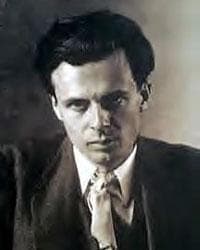
Aldous Leonard Huxley was an English writer and philosopher. His bibliography spans nearly 50 books, including novels and non-fiction works, as well as essays, narratives, and poems.

Ashley Antoinette
4.6

Mark McDonald
4.4
Luo Guanzhong
4.4

Mia McKenzie
4.3

Dorothy Parker
4.3

Joaquim Maria Machado de Assis
4.3
James Thurber
4.2

Terry Kay
4.2