“Gold is the spiritual essence of all present and past societies.”
— A reflection on the pervasive power of money in society.


Honore De Balzac (2013)
Genre
Fiction
Reading Time
180 min
Key Themes
See below
Sign in to track this book
In a French town, a sheltered heiress's love for her cousin clashes with her miserly father's obsession with gold, leading to tragedy.
Monsieur Félix Grandet, a former cooper who made a fortune, lives in a rundown house in Saumur with his wife, Madame Grandet, and their daughter, Eugénie. Their life is extremely frugal. Grandet carefully controls every expense. The house itself shows his saving nature, cold and sparsely furnished. Eugénie, a kind and religious young woman, does not know how wealthy her father is. She lives without luxury or social events, her days filled with simple routines and much loneliness. This introduction sets the harsh mood Grandet's greed creates.
Two main Saumur families, the Cruchots and the des Grassins, want to marry Eugénie, mainly because of her rumored large inheritance. The Cruchot family, with President de Bonfons, and the des Grassins family, with their son Adolphe, often visit the Grandet home. They put up with Monsieur Grandet's miserliness for the chance of wealth. This quiet, predictable life breaks on Eugénie's twenty-third birthday when her Parisian cousin, Charles Grandet, arrives. Charles is the son of Grandet's brother, Guillaume, a rich Parisian banker. His elegant clothes, refined manners, and fashionable look immediately charm Eugénie, who has never met such sophistication.
Charles brings a letter for Monsieur Grandet. It reveals bad news: his father, Guillaume Grandet, killed himself after going bankrupt, leaving Charles penniless and in great debt. Charles does not at first know the full extent of his father's ruin and thinks he is only staying in Saumur for a short time. Monsieur Grandet, after reading the letter, immediately sees a way to profit from his brother's bad luck and save his own name. He pretends to care while secretly planning how to handle the bankruptcy without losing any of his own money. He manipulates the situation to his benefit and further isolates Charles.
Seeing Charles's deep sadness, Eugénie feels strong emotions for the first time. Her sheltered life has not prepared her for such sorrow. Overcome by sympathy and growing love, she secretly gives Charles all her personal gold, 6,000 francs. She had received this money over the years as birthday gifts from her father. She means for this money to help him start over in the Indies, where he plans to seek his fortune. This act of selfless giving is a sharp contrast to her father's greed and marks a key change in her character, showing her ability for deep affection and sacrifice.
Monsieur Grandet eventually finds out that Eugénie gave her gold to Charles. He reacts with furious anger, not because he cares for Eugénie, but because he lost his valuable gold and she defied his authority. He confronts Eugénie, demanding to know where her gold is. When she admits her generous act, he locks her in her room, denying her food and fire, and keeps her from her mother. This harsh punishment shows Grandet's complete obsession with money and his tyrannical control over his home. It highlights the destructive power of his greed and the suffering it brings his family.
Madame Grandet, weak and submissive, is very upset by her husband's cruelty to Eugénie. Despite her fear of Grandet, she bravely steps in, asking him to free their daughter. Grandet, fearing his wife might die without a will, which would complicate his inheritance plans, reluctantly agrees to a compromise. He releases Eugénie but stays cold toward her. However, the emotional stress and her husband's constant mistreatment have badly affected Madame Grandet's health. Her condition quickly worsens, made worse by the oppressive atmosphere and her inability to fully protect her daughter. This hints at her coming death.
Madame Grandet eventually dies peacefully from her illness. Her death creates a new legal situation for her estate, of which Eugénie is legally entitled to half. Monsieur Grandet, always calculating, fears that Eugénie's inheritance will lessen his control and wealth. He manipulates Eugénie, taking advantage of her grief and innocence. He threatens to declare bankruptcy himself if she does not sign away her share of her mother's inheritance to him. Eugénie, out of duty and wanting to avoid more conflict, agrees to sign the documents, giving up her claim and putting Grandet's large fortune solely under his control.
Years pass. Charles Grandet returns from the Indies a rich man, having made his fortune through clever, and sometimes dishonest, business deals. He has, however, forgotten his promise to Eugénie and their unspoken engagement. Instead, he wants to marry a noblewoman, Mademoiselle d'Aubrion, to gain social standing. He sends a letter to Eugénie, delivered by Monsieur des Grassins, coldly telling her of his plan to marry someone else and offering to repay the 6,000 francs she gave him. This heartbreaking betrayal crushes Eugénie's hopes and ends her innocent idealism about love.
After receiving Charles's cold letter, Eugénie is heartbroken but firm. She uses her large inheritance to pay all of Charles's father's debts. This ensures Charles can marry Mademoiselle d'Aubrion without scandal. This act, while seeming generous, is also a subtle form of revenge, showing her financial power and moral superiority. Soon after, Monsieur Grandet, now an old man, falls ill. Even on his deathbed, his obsession with gold continues. His last words are a command to Eugénie to protect his riches. He dies, leaving Eugénie his vast fortune, making her one of the wealthiest women in France.
Now very wealthy, Eugénie Grandet continues to live a simple life, like her father's frugality, though not driven by greed but by habit and a lack of desire for luxury. She uses her wealth for charity, quietly helping the poor and religious groups. She eventually marries President de Bonfons, one of her original suitors, but only if their marriage remains one of companionship, not physical closeness. Her marriage is loveless and short, as de Bonfons dies soon after. Eugénie stays in her old, cold house, a lonely figure surrounded by great riches. Her heart is forever marked by Charles's betrayal and her father's influence. This shows the lasting emptiness wealth can bring without love.
The Protagonist
Eugénie transforms from a naive, cloistered girl into a wealthy, solitary woman, hardened by betrayal but retaining her inherent goodness and generosity.
The Antagonist
Grandet's character remains static, his avarice only intensifying with age until his death, where his final thoughts are of his gold.
The Supporting
Charles transforms from a spoiled, naive youth into a worldly, self-serving man, ultimately betraying Eugénie's love for social advancement.
The Supporting
Madame Grandet's arc is one of decline, culminating in her death from the emotional and physical toll of her life.
The Supporting
Nanon remains a constant, loyal presence throughout the story, her character unchanged by the surrounding drama.
The Supporting
President de Bonfons successfully achieves his goal of marrying Eugénie and gaining access to her wealth, though his personal happiness remains elusive.
The Supporting
Adolphe fails to secure Eugénie's hand and her fortune, representing the less successful of the two major suitors.
The Mentioned
Guillaume's arc is completed before the story begins, his suicide serving as a catalyst for the main plot.
The novel's main theme is the overwhelming and destructive power of greed, shown by Monsieur Grandet. His obsession with money blinds him to affection, family duty, and right behavior. It leads him to deny his family basic comforts, manipulate legal matters, and emotionally hurt his wife and daughter. The decaying Grandet house itself symbolizes this theme. As the miser's wealth grows, his home and family life fall apart. This theme is clearly shown when Grandet locks Eugénie in her room for giving away her gold, valuing money over his daughter's well-being.
“Gold is the spiritual essence of all present society.”
While Monsieur Grandet embodies greed, the novel also explores how wealth, or wanting it, can corrupt. Charles Grandet, first shown as a charming, if spoiled, young man, becomes more cynical and self-serving after his trip to the Indies. There, he makes his fortune through questionable means. His pursuit of wealth and social status leads him to betray Eugénie. This shows how even inherited or hard-earned riches can harden the heart and lessen moral integrity. Eugénie herself, though kind, finds her great wealth brings her only loneliness and a continuation of her simple habits, not happiness.
“Money is the one thing that can put an end to all things.”
Eugénie's deep, selfless love for Charles contrasts sharply with his shallow affection and eventual betrayal. Her act of giving him all her gold, her patient wait for his return, and her continued devotion are met with cold, calculated abandonment. This theme highlights how vulnerable pure affection is in a world driven by material concerns. Charles's betrayal shatters Eugénie's innocence and leaves her with a lasting emotional wound. This leads to her lonely life despite her vast wealth. Her decision to pay his debts, while seeming generous, is also a quiet act of emotional closure and moral superiority.
“Love, like life, is a battle.”
The novel clearly shows the limited power and harsh conditions women faced in 19th-century France, especially in rural areas. Both Madame Grandet and Eugénie are completely under Monsieur Grandet's male authority and financial control. Madame Grandet's quiet suffering and eventual death come directly from her husband's cruelty. Eugénie, despite her eventual great wealth, mostly stays confined to her home. Her choices are set by social expectations and her own emotional scars. Her marriage of convenience further shows the lack of personal freedom and emotional fulfillment available to women.
“A woman's life is a constant sacrifice.”
A physical manifestation of Grandet's avarice and the family's oppression.
The Grandet house in Saumur is more than just a setting; it is a character in itself, reflecting Monsieur Grandet's miserly nature. Its decaying state, cold rooms, and lack of comforts are direct consequences of his refusal to spend money. The house acts as a prison for Eugénie and Madame Grandet, symbolizing their confinement and the oppressive atmosphere created by Grandet's avarice. It is a constant reminder of the family's deprivation amidst their hidden wealth, and even after Eugénie inherits, she continues to live in it, perpetuating its symbolic meaning of solitude and frugality.
A tangible symbol of both wealth and corruption.
Gold, in its various forms (coins, jewelry), is a recurring motif and a central plot device. It is the object of Monsieur Grandet's obsessive desire, representing his power and control. For Eugénie, her personal gold coins are a symbol of her innocent love and generosity when she gives them to Charles. Later, the vast gold she inherits becomes a symbol of her immense power, but also her ultimate solitude. The gold itself is inert, but its presence and absence drive the characters' motivations and actions, highlighting its transformative and often corrupting influence.
A means of conveying crucial plot information and driving character development.
Letters play a pivotal role in advancing the plot. Charles's initial letter from his father reveals the bankruptcy and suicide, setting the entire narrative in motion. Later, Charles's letter from the Indies, coldly breaking off his implied engagement to Eugénie, serves as the ultimate betrayal and a turning point for her character, shattering her romantic illusions. The delayed and impersonal nature of these communications emphasizes the emotional distance and the profound impact of unseen forces on the characters' lives, particularly Eugénie's.
The audience's awareness of Grandet's immense wealth, unknown to his family.
Dramatic irony is a key element throughout the novel, particularly concerning Monsieur Grandet's wealth. The reader is aware of the vastness of Grandet's fortune, while his family, especially Eugénie, lives in ignorance and deprivation. This creates a constant tension and highlights the absurdity and cruelty of Grandet's miserliness. For instance, the detailed descriptions of the family's meager meals and cold rooms are rendered more poignant by the reader's knowledge of the gold secretly hoarded within the house's very walls, intensifying the tragedy of their existence.
“Gold is the spiritual essence of all present and past societies.”
— A reflection on the pervasive power of money in society.
“Avvarice, like love, has its ecstasies, its fevers, its delirium, its sacrifices.”
— Comparing the intensity of avarice to that of love.
“Great souls are always the most sensitive to the misfortunes of others.”
— Eugenie's inherent kindness and empathy are highlighted.
“The human heart, when it is truly great, can find consolation in self-sacrifice.”
— Eugenie's eventual acceptance of her fate and dedication to charity.
“Misers have no faith in the future, only in the present, which they grasp with all their might.”
— Describing the psychological mindset of a miser like Grandet.
“There are some natures so truly noble that they can never be corrupted, even by the most crushing misfortunes.”
— Referring to Eugenie's enduring purity despite her suffering.
“To hoard money is to love it for its own sake, not for what it can buy.”
— A defining characteristic of Father Grandet's avarice.
“The passions are like a fire, they consume the heart and leave only ashes.”
— A general reflection on the destructive nature of unchecked passions.
“A woman's first love is a religion.”
— Describing the profound and almost sacred nature of Eugenie's initial love for Charles.
“The human heart has depths that even the most skillful divers cannot plumb.”
— A comment on the complexity and mystery of human emotions.
“In the provinces, everything is known, everything is seen, everything is commented upon.”
— Highlighting the lack of privacy and intense scrutiny in provincial life.
“Money is power, and power is a god that men worship.”
— Another observation on the societal reverence for wealth.
“Happiness is a plant that grows with difficulty in the soil of human life.”
— A somber reflection on the elusive nature of happiness.
“There is no greater torment than to love without hope.”
— Reflecting on Eugenie's unrequited love for Charles.
“The strongest ties are often those woven in silence and suffering.”
— Referring to the bond between Eugenie and her mother, or her own internal strength.
Ready to see how well you understood this book? Take our interactive quiz with 10 questions.
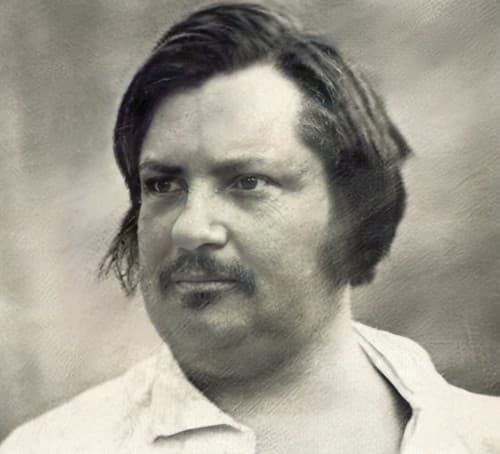
Honoré de Balzac was a French novelist and playwright. The novel sequence La Comédie humaine, which presents a panorama of post-Napoleonic French life, is generally viewed as his magnum opus.

Ashley Antoinette
4.6

Mark McDonald
4.4
Luo Guanzhong
4.4

Mia McKenzie
4.3

Dorothy Parker
4.3

Joaquim Maria Machado de Assis
4.3

James Thurber
4.2

Terry Kay
4.2