“Angels are not supposed to be able to feel pain. But then, we’re not supposed to be able to fall in love either.”
— Penryn reflects on her forbidden feelings for Raffe.

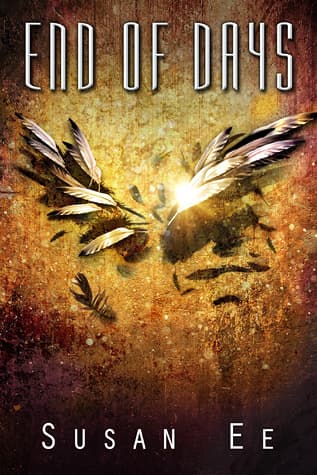
Susan Ee (2015)
Genre
Science Fiction
Reading Time
286 min
Key Themes
See below
Sign in to track this book
Angels unleash an apocalyptic war. A human girl and a winged angel, desperate to heal their loved ones, must confront dark revelations about his past. They choose between their species and their forbidden love to save a shattered world.
After the events at the aerie, Penryn and Raffe are on the run. Penryn needs to find a doctor for her sister, Paige, who still suffers from angel experiments, showing monstrous traits and a craving for human flesh. Raffe also needs a doctor to reattach his original wings, which he believes Beliel stole. Their initial search leads them to a group of human survivors, but their main goal is to find Beliel, who they suspect holds the key to both their problems. They are constantly alert, knowing both angels and humans could be threats in the post-apocalyptic world, and their bond grows stronger amid the shared danger and their separate, yet connected, missions.
During their journey, Penryn and Raffe meet Layla, a mysterious angel who reveals a shocking truth: Raffe is the son of the Archangel Gabriel. This revelation carries significant weight, as a prophecy says the Archangel's son will either end the angels' reign or begin a new era. This news complicates Raffe's desire to simply reclaim his wings and escape the conflict, placing a heavy burden of destiny on him. Penryn struggles with the implications of Raffe's lineage, understanding his importance is far greater than she first thought.
After learning of his parentage, Raffe is told that to fulfill his destiny, he must find the Scythe of Gabriel, a legendary weapon of immense power. This quest is important, as the scythe is believed to be the only weapon that can defeat the Elder, the ancient entity behind the angels' actions. Penryn, despite being human, promises to help Raffe in this dangerous task. Their search is full of danger, leading them through desolate lands and encounters with various groups, both human and angelic, who also know about the scythe's importance.
As Penryn and Raffe get closer to the scythe, they first encounter the Elder's influence and its terrifying creations: the serpent angels. These creatures are grotesque mutations, showing the Elder's corrupting power, and they are a significant threat. This encounter confirms the true horror of the Elder's plan and the stakes of their mission. Penryn sees firsthand the monstrous transformation angels can undergo, strengthening her understanding of the desperate situation and the need for the scythe to fight this overwhelming evil.
Realizing the scale of the threat, Raffe and Penryn must form an uneasy alliance with a group of angels who also oppose the Elder, led by the Archangel Uriel. This alliance is tense, as many of these angels still see humans as inferior or enemies, and Raffe's position as Gabriel's son is met with suspicion by some. Penryn, as a human, struggles to earn their trust, but her resourcefulness and loyalty to Raffe slowly begin to win some over. This fragile partnership highlights the need for unity against a common, greater enemy.
Throughout the journey, Paige's condition worsens. She has increasingly violent urges and struggles to control her monstrous form, causing fear and distress for Penryn. Penryn desperately seeks a way to cure her sister, but the limited medical knowledge and resources in their post-apocalyptic world are useless. This leads to heartbreaking moments where Penryn must make difficult choices to protect others from Paige, while still hoping to find a solution. Paige's internal struggle between her humanity and her transformed state is a constant source of anguish for Penryn.
After a dangerous search, Raffe and Penryn finally find the Scythe of Gabriel. However, it is not just a weapon but a conduit of divine power, capable of both creation and destruction. Raffe learns that wielding it requires immense control and a deep understanding of its purpose. The scythe's power is connected to the very fabric of existence, and Raffe realizes the immense responsibility that comes with possessing it. This discovery marks a turning point, giving Raffe the means to confront the Elder, but also burdening him with a serious choice.
The final confrontation takes place in a desolate, ruined landscape. Raffe, wielding the Scythe of Gabriel, leads the alliance of angels and humans against the Elder and its formidable army of serpent angels. Penryn fights alongside them, using her wits and combat skills to protect Raffe and their allies. The battle is brutal and chaotic, with many casualties on both sides. The Elder reveals its true, terrifying form, showing its ancient and malevolent power, pushing Raffe to his limits as he struggles to control the scythe and defeat the cosmic entity threatening all life.
In the battle's climax, Raffe realizes that to truly defeat the Elder, he must make the ultimate sacrifice. He uses the Scythe of Gabriel to absorb the Elder's essence, becoming the new Elder, but losing his own identity and his connection to Penryn. This selfless act cleanses the world, but leaves Penryn heartbroken. Faced with the choice of remaining in a world without Raffe or trying to bring him back, Penryn makes a difficult decision, driven by her love and her refusal to give up on him, even if it means confronting the divine.
After the Elder's defeat and Raffe's sacrifice, the world is changed forever. The angels are diminished, and humanity is left to rebuild. Penryn, though grieving, finds comfort in the fact that Paige is finally cured, returned to her human form. She begins a new path for herself, dedicating her efforts to helping rebuild the human world and fostering peace between the remaining groups. The ending suggests a future where Penryn, though always marked by her experiences, embraces her role as a leader and a bridge between worlds, always remembering Raffe's sacrifice and their shared journey.
The Protagonist
Penryn transforms from a protective sister focused solely on her family's survival into a leader capable of uniting factions and making difficult choices for the greater good, while never losing her compassion.
The Co-protagonist/Love Interest
Raffe evolves from a self-serving angel focused on reclaiming his power into a selfless leader who embraces his destiny and sacrifices himself for the good of all.
The Supporting Character
Paige undergoes a physical and psychological struggle, eventually finding a cure and regaining her humanity, symbolizing hope and the possibility of healing.
The Supporting Character
Her arc remains largely static in terms of mental state, but her visions become increasingly relevant, guiding Penryn indirectly.
The Antagonist/Supporting
Beliel remains largely antagonistic, though his ultimate fate serves as a demonstration of the Elder's overwhelming power.
The Supporting Character
Uriel transitions from a rigid, distrustful leader to a more open-minded ally, recognizing the need for unity across species.
The Antagonist
The Elder's influence grows throughout the series, culminating in its direct confrontation and eventual defeat, but at a great cost.
The Supporting Character
Layla's role is primarily to deliver exposition and push the plot forward, her character arc is largely static.
This theme explores the blurred lines between human and monster. Paige's transformation is central, as she physically becomes a monster but struggles to keep her humanity. Penryn grapples with the morality of her sister's condition. Conversely, angels, often seen as divine, commit monstrous acts, forcing Penryn and Raffe to question who the true monsters are. The Elder's corruption, turning angels into serpent-like creatures, further emphasizes that monstrosity is not just physical but also a state of being, often born from power and malice.
“Just because you have wings doesn't mean you're an angel. And just because you don't have wings doesn't mean you're not.”
Love, in its various forms, drives much of the story and demands immense sacrifice. Penryn's fierce love for Paige compels her to endure unimaginable hardships, while her developing romantic love for Raffe leads her to risk her life repeatedly. Raffe's love for Penryn and his growing sense of responsibility for the world ultimately lead him to make the ultimate sacrifice, giving up his identity and his chance at a normal life. The theme explores how love can be both a powerful motivator for survival and a catalyst for profound selflessness, defining the characters' most significant choices.
“I would give up everything for you. Everything.”
The prophecy surrounding Raffe's lineage as the Archangel Gabriel's son and his role in the apocalypse forces him to confront the tension between a preordained destiny and his desire for free will. While he initially resists the burden of prophecy, he eventually accepts his fate, making choices that align with, yet also define, his destiny. Penryn, too, makes choices that shape events, demonstrating that even within a grand, apocalyptic narrative, individual agency and personal decisions hold immense power. The story suggests that destiny may set the stage, but free will dictates how the play unfolds.
“Sometimes, the only way to save the world is to lose yourself.”
Despite the grim, apocalyptic setting and the overwhelming destruction, a persistent theme of hope for redemption and rebuilding emerges. Paige's eventual cure symbolizes the possibility of healing from profound trauma and transformation. The formation of alliances between humans and angels, despite their historical animosity, suggests that unity can lead to a better future. The ending, with Penryn leading efforts to rebuild the human world, reinforces the idea that even after cataclysmic events, humanity's resilience and capacity for creating a new beginning can prevail, offering a glimmer of optimism amidst the devastation.
“The world was broken, but it wasn't dead. And neither were we.”
A legendary divine weapon key to defeating the Elder.
The Scythe of Gabriel serves as a powerful MacGuffin and a symbol of Raffe's destiny. Its legendary status and immense power drive a significant portion of the plot, as Raffe and Penryn actively seek it. It is not merely a weapon but a conduit of cosmic power, capable of both creation and destruction, which Raffe must learn to control. Its acquisition elevates Raffe's status and provides the means for the final confrontation, making it a crucial element in the resolution of the overarching conflict.
A physical and psychological manifestation of angelic cruelty.
Paige's monstrous transformation serves multiple plot functions. It is Penryn's primary motivation, fueling her desperate search for a cure. It also acts as a tangible representation of the angels' cruelty and the horrifying consequences of their experiments on humans. Furthermore, Paige's internal struggle between her human and monstrous instincts highlights the theme of humanity versus monstrosity, adding emotional depth and constant tension to Penryn's journey. Her eventual cure provides a powerful symbol of hope and redemption.
A pervasive evil force that twists and controls.
The Elder's corruption is a central antagonist device, manifesting through the transformation of angels into terrifying 'serpent angels' and its manipulation of the angelic hierarchy. This pervasive evil creates a sense of dread and urgency, raising the stakes of the conflict. It explains the widespread chaos and suffering in the world, providing a clear, ultimate enemy that unites disparate factions. The Elder's ability to corrupt both physically and morally underscores the profound threat it poses to all life and free will.
A foretelling of Raffe's destiny that guides his path.
The prophecy surrounding the Archangel Gabriel's son (Raffe) serves as a significant plot driver, imbuing Raffe with a sense of destiny and responsibility. It provides a larger framework for the conflict, suggesting that Raffe is a chosen figure with a pivotal role to play in the fate of the world. This device raises the stakes for Raffe's personal journey, transforming him from a self-interested angel into a reluctant savior, and adds a layer of cosmic significance to his actions and decisions throughout the narrative.
“Angels are not supposed to be able to feel pain. But then, we’re not supposed to be able to fall in love either.”
— Penryn reflects on her forbidden feelings for Raffe.
“Hope is a dangerous thing. It can drive a man to do crazy things.”
— Raffe comments on the human drive for survival and hope.
“The world had ended, but life went on. It always does.”
— Penryn observes the resilience of life after the apocalypse.
“Sometimes the only way to save someone is to let them go.”
— Penryn grapples with difficult choices regarding her family and Raffe.
“We are all monsters in our own way. Some of us just hide it better than others.”
— Raffe acknowledges the darkness within himself and others.
“There are some things you can’t outrun, no matter how fast you are.”
— Penryn realizes the inevitability of certain fates.
“Love isn't a choice, it's a consequence.”
— A reflection on the nature of love, particularly between Penryn and Raffe.
“Even in the end of days, there is still beauty to be found.”
— Penryn finds moments of peace and beauty amidst the chaos.
“Sometimes the greatest strength is in knowing when to surrender.”
— A character learns the value of strategic retreat or acceptance.
“We are defined not by our origins, but by the choices we make.”
— A theme explored through the characters' decisions and their impact.
“The line between good and evil is a lot blurrier than people like to think.”
— Characters encounter morally ambiguous situations and individuals.
“Fear can be a powerful motivator, but it can also be a paralyzing force.”
— Penryn experiences both the motivating and debilitating aspects of fear.
“Sometimes, the only way to find your way home is to get lost first.”
— Penryn's journey takes her far from what she knew, ultimately leading her to a new understanding of 'home'.
“Even angels bleed.”
— A metaphorical and literal statement about the vulnerability of powerful beings.
Ready to see how well you understood this book? Take our interactive quiz with 10 questions.

Biography coming soon.