“I was a good boy, I always was. I never broke the rules. I just bent them until they snapped.”
— Roscoe's reflection on his past actions and self-perception.

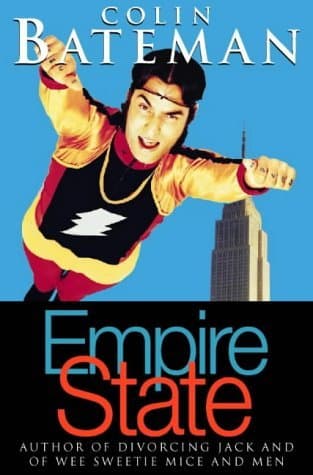
Colin Bateman (1997)
Genre
Fiction
Reading Time
512 min
Key Themes
See below
Sign in to track this book
Nathan Jones navigates a hilariously catastrophic New York City, where a breakup with a drag artist, a mugging, and an S&M mishap are just the beginning of his increasingly absurd misadventures.
Nathan Jones, a struggling writer in a London flat, finds his life spiraling when his girlfriend, Sarah, leaves him for a drag artist named Crystal. Devastated and lost, Nathan decides to walk home after a night of drinking, only to be mugged by youths who steal his wallet and phone. This bad luck sets the tone for Nathan's bizarre and dangerous journey. He deals with loneliness, money problems, and a general sense of incompetence, leading him to make impulsive and often bad decisions to regain control and understand the chaos around him.
Desperate to forget Sarah and his recent troubles, Nathan responds to a newspaper ad for 'adult services.' He arranges to meet a dominatrix named Madame X, hoping for a simple distraction. However, the encounter quickly turns into a nightmare. Madame X, mistaking Nathan for a masochistic client due to his nervousness and a misunderstanding, handcuffs him to a bed and cuts him with a razor. Nathan, terrified and in pain, struggles to explain the mistake, showing his general inability to navigate even simple social interactions, let alone the S&M world.
Bleeding and traumatized, Nathan eventually frees himself from Madame X's apartment, leaving her confused and angry. He stumbles through the streets, seeking help, and makes his way to a hospital emergency room. While being treated, Nathan meets an eccentric old woman named Mrs. Higgins, also a patient. Mrs. Higgins, with a strange mix of wisdom and delusion, offers Nathan cryptic advice and makes peculiar observations about his life, hinting at a larger, unseen force. This encounter begins Nathan's reluctant involvement in events beyond his understanding, subtly introducing absurd and supernatural elements.
Through Mrs. Higgins and his own investigations, Nathan slowly uncovers information about a secret organization called the 'Empire State.' This group, led by a charismatic guru, preaches extreme self-improvement and radical societal change, promising followers enlightenment and power. Nathan learns that the 'Empire State' has growing influence and a dark reputation, hinting at cult-like practices and dangerous motives. The group's presence begins to loom large in Nathan's world, drawing him into hidden agendas and escalating danger, even as he tries to distance himself.
Despite his reluctance, Nathan finds himself increasingly involved with the 'Empire State.' His attempts to understand the group's activities, combined with a series of bizarre coincidences, lead him to inadvertently infiltrate their ranks. He attends their meetings, observes their rituals, and even gets the attention of some high-ranking members. Nathan's bumbling, unassuming nature ironically makes him seem less threatening, allowing him access to information and situations a more deliberate investigator might not achieve. He struggles to maintain a facade of belief while secretly trying to piece together the cult's true intentions and the extent of their power.
As Nathan goes deeper, he sees the Guru's manipulative influence over his followers, who seem to surrender their wills to his command. The Guru's teachings, initially harmless, gradually reveal a sinister undertone, hinting at a desire for absolute control and destructive goals. To Nathan's shock, he also discovers that his ex-girlfriend, Sarah, has joined the 'Empire State,' seemingly drawn in by the Guru's charisma. This personal connection intensifies Nathan's motivation to expose the cult, changing his passive observation into an urgent mission to save Sarah and potentially others from the Guru.
Nathan's investigation becomes more desperate as he uncovers disturbing truths about the 'Empire State.' He learns of disappearances, suspicious deaths, and the cult's involvement in illicit activities. The body count associated with the 'Empire State' rises, making it clear that the Guru's ambitions are far more dangerous than anyone suspected. Nathan, despite his fear and inexperience, feels a moral imperative to expose the cult's true nature before more lives are lost. He pieces together information, often relying on his wit and sheer luck to evade detection by the cult's enforcers.
As Nathan gathers more evidence, he realizes a direct confrontation with the Guru is coming. He reluctantly forms alliances with unexpected characters, including Mrs. Higgins and even, to some extent, Madame X, who has her own grudge against the Guru for unrelated reasons. These individuals, united by their opposition to the 'Empire State,' pool their limited resources and knowledge. Nathan, despite his sense of inadequacy, begins to show courage and resourcefulness, understanding that Sarah's fate and potentially many others rests on his ability to expose the Guru's deception and destructive plans.
The climax sees Nathan and his allies facing the Guru and his loyal followers. The confrontation is chaotic and dangerous, pushing Nathan to his limits. During the struggle, a shocking revelation comes to light: the Guru is not just a charismatic cult leader, but a figure with a deeper, more personal connection to Nathan's past and the broader narrative. The Guru's true motives are unveiled, exposing a grander scheme that goes beyond simple cult leadership and delves into identity, manipulation, and the fabric of reality, leaving Nathan reeling from the implications.
After the confrontation, the 'Empire State' is largely dismantled, its power broken, and its followers dispersed. Sarah is rescued, though deeply affected by her experience. Nathan, though scarred, emerges as an unlikely hero. However, the victory is bittersweet. The revelations about the Guru and the true nature of the 'Empire State' leave Nathan with lingering questions about identity, reality, and the pervasive nature of manipulation. While the immediate threat is neutralized, Nathan's worldview has changed, suggesting some mysteries may never be fully solved, and some scars never truly heal.
The Protagonist
Nathan transforms from a passive victim of circumstance into an unlikely, albeit still bumbling, hero who finds a degree of courage and purpose in confronting a dangerous cult.
The Supporting
She moves from a conventional relationship to seeking alternative fulfillment, ultimately becoming a victim of cult manipulation before being rescued.
The Supporting
Transforms from an antagonistic figure who harms Nathan into a pragmatic, albeit reluctant, ally against a common enemy.
The Supporting
Serves as a consistent, if cryptic, source of guidance and wisdom for Nathan, helping him navigate the cult's mysteries.
The Antagonist
His true identity and manipulative goals are slowly unveiled, culminating in a dramatic confrontation that exposes his true nature.
The Mentioned
No significant arc; serves as a plot device to initiate Nathan's journey.
The novel highlights the bizarre, illogical, and often humiliating experiences Nathan endures, showing a world where common sense is often absent. From being left for a drag artist to being cut by a dominatrix in a misunderstanding, Nathan's journey is a series of improbable and ridiculous events. This theme is clear in other characters' casual acceptance of the bizarre, and Nathan's own bumbling attempts to navigate a world that seems to delight in making him suffer. The 'Empire State' cult itself, with its grand promises and nonsensical rituals, embodies this absurdity, suggesting that even serious threats can stem from ridiculous origins.
“''I mean, where do you go from here? Getting dumped for a drag queen, then mugged, then tied up and sliced by an S&M hooker. It's like a bad joke, only I'm the punchline.'”
Nathan's struggles with his own identity are central to the story. He is a 'Nathan Jones' – a common name for an uncommon life – and he constantly questions who he is and his purpose. His initial lack of self-worth worsens with his misfortunes, and he deals with feelings of inadequacy and invisibility. The 'Empire State' cult preys on individuals seeking a stronger sense of self, promising transformation and power. The Guru's manipulative tactics and the revelation of his own fluid identity further emphasize this theme, suggesting that identity can be constructed, deconstructed, and even stolen. Nathan's journey forces him to confront his perceived weaknesses and find self-worth through his actions.
“'I was Nathan Jones, a name as bland as unbuttered toast, and my life was just as uninspired. Who was I, really, beyond the sum of my recent disasters?'”
The 'Empire State' cult illustrates how charismatic leaders can exploit people's vulnerabilities and desires for belonging or self-improvement. The Guru's ability to manipulate followers into unquestioning loyalty, even to the point of dangerous acts, highlights the peril of blind faith. Sarah's easy recruitment into the cult, despite her previous independence, shows how easily individuals can fall prey to such influences when searching for meaning or direction. The theme warns against surrendering critical thinking to an external authority, no matter how appealing, and emphasizes independent thought.
“'He didn't just speak; he wove a spell. You could feel it, the way people leaned in, desperate for whatever he was selling. And they'd buy anything.'”
The novel portrays a gritty and disturbing side of London, far from tourist brochures. Nathan's journey takes him through dilapidated flats, seedy adult services, and the hidden meeting places of a dangerous cult. The city becomes a character, a sprawling, indifferent entity where strange and dangerous things happen beneath the surface. Characters like Madame X and the various members of the 'Empire State' cult highlight the diverse and often morally ambiguous inhabitants of this urban setting. This theme emphasizes the isolation and anonymity that can exist within a large city, where individuals can easily get lost or fall prey to hidden dangers.
“'London, I thought, wasn't just a city; it was a thousand cities, layered on top of each other, some glittering, some festering, and I seemed to have fallen into one of the festering ones.'”
The mysterious cult that drives the central conflict and Nathan's investigation.
The 'Empire State' cult acts as a central MacGuffin. Initially, its nature and purpose are vague, serving primarily to draw Nathan into a larger mystery. It provides the overarching goal for Nathan – to understand and ultimately dismantle it – without its exact details being fully revealed until later in the story. The cult's existence and the Guru's power are the primary motivators for Nathan's actions, pushing him out of his stagnant life and into danger. It is the object of desire (for power, for followers) for the antagonist and the object of investigation for the protagonist, giving structure to the narrative.
Nathan's subjective and often self-deprecating perspective shapes the reader's understanding of events.
The story is told from Nathan's first-person perspective, making him an inherently unreliable narrator. His self-deprecating humor, neuroses, and general ineptitude color his descriptions of events and other characters. The reader experiences the bizarre occurrences through Nathan's bewildered and often terrified eyes, which can lead to humorous misunderstandings or a skewed perception of danger. This device allows for comedic relief and emphasizes the absurdity of Nathan's situation, as his internal monologue often contradicts the seriousness of the external events, making the reader question the full truth of what is happening.
A series of improbable chance encounters and accidental discoveries propel Nathan's investigation.
Nathan's journey is heavily reliant on an almost unbelievable string of coincidences and serendipitous encounters. From meeting Mrs. Higgins in the hospital to inadvertently gaining access to cult meetings, Nathan rarely makes a deliberate, successful investigative move. Instead, he stumbles into crucial information or encounters key characters by accident. This device reinforces the theme of absurdity and Nathan's passive role in his own life, highlighting that fate, or perhaps just sheer bad luck, is guiding his path. It also allows for unexpected plot developments and maintains a sense of unpredictable, chaotic progression.
The initial focus on Sarah's new relationship distracts from the true, larger threat.
Sarah leaving Nathan for Crystal initially presents itself as the primary source of Nathan's distress and the driving force for his actions. However, this personal drama quickly becomes a red herring, diverting both Nathan's and the reader's attention from the far greater and more dangerous threat of the 'Empire State' cult. While Sarah's departure is the catalyst for Nathan's downward spiral, the narrative soon expands beyond this personal slight to reveal a much larger, more sinister plot. This device effectively broadens the scope of the story and elevates the stakes beyond a simple romantic breakup.
“I was a good boy, I always was. I never broke the rules. I just bent them until they snapped.”
— Roscoe's reflection on his past actions and self-perception.
“New York was a beast. It would chew you up and spit you out, or it would make you stronger. There was no middle ground.”
— Roscoe's general observation about the nature of New York City.
“Fear was a funny thing. It could paralyse you, or it could make you do things you never thought possible.”
— Roscoe contemplating the effects of fear during a dangerous situation.
“Money was the great equalizer, the great corruptor, and the great motivator. It was everything and nothing.”
— Roscoe's cynical view on the role of money in society.
“The past wasn't dead. It wasn't even past. It was always there, lurking, waiting to bite you when you least expected it.”
— Roscoe's internal monologue about how past events continue to influence the present.
“He learned early on that charm could get you further than a gun, but a gun could always back up the charm.”
— A reflection on the strategies Roscoe employed in his criminal life.
“Some people are born to follow. Some are born to lead. And some are just born to cause trouble.”
— Roscoe categorizing different types of people he encounters.
“Loyalty was a currency in their world, more valuable than dollars, but just as easily spent.”
— Roscoe's perspective on loyalty within his criminal circle.
“The city never slept, and neither did its demons.”
— A vivid description of the relentless nature of New York and its hidden dangers.
“Every lie built a wall, and eventually, you were trapped inside your own maze.”
— Roscoe reflecting on the cumulative effect of his deceptions.
“Justice was a luxury few could afford, and even fewer actually received.”
— Roscoe's cynical view on the concept of justice in his world.
“He knew the smell of trouble like a chef knows his spices.”
— A metaphorical description of Roscoe's street smarts and intuition for danger.
“The only thing harder than getting to the top was staying there.”
— Roscoe's observation about the constant struggle for power and dominance.
“Sometimes the biggest monsters wear the best suits.”
— Roscoe's insight into the deceptive appearances of powerful criminals.
Ready to see how well you understood this book? Take our interactive quiz with 10 questions.

Colin Bateman is a Northern Irish author known for his darkly humorous crime novels. His works, including the critically acclaimed 'Empire State,' often blend gritty realism with sharp wit and unexpected plot twists. Bateman's distinctive voice and engaging storytelling have earned him a dedicated readership within the crime fiction genre.

Ashley Antoinette
4.6

Mark McDonald
4.4
Luo Guanzhong
4.4

Mia McKenzie
4.3

Dorothy Parker
4.3

Joaquim Maria Machado de Assis
4.3
James Thurber
4.2

Terry Kay
4.2