“Reason is not a faculty we use in order to obtain truth. Reason is a faculty we use in order to be more effective in our lives.”
— Elizabeth Costello's lecture on animal rights.

J.M. Coetzee (2015)
Genre
Fiction
Reading Time
240 min
Key Themes
See below
Sign in to track this book
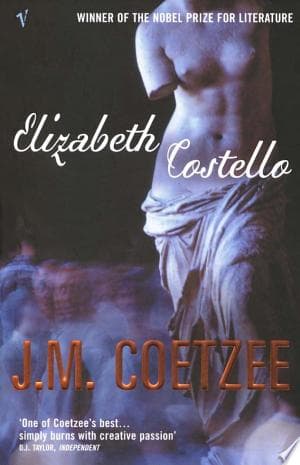
An aging, celebrated novelist travels the world, grappling with fame and her struggle to articulate her deepest beliefs.
Elizabeth Costello, an aging Australian novelist, arrives at Appleton College in Pennsylvania to accept the fictional 'St Louis Award for Fiction' and give two lectures. Her son, John, a physics professor at the same college, accompanies her, often feeling embarrassed by her unconventional views. In her first lecture, 'The Animal's Curse,' Elizabeth argues passionately for the ethical treatment of animals, comparing the industrialized killing of animals to the Holocaust. She criticizes humans' capacity for 'sympathetic imagination,' which she believes is limited to their own species. Her lecture provokes discomfort and resistance from the audience and faculty, including her son, who finds her comparisons extreme and her arguments lacking academic rigor.
Following her provocative lecture, Elizabeth Costello participates in a panel discussion with various Appleton College faculty members, including Professor Abraham, an expert in African literature, and Dr. A.D. Schopenhauer, a philosopher. The discussion revolves around animal consciousness and the limits of human understanding and sympathy. Elizabeth challenges the idea that animals are mere automatons, incapable of feeling pain or having an inner life comparable to humans. She rejects purely rational, philosophical arguments, instead appealing to an intuitive, imaginative understanding of animal suffering. John observes these interactions, often mediating or attempting to rationalize his mother's more radical statements, highlighting the tension between academic discourse and Elizabeth's more visceral, moral stance.
This section focuses on John's internal thoughts and his perspective on his mother's character and beliefs. He recounts her past, her literary career, and her lifelong obsession with animal suffering. John struggles to reconcile the brilliant, renowned author with the eccentric, often embarrassing woman who is his mother. He acknowledges her intellectual power but criticizes her methods and her perceived lack of academic rigor. He reflects on their complex relationship, marked by filial duty, frustration, and a grudging admiration for her unwavering moral conviction, even if he does not fully agree with her conclusions or her confrontational style. He feels burdened by her celebrity and her challenging ideas.
Elizabeth Costello is a writer-in-residence on a luxury cruise ship sailing from Athens to Port Said. During this period, she gives a lecture titled 'The Problem of Evil,' where she explores the origins and manifestations of evil in human history and literature. She discusses figures like Hitler and the perpetrators of the Holocaust, questioning how such atrocities could occur. She grapples with language and art's inadequacy to fully comprehend or represent the depths of human cruelty. Her interactions with the cruise ship's passengers and staff are minimal, highlighting her isolation and her internal struggle with philosophical questions, often feeling out of place in the opulent environment.
Elizabeth travels to Africa to visit her sister, Blanche, who is a missionary nun. Blanche is receiving an honorary degree for her decades of service. This visit is a last opportunity for the estranged sisters to reconcile. During their time together, they discuss their differing life paths, their spiritual beliefs, and the role of faith versus reason. Elizabeth, an atheist, struggles to understand Blanche's unwavering devotion and her life of self-sacrifice. They also touch upon storytelling and the impact of the novel in an African context, with Blanche suggesting that African narratives often prioritize community and oral tradition over the individualistic focus of Western fiction. The encounter is fraught with unspoken resentments and the weight of their diverging lives.
Elizabeth attends a literary conference in Amsterdam, where she is scheduled to give a lecture on Franz Kafka's 'Report to an Academy,' a story narrated by an ape named Red Peter. She examines the themes of mimicry, freedom, and the humanization of animals, arguing that Kafka's ape challenges human assumptions about consciousness and language. During her lecture, she notices a man in the audience who strongly resembles Red Peter as described in Kafka's story. This unsettling encounter blurs the lines between fiction and reality for Elizabeth, prompting her to question her own imaginative projections and narrative's power to manifest itself in unexpected ways, intensifying her preoccupation with animal perspectives.
In a surreal, allegorical sequence, Elizabeth finds herself in a place resembling a spiritual or bureaucratic purgatory, needing to pass through a gate. To do so, she must answer questions about her beliefs, specifically regarding God, animals, and the nature of her soul. She struggles to articulate a definitive faith or a clear set of convictions that satisfies her interrogators, who include a priest and a judge. She confesses her inability to believe in God in the traditional sense, and her primary conviction seems to be the suffering of animals. This section explores her intellectual and spiritual honesty, her refusal to conform to prescribed doctrines, and her deep empathy for non-human life, even in the face of judgment.
While awaiting judgment at the gate, Elizabeth observes a dog and its master. This observation prompts her to reflect on the nature of the human-dog relationship, particularly loyalty and obedience. She questions whether the dog's devotion is a genuine expression of affection or merely a conditioned response to its dependence on humans. This introspection ties back to her earlier concerns about animal consciousness and agency. She wonders if humans truly understand the inner lives of animals or if they project their own desires and interpretations onto them. The dog becomes a symbol of the broader ethical dilemma she faces regarding human dominion over other species.
After her interrogation, Elizabeth is not definitively granted passage through the gate, nor is she entirely denied. Her judges remain unconvinced by her explanations, particularly her lack of traditional faith and her intense focus on animal suffering. She remains in an indeterminate state, her soul unsettled, unable to fully align with either the secular or the religious frameworks presented to her. This concluding section emphasizes the ongoing nature of her philosophical and ethical quest, her refusal to accept easy answers, and her enduring commitment to a moral vision that often puts her at odds with conventional thought. Her journey remains one of perpetual inquiry and discomfort.
The Protagonist
Elizabeth's arc is less about transformation and more about an unwavering commitment to her moral and intellectual quest, despite societal resistance and personal discomfort.
The Supporting
John''s arc involves a deepening understanding of his mother's unwavering moral core, even if he doesn't fully embrace her methods.
The Supporting
Blanche's character remains steadfast in her faith and commitment, serving as a foil to Elizabeth's philosophical uncertainty.
The Supporting
Professor Abraham serves as a static intellectual counterpoint, facilitating the exploration of Elizabeth's ideas.
The Mentioned
These figures serve as a catalyst for Elizabeth's final, internal examination of her life's convictions.
The Mentioned
Red Peter is a literary figure whose story acts as a key thematic touchstone for Elizabeth's ongoing philosophical inquiry.
This is the central, most pervasive theme. Elizabeth Costello passionately argues for the ethical treatment of animals, often comparing factory farming and the industrialized killing of animals to the Holocaust. She challenges human anthropocentrism, arguing that humans lack the 'sympathetic imagination' to truly understand and empathize with animal suffering. Her lectures, particularly 'The Animal's Curse,' force the reader to confront uncomfortable truths about humanity's dominion over other species and the moral implications of their actions. This theme explores the boundaries of empathy and the definition of consciousness beyond the human.
“We are surrounded by an enterprise of degradation, cruelty, and killing which rivals any atrocity in history.”
The novel repeatedly questions what constitutes consciousness, especially in non-human animals. Elizabeth challenges the scientific and philosophical frameworks that limit consciousness to human beings, arguing for an intuitive, imaginative understanding of animal inner lives. The discussions at Appleton College and her reflections on Kafka's Red Peter explore whether animals feel pain, have agency, or possess a form of self-awareness. This theme explores the limits of human empathy and the difficulty of truly knowing another's experience, whether human or animal.
“How do we know what it is like to be a bat? How do we know what it is like to be a cow?”
Elizabeth Costello, as a novelist, constantly grapples with literature's power and limitations. She questions whether fiction can truly convey suffering, explore the nature of evil, or effect genuine moral change. Her lecture on 'The Problem of Evil' reflects her struggle with language's inadequacy to represent extreme human cruelty. Her engagement with Kafka's 'Report to an Academy' shows her belief in literature's capacity to challenge human perspectives and imagine non-human consciousness, yet she also encounters the unsettling manifestation of her literary subject in reality, blurring the lines between art and life.
“Literature can do everything but save the world.”
A recurring tension exists between logical, academic reasoning and intuitive, passionate conviction. John, the academics, and the 'judges' at the gate often demand rational, evidence-based arguments from Elizabeth. However, Elizabeth frequently appeals to a more visceral, imaginative, or even spiritual understanding, particularly concerning animal suffering. Her atheism contrasts with her sister Blanche's unwavering faith, highlighting different paths to understanding the world and moral truth. This theme explores the different ways humans seek meaning and truth, and the limitations of purely rational approaches to profound ethical dilemmas.
“Reason is what human beings use to justify what they do.”
The novel portrays Elizabeth Costello as an aging public figure whose life has become a series of ceremonial appearances. Despite her renown, she often feels isolated and misunderstood, particularly by her son and the academic establishment. Her public persona as a 'famous writer' contrasts with her private struggles and her profound, often unsettling, moral convictions. The theme explores the challenges of maintaining intellectual integrity and personal authenticity in the face of public scrutiny and the inevitable decline of age. Her journey is one of internal solitude amidst external demands.
“She has become a body of work, a name, a set of opinions.”
The narrative is structured around Elizabeth Costello's formal lectures and internal essays.
Much of the novel's content is delivered through Elizabeth Costello's public lectures ('The Animal's Curse,' 'The Problem of Evil,' 'The Poet and the Ape') and internal monologues that read like essays. This device allows Coetzee to directly present complex philosophical and ethical arguments, rather than embedding them solely within dialogue or action. It highlights Elizabeth's role as an intellectual and public speaker, and it challenges the reader to engage with her ideas directly, mimicking the experience of her audiences. This format also lends the book a meditative and argumentative quality, blurring the lines between fiction and philosophical discourse.
The novel employs allegorical scenes and elements of surrealism, particularly in its later sections.
The 'Gatekeeper' section, where Elizabeth is interrogated about her beliefs before passing through a gate, is a clear example of allegory, representing a metaphorical trial of the soul or a reckoning with one's life. Similarly, the 'appearance' of Red Peter, the ape from Kafka's story, in the audience of Elizabeth's lecture introduces a surreal element. These devices allow Coetzee to explore profound existential and spiritual questions outside the strict confines of realism, adding a layer of symbolic meaning and psychological depth to Elizabeth's journey and her internal struggles.
The novel frequently comments on its own nature as a fictional text and the act of storytelling.
The book itself is presented as a series of 'lessons' or 'chapters' that chronicle Elizabeth Costello's intellectual journey. The character of Elizabeth Costello is also a writer, and her discussions about the role and limits of literature ('The Novel in Africa,' 'The Problem of Evil') are metafictional, reflecting on the craft and purpose of storytelling within the story itself. This device invites the reader to consider the artificiality of fiction, the relationship between author and character, and the power of narrative to shape understanding and moral conviction.
The novel extensively references other literary works and philosophical ideas.
Coetzee weaves in numerous references to other texts and thinkers, most notably Franz Kafka's 'Report to an Academy,' but also allusions to philosophers like Thomas Nagel ('What Is It Like to Be a Bat?') and historical events like the Holocaust. This intertextuality enriches the novel's thematic depth, placing Elizabeth Costello's arguments within a broader intellectual and literary tradition. It also serves to validate her arguments by demonstrating their connection to established thought, while simultaneously allowing for their critique and reinterpretation within the novel's unique context.
“Reason is not a faculty we use in order to obtain truth. Reason is a faculty we use in order to be more effective in our lives.”
— Elizabeth Costello's lecture on animal rights.
“We are not ourselves, we are what we do.”
— Discussing the nature of identity and action.
“There are no good books, only good readers.”
— A reflection on the subjective experience of literature.
“The animal is not a machine, it is a being.”
— Part of her argument against the mechanistic view of animals.
“We have to think our way into the being of another. It's the only way.”
— Emphasizing empathy and imaginative understanding.
“What is it like to be a bat? We will never know. But we can imagine.”
— Referencing Thomas Nagel's essay, in the context of animal consciousness.
“The business of the novelist is to portray the world as it is, not as it ought to be.”
— A statement on the role and responsibility of a novelist.
“Perhaps the only way to be a good human being is to be a bad animal.”
— A provocative thought on the human condition in relation to other species.
“The novel is not a lecture, it is an experience.”
— Distinguishing the function of literature from academic discourse.
“We live in a world of symbols, not of things.”
— Reflecting on the mediated nature of human perception.
“The heart has its reasons, which reason knows nothing of.”
— A direct quote from Pascal, used to underscore the limits of pure rationality.
“To be human is to be caught in a net of stories.”
— Exploring the narrative construction of human identity and reality.
“Ignorance is not bliss. Ignorance is just ignorance.”
— A straightforward dismissal of the 'ignorance is bliss' adage.
“The question is not 'Can they reason?' nor 'Can they talk?' but 'Can they suffer?'”
— Quoting Jeremy Bentham in her argument for animal rights.
Ready to see how well you understood this book? Take our interactive quiz with 10 questions.
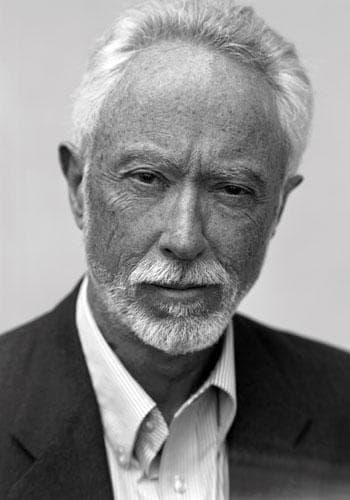
John Maxwell Coetzee OMG is a South African and Australian novelist, essayist, linguist, translator and recipient of the 2003 Nobel Prize in Literature. He is one of the most critically acclaimed and decorated authors in the English language. He has won the Booker Prize (twice), the CNA Prize (thrice), the Jerusalem Prize, the Prix Femina étranger, and The Irish Times International Fiction Prize, and holds a number of other awards and honorary doctorates.

Ashley Antoinette
4.6

Mark McDonald
4.4
Luo Guanzhong
4.4
Mia McKenzie
4.3
Dorothy Parker
4.3
Joaquim Maria Machado de Assis
4.3

James Thurber
4.2
Terry Kay
4.2