“Aujourd'hui, maman est morte. Ou peut-être hier, je ne sais pas.”
— The very first lines of the novel, setting the tone for Meursault's detachment.

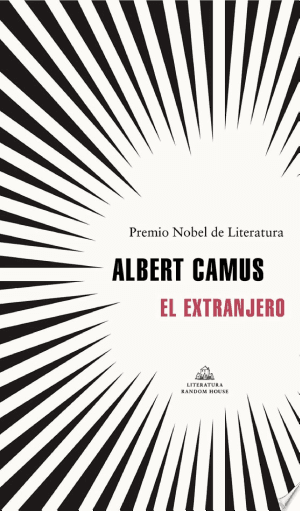
Albert Camus (2021)
Genre
Fiction
Reading Time
120 min
Key Themes
See below
Sign in to track this book
In sun-drenched Algiers, an indifferent man's life unravels from his mother's death to a senseless murder, revealing the chilling absurdity of existence.
Meursault, a clerk in Algiers, receives a telegram that his mother died at the Marengo old people's home. He travels there by bus, noticing the heat and his wish for a cigarette and coffee. At the vigil, he refuses to see his mother's body and feels distant from the other mourners, especially the director and Thomas Pérez, his mother's close friend. During the funeral, the intense heat and bright sun bother him more than the event itself. He thinks about the formal nature of it all, feeling no deep sadness, only physical discomfort and a desire for it to end so he can return to his life.
The day after the funeral, Meursault goes to the public swimming pool where he meets Marie Cardona, a former typist from his office. They swim together, and later that evening, they go to the cinema to see a comedy. They spend the night together, and Meursault notices her beauty and their mutual pleasure. When Marie asks if he loves her, Meursault replies that it means nothing, and he does not think so. He finds their relationship mostly physical and convenient, fitting his indifferent approach to life. He resumes his normal weekend activities, including watching people from his balcony.
Meursault meets his neighbor, Raymond Sintès, a man with a bad reputation, who invites him to dinner. Raymond tells how he beat his mistress after finding she was cheating. He asks Meursault to write a letter to her, inviting her back only to humiliate her further. Meursault agrees to write the letter, seeing no reason not to. He observes Raymond's violent tendencies and his desire for revenge without judgment. This interaction further highlights Meursault's passive nature and his willingness to take part in others' plans without personal involvement or moral thought, even when they involve violence.
Raymond invites Meursault and Marie to spend a Sunday at the beach house of his friend, Masson. The group enjoys swimming and eating. After lunch, Raymond, Masson, and Meursault walk and encounter two Arabs, one of whom is the brother of Raymond's mistress. A fight breaks out, and Raymond is cut with a knife. They return to the house, and Raymond insists on going back to confront the Arabs, taking a pistol. Meursault goes with him, feeling the intense heat and sun. They find the Arabs again, and Raymond, after a tense moment, hands the pistol to Meursault.
Meursault returns to the spring alone, seeking relief from the scorching sun. He meets one of the Arabs again, who still has a knife. The sun, reflecting off the blade and the sand, overwhelms Meursault, causing a sensory overload. He feels a sudden, unexplainable urge and fires Raymond's pistol, killing the Arab. After a pause, he fires four more shots into the body. The act is presented as a result of the oppressive heat and light, rather than a planned decision or self-defense. Meursault feels no immediate regret or emotion about the murder.
Meursault is arrested and taken into custody. During his interrogation by the examining magistrate, he answers truthfully but with his usual indifference. He admits to the murder but struggles to explain a motive beyond the sun and discomfort. The magistrate is particularly bothered by Meursault's lack of remorse and his apparent coldness about his mother's death, which is brought up to describe his character. Meursault finds the legal process boring and confusing, viewing it as a detached observer rather than an active participant in his own defense.
While in prison, Meursault initially struggles with the lack of freedom and Marie. However, he gradually adjusts to the routine. He learns to spend his time by sleeping, recalling memories, and reading an old newspaper clipping about a Czech man murdered by his family. He notices the physical sensations of hunger and thirst, and the passage of time. He finds that he can get used to almost anything, and his indifference allows him to endure confinement without deep suffering or despair, further emphasizing his detachment from common human emotions.
The trial begins, drawing a large crowd and public interest. Meursault is struck by the surreal atmosphere of the courtroom, feeling like an outsider watching the events. The prosecutor, the defense attorney, and the judge all present their arguments, but Meursault feels increasingly distant from the story being built about him. The focus quickly shifts from the murder of the Arab to Meursault's character, especially his lack of emotion at his mother's funeral, which the prosecution uses to paint him as a heartless monster incapable of remorse.
Witnesses are called, including the director of the old people's home, Céleste, Marie, and Raymond. Their testimonies, often twisted or taken out of context, add to the prosecution's image of Meursault as a morally corrupt person. The prosecutor highlights Meursault's indifference at his mother's funeral, his relationship with Marie right after, and his connection with Raymond as proof of his depravity. He argues that Meursault is a danger to society, a man without human feeling, whose actions were planned and malicious, leading to the murder.
Despite his lawyer's attempts to portray him as a victim of circumstances and argue for self-defense, the jury is swayed by the prosecution's strong words about Meursault's moral character. Meursault, watching the proceedings, feels great tiredness and a sense of detachment as the verdict is delivered. He is found guilty of planned murder and sentenced to death by public decapitation. The news of his coming execution leaves him with dread, but also a growing awareness of his own existence and the absurdity of the world.
In the days before his execution, Meursault repeatedly refuses to see the chaplain. When the chaplain insists on visiting him, Meursault initially remains calm, but the chaplain's talk of God and repentance causes a violent outburst. Meursault grabs the chaplain and shouts at him, rejecting false hopes and the meaninglessness of existence. In this moment, he realizes something profound: he fully embraces the indifference of the universe and recognizes his place within it. He finds a strange peace and accepts his fate, wishing for a large crowd to greet him with shouts of hate on his execution day.
The Protagonist
Meursault begins as an utterly indifferent individual, but through his trial and impending execution, he comes to a defiant acceptance of the universe's meaninglessness and finds a form of peace in this realization.
The Supporting
Marie remains relatively unchanged, serving as a foil to Meursault's emotional state.
The Supporting
Raymond remains consistent in his character, serving as a catalyst for Meursault's actions.
The Supporting
The Magistrate fails to comprehend Meursault, reinforcing the protagonist's 'outsider' status.
The Antagonist
The Prosecutor successfully condemns Meursault, representing society's inability to accept his indifference.
The Supporting
The Chaplain's efforts are met with rejection, leading to Meursault's ultimate acceptance of the absurd.
The Supporting
Céleste's testimony fails to sway the court, highlighting the judicial focus on Meursault's perceived character flaws.
The Mentioned
Pérez's character serves to underscore Meursault's emotional detachment at the beginning of the novel.
The main theme of 'El Extranjero' is absurdism, which comes from the human need for meaning in a universe that offers none. Meursault shows this absurdity through his indifference to social rules, his lack of emotion for major life events like his mother's death, and his seemingly motiveless crime. His trial further shows this, as society tries to force meaning and moral judgment on actions that, for Meursault, are simply reactions to immediate feelings. The universe's silence and Meursault's acceptance of its indifference illustrate Camus's exploration of this theme.
“Había sido feliz y lo era todavía. Para que todo se consumara, para que me sintiera menos solo, sólo me quedaba desear que hubiera muchos espectadores el día de mi ejecución y que me recibieran con gritos de odio.”
Meursault's main trait is his deep indifference to the world. He does not grieve his mother, does not tell Marie he loves her, and commits murder without ill will or strong feeling. This detachment is not presented as cruelty but as a basic part of him. He watches life rather than actively taking part in its emotional currents. This theme is clear from the first lines ('Mamá ha muerto hoy. O puede que ayer, no lo sé.') and continues through his trial, where his lack of normal regret is considered more damning than the murder itself. His indifference makes the reader question the truth of society's emotional displays.
“Encontré a Marie y le propuse que nos casáramos. Dijo que sí. Le pregunté si me quería. Dijo que no significaba nada, pero que sin embargo pensaba que sí. Yo le dije que no significaba nada, pero que sin embargo no la quería.”
The novel examines society and its justice system. Meursault's trial becomes a place for society to impose its values and stories on someone who defies them. The court cares less about the facts of the murder and more about Meursault's perceived moral character, especially his failure to show expected emotional responses. The prosecutor creates a story of a heartless monster, and the jury, representing society, condemns him not just for the crime but for being 'other.' This shows how society tries to create order and meaning, even if it means twisting truth and punishing those who challenge its norms.
“Se me reprochaba haber enterrado a mi madre con un corazón de criminal.”
Throughout the novel, Meursault's experiences are heavily shaped by the physical world, especially the oppressive heat and bright sun of Algiers. The sun is not just a background but an active force, adding to his discomfort at the funeral and directly causing the murder. His actions are often described in terms of physical sensations rather than emotional reasons. This focus on the tangible and sensory highlights Meursault's connection to the immediate, physical present, contrasting with the abstract emotional and moral ideas that society tries to impose on him.
“Era el mismo sol que el día en que había enterrado a mamá y, como entonces, me dolían las sienes, y todas las venas me latían a la vez en la superficie de la piel.”
Meursault's detached perspective shapes the entire story.
The story is told entirely from Meursault's first-person perspective, which is crucial for conveying his emotional detachment and indifferent worldview. His flat, factual, and often repetitive language mirrors his lack of emotional depth and subjective interpretation of events. This narrative choice forces the reader to experience the world through his unique lens, without the benefit of an omniscient narrator's judgment or external emotional commentary. It allows the reader to understand his internal logic, even if it defies conventional morality, and to feel the full impact of his alienation.
The sun represents both physical oppression and the indifference of the universe.
The sun is a powerful and recurring symbol in 'El extranjero.' It is constantly present, often described as oppressive, blinding, and burning. It causes Meursault physical discomfort at his mother's funeral and is presented as a direct catalyst for the murder of the Arab. Beyond its literal effect, the sun can be interpreted as symbolizing the indifferent and overwhelming force of the universe itself – a constant, inescapable presence that acts without malice but also without care, much like the absurd reality Meursault eventually embraces.
Contrasting elements highlight Meursault's 'otherness'.
Camus frequently uses juxtaposition to highlight Meursault's detachment and the absurdity of his situation. For example, Meursault's indifference at his mother's funeral is contrasted with Thomas Pérez's profound grief. His physical pleasure with Marie immediately after the funeral stands in stark contrast to societal expectations of mourning. During the trial, the prosecution's passionate condemnation of his character is juxtaposed with Meursault's calm, often confused observations. These contrasts emphasize Meursault's 'outsider' status and the chasm between his internal experience and societal norms.
Subtle hints prepare the reader for Meursault's actions and fate.
While Meursault's actions often seem spontaneous, there are subtle instances of foreshadowing. His casual acceptance of Raymond's violent nature, his indifference to moral consequences, and even his early observations about the heat and light setting him on edge, all subtly prepare the reader for the eventual murder. The recurring motif of the sun's oppressive nature, particularly, hints at its role in the climactic event. This device creates a sense of inevitability, reinforcing the idea that Meursault's actions, though seemingly unmotivated, are consistent with his character and the world he inhabits.
“Aujourd'hui, maman est morte. Ou peut-être hier, je ne sais pas.”
— The very first lines of the novel, setting the tone for Meursault's detachment.
“Il n'y a pas de soleil dans l'après-midi, et il n'y a pas de soleil le matin. Il n'y a pas de soleil du tout.”
— Meursault reflecting on the oppressive heat and his general lack of strong feeling.
“J'ai compris que j'avais détruit l'équilibre du jour, le silence exceptionnel d'une plage où j'avais été heureux.”
— After shooting the Arab, Meursault's immediate, almost detached, realization of his act's impact.
“Cela m'était égal d'être son copain ou de ne pas l'être. Il voulait savoir si je l'aimais. Je lui ai répondu que cela ne voulait rien dire, mais que sans doute je ne l'aimais pas.”
— Meursault's honest, yet blunt, response to Marie's question about his love for her.
“J'ai ouvert les yeux et j'ai vu le sourire de la nuit sur mon visage.”
— Meursault's final moments of acceptance and peace before his execution.
“J'ai dit que je n'avais rien à dire, que je n'avais jamais rien à dire.”
— Meursault's recurring response during his trial, highlighting his difficulty in conforming to societal expectations of remorse.
“Pour la première fois, j'ai pensé que j'allais être condamné.”
— A moment of dawning realization for Meursault during his trial, a rare flicker of conventional understanding.
“J'ai compris alors que j'avais été heureux et que je l'étais encore.”
— Meursault's profound reflection in prison, realizing his past and present contentment despite his circumstances.
“J'étais sûr de moi, sûr de tout, plus sûr que lui, sûr de ma vie et de cette mort qui allait venir.”
— Meursault's defiant internal monologue against the chaplain, asserting his own truth.
“Pour que tout soit consommé, pour que je me sente moins seul, il me restait à souhaiter qu'il y ait beaucoup de spectateurs le jour de mon exécution et qu'ils m'accueillent avec des cris de haine.”
— The very last sentence of the novel, a powerful and ambiguous expression of Meursault's final wish.
“J'avais l'impression que le ciel était comme un couvercle qui s'abattait sur moi.”
— Meursault's feeling of being overwhelmed by the heat and the oppressive environment on the beach.
“Puisque nous allions tous mourir, il était évident que le moment et la façon n'avaient aucune importance.”
— Meursault's philosophical musing in prison, reflecting his core absurdist viewpoint.
“Le soleil était le même que le jour où j'avais enterré maman.”
— Meursault's observation on the beach, linking the oppressive heat to the day of his mother's funeral, a subtle connection.
Ready to see how well you understood this book? Take our interactive quiz with 10 questions.
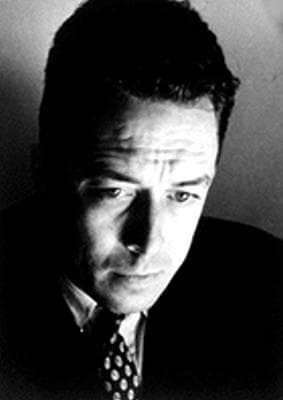
Albert Camus was a French-Algerian philosopher, author, dramatist, and journalist. He was the recipient of the 1957 Nobel Prize in Literature at the age of 44, the second-youngest recipient in history. His works include The Stranger, The Plague, The Myth of Sisyphus, The Fall, and The Rebel.

Ashley Antoinette
4.6

Mark McDonald
4.4
Luo Guanzhong
4.4

Mia McKenzie
4.3
Dorothy Parker
4.3

Joaquim Maria Machado de Assis
4.3
James Thurber
4.2

Terry Kay
4.2