“Ach, Effi, das ist eben der Fluch, wenn man zu jung ist und zu schön und zu reich und zu gut.”
— Baron von Instetten reflects on Effi's situation.


Theodor Fontane (2000)
Genre
Fiction
Reading Time
256 min
Key Themes
See below
Sign in to track this book
Trapped in a loveless marriage to an older baron, the youthful Effi Briest seeks fleeting solace in a forbidden affair, only for its long-buried secret to resurface years later with devastating, inescapable consequences.
Seventeen-year-old Effi Briest, a lively and somewhat naive girl from Hohen-Cremmen, enjoys a carefree life at her parents' estate. Her idyllic existence is disrupted when Baron Geert von Innstetten, a former suitor of her mother and a respected but austere civil servant, proposes to her. Despite Innstetten being significantly older and serious, Effi's parents, particularly her ambitious mother, encourage the match, seeing it as a prestigious opportunity. Effi, flattered and somewhat overwhelmed by the attention and the prospect of a grand future, accepts the proposal, though she feels apprehension about leaving her childhood home and entering such a serious commitment.
After a brief honeymoon, Effi moves with Innstetten to Kessin, a small, isolated town on the Baltic coast where he is District Administrator. The house they inhabit is large and old-fashioned, and Effi is immediately unsettled by a strange, almost ghostly atmosphere, particularly a story about a Chinese ghost that Innstetten playfully, yet persistently, uses to control and entertain her. She finds Innstetten often busy with his work, leaving her feeling lonely and bored. Her only companions are the servants and her dog, Rollo. Social life in Kessin is limited, and Effi longs for the vibrancy and freedom of her youth, struggling to find her place in her new, restrictive environment.
Effi becomes pregnant and gives birth to a daughter, Annie. The birth, however, does not bring her the joy or sense of purpose one might expect. She finds her maternal duties somewhat tedious and her connection to Annie rather weak, often preferring her own diversions to caring for the infant. Innstetten, while a devoted father, remains emotionally distant from Effi, further deepening her sense of isolation. Annie's arrival does little to bridge the growing gap between Effi and her husband, nor does it alleviate her pervasive boredom and longing for genuine connection and excitement in Kessin.
Life in Kessin changes with the arrival of Major Crampas, a charming, witty, and somewhat notorious officer who is a friend of Innstetten's. Crampas has a worldly sophistication and a playful demeanor that contrasts with Innstetten's seriousness. He pays Effi considerable attention, engaging her in stimulating conversations and flirtatious banter. Effi, starved for genuine connection and amusement, is drawn to Crampas's vivacity and charm. Their interactions quickly become a source of excitement and a dangerous distraction from her monotonous life, filling the void left by her husband's emotional absence and her own unfulfilled desires.
The subtle flirtation between Effi and Major Crampas escalates when Innstetten is frequently away on official duties. Crampas uses these opportunities to spend more time with Effi, appealing to her loneliness and her longing for affection and excitement. Despite her initial hesitations and a lingering sense of duty, Effi, feeling neglected and emotionally vulnerable, eventually succumbs to Crampas's persistent advances. Their affair is brief and clandestine, offering Effi a fleeting escape from her constrained reality and a taste of passion she had not experienced in her marriage. The affair, though short-lived, marks a turning point in her life, fraught with guilt and the constant fear of discovery.
Fortunately for Effi, Innstetten receives a promotion and is transferred to Berlin, a move that brings immense relief to Effi. The departure from Kessin effectively ends her physical affair with Major Crampas, removing her from the immediate temptation and the oppressive environment that fueled her mistake. Effi hopes that this new chapter in Berlin, with its greater social opportunities and the distance from her past, will allow her to bury her secret and move on. She believes she can now dedicate herself fully to her role as a wife and mother, leaving the dark episode in Kessin behind her, unaware that secrets have a way of resurfacing.
In Berlin, Effi's life significantly improves. She thrives in the more stimulating social environment, attending parties and cultural events, and making new friends. She dedicates herself more earnestly to her family, and her relationship with Annie deepens. Innstetten also seems more content in his new, more prominent position. Effi genuinely believes she has left her past behind and is building a respectable, happy life. However, the memory of her affair with Crampas, though dormant, remains a constant undercurrent of anxiety. She lives with the unspoken fear that her secret could, at any moment, be exposed, threatening to shatter her carefully constructed new existence.
Years after their move to Berlin, a chance discovery shatters Effi's fragile peace. While searching for documents, Innstetten inadvertently finds a bundle of old love letters from Major Crampas to Effi, hidden away. The letters explicitly reveal the affair that Effi had in Kessin. Innstetten is devastated and humiliated by the revelation. His carefully constructed world of honor and reputation crumbles around him. Despite the passage of time and Effi's apparent reformation, the evidence of her betrayal is undeniable and unpardonable in his eyes, unleashing a chain of events with tragic consequences for all involved.
Bound by the rigid code of honor prevalent in his society, Innstetten feels compelled to challenge Major Crampas to a duel, despite his personal reluctance and the affair being years in the past. The duel takes place, and Crampas is killed. Following this, Innstetten initiates divorce proceedings against Effi. Effi is cast out of her marital home and forbidden from seeing her daughter, Annie, as society deems her an adulteress. She is effectively ostracized by her former social circle and even her parents, who initially refuse to take her in, fearing the damage to their own reputation.
Effi's parents eventually relent and provide her with a small apartment in Berlin, but her mother, particularly, maintains a cold and distant demeanor. Effi lives a lonely and isolated existence, shunned by society and separated from her daughter. Her health, both mental and physical, rapidly declines under the weight of her disgrace and profound sorrow. The joy and vivacity that once characterized her are completely extinguished. She longs for her daughter and for some semblance of forgiveness, but society's judgment is absolute, leaving her with no hope of redemption or reconciliation.
As Effi's health worsens, her doctor advises Innstetten that a reunion with Annie might be beneficial for Effi's spirit. Innstetten, after much internal struggle and recognizing the severity of Effi's condition, allows Annie to visit her mother. The reunion is brief and heartbreaking. Annie, having been raised to view her mother with a mixture of pity and disapproval, is reserved and somewhat formal. While Effi cherishes the moment, the visit underscores the irreparable damage done to their relationship and the profound loss she has endured. It offers a fleeting comfort but cannot mend the deep wounds.
In her final days, Effi expresses a desire to return to Hohen-Cremmen, her childhood home. Her parents, finally softening in their condemnation, welcome her back. Surrounded by the familiar sights and sounds of her youth, Effi finds a measure of peace and solace. She reflects on her life, acknowledging her mistakes but also recognizing the societal pressures and emotional neglect that contributed to her downfall. Her parents, particularly her father, express regret for their part in her tragic fate. Effi dies at Hohen-Cremmen, finding a quiet dignity in her final moments, having come to terms with her past and the injustices she suffered.
The Protagonist
Effi transforms from a carefree girl into a lonely, despairing woman, ultimately finding a fragile peace and self-understanding in her final days.
The Antagonist/Supporting
Innstetten remains largely unchanged in his adherence to honor, but experiences profound internal conflict and regret over the consequences of his actions.
The Supporting
Crampas remains largely static, serving as the catalyst for Effi's downfall, and is killed in a duel.
The Supporting
Her character softens from rigid social adherence to a more compassionate understanding in Effi's final days.
The Supporting
He remains largely passive, but expresses profound regret and a more nuanced understanding of Effi's fate by the end of the novel.
The Supporting
Annie remains a child and is largely static, serving more as a symbolic figure.
The Supporting
Roswitha remains a loyal and constant presence throughout Effi's life.
The Mentioned
A minor character who facilitates a brief moment of reconciliation.
The novel explores the conflict between rigid 19th-century Prussian societal norms and an individual's yearning for personal happiness and emotional fulfillment. Effi's marriage to Innstetten is primarily dictated by social climbing and convention, not love. Her subsequent affair with Crampas is a desperate attempt to satisfy her emotional and physical needs, which are neglected in her marriage. The tragic consequences of her affair highlight society's unforgiving nature, which punishes deviation from its strict moral code, even at the cost of human life and happiness. Effi's ultimate ostracism, despite her youth and vulnerability, shows this theme vividly.
““Ah, Mamma, let's just leave it. That's a very wide field.””
The concept of honor and reputation is central to the tragedy. Innstetten, despite his personal feelings and the passage of time, is compelled by the prevailing code of honor to duel Crampas and divorce Effi. His actions are not driven by personal hatred but by the perceived necessity to uphold his social standing and avoid public ridicule. This theme illustrates how societal constructs, particularly masculine honor, can override personal relationships and lead to destructive outcomes. Effi's parents also initially prioritize their reputation over their daughter's well-being, refusing to take her in, underscoring this pervasive societal value.
““It's not a question of hating. It's a question of social necessity, of what one expects of me.””
Effi's deep sense of isolation and boredom in Kessin is a primary catalyst for her affair. Married to an emotionally distant and frequently absent husband, and living in a dull, provincial town, Effi finds herself without stimulating companionship and purpose. The 'Chinese ghost' in her house, a playful but unsettling fabrication by Innstetten, further contributes to her feeling of unease and loneliness. This emotional void makes her highly susceptible to the charms of Major Crampas, who offers a temporary escape from her monotonous existence. Her later social isolation after the divorce is an even more devastating form of this theme.
““Oh, that Kessin! That Kessin! It was always so dreadful there.””
The novel explores the long-lasting impact of guilt, for both Effi and Innstetten. Effi lives with the constant burden of her secret, which eventually destroys her. Innstetten, while adhering to the societal code, grapples with the morality of his actions and the devastating consequences for Effi. The lack of true forgiveness from society and, initially, from her parents, condemns Effi to a lonely and tragic end. The novel questions whether true forgiveness is possible within such a rigid social framework, and who truly bears the greatest guilt for the unfolding tragedy.
““I've wronged no one, but I've sinned against myself.””
Effi's story is an examination of the limited agency and extreme vulnerability of women in 19th-century German society. As a young woman, she is married off to a man chosen by her parents, with little consideration for her own desires or emotional needs. Her value is tied to her reputation and her ability to uphold her husband's honor. Once she deviates from these expectations, she is swiftly and brutally punished, losing her home, her child, and her social standing, with no path to redemption. Her fate highlights the double standards and patriarchal structures that governed women's lives.
““But we women, we have to suffer for everything, whether we are guilty or not.””
A recurring supernatural motif used to control and unsettle Effi.
The 'Chinese ghost' is a recurring motif in the Innstetten household in Kessin, fabricated or at least perpetuated by Innstetten. It serves multiple functions: it is a playful but unsettling tool Innstetten uses to control and entertain Effi, highlighting his somewhat manipulative nature. For Effi, it symbolizes the eerie, oppressive atmosphere of her new home and her own subconscious anxieties. It contributes to her sense of isolation and foreshadows the hidden, haunting presence of her later secret, which will eventually 'ghost' her life.
A tangible piece of evidence that resurfaces years later to trigger the climax.
The hidden love letters from Major Crampas to Effi are the ultimate plot device that drives the climax of the story. Years after the affair, their chance discovery by Innstetten serves as the undeniable proof of Effi's infidelity, shattering his carefully constructed world and forcing him to confront the past. The letters symbolize the lingering power of secrets and the impossibility of truly escaping one's past. Their delayed discovery creates dramatic irony and highlights the arbitrary nature of fate, as a forgotten past suddenly becomes a present crisis.
A climactic event dictated by the code of honor, leading to tragic consequences.
The duel between Innstetten and Crampas is a pivotal plot device, representing the inflexible and destructive nature of the societal code of honor. It is not fought out of personal hatred but out of Innstetten's perceived social obligation. The duel serves as the physical manifestation of the societal judgment against Effi's transgression, leading to Crampas's death and sealing Effi's fate of divorce and ostracization. It highlights the brutal consequences of adhering to rigid social norms, even when personal feelings might dictate a different course of action.
Contrasting environments that reflect Effi's emotional states and societal pressures.
The contrasting settings of Kessin and Berlin are crucial to the narrative. Kessin, an isolated, provincial town on the Baltic coast, symbolizes Effi's confinement, boredom, and emotional neglect, directly contributing to her affair. The old, gloomy house in Kessin, with its 'ghost,' further emphasizes this oppressive atmosphere. Berlin, on the other hand, represents a period of potential freedom, social engagement, and a chance for Effi to rebuild her life. The move to Berlin offers a temporary reprieve and hope, only for the past to inevitably catch up, showing that external change cannot erase internal secrets or societal judgment.
“Ach, Effi, das ist eben der Fluch, wenn man zu jung ist und zu schön und zu reich und zu gut.”
— Baron von Instetten reflects on Effi's situation.
“Wir haben uns geschieden, aber wir bleiben einander treu.”
— Effi's parents discuss the aftermath of the divorce.
“Das Leben ist kein Roman, und es ist nicht alles so, wie man es sich in seiner Phantasie ausmalt.”
— Effi's mother offers a dose of reality.
“Es ist eine alte Geschichte, aber sie bleibt immer neu.”
— A general observation on human nature and recurring themes.
“Und dann kam doch alles anders, als man es sich gedacht hatte.”
— A recurring sentiment in Effi's life, reflecting unforeseen turns.
“Man muss eben die Verhältnisse nehmen, wie sie sind, und das Beste daraus machen.”
— A pragmatic view on accepting one's circumstances.
“Aber das Herz hat seine eigenen Gründe, die der Verstand nicht kennt.”
— Reflecting on emotional motivations that defy logic.
“Die Welt ist voll von Ungerechtigkeiten, und man muss lernen, damit zu leben.”
— A bitter reflection on the unfairness of society.
“Es war ein Fehler, aber er war unvermeidlich.”
— Effi's internal struggle to justify her actions.
“Man muss sich immer an das halten, was sich schickt.”
— A focus on propriety and social decorum.
“Wir sind alle nur Menschen, und keiner ist ohne Fehler.”
— A plea for understanding and forgiveness.
“Das ist das Schicksal der Frau, dass sie immer warten muss.”
— A comment on the passive role of women in society.
“Und so ist es gekommen, wie es kommen musste.”
— A fatalistic view on the unfolding of events.
“Ich glaube, der liebe Gott hat es so gewollt.”
— Effi's mother trying to find meaning in Effi's tragic end.
Ready to see how well you understood this book? Take our interactive quiz with 10 questions.
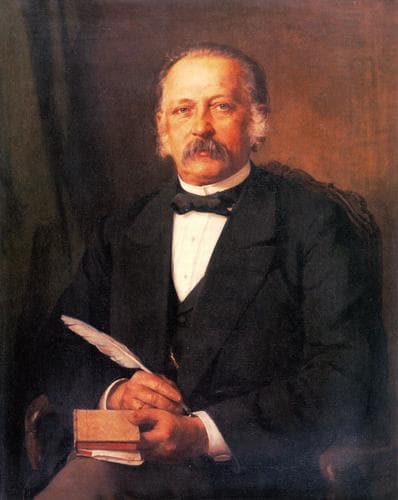
Theodor Fontane was a German novelist and poet, regarded by many as the most important 19th-century German-language realist author. He published the first of his novels, for which he is best known today, only at age 58 after a career as a journalist.

Ashley Antoinette
4.6

Mark McDonald
4.4

Luo Guanzhong
4.4

Mia McKenzie
4.3

Dorothy Parker
4.3

Joaquim Maria Machado de Assis
4.3

James Thurber
4.2

Terry Kay
4.2