“There must be a lot of people like me. They know somethin's missin' but they don't know what it is. And they certainly don't know where to get it.”
— Rita explains her motivation for seeking education to Frank.

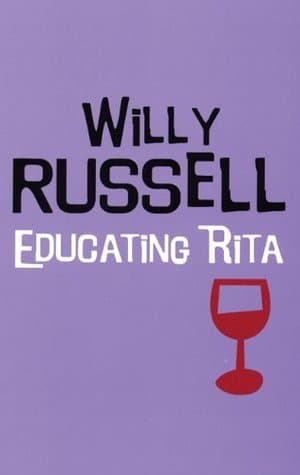
Willy Russell (1884)
Genre
Fiction
Reading Time
90 min
Key Themes
See below
Sign in to track this book
A spirited, working-class hairdresser from Liverpool yearns to transcend her predetermined life through literature, embarking on a transformative journey with her cynical Open University tutor.
The play opens in Professor Frank Bryant's cluttered Open University office. Frank, a middle-aged literature professor, is jaded, finding solace in hidden bottles of whisky and cynical wit. He is a published poet but feels his academic career has stagnated. His new student, Susan White, bursts in, announcing she prefers to be called Rita. Rita is a vivacious, working-class hairdresser from Liverpool, driven by an intense desire for education and cultural enrichment, believing it will unlock a more meaningful life. She candidly expresses her dissatisfaction with her current life and her husband, Denny, and her eagerness to learn, despite her lack of formal academic background. Frank is initially amused and intrigued by her enthusiasm and unconventional approach.
During their first session, Rita’s natural intelligence and unique perspective are evident, but she struggles with academic conventions. She speaks her mind freely, often using colloquialisms and personal anecdotes to interpret literary texts, much to Frank's surprise and occasional exasperation. Frank, on the other hand, tries to guide her towards more structured analytical methods, but he is also charmed by her honesty and lack of pretension. He sees in her a spark he's long lost in himself. Their initial discussions highlight the vast cultural and class differences between them, as Rita grapples with concepts like 'subtlety' and 'allusion' while Frank struggles to understand her working-class experiences.
Rita’s commitment to her studies begins to strain her marriage to Denny. He resents her intellectual pursuits, viewing them as a rejection of their shared working-class life and values. He wants to start a family, but Rita is determined to complete her education first. The conflict escalates when Denny discovers Rita is secretly taking birth control pills, leading him to burn her poetry books in a fit of anger. This act of aggression shows his desperate attempt to control her and pull her back into the life he believes they should share. Rita becomes more resolved to break free from these constraints.
As Rita progresses, Frank's personal demons become more apparent. His reliance on alcohol increases, and his cynical outlook on academia and life deepens. He reveals his own failed marriage and his sense of professional stagnation. However, Rita’s enthusiasm and genuine desire to learn start to have a positive effect on him. He finds himself looking forward to their sessions, and her fresh insights into literature occasionally rekindle his own passion for the subject. He begins to see her as more than just a student, and she, in turn, offers him a connection he's been missing.
Rita attends a summer school, immersing herself fully in the academic environment. Here, she meets other students, including a more sophisticated and confident young man named Brian. She starts to adopt the mannerisms, speech patterns, and interests of her new academic circle, consciously shedding her old working-class identity. This period marks a significant shift in her personal development, as she gains confidence and a sense of belonging in a world previously alien to her. She even changes her hairstyle and clothes, reflecting her evolving self-perception and aspirations. This transformation, however, also starts to create a distance between her and Frank.
As Rita's academic skills improve and she gains confidence, she begins to challenge Frank more directly. She starts to mimic the analytical styles of other tutors and students, which Frank perceives as a loss of her unique, authentic voice. He becomes increasingly critical of what he sees as her adoption of a 'new, better class of friends' and a superficial understanding of culture. Frank feels a sense of betrayal, believing she is sacrificing her individuality for conformity. This tension highlights their differing views on education: Frank values originality, while Rita seeks the tools to navigate the academic world.
Frank’s alcoholism finally catches up with him. His erratic behavior and drinking during office hours lead to his suspension from the university, with a forced sabbatical to Australia. He is deeply depressed and bitter about the turn of events. Rita visits him in his office, expressing genuine concern for his well-being. This interaction reveals that despite their recent clashes, a deep bond of affection and respect still exists between them. Rita offers him a thoughtful gift – a new shirt – demonstrating her care and an acknowledgment of his role in her transformation, even as she continues on her own path.
Rita sits her final exams, performing exceptionally well. Frank, despite his personal troubles, is proud of her academic success but also struggles with the feeling that he has created something beyond his control. He reflects on her journey and his own role in it, acknowledging that he has given her the tools to become independent, even if that independence means she no longer needs him in the same way. He realizes that her transformation is complete, and she has achieved the education she so desperately sought, fundamentally changing her life.
Rita returns to Frank’s office, elated, to announce her exam results: she passed with distinction. She reveals that she has left Denny and is now truly independent. She is no longer 'Rita' but 'Susan White,' the educated woman she aspired to be. Frank is genuinely happy for her success but also feels a sense of loss, realizing that his 'creation' has outgrown him. He tries to offer her one last piece of advice about finding her own voice, but she gently asserts her newfound confidence and autonomy. The power dynamic has completely shifted.
In a final, poignant scene, Rita offers to cut Frank's hair, a symbolic act that reverses their initial roles and signifies her complete liberation and independence. She, the former hairdresser, now metaphorically 'cuts' him loose, just as he helped her cut ties with her old life. As she trims his hair, they share a moment of quiet understanding and mutual respect. The act is tender yet definitive. Frank is left alone, preparing for his enforced sabbatical to Australia, while Rita, now Susan, walks out into her new, self-determined future, leaving him with the lingering scent of her perfume and the profound impact she has had on his life.
The Protagonist
Transforms from an uneducated, dependent hairdresser into a confident, articulate, and independent university student, finding her own voice and identity.
The Supporting/Mentor
Initially a cynical and alcoholic mentor, he experiences a brief resurgence of passion through Rita but ultimately remains trapped by his own self-destructive tendencies, while she moves beyond him.
The Mentioned/Antagonistic
Remains static in his traditional views, becoming an obstacle to Rita's growth and ultimately losing her as she outgrows their shared life.
The Mentioned/Supporting
Does not have a significant arc within the play, serving primarily to illuminate Frank's character and circumstances.
The Mentioned/Supporting
No personal arc, serves as a catalyst for Rita's social and intellectual development.
The Mentioned
No personal arc, serves to illustrate Rita's changing living situation and social circle.
The Mentioned
No personal arc, serves as a plot device to advance Frank's storyline.
The central theme explores education as a transformative force, offering not just knowledge but also choice and freedom. Rita believes education is her ticket out of a predetermined working-class life, enabling her to critically analyze her surroundings and forge her own identity. Frank, despite his cynicism, provides the tools for this transformation. The play shows that education can empower individuals to transcend social barriers and achieve self-actualization, as seen in Rita's journey from an unfulfilled hairdresser to a confident, articulate student who passes her exams with distinction.
“I wanna know. I wanna know why that song on the radio is just a noise and the stuff in those books is real. I wanna know why.”
The play portrays the stark class divide in British society and the challenges of social mobility. Rita's working-class background, with its emphasis on community and traditional values, clashes with the middle-class academic world she seeks to enter. Her husband, Denny, embodies the resistance to changing class identity. Rita's adoption of new speech patterns, interests, and friends illustrates her conscious effort to move beyond her origins. The play questions whether true mobility is possible without sacrificing one's authentic self, as Frank suggests Rita loses her unique voice in her pursuit of academic conformity.
“I don't wanna be a freak. I just wanna be able to choose.”
This theme explores the tension between maintaining one's authentic self and conforming to societal or academic expectations. Initially, Rita's raw, unpolished voice is celebrated by Frank. However, as she integrates into the academic world, she begins to adopt its language and intellectual styles, which Frank views as a loss of her individuality. The play prompts reflection on whether education necessarily leads to a loss of original thought or if it simply provides new modes of expression. Rita's final transformation suggests she finds a balance, integrating her past with her educated present.
“I've tried to teach you to fly, Rita, but you've only learned to ape the movements of other birds.”
The relationship between Frank and Rita is a complex exploration of mentorship. Frank, initially a reluctant and cynical tutor, becomes a key figure in Rita's intellectual awakening. He provides guidance, encouragement, and access to knowledge, acting as a surrogate father figure. However, the play also shows the limitations and potential pitfalls of mentorship, as Frank struggles with Rita's growing independence and the feeling that she no longer needs him. His own personal failures contrast sharply with Rita's success, highlighting the sacrifices and personal costs sometimes involved in guiding another's journey.
“I taught her to see, and now she sees me.”
At its heart, 'Educating Rita' is a story about the pursuit of personal freedom and the ability to make choices. Rita feels trapped by her working-class background, her marriage, and the expectations of her community. Education, for her, is not just about knowledge but about gaining the power to choose her own path, her own identity, and her own future. Her decision to leave Denny and to become 'Susan White' symbolizes her ultimate liberation and the realization of her desire for self-determination, moving beyond the constraints that once defined her.
“I don't want to be a freak, I just want to be able to choose.”
Frank's office reflects his internal state and serves as a liminal space for transformation.
Frank's cluttered, whisky-filled office symbolizes his own intellectual stagnation, disillusionment, and self-destructive tendencies. It is a sanctuary from the outside world but also a prison. For Rita, it initially represents the intimidating, exclusive world of academia. Over the course of the play, it becomes a liminal space where her transformation occurs. As Rita gains confidence, the office subtly changes in her eyes, becoming less daunting. By the end, it is still Frank's domain, but Rita has outgrown its confines, signifying her own liberation from its initial power over her.
A symbolic act representing Rita's transformation and the reversal of power dynamics.
The final scene, where Rita cuts Frank's hair, is a powerful symbolic gesture. Hairdressing was Rita's original profession, representing her past working-class identity. By cutting Frank's hair, she takes on the active, skilled role, while Frank becomes passive, signifying a complete reversal of their initial student-tutor dynamic. It symbolizes her mastery, her independence, and her ability to 'cut' ties with her old life and, metaphorically, with her dependence on Frank. It's a tender but definitive act of liberation and a final, intimate farewell.
Characters who are spoken about but never seen, shaping the protagonists' lives.
Key characters like Denny (Rita's husband) and Julia (Frank's girlfriend) never appear on stage but are crucial to the plot and character development. Denny represents the traditional working-class world Rita is trying to escape and the patriarchal constraints she faces. His actions (burning her books) are pivotal. Julia highlights Frank's personal struggles and his isolation. By keeping them offstage, the play focuses intensely on the dynamic between Frank and Rita, making their relationship the sole visual and emotional core, while these unseen figures provide essential context and conflict.
The evolution of Rita's language reflects her intellectual and social transformation.
Rita's language is a key plot device. She begins with a strong Liverpudlian accent and colloquialisms, which define her working-class identity. As she becomes more educated, her speech gradually shifts, incorporating more formal vocabulary and analytical structures, reflecting her assimilation into the academic world. Frank often comments on this change, sometimes lamenting what he perceives as a loss of her authentic voice. This linguistic transformation is a direct manifestation of her journey, illustrating the impact of education on identity and class, and the tension between authenticity and acquired sophistication.
Frank's constant companion, symbolizing his disillusionment and self-destruction.
Alcohol, specifically whisky, is a pervasive presence in Frank's life and his office. It symbolizes his deep-seated disillusionment, his escape from reality, and his professional stagnation. His reliance on it leads to his suspension and represents his inability to cope with his own unfulfilled potential. While Rita's journey is one of self-improvement, Frank's is marked by self-destruction, and alcohol is the most visible manifestation of this. It serves as a stark contrast to Rita's thirst for knowledge and her pursuit of a better life.
“There must be a lot of people like me. They know somethin's missin' but they don't know what it is. And they certainly don't know where to get it.”
— Rita explains her motivation for seeking education to Frank.
“You think I don't know what it's like to be out on the street with nothin'? To have to fight for every single thing you get?”
— Frank, initially dismissive, reveals a shared understanding of struggle to Rita.
“I don't wanna be a freak. I don't wanna be some weirdo who talks posh and goes to the theatre.”
— Rita expresses her fear of losing her identity as she becomes more educated.
“There's a whole world out there, Frank, that I never knew existed. And I'm gonna be part of it.”
— Rita's growing excitement about the possibilities education offers.
“You know what I mean, like, it's not just about learnin' facts, is it? It's about… findin' out who you are.”
— Rita articulates her deeper understanding of the purpose of education.
“I gave up trying to teach. I teach people to pass examinations.”
— Frank's cynical admission about the state of his profession.
“It's like I've been born again, Frank. But I'm still me, if you know what I mean.”
— Rita reflects on her transformation while maintaining her core self.
“That's why I came here, to find a new song to sing.”
— Rita uses a metaphor to explain her desire for a different life.
“You're not just a student, you're a pupil. And I'm not just a tutor, I'm a teacher.”
— Frank corrects Rita, emphasizing the traditional roles, which Rita later challenges.
“I'm not saying it's easy, Frank, but it's worth it. Every single minute of it.”
— Rita's determination despite the difficulties of her educational journey.
“The trouble with you, Frank, is you think you're a poet, but you're just a bloody critic.”
— Rita's sharp observation about Frank's unfulfilled potential.
“I had a choice. I could stay at home and watch the telly or I could come here and try to get a bit of life.”
— Rita's simple yet profound explanation for her decision to pursue education.
“You found your voice, Rita. And that's what matters.”
— Frank acknowledges Rita's profound personal development.
“I'm not trying to escape from my class, I'm trying to escape from my lack of choice.”
— Rita clarifies her motivations, distinguishing between social class and personal freedom.
“Education is not just about passing exams, it's about expanding your horizons.”
— A central theme of the play, often implied through the characters' journeys.
Ready to see how well you understood this book? Take our interactive quiz with 10 questions.

Biography coming soon.

Ashley Antoinette
4.6

Mark McDonald
4.4
Luo Guanzhong
4.4

Mia McKenzie
4.3

Dorothy Parker
4.3

Joaquim Maria Machado de Assis
4.3

James Thurber
4.2

Terry Kay
4.2