BookBrief
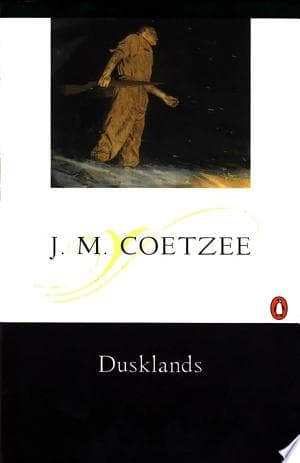
Dusklands cover
Archivist's Choice

Dusklands

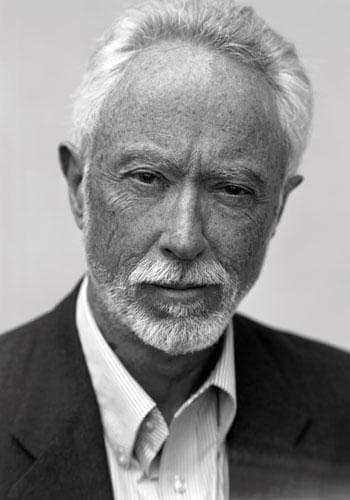
J. M. Coetzee (2017)

Genre

Fiction

Reading Time

12 Minutes

Key Themes

See below

Track Your Reading

Sign in to track this book

In the stark, colonial landscapes of 18th-century South Africa and 1970s Vietnam, Coetzee's novellas expose the corrosive obsession with power and the brutal subjugation of the 'other'.

Synopsis

J.M. Coetzee's "Dusklands" comprises two distinct novellas, each exploring themes of power, colonialism, and the psychological underpinnings of domination. The first, "The Vietnam Project," follows Eugene Dawn, a disillusioned American researcher tasked with developing new propaganda and psychological warfare tactics for the Vietnam War. As he delves into the project, his grip on reality frays, and his increasingly disturbing internal monologues reveal a profound alienation and a chilling descent into a personal heart of darkness, mirroring the moral ambiguities of the war itself. The second novella, "The Narrative of Jacobus Coetzee," is set in 18th-century South Africa and purports to be the journal of a Boer frontiersman. Jacobus, a hunter and explorer, ventures into the wilderness and encounters a group of Hottentot natives. After an initial period of uneasy co-existence, a misunderstanding or perceived slight leads to violence and Jacobus's brutal revenge. This narrative dissects the mindset of the colonizer, exposing the racial arrogance, the demand for deference, and the brutal mechanisms used to assert dominance over indigenous populations, connecting the historical roots of colonialism to contemporary power dynamics.
Difficulty
Hard
Pacing
Slow
Mood
Dark, intense, philosophical, disturbing, analytical

Plot Summary

The Vietnam Project: The Analyst's Disquiet

Eugene Dawn, a disillusioned analyst working for a government agency in late 1960s America, researches psychological warfare and propaganda during the Vietnam War. He examines reports, interviews, and strategic documents to understand how messages are received and interpreted. However, his work is less about objective analysis and more about creating narratives that justify American intervention and control. As he works, Dawn is increasingly disturbed by the moral implications of his job and the manipulative nature of the propaganda. He begins to question his task, feeling alienated from his colleagues and the project's goals, which he sees as dishonest and destructive.

Eugene's Domestic Unraveling

The pressures and ethical problems of Eugene Dawn's work on the Vietnam Project affect his personal life, causing severe psychological distress. His relationship with his wife, Alice, worsens as he becomes withdrawn, irritable, and prone to violent fantasies. He struggles to connect with his young son, Martin, seeing the child's innocence with both tenderness and resentment. Dawn's internal trouble grows because he cannot express the deep unease he feels about his government's actions and his own involvement. His home becomes a place of his unspoken anxieties, with Alice dealing with his increasingly erratic behavior and emotional distance, creating tension in the family.

The Nightmare of the Child

Eugene Dawn's mental state continues to decline, ending in a disturbing act of violence. Haunted by vivid, troubling dreams and growing paranoia, he struggles to tell the difference between reality and his own thoughts. One night, convinced that his son, Martin, represents an oppressive system, or perhaps his own hidden anxieties and failures, Eugene assaults the child. This act is not explicitly detailed but implied, leaving a lasting scar on the family. The violence against his son marks a point of no return for Eugene, showing a complete breakdown of his psychological defenses and moral compass, pushing him further into self-destruction and guilt.

Institutionalization and Further Decay

After the violent incident with his son, Eugene Dawn is institutionalized in a psychiatric facility. Confined and observed, his mental state does not improve; instead, he retreats further into his own fractured reality. He continues to obsess over power, control, and the manipulation of truth, now seeing his confinement as another form of institutionalized oppression. His thoughts become increasingly disjointed and self-referential, blurring the lines between his past work, his personal guilt, and the perceived injustices of his present situation. The institution, instead of offering recovery, seems to speed up his psychological breakdown, trapping him in a cycle of rumination and self-justification, further cementing his status as a victim of his own mind and the systems he once served.

Jacobus Coetzee: The Expedition Begins

The second novella, 'The Narrative of Jacobus Coetzee,' introduces an 18th-century Boer frontiersman of the same name. Jacobus, driven by ambition, curiosity, and entitlement, sets out from the Cape Colony on an elephant hunting expedition deep into Southern Africa. He travels with a small group of Hottentot (Khoikhoi) servants and guides, whom he views as inferior. His main goal is to acquire ivory, but also to assert his dominance over the wilderness and its inhabitants. This journey begins his encounter with a world that challenges his ideas of order, power, and his place within the colonial hierarchy, setting the stage for conflict and change.

The Encounter with the Hottentots

During his expedition, Jacobus Coetzee and his group meet a Hottentot tribe in the interior. From Jacobus's perspective, these people are primitive, lacking the 'civilized' understanding and respect he believes he, as a white European, deserves. He interacts with them dismissively, expecting immediate obedience to his commands. He sees their customs and way of life as barbaric, reinforcing his own sense of racial and cultural superiority. This first encounter is marked by a basic misunderstanding and a clash of worldviews; Jacobus's colonial mindset prevents him from seeing the Hottentots as equals. His interactions show a paternalistic disdain, creating future conflict and resentment between him and the native population.

The Affliction and Abandonment

Jacobus Coetzee falls gravely ill with a mysterious fever, leaving him weak and delirious. His Hottentot servants, fearing he is cursed or dying, and perhaps seeing a chance to escape his harsh authority, abandon him in the wilderness. This desertion shocks Jacobus, who has always assumed his absolute control and the loyalty of his subordinates. Left alone and vulnerable, he experiences a complete reversal of his perceived power. Stripped of his weapons, supplies, and the protection of his colonial status, he must confront his own mortality and dependence on the very people he deemed inferior. This abandonment marks a turning point, forcing him into extreme physical and psychological vulnerability.

Survival and the Return

Against all odds, Jacobus Coetzee recovers from his illness. His survival is a result of his willpower and resilience, but it also ignites a desire for revenge against the Hottentots who abandoned him. He undertakes an arduous journey back to the Cape Colony, a journey filled with hardship and fueled by an obsessive focus on retribution. During this solitary trek, his view of the land and its inhabitants changes; his previous entitlement hardens into a deep grievance. He sees the Hottentots' actions not just as desertion, but as a deliberate act of disrespect and defiance against his white authority, solidifying his resolve to punish them upon his return.

The Quest for Vengeance

Upon his return to the Cape, Jacobus Coetzee, now recovered and consumed by his thirst for vengeance, secures a commando from the colonial authorities. He exaggerates the 'atrocities' committed against him by the Hottentot tribe, framing their abandonment as a hostile act requiring punitive action. With the support of the colonial administration, he leads the armed expedition back into the interior, specifically targeting the tribe that had left him for dead. This quest is not just about personal revenge; it is part of the broader colonial agenda of asserting white dominance and punishing any perceived disobedience from indigenous populations. Jacobus sees himself as an instrument of justice, restoring the 'natural order' he believes was violated.

The Tribunal and the Unseen Power

Jacobus's commando reaches the Hottentot encampment, but the outcome is not as he envisioned. Instead of a straightforward massacre, Jacobus is captured by the Hottentots and subjected to a surreal 'trial' or interrogation. Stripped of his authority and weapons again, he is forced to sit before the tribe's elders, who observe him with an unnerving, silent judgment. This encounter disorients Jacobus, as the Hottentots' power dynamic is entirely different from his own, operating on a level he cannot comprehend. He is forced to confront his own perceived savagery and the moral emptiness of his quest for revenge, becoming the subject of their scrutiny rather than the dispenser of justice.

The Unsettling Verdict

Following his 'trial' by the Hottentot elders, Jacobus Coetzee is unexpectedly released. However, his release is not an act of forgiveness or mercy in the way he understands it, but a profound and unsettling experience that leaves him deeply changed. He is not physically harmed, yet he feels a spiritual wound, an indelible mark left by their silent judgment. He is left with an acute awareness of his own vulnerability and the limits of his colonial worldview when confronted with a different form of power and understanding. The Hottentots' decision to let him go, rather than kill him, shows a form of dominance that transcends brute force, leaving Jacobus with a lasting sense of his own insignificance and the unsettling realization that he is merely an object of their inscrutable observation.

The Chronicler's Ambiguity

The 'Narrative of Jacobus Coetzee' ends with an ambiguous account of Jacobus's later life and the fate of his story. The chronicler, a descendant or historian, struggles to reconcile the various versions of Jacobus's experiences and the conflicting interpretations of his character. Jacobus himself reportedly returns to the Cape, a changed man, but the precise nature of this change remains unclear. His story becomes a legend, subject to embellishment and reinterpretation, highlighting the subjective nature of historical truth and the construction of colonial narratives. The ending leaves the reader with unresolved tension, emphasizing the lasting impact of the encounter between colonizer and colonized, and the enduring questions about power, identity, and the telling of history.

Principal Figures

Eugene Dawn

The Protagonist

Eugene descends from a seemingly functional, albeit detached, analyst into a state of complete psychological breakdown, culminating in violence and institutionalization.

Alice Dawn

The Supporting

Alice's character remains relatively static, primarily serving as a witness to Eugene's decline and the recipient of his psychological and physical abuse.

Martin Dawn

The Supporting

Martin's character has no discernible arc; he functions as a catalyst and victim within Eugene's narrative.

Jacobus Coetzee

The Protagonist

Jacobus begins as an arrogant colonizer, is humbled by illness and abandonment, but then transforms into a vengeful colonizer, only to be profoundly unsettled and disempowered by the Hottentots' unique form of justice.

The Hottentot Servants/Guides

The Supporting

Their arc is brief but impactful, moving from subservience to an act of decisive self-preservation.

The Hottentot Elders/Tribe

The Antagonist/Supporting

Their collective presence shifts from being observed by Jacobus to being his observers and judges, asserting a non-European form of power.

The Narrator (Jacobus Coetzee's Chronicler)

The Supporting

The chronicler's role is primarily to frame and comment on Jacobus's story, rather than undergo a personal arc.

Themes & Insights

The Corrosive Nature of Power

Both novellas explore how power, especially colonial and state power, corrupts both the oppressor and the oppressed. Eugene Dawn's work in psychological warfare, designed to manipulate, ultimately fragments his own mind. Jacobus Coetzee's belief in his right to dominate leads him to extreme violence and moral blindness. The theme suggests that attempts to impose one's will on others, whether through propaganda or force, lead to a loss of humanity and a distortion of reality for those wielding the power.

All that is left is the bare, symmetrical, unanswerable need to subject another being to my will.

Eugene Dawn

The Construction of Narrative and History

Coetzee examines how history and truth are not objective facts but constructed narratives, shaped by power, bias, and individual perspective. In 'The Vietnam Project,' Eugene Dawn's job is to create narratives to justify war. In 'The Narrative of Jacobus Coetzee,' the chronicler struggles with conflicting accounts, highlighting the subjective nature of colonial history. The novel suggests that the 'truth' of events, especially those involving power imbalances, is always mediated and often manipulated, making it difficult to discern what actually happened versus what was reported or believed.

The true subject of this tale is the history that writes itself in the body of the teller.

Narrator (Jacobus Coetzee's Chronicler)

Colonialism and Its Psychological Impact

The book probes the psychological toll of colonialism, not just on the colonized but on the colonizer. Jacobus Coetzee's narrative details the arrogance, entitlement, and violence in the colonial project, showing how it dehumanizes both sides. His inability to see the Hottentots as equals fuels his rage and desire for vengeance. Eugene Dawn's story, set in a modern context, connects to this theme by showing how contemporary forms of imperial power (like the Vietnam War) continue to have a corrosive psychological effect, leading to alienation, paranoia, and moral decay within the dominant culture.

I was a white man, master of the land, and these people had failed to treat me with the respect that was my due.

Jacobus Coetzee

The Unspeakable and the Repressed

Both protagonists grapple with internal conflicts they struggle to express, leading to repression and violent outbursts. Eugene Dawn's psychological breakdown stems from his inability to process the moral horror of his work, manifesting as domestic violence. Jacobus Coetzee's deep prejudices and vengeful desires are driven by an inability to accept vulnerability or perceived disrespect. The novel suggests that when fundamental truths or moral dilemmas are repressed, they do not disappear but instead erupt destructively, highlighting the dangerous consequences of unexamined consciousness and societal denial.

There are depths of the human heart that it is better not to plumb.

Narrator (Jacobus Coetzee's Chronicler)

The Nature of 'Civilization' and 'Savagery'

Coetzee redefines 'civilization' and 'savagery' by portraying the supposed civilized white colonizers (Jacobus and, implicitly, Eugene's employers) as exhibiting brutality and moral bankruptcy. Conversely, the indigenous Hottentots, often labeled 'savages,' demonstrate a complex, though inscrutable, system of justice and power that challenges the colonizer's worldview. The novel questions who truly embodies savagery, suggesting that the drive for control, exploitation, and dehumanization, often found within 'civilized' societies, is the true mark of barbarism, rather than the customs of indigenous peoples.

Here was a justice whose instruments were not the whip and the bullet, but the gaze and the word.

Narrator (Jacobus Coetzee's Chronicler)

Plot Devices & Literary Techniques

Unreliable Narrator

Both Eugene Dawn and Jacobus Coetzee provide biased and potentially distorted accounts.

Both novellas employ unreliable narrators, challenging the reader to discern truth from subjective interpretation and psychological distortion. Eugene Dawn's narrative is a descent into madness, making his perceptions increasingly suspect. Jacobus Coetzee's account is filtered through his colonial prejudices and later, through the ambiguous chronicler, who admits to the difficulties of historical accuracy. This device forces the reader to critically engage with the text, questioning the motivations and biases of the narrators, and highlighting the inherent subjectivity of experience, particularly in contexts of power and conflict.

Metafiction

The novel draws attention to its own constructed nature, especially in 'The Narrative of Jacobus Coetzee'.

Metafiction is prominently used in 'The Narrative of Jacobus Coetzee,' where a chronicler explicitly discusses the process of compiling and interpreting historical documents. This device breaks the fourth wall, reminding the reader that they are engaging with a constructed text, not a transparent reality. By highlighting the challenges of historical accuracy, the subjective nature of sources, and the role of the historian in shaping narratives, Coetzee critiques the very act of storytelling and history-making, particularly concerning colonial pasts, where dominant narratives often obscure indigenous perspectives.

Parallelism and Juxtaposition

Two seemingly disparate novellas are placed side-by-side to illuminate shared themes.

The novel's structure, consisting of two distinct novellas, creates a powerful parallelism. The modern story of Eugene Dawn's psychological breakdown due to state-sanctioned violence (Vietnam) is juxtaposed with the 18th-century tale of Jacobus Coetzee's colonial aggression and its consequences. This device allows Coetzee to draw connections between different historical periods and forms of oppression, suggesting that the underlying dynamics of power, control, and the dehumanization of the 'other' are deeply ingrained and recurring. The juxtaposition emphasizes the timelessness of these themes and the continuity of colonial violence, whether overt or psychological.

Intertextuality

References to historical documents and literary traditions enrich the narrative.

Coetzee employs intertextuality by referencing and mimicking historical documents and literary styles. 'The Vietnam Project' draws on the language of government reports and psychological analyses, lending an air of authenticity to Eugene Dawn's work. 'The Narrative of Jacobus Coetzee' is presented as a found historical document, complete with a chronicler's notes, echoing real colonial expedition accounts and travelogues. This device grounds the fiction in historical reality while simultaneously critiquing the genres it imitates, questioning the objectivity and inherent biases within such historical records and literary traditions.

Symbolism (The Dusklands)

The 'dusklands' symbolize areas of moral ambiguity and untamed psychological space.

The title itself, 'Dusklands,' functions as a powerful symbol. It refers not only to the literal geographical frontiers that Jacobus Coetzee penetrates but also to the metaphorical 'twilight lands' of human consciousness and morality. For Eugene Dawn, it represents the murky, ethically ambiguous territory of psychological warfare and his own deteriorating mind. For Jacobus, it's the unknown, 'savage' interior that challenges his European rationality and where his own primal desires for dominance and revenge are unleashed. The dusklands symbolize spaces where the boundaries of civilization, reason, and morality become blurred and dangerous.

Critical analysis

Notable Quotes

Quiz

Test Your Knowledge

Ready to see how well you understood this book? Take our interactive quiz with 10 questions.

10
Questions
~5
Minutes
?
Best Score

Key Questions (FAQ)

Dusklands is a collection of two novellas that explore themes of power, colonization, and obsession. The first novella, 'Vietnam Project,' follows a researcher studying psychological warfare, while the second, 'The Narrative of Jacobus Coetzee,' tells the story of an 18th-century frontiersman seeking revenge.

About the author

J. M. Coetzee

John Maxwell Coetzee OMG is a South African and Australian novelist, essayist, linguist, translator and recipient of the 2003 Nobel Prize in Literature. He is one of the most critically acclaimed and decorated authors in the English language. He has won the Booker Prize (twice), the CNA Prize (thrice), the Jerusalem Prize, the Prix Femina étranger, and The Irish Times International Fiction Prize, and holds a number of other awards and honorary doctorates.