“But words are things, and a small drop of ink, Falling like dew upon a thought, produces That which makes thousands, perhaps millions, think.”
— Reflecting on the power of writing and its impact.


Sign in to track this book
Lord Byron's Don Juan humorously flips the classic legend, showing a naive young man who, instead of seducing women, finds himself carried away by their desires.
Don Juan, a young man from Seville, Spain, is the son of Don Jose and Donna Inez. His mother, Donna Inez, is educated and strict, trying to protect Juan from bad influences. Despite her efforts, Juan is lively. At sixteen, he starts a secret affair with Julia, a married woman much older than him. Her husband, Don Alfonso, is often away. Their meetings continue until Don Alfonso, hearing rumors, returns unexpectedly one night. He finds Juan hiding in Julia's bedroom, causing a scandal that forces Juan to leave Seville. Julia goes to a convent, and Juan is sent on a trip to escape the shame.
Juan sails on a ship to Cadiz, but the trip is dangerous. A storm hits, causing a shipwreck. Many people die. Juan and a few others survive for days in an open boat, eating each other to stay alive. Eventually, he is the only survivor, washing ashore on a Greek island. There, Haidée finds him. She is the beautiful daughter of Lambro, a rich and feared pirate. Haidée is taken with the unconscious Juan. She brings him to her secret cave, helps him recover, and they fall in love. They live peacefully while her father is away pirating.
Their peaceful time ends when Lambro unexpectedly returns. The pirate, who had pretended to be dead to test his daughter, finds Juan and Haidée together. Angry about the betrayal, Lambro orders his men to seize Juan. A fight breaks out, and Juan is overpowered despite his bravery. Haidée, upset, tries to help but is overcome by sadness and shock. Juan is captured, tied up, and sold into slavery, headed for the Ottoman Empire. Haidée, heartbroken and pregnant, goes mad and dies from grief. She is a tragic victim of her father's anger and their forbidden love.
Juan goes to Constantinople and is sold in a busy slave market. Baba, the chief eunuch, buys him for Gulbeyaz, the powerful and bored Sultana. Gulbeyaz has heard stories of Juan's good looks and misfortunes and wants him as her favorite. Baba disguises Juan as a female slave named Juanna and sneaks him into the Sultan's harem. Juan is uncomfortable with the trick but cannot resist. He navigates the dangerous world of the seraglio, where female jealousy and the Sultan's unpredictable nature threaten his safety and identity.
Juan's time in the harem is tense. He rejects Gulbeyaz's advances, fearing the Sultan's anger and staying loyal to his memory of Haidée. This rejection angers the Sultana, who plans his death. With the help of a sympathetic slave girl, Dudu, and another, Leila, Juan escapes the harem during a chaotic night. He flees Constantinople and finds himself near the Russian-Ottoman war front. Looking for a new purpose, Juan joins the Russian army under General Suwarrow, who is preparing for the Siege of Ismail.
Juan fights in the bloody Siege of Ismail, a key battle in the Russo-Turkish War. Byron shows the horrors of war, the killing, and the suffering of soldiers and civilians. Juan, though new to battle, shows bravery and skill in fighting, standing out on the field. During the chaos, he saves a young Muslim girl named Leila from a burning building, becoming her protector. His actions earn him recognition from General Suwarrow, who promotes him and sends him to Empress Catherine the Great in St. Petersburg with messages.
Juan arrives in St. Petersburg with Leila and is welcomed at Empress Catherine the Great's grand court. His youthful charm, good looks, and reputation from Ismail quickly get the Empress's attention. Catherine, known for her many lovers, likes Juan, making him her favorite and giving him gifts and honors. Juan, initially sick from the cold Russian weather, recovers and becomes caught in a new kind of 'slavery' – that of a royal favorite. He lives a life of luxury and influence, but the constant demands of the Empress's affections start to affect his health and spirit.
After some time as Catherine's favorite, Juan's health worsens due to the demands of his position and the cold Russian weather. Concerned for him, and perhaps wanting a break from his presence, Catherine sends Juan on a diplomatic mission to England. He is given important messages and money. This journey lets Juan escape the luxurious Russian court and experience a new culture. It provides a new setting for Byron's satirical comments on English society, politics, and manners as Juan travels to the British Isles.
Juan arrives in England, at first experiencing seasickness and bad weather. He is soon introduced to English high society, where his exotic charm, good looks, and reputation are known. Lord Henry Amundeville and his wife, Lady Adeline Amundeville, take him in at their country estate, Norman Abbey. Lady Adeline, a beautiful, smart, and influential woman, takes an interest in Juan, guiding him through aristocratic etiquette and social schemes. Juan is admired by many but also subject to gossip, especially about his relationship with Lady Adeline.
At Norman Abbey, Juan gets involved in the social season, going to balls, hunts, and dinners. He observes the hypocrisies of English high society. He meets the 'Black Friar,' a ghost said to haunt the Abbey, adding a supernatural element to aristocratic life. Juan also meets Aurora Raby, a young, religious heiress, whose quiet piety and innocence contrast with the worldly women around her, including Lady Adeline. While Lady Adeline tries to find Juan a suitable wife, he is drawn to Aurora's purity, even as he deals with flirtations and temptations from other women in the house, especially the flirtatious Duchess of Fitz-Fulke.
The story ends with the mystery of the 'Black Friar.' Juan, curious about the ghost, chases it through the Abbey. In a final meeting, the 'Black Friar' is not a ghost but the Duchess of Fitz-Fulke in disguise, trying to seduce Juan. The poem ends suddenly here, leaving Juan's future uncertain. He remains caught in the English aristocracy, with the chance for more romantic problems, social satire, and moral dilemmas. The last cantos show Juan's repeated encounters with women and the satirical observations Byron puts throughout the epic.
The Protagonist
Juan evolves from an innocent youth into a seasoned survivor, adapting to various cultures and challenges, yet retaining a core naivety that makes him perpetually susceptible to new romantic entanglements and societal pressures.
The Supporting
Her character remains largely static, serving as a foundational influence on Juan's early life and a target for Byron's satire on overly academic and moralistic women.
The Supporting
Her story concludes with her being sent to a convent after her affair is exposed, symbolizing the societal punishment for women who transgress moral boundaries.
The Supporting
She transforms from an innocent maiden to a heartbroken, defiant lover, ultimately succumbing to despair, symbolizing the tragic consequences of love and loss.
The Supporting
His character is static, a force of disruption and harsh reality against the romanticism of Haidée and Juan.
The Supporting
Her character remains consistent as a powerful, demanding figure, whose desires drive a significant portion of Juan's plot in the Ottoman Empire.
The Supporting
Her character is portrayed consistently as a formidable and amorous ruler, serving to propel Juan into a new phase of his adventures.
The Supporting
Her character remains a sophisticated and somewhat enigmatic figure, observing and navigating the social landscape of Norman Abbey.
The Supporting
Her character is introduced as a pure and contrasting presence, her potential role in Juan's future left open-ended by the poem's unfinished state.
The Supporting
She is introduced as a playful and cunning figure, whose antics provide humor and plot development in the English cantos.
Byron uses 'Don Juan' to extensively satirize society, including English aristocracy, political figures, war, religious beliefs, and moral pretenses. He shows the hypocrisy in social rules, where outward appearances often hide corruption, lust, and greed. For example, Donna Inez's strict morality is seen as intellectual arrogance. England's 'polite' society is shown to be full of gossip and hidden desires, as seen with the Duchess of Fitz-Fulke and the flirtations at Norman Abbey. The poem constantly challenges exaggerated claims of virtue and honor.
“''Tis strange--but true; for truth is always strange; / Stranger than fiction: if it could be told, / How much would novels gain by the exchange! / How many a tale might then be bought and sold!''”
The poem explores the many sides of love, lust, and human relationships. Juan's journey has many affairs, each showing a different aspect: the forbidden passion with Julia, the pure and tragic love with Haidée, the dangerous and power-driven lust of Gulbeyaz, and Catherine the Great's worldly, demanding affection. Byron compares these forms of love, often showing how fleeting they are, the pain they cause, and the social limits placed on them. The poem suggests that while true love (like with Haidée) can be beautiful, it is often short-lived, while lust and power dynamics are more lasting parts of human interaction.
“'Alas! the love of women! it is known / To be a lovely and a fearful thing.'”
Byron questions traditional ideas of heroism, especially in how he shows war. The Siege of Ismail is not a glorious event but a brutal, chaotic, and senseless killing, without true honor. Juan's 'heroism' is often accidental or driven by instinct, not grand ideals. Byron criticizes the romantic view of war, showing its terrible realities and the suffering it causes on all sides. This theme challenges the epic tradition's praise of battle, presenting a more cynical and realistic view of military conflict and the random nature of fame.
“'And here and there a little act of grace / Was shown, and then there was a kind of truce / To slaughter, and the prisoners had space / To breathe a moment, ere the work of loose / Began again, and all was in its place.'”
Throughout Juan's adventures, the poem implicitly explores fate versus free will. Juan often seems to be a passive person, carried along by shipwrecks, slave markets, and powerful women's desires. While he makes choices, like rejecting Gulbeyaz, his life seems mostly controlled by outside forces. This raises questions about human choice and whether people truly control their destiny or are just pieces in a larger, often absurd, game. Byron's narrator often highlights the unpredictable and often cruel nature of luck.
“'But then, again, when we no more are boys, / The world becomes a wider world, and then / Our hearts are not so easily at ease.'”
Juan's constant journey across different lands and cultures – from Spain to Greece, Turkey, Russia, and England – shows a theme of exile and wanting to travel. Each new place provides a fresh setting for Byron's observations and new challenges and temptations for Juan. This constant movement keeps him from ever settling, reflecting Byron's own life of self-imposed exile. The theme suggests a restless human spirit, always looking for new experiences, but also hints at a deeper inability to find a lasting home or stable identity, constantly adapting to new places.
“'I've taught me other tongues—and in strange eyes / Have made me not a stranger.'”
The eight-line stanza form used throughout the poem
Ottava Rima is the distinctive poetic form used by Byron, consisting of eight lines in iambic pentameter with an ABABABCC rhyme scheme. Byron masterfully employs this form for its inherent comedic potential, often using the final rhyming couplet for a witty, ironic, or bathetic punchline that undercuts the preceding lines. This structure allows for both narrative flow and frequent, often humorous, authorial interjections and digressions, contributing significantly to the poem's satirical tone and its unique blend of epic narrative and personal commentary.
The narrator's frequent interruptions and asides to the reader
Byron, as the narrator, frequently breaks the fourth wall, directly addressing the reader with personal opinions, philosophical musings, and satirical commentary that often interrupt the plot. These digressions are a hallmark of 'Don Juan,' allowing Byron to inject his own views on literature, politics, society, morality, and human nature. This device serves to underscore the satirical nature of the poem, providing a layered narrative that is both a story and a running commentary on the world, preventing the reader from becoming too immersed in the plot without critical reflection.
The contrasting of elements to highlight their differences
Byron extensively uses juxtaposition to create comedic and satirical effects, as well as to highlight moral and social contradictions. For instance, the idyllic romance of Juan and Haidée is sharply juxtaposed with the brutal reality of Lambro's return and the violence of the slave market. The opulence of the Russian court and English aristocracy is juxtaposed with their underlying hypocrisies and moral failings. This device allows Byron to draw attention to the disparities between appearance and reality, innocence and corruption, and the sublime and the ridiculous, enriching his satirical critique.
Juan's characterization as someone acted upon rather than acting
Byron intentionally subverts the traditional epic hero by portraying Don Juan as a largely passive protagonist, more often seduced than seducing, and frequently a victim of circumstance rather than a master of his own destiny. This 'passive' heroism serves as a satirical commentary on conventional heroic narratives and allows Byron to place Juan in a variety of situations where he can observe and react to the absurdities of the world. Juan's susceptibility makes him an ideal vehicle for Byron's exploration of different societies and human behaviors, as he is easily molded by his environment and the women he encounters.
The contrast between what a character knows and what the reader knows
Dramatic irony is frequently employed, particularly in the early cantos, to highlight the naivety of characters or the blindness of society. For example, Donna Inez's attempts to shield Juan from corrupting influences, while he is secretly engaged in an affair with Julia, create an ironic tension. Similarly, the reader is often privy to the true motivations and hypocrisies of characters that Juan, in his innocence, may not fully grasp. This device enhances the satirical tone, allowing the reader to share in Byron's critical perspective on the characters and their situations.
“But words are things, and a small drop of ink, Falling like dew upon a thought, produces That which makes thousands, perhaps millions, think.”
— Reflecting on the power of writing and its impact.
“Man's love is of man's life a thing apart; 'Tis woman's whole existence.”
— A generalization about the differing roles of love in men's and women's lives.
“The isles of Greece, the isles of Greece! Where burning Sappho loved and sung, Where grew the arts of war and peace, Where Delos rose, and Phoebus sprung!”
— Part of the famous 'Isles of Greece' song, lamenting Greece's fallen state.
“And if I laugh at any mortal thing, 'Tis that I may not weep; and if I weep, 'Tis that I may not laugh.”
— A reflection on the intertwined nature of joy and sorrow.
“What is the end of fame? 'Tis but to fill A certain portion of uncertain paper.”
— A cynical view on the ultimate value and transience of fame.
“But Juan was not of the demon kind, Though made sometimes a devilish figure out, For some sweet girl in innocence of mind.”
— Describing Don Juan's nature, often misunderstood despite his actions.
“Oh, Hymen! Hymen! guide our lovers through The winding mazes of their destiny!”
— An invocation to the god of marriage, highlighting the complexities of love and fate.
“He knew the world and felt that this was fame: The only pleasure that he had was shame.”
— A commentary on the corrupting nature of certain types of fame and pleasure.
“Sweet is revenge—especially to women.”
— A general observation on the nature of revenge, particularly as it relates to women.
“I'm a great believer in the generally accepted axiom that 'everything has its price.'”
— A pragmatic, perhaps cynical, view on human motivation and transactions.
“The best of all ways to lengthen our days Is to steal a few hours from the night, my dear.”
— A playful suggestion about enjoying life and making the most of time.
“Of all the horrid, hideous notes of woe, Sadder than owl-songs or the midnight blast, Is that portentous phrase, 'I told you so.'”
— A humorous take on the irritating nature of a common human phrase.
“There's not a joy the world can give like that it takes away.”
— A melancholic reflection on loss and the bittersweet nature of memory.
“Let us have wine and women, mirth and laughter, Sermons and soda-water the day after.”
— A famous couplet advocating for indulgence followed by repentance or recovery.
Ready to see how well you understood this book? Take our interactive quiz with 10 questions.
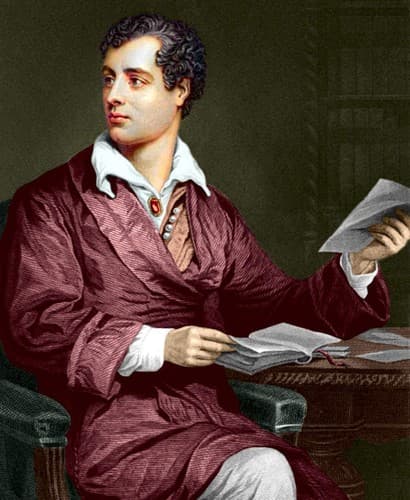
George Gordon Byron, 6th Baron Byron was an English romantic poet and peer. He was one of the leading figures of the Romantic movement, and has been regarded as among the greatest of English poets. Among his best-known works are the lengthy narratives Don Juan and Childe Harold's Pilgrimage; many of his shorter lyrics in Hebrew Melodies also became popular.

Ashley Antoinette
4.6

Mark McDonald
4.4
Luo Guanzhong
4.4

Mia McKenzie
4.3

Dorothy Parker
4.3
Joaquim Maria Machado de Assis
4.3

James Thurber
4.2

Terry Kay
4.2