“I wanted only to try to live in accord with the promptings which came from my deepest self. Why was that so difficult?”
— Emil Sinclair reflects on his early struggles to be true to himself and the societal pressures that make it challenging.

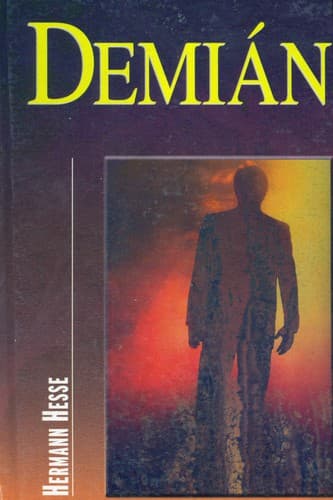
Sign in to track this book
Young Emil Sinclair leaves behind his comfortable, illusory world to find himself, guided by the mysterious Max Demian, on a journey of self-discovery.
Emil Sinclair, a boy in a religious, middle-class family, sees his life as divided. There is the 'world of light' with his family, safety, and traditional morals. Then there is the 'darker world' of forbidden experiences outside his home, filled with noise, scandal, and danger, which also attracts him. This split view shapes his early mind. He struggles with the pull between these two worlds, drawn to the unknown but also wanting to stay pure and connected to his family's 'light'.
One day, a bully named Franz Kromer corners Emil and demands money, threatening to spread a false story about Emil stealing apples. Terrified, Emil lies and says he did steal them, which traps him in fear and guilt. He becomes Kromer's servant, enduring abuse and demands for money, too ashamed to tell his parents. His suffering seems endless until Max Demian, an older, new student, arrives. Demian, with his sharp eyes and unusual maturity, quickly understands Emil's secret without being told. He subtly helps Emil escape with a few pointed questions.
Max Demian confronts Franz Kromer, not with anger, but with a quiet, unsettling authority that makes Kromer back down and leave Emil alone. Emil is free from his tormentor, but the event leaves him shaken and owing Demian. Demian begins to challenge Emil's usual ideas of good and evil, sharing new interpretations of Bible stories (like Cain and Abel) that go against traditional morality. He suggests that the 'mark of Cain' means strength and individuality, not a curse. This friendship starts Emil's slow loss of faith in the 'world of light' and his first steps toward finding himself.
After Demian leaves their town for another school, Emil tries to fit in with his family and society's expectations. He does well in his studies, avoids trouble, and tries to get back the comfort of his 'world of light.' But Demian's influence has changed his view forever. He finds the conventional world empty and suffocating. He feels increasingly lonely and unable to truly connect with his peers, who seem happy with superficial things. This time is marked by an inner battle, feeling like a stranger in his own life, always searching for something more meaningful.
As Emil grows into adolescence, he deals with new sexual desires and the 'darker world' of temptations. He starts drinking and spending time with 'bad company,' feeling both guilty and strangely free. During this time, he becomes obsessed with an idealized, unreachable woman he sees in a park. He calls her Beatrice, after Dante's muse, and starts painting her portrait repeatedly. This idealization is not about the real girl, but rather his inner longing for purity, beauty, and a spiritual connection beyond his current wildness. Beatrice becomes a symbol of his desire for a higher self.
Driven by a strong inner urge, Emil begins to sketch and paint. He repeatedly draws a dream image: a large bird, half-hatched from a cosmic egg, with an old, wise, and somewhat threatening face. This image shows his subconscious search for a unifying symbol. He sends one drawing to Demian, who recognizes it right away. Demian's reply introduces Emil to Abraxas, a Gnostic god representing the union of divine and demonic, good and evil. This idea deeply affects Emil, confirming his own dual experiences and pushing him further into exploring his inner world.
At university, Emil meets Pistorius, an eccentric organist and former theology student who becomes his new spiritual guide. Pistorius lives an isolated life, dedicated to esoteric knowledge and ancient religions. He sees the Abraxas symbol in Emil's painting and explains its meaning as a god that includes both good and evil. He urges Emil to accept his whole self, including his 'darker' impulses. Pistorius encourages Emil to look within for truth and to break free from traditional morality, guiding him toward self-realization and individual destiny.
Emil eventually finds Max Demian again, living with his mother, Frau Eva. Emil is immediately drawn to Frau Eva, seeing her as the idealized woman he had searched for in his dreams and paintings—the Beatrice figure. She has an aura of deep wisdom, strength, and maternal grace, representing a complete, self-possessed woman. Their home becomes a safe place for Emil, where he feels truly understood and can openly explore his deepest thoughts and spiritual longings with Demian and Frau Eva, forming a unique bond with both.
Emil joins a small, informal group drawn to Demian and Frau Eva. These people, like Emil, feel separate from mainstream society and seek deeper meaning and self-knowledge. They share a sense of being 'marked' or set apart from the complacent crowd. In this community, they discuss esoteric philosophies, dream interpretations, and the challenging concept of Abraxas. This reinforces the idea that each person must create their own path and accept their entire being, including their shadow aspects, to achieve true individuation. This group gives Emil a sense of belonging and validation.
World War I begins, destroying the peace of their philosophical haven. Emil and Demian both enlist and go to the front. During a battle, Emil is wounded and ends up in a field hospital. There, he finds a badly injured Max Demian. In a final, intense talk, Demian tells Emil that he must now look within himself for guidance, as Demian will always be a part of him. Demian then gives him a kiss from Frau Eva, a symbolic transfer of her love and wisdom. When Emil wakes up, Demian is gone, but Emil feels Demian's presence deeply within himself, realizing their spirits have merged.
After Demian disappears, Emil understands that his mentor was not just an outside person but a part of his own developing self, an inner guide. He realizes that self-realization is a very personal journey, and the 'guidance' he sought from Demian and Frau Eva was always a reflection of his own inner potential. Emil has now fully accepted his individuality, embracing the dualities within himself—the 'light' and the 'dark,' the conventional and the unconventional. He feels a deep inner peace and self-possession, having finished his journey of individuation and found his true, authentic self.
The Protagonist
Sinclair transforms from a fearful, conformist boy into a self-aware, independent individual who embraces his unique destiny and integrates his conscious and unconscious selves.
The Mentor/Catalyst
Demian remains largely consistent, serving as a beacon and guide for Sinclair's development, ultimately dissolving into Sinclair's internal consciousness.
The Archetypal Figure
Frau Eva serves as a consistent archetypal figure, embodying wisdom and wholeness throughout Sinclair's later development.
The Antagonist/Catalyst
Kromer serves as an early antagonist, his role diminishing after Demian's intervention, but his impact remains a foundational experience for Sinclair.
The Supporting/Mentor
Pistorius guides Sinclair through a specific phase of intellectual and spiritual awakening, then his role recedes as Sinclair internalizes his teachings.
The Mentioned/Archetypal Figure
Beatrice serves as a temporary, idealized focus for Sinclair's emerging spiritual and romantic longings, eventually superseded by Frau Eva.
The Supporting
Their role remains consistent, representing the conventional world from which Sinclair gradually distances himself.
The main theme, influenced by Jungian psychology, is Emil Sinclair's journey of individuation—the process of joining the conscious and unconscious parts of himself to become a whole, unique person. Sinclair's path involves rejecting society's rules, accepting his 'darker' impulses, and recognizing the inner guidance that leads him to his true self. This appears in his struggles with the 'two realms,' his art of the egg-bird, and his eventual understanding that Demian is an internal projection. The novel states that true selfhood requires confronting and accepting all parts of one's being, instead of just following outside expectations.
“I wanted only to try to live in accord with the promptings which came from my real self. Why was that so very difficult?”
Hesse explores the idea that good and evil are not separate forces, but two parts of one larger reality, shown by the Gnostic god Abraxas. Sinclair's early life is troubled by the sharp division between his family's 'world of light' and the 'darker world' of forbidden experiences. Through Demian and Pistorius, he learns to accept this duality, understanding that true wholeness means accepting both the divine and the demonic within oneself. This theme questions traditional morality, suggesting that suppressing one side creates imbalance, and that being real means acknowledging and combining both.
“Abraxas is the god who is both god and devil. He unites the bright and the dark, the masculine and the feminine, the holy and the profane.”
Throughout the novel, Sinclair feels increasingly separate from the middle-class values and social norms of his upbringing. He finds the 'world of light' to be superficial, fake, and limiting to his growing individuality. His friendships with Demian and Pistorius, and his connection with Frau Eva, show a clear turning away from mainstream society toward a community of 'marked' individuals who seek deeper truths. This theme criticizes the conformity and spiritual emptiness of conventional life, advocating for strong individualism and a life guided by inner truth rather than outside expectations. The 'mark of Cain' symbolizes this chosen separation.
“I was a man of the world, I lived among men, but I no longer belonged to them.”
Mentorship is important in Sinclair's development, with Demian, Pistorius, and Frau Eva each guiding him at different times. However, the novel eventually shows that these outside figures are projections of Sinclair's own developing inner self. Demian, in particular, acts as a 'wise old man' figure, representing Sinclair's inner potential and higher consciousness. Frau Eva embodies the 'Great Mother' archetype, symbolizing wholeness and spiritual love. This theme suggests that while outside guidance can help, true wisdom and growth come from recognizing and combining these archetypal forces within oneself, leading to self-reliance.
“Every man has a destiny of his own; every man is a link in the chain of destiny.”
The contrasting 'world of light' and 'darker world' represent innocence/conformity and experience/individuality.
Hesse establishes a fundamental dichotomy early in the novel: the 'world of light' (Sinclair's sheltered home, conventional morality) versus the 'darker world' (forbidden experiences, temptation, authenticity). This symbolic division mirrors Sinclair's internal conflict and the Jungian concept of the conscious and unconscious. As the story progresses, these realms are not simply external but become internalized, representing the tension between societal expectations and the individual's true self. The eventual goal is not to choose one, but to integrate both into a unified whole, transcending the initial simplistic division.
Dreams and symbolic visions serve as direct conduits to Sinclair's unconscious mind and his spiritual progression.
Sinclair's dreams and visionary experiences are crucial plot devices, providing direct insight into his psychological and spiritual state. The recurring dream of the cosmic egg and the bird, for instance, is a profound symbol of rebirth and the emergence of his true self. Demian and Pistorius often interpret these dreams, guiding Sinclair towards a deeper understanding of Abraxas and his own individuation process. These internal, subjective experiences are presented as equally, if not more, real and significant than external events, emphasizing the novel's focus on inner transformation and the power of the unconscious.
Max Demian and Pistorius act as external manifestations of Sinclair's internal wisdom and guidance.
Max Demian and, to a lesser extent, Pistorius, serve as classic mentor figures. They provide intellectual, emotional, and spiritual guidance, challenging Sinclair's perceptions and pushing him towards self-discovery. However, the novel cleverly uses this device to reveal that these mentors are not merely external characters but increasingly become projections or externalized aspects of Sinclair's own developing psyche. By the end, Demian's disappearance signifies Sinclair's integration of this 'inner mentor,' highlighting the individuation process where external guidance is internalized, and the individual becomes their own guide.
The Gnostic deity Abraxas symbolizes the union of all dualities, particularly good and evil.
The concept of Abraxas, a Gnostic deity representing the simultaneous presence of divine and demonic, good and evil, is a central motif. Introduced by Demian and further explained by Pistorius, Abraxas provides a philosophical framework for Sinclair to reconcile the conflicting aspects of his personality and the 'two realms' of his childhood. This motif challenges conventional morality and allows Sinclair to embrace his 'darker' impulses as integral to his wholeness, rather than something to be suppressed. It is a powerful symbol of the novel's core theme of integrating dualities for true self-realization.
“I wanted only to try to live in accord with the promptings which came from my deepest self. Why was that so difficult?”
— Emil Sinclair reflects on his early struggles to be true to himself and the societal pressures that make it challenging.
“The bird fights its way out of the egg. The egg is the world. Whoever wants to be born must first destroy a world.”
— Max Demian shares his core philosophy with Sinclair, emphasizing the necessity of breaking free from old structures for personal growth.
“There are people who believe that to be a saint means not to sin. But I say that a saint is a person who sins and does not repent.”
— Demian challenges conventional morality and the concept of sin and redemption, advocating for embracing all aspects of oneself.
“Each man's life represents a road toward himself, an attempt at such a road, the intimation of a path.”
— Sinclair contemplates the unique journey of self-realization that every individual must undertake.
“When we hate a person, we hate something in his image that is inside ourselves. What is not inside us does not excite us.”
— Demian explains the psychological projection involved in hatred, suggesting that external aversion reflects internal conflict.
“I realize today that nothing in the world is more distasteful to a man than to take the path that leads to himself.”
— Sinclair observes the inherent difficulty and resistance people have towards introspection and genuine self-exploration.
“He who wants to be born must destroy a world.”
— A concise restatement of Demian's core philosophy, emphasizing the radical nature of true birth and transformation.
“For me, the only reality was the world that I alone could see, the world that I alone could feel.”
— Sinclair describes his growing solipsism and reliance on his inner world as he distances himself from external norms.
“Everything that was 'good' and 'right' in the old world was now nothing but a hollow shell for me.”
— Sinclair's disillusionment with conventional morality and societal values grows, seeing them as empty and meaningless.
“Love does not have to be perfect, it only has to be true.”
— Sinclair reflects on the nature of love, prioritizing authenticity over an idealized or flawless state.
“The truly religious man, he who has God in his heart, can do anything.”
— Demian suggests that true spiritual connection grants immense freedom and power, transcending conventional boundaries.
“A man who is afraid of himself, who closes his eyes to his own soul, will never be able to love anyone else.”
— Sinclair understands that self-knowledge and acceptance are prerequisites for genuine love towards others.
“To be able to love, one must be able to recognize the other person and to be able to accept them, to see them as they are.”
— Pistorius elaborates on the nature of true love, emphasizing acceptance and clear-sightedness.
“It seems to me that it is not our business to judge other people's lives.”
— Sinclair contemplates the futility and inappropriateness of judging others, advocating for a focus on one's own path.
“The greatest joy lies in being able to give birth to oneself.”
— Sinclair reflects on the ultimate fulfillment found in self-creation and the realization of one's true potential.
Ready to see how well you understood this book? Take our interactive quiz with 10 questions.
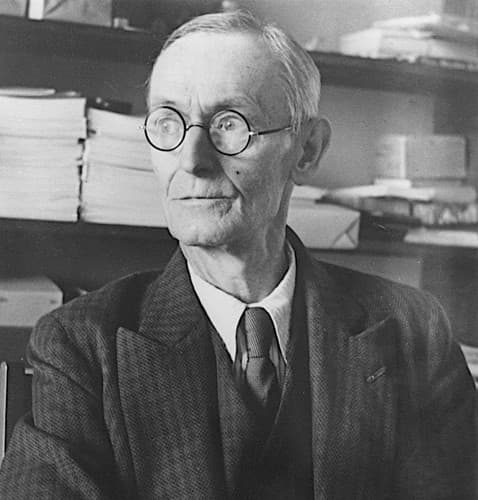
Hermann Karl Hesse was a German-Swiss poet, novelist, and painter. His best-known works include Demian, Steppenwolf, Siddhartha, and The Glass Bead Game, each of which explores an individual's search for authenticity, self-knowledge and spirituality. In 1946, he received the Nobel Prize in Literature.

Ashley Antoinette
4.6

Mark McDonald
4.4
Luo Guanzhong
4.4

Mia McKenzie
4.3

Dorothy Parker
4.3

Joaquim Maria Machado de Assis
4.3

James Thurber
4.2

Terry Kay
4.2