“Delhi is not far. Just a night's journey. But it might as well be a thousand miles.”
— Sushil, the protagonist, often dreams of leaving Pipalnagar for Delhi.

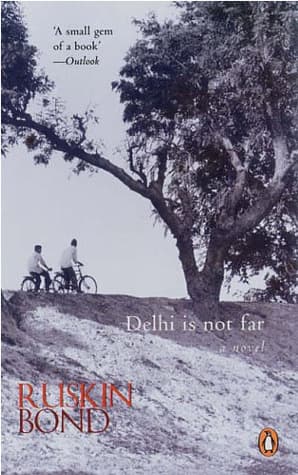
Ruskin Bond (2002)
Genre
Fiction
Reading Time
90 min
Key Themes
See below
Sign in to track this book
In the quiet town of Pipalnagar, a struggling Urdu detective novelist finds unexpected comfort and inspiration for a new story through his friendships with a young prostitute and an optimistic epileptic orphan.
Arun, a young man in the dusty town of Pipalnagar, makes a small living writing detective stories in Urdu. He lives in a room above a tea shop, watching the quiet lives around him. He wants to save enough money to leave Pipalnagar and move to Delhi, a city he imagines as full of chances. He believes his writing career will do well in Delhi, giving him the success he lacks in his current slow environment. Despite his goal, he often spends what he earns on daily needs and small treats, making his dream seem far away.
Arun often visits Kamla, a young prostitute who lives nearby. Their relationship, though based on money, grows into a surprising friendship. Kamla, despite her job, has a quiet understanding and kind spirit. She offers Arun companionship and understanding he doesn't find elsewhere. They often talk about wanting more from life. Kamla dreams of a simple, respectable life, perhaps in a village, while Arun talks constantly of Delhi. She sometimes teases him about his writing but also gives him real comfort.
One day, Arun meets Suraj, a young, homeless boy who often hangs around the tea shop. Suraj is an orphan and has epilepsy. Despite his difficulties, Suraj is very optimistic and strong. He also dreams of going to Delhi, believing he can find work and a better life there. Suraj's steady hope, even with his hard life, connects with Arun, forming an unexpected bond between the writer and the hopeful street boy. Arun feels protective of Suraj.
Arun's daily life includes talking with the tea shop owner, an old man who often makes cynical comments about life in Pipalnagar. The owner often dismisses Arun's big plans, reminding him how stuck the town is. Other local people, like shopkeepers and travelers, fill the background of Arun's life. These interactions show Pipalnagar as a place where dreams fade, but they also show the quiet dignity and strength of its people. Arun often feels a gap between his world of stories and the town's everyday reality.
During one of their evenings, Kamla tells Arun about her past, hinting at how she came to Pipalnagar and her current work. She doesn't ask for pity but expresses a quiet wish for a future where she can live peacefully and privately, perhaps in a small village away from the town's judgment. She talks about wanting a small hut, a garden, and the simple joys of a home life. Her dreams, though modest, are deeply felt and contrast with Arun's bigger, city-focused goals, yet both want to escape and start fresh.
One afternoon, while Arun is with Suraj, the boy has a severe epileptic fit. Arun, at first surprised, helps him through it. This event shows Suraj's weakness and the harshness of his life on the streets. However, once the fit passes, Suraj quickly becomes cheerful again, still optimistic about Delhi. This strength deeply impresses Arun, making him realize that Suraj's hope is not foolish but a strong way to survive. The event makes Arun feel even closer to the boy, feeling more responsible for him.
Arun's dream of Delhi remains constant, but his money situation makes it seem harder to reach. He struggles to save, often spending his small earnings on necessities, small treats, or helping Suraj. He keeps calculating how much he needs for a train ticket and initial costs in Delhi, but the numbers always seem against him. The difference between his big writing goals and his small income creates an ongoing inner struggle. He often feels trapped by his situation, despite moments of hope.
One day, Kamla tells Arun she is leaving Pipalnagar. She has saved enough money and found a chance to move to a small village where she hopes to start a new, respectable life, far from her past. Her leaving is bittersweet for Arun. While he understands her desire for a better future, he feels a deep loss. Kamla has been a source of comfort and quiet understanding, and her absence leaves a gap in his life. She leaves him a small, meaningful gift, a sign of their unique bond, and wishes him well on his own trip to Delhi.
After Kamla leaves, Arun feels a new urgency to make his own move. By saving steadily and with a bit of luck, he finally gets two tickets for a train to Delhi. He decides to take Suraj with him, unable to leave the optimistic boy behind. The railway station scene is full of excitement and some worry. As the train leaves Pipalnagar, Arun and Suraj share a moment of quiet success and shared hope, their faces showing a mix of excitement and uncertainty about their future in the big city.
Arun and Suraj arrive in the busy, overwhelming city of Delhi. The city is much grander and more chaotic than Arun imagined. The noise, the crowds, and Delhi's sheer size are daunting at first. They are two small figures lost in a sea of people, carrying their few belongings and their big hopes. The story ends not with a grand success, but with the quiet, uncertain start of their new lives in Delhi. It suggests that while getting to Delhi is done, the real challenge of building a life there has just begun, leaving the reader with a sense of open possibility.
The Protagonist
Arun evolves from a passive dreamer to someone who takes decisive action, spurred by a sense of responsibility and a desire for change, ultimately embarking on his journey to Delhi.
The Supporting
Kamla finds the courage and means to leave her past behind and pursue her own dream of a simple, respectable life, symbolizing a different kind of escape than Arun's.
The Supporting
Suraj maintains his unshakeable optimism despite his illness and homelessness, ultimately finding a companion in Arun to pursue his dream of Delhi.
The Supporting
The tea shop owner remains a consistent, unchanging figure, embodying the static nature of Pipalnagar that Arun yearns to escape.
The Mentioned
Sitaram exists within Arun's creative world, remaining a static representation of his aspirations.
A main theme is the common human wish to escape one's current life for something better. Arun sees Delhi as a place for writing success and freedom, a contrast to Pipalnagar's stagnation. Kamla dreams of a quiet, respectable village life, leaving her profession behind. Suraj, despite his dire situation, holds onto Delhi as a sign of stability and work. This theme appears in their talks about the future and their small efforts to move towards their 'Delhis,' showing how powerful hope can be even when resigned. The train journey at the end physically shows this escape.
“Delhi is not far. It's only a day and a night away by train. But it might as well be a thousand miles.”
The story balances Pipalnagar's general resignation with the lasting spark of hope in its people. The town is described as a place with 'not exactly despair, but resignation,' suggesting a quiet acceptance of fate. Yet, Arun's constant dream, Kamla's quiet planning, and especially Suraj's steady optimism, go against this resignation. Suraj, despite his epilepsy and homelessness, never loses his belief in a better future, showing pure hope. This theme explores how people find meaning and drive even when surrounded by the ordinary and seemingly unchangeable.
“Hope is a thing with feathers – that perches in the soul – And sings the tune without the words – And never stops – at all.”
Despite individual struggles and a feeling of isolation in Pipalnagar, the characters find deep human connection in unexpected places. Arun, a solitary writer, forms close bonds with Kamla, a prostitute, and Suraj, an orphaned street boy. These relationships are not traditional but are built on understanding, shared dreams, and quiet kindness. Kamla offers Arun emotional comfort, while Arun gives Suraj protection and companionship. These connections highlight the human need for belonging and support, even in the toughest environments, and show how empathy can bridge social differences.
“Perhaps all we really need is someone to listen, someone to understand, someone to simply be there.”
The book looks at different kinds of dreams, from big goals to simple wants. Arun's dream of writing success in Delhi is ambitious and somewhat romanticized, while Kamla's dream of a quiet, respectable village life is modest but deeply personal and practical. Suraj's dream of Delhi is pure and almost childlike in its optimism. The story shows that while dreams can be strong motivators, reaching them is often complex and uncertain. It also highlights that dreaming itself, regardless of the outcome, gives meaning and strength in hard lives, offering an inner escape from harsh realities.
“Dreams are like stars. You may never touch them, but if you follow them, they will lead you to your destiny.”
Delhi as a symbol of hope, opportunity, and escape.
Delhi functions as a central motif throughout the novel, representing different things to different characters but always embodying a better future. For Arun, it's the promised land for his literary career; for Kamla, it's a distant, perhaps unattainable, ideal of anonymity and new beginnings; for Suraj, it's a concrete place for work and a stable life. The repeated mention of Delhi underscores the characters' aspirations and serves as a constant reminder of the world beyond Pipalnagar, driving the narrative forward and culminating in Arun and Suraj's journey there.
The story is told from Arun's intimate and reflective perspective.
The use of first-person narration allows the reader deep insight into Arun's thoughts, feelings, and observations. This intimate perspective creates a strong sense of empathy for Arun's struggles and aspirations. It also filters the portrayal of Pipalnagar and its inhabitants through his subjective lens, highlighting his melancholic yet hopeful nature. The reader experiences the quiet despair and the small joys alongside Arun, making the journey to Delhi not just a physical one, but also a profound personal transformation for the protagonist.
The stark difference between Pipalnagar and the imagined Delhi.
The novel heavily relies on the contrast between the dull, dusty, and stagnant Pipalnagar and the vibrant, opportunity-filled, and bustling Delhi that Arun and Suraj imagine. Pipalnagar represents resignation, limited possibilities, and a slow pace of life, serving as a symbolic prison. Delhi, on the other hand, is the beacon of hope, dynamism, and the future. This contrast amplifies the characters' desires for escape and highlights the emotional weight of their journey, making the arrival in Delhi a significant moment of transition and challenge.
The train as a vehicle of transition and the tangible manifestation of dreams.
The train serves as a powerful symbol of transition, hope, and the tangible realization of a dream. For Arun and Suraj, the train is not just a mode of transport but the physical embodiment of their escape from Pipalnagar and their journey towards a new life in Delhi. The act of boarding the train signifies a decisive break from their past and an embrace of the uncertain future. It represents the courage to act on one's aspirations, moving from a state of dreaming to one of doing, and marks the culmination of their long-held desires.
“Delhi is not far. Just a night's journey. But it might as well be a thousand miles.”
— Sushil, the protagonist, often dreams of leaving Pipalnagar for Delhi.
“Sometimes I feel like I'm a little boat in a big ocean, just drifting.”
— Sushil reflects on his aimless life in Pipalnagar.
“The wind was cool and carried the smell of rain, a promise of something new.”
— Sushil experiences a change in weather, mirroring his internal yearning for change.
“Small towns have a way of holding you, even when you desperately want to leave.”
— Sushil contemplates the magnetic pull of his hometown.
“A good story isn't just about what happens, but how it makes you feel.”
— Sushil, a barber, often shares and hears stories from his customers.
“Loneliness is not being alone, but being unable to share what's inside you.”
— Sushil reflects on his feelings of isolation despite being surrounded by people.
“The past is a stubborn thing. It follows you everywhere, even to Delhi.”
— Sushil realizes that escaping his past might be harder than just changing locations.
“Perhaps happiness isn't a destination, but a way of travelling.”
— Sushil muses on the nature of happiness and his pursuit of it.
“The silence of the night in a small town is different. It's full of unspoken thoughts.”
— Sushil observes the quiet nights in Pipalnagar.
“You can cut hair, but you can't cut out the memories.”
— Sushil, a barber, makes an observation about the permanence of memories.
“Every person carries a secret garden within them, full of flowers and weeds.”
— Sushil reflects on the inner lives and complexities of the people he meets.
“Sometimes the greatest adventures are the ones you imagine, not the ones you take.”
— Sushil often daydreams about Delhi and other grander lives.
“The clock ticks, but time in Pipalnagar moves differently. Slower, perhaps.”
— Sushil observes the leisurely pace of life in his hometown.
“Even a small lamp can light up a very dark room, if it's the only light there is.”
— Sushil finds moments of hope and significance in simple things.
Ready to see how well you understood this book? Take our interactive quiz with 10 questions.
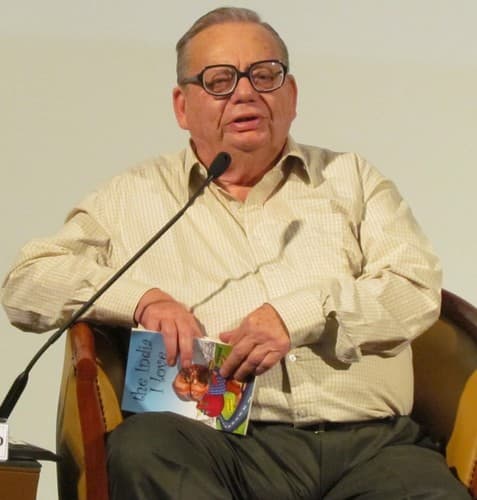
Biography coming soon.

Ashley Antoinette
4.6

Mark McDonald
4.4

Luo Guanzhong
4.4

Mia McKenzie
4.3

Dorothy Parker
4.3

Joaquim Maria Machado de Assis
4.3

James Thurber
4.2

Terry Kay
4.2