“Money is the mother's milk of politics, and in the shadows, it flows like a river.”
— A character reflects on the pervasive influence of undisclosed political funding.

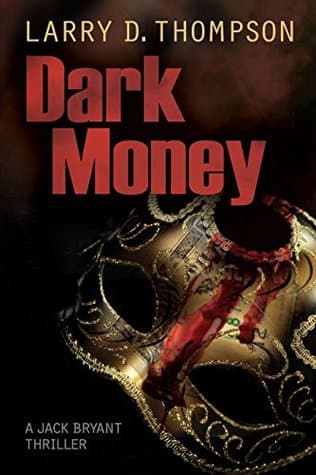
Larry D. Thompson (2015)
Genre
Fiction
Reading Time
9-10 hours
Key Themes
See below
Sign in to track this book
A pro bono lawyer dives into the murky world of dark money and political corruption after a Halloween fundraiser turns deadly, forcing him to hunt for a phantom killer to clear his friend's name.
Jackson Bryant, a millionaire plaintiff lawyer now doing pro bono work, gets a call from his old army friend, Walt Frazier, a Texas Ranger. Walt asks Jackson to help evaluate security for Texas Governor Rob Lardner at a Halloween costume fundraiser hosted by Republican billionaire John B. Rutledge at his Fort Worth mansion. The event is a gathering of political donors and power brokers. Miriam Van Zandt, a skilled marksman and member of 'The Alamo Defenders' anti-government militia, enters the party disguised as a cat burglar. She opens fire, wounding Governor Lardner and fatally shooting Rutledge's brother, Robert Rutledge, another prominent Republican billionaire. Miriam is shot in the leg during her escape but manages to flee, leaving chaos and a high-profile murder.
After the Halloween massacre, Jackson Bryant is appointed as a special prosecutor to investigate the attack and find the shooter, Miriam Van Zandt. Jackson works with the Texas DPS SWAT team to track Miriam. Their investigation leads them to a remote compound in West Texas, the headquarters of 'The Alamo Defenders,' the anti-government militia founded by Miriam's father. A standoff ends in a violent assault on the compound. During the raid, Miriam's father is killed, and Miriam herself is severely injured, falling into a coma. Authorities, believing the case closed with Miriam incapacitated and her father dead, declare victory.
While the official investigation concludes with Miriam Van Zandt in a coma and her father deceased, Jackson Bryant remains unconvinced that the true mastermind behind the Halloween massacre has been caught. His intuition tells him there's more to the story than a lone wolf militia member. His suspicions grow when Walt Frazier and the protective detail assigned to Governor Lardner are sued by John B. Rutledge, the fundraiser host, and the widow of Robert Rutledge, the murdered billionaire. The lawsuit claims negligence and seeks to hold Walt and his team responsible for the security breach and the tragedy. This legal action gives Jackson a reason to look deeper into the events of that night, to find the real killer and clear his friend's name.
Determined to uncover the truth and clear Walt Frazier and the protective detail, Jackson Bryant begins a meticulous investigation, focusing on the financial motivations and political connections surrounding the Rutledge family and the fundraiser. He starts to follow a trail of 'dark money' – untraceable political contributions and illicit financial dealings. This path leads him from the legitimate world of campaign finance to offshore accounts in the Cayman Islands. As he digs deeper, the scope of the conspiracy widens, suggesting that the Halloween massacre was not merely an act of anti-government extremism but a calculated assassination with far-reaching implications driven by powerful, hidden interests.
Jackson Bryant's pursuit of the dark money trail takes him far beyond Texas, revealing an international network of corruption. His investigation leads him from the financial centers of Washington D.C. to dealings in Eastern Europe, then to New York and New Orleans. He uncovers a scheme involving shell corporations, foreign influence, and political maneuvering designed to manipulate elections and enrich powerful individuals. By analyzing financial records and conducting interviews, Jackson begins to identify the true masterminds behind the Halloween massacre. He learns that the attack was a planned hit, intended to eliminate Robert Rutledge because of his opposition to a specific political agenda, and Miriam Van Zandt was merely a pawn in a larger game.
With the puzzle pieces falling into place, Jackson Bryant identifies the main orchestrator of the Halloween massacre. This individual is a powerful figure, deeply embedded in the political and financial elite, who used the anti-government militia as a convenient scapegoat. Jackson gathers evidence linking this person to the dark money transactions, the recruitment of Miriam Van Zandt, and the targeting of Robert Rutledge. The investigation's climax involves a direct confrontation with this mastermind, who tries to evade justice through manipulation and threats. Jackson, using his legal skills and the evidence he collected, systematically dismantles their defense, exposing their criminal enterprise.
After the confrontation, the mastermind behind the Halloween massacre is brought to justice, facing the law for their crimes. Jackson Bryant's pursuit of the truth not only exposes a network of corruption but also completely clears Walt Frazier and the protective detail from any responsibility for the security breach and the deaths. The lawsuit against them is dismissed, and their reputations are cleared. Miriam Van Zandt, though still recovering, is seen as a victim of manipulation rather than the sole perpetrator. The case shows how money can corrupt politics, highlighting the dangerous effects of unchecked financial influence in democratic processes, leaving a lasting impact on all involved.
The Protagonist
Jackson transforms from a reluctant participant in a security assessment to a dedicated special prosecutor, ultimately exposing a vast political conspiracy and bringing true justice.
The Supporting
Walt endures the stress of being falsely accused of negligence, eventually finding vindication through Jackson's efforts.
The Antagonist/Victim
Miriam transitions from an active participant in a violent attack to a comatose victim of manipulation, highlighting the tragic consequences of being used by powerful forces.
The Supporting
Governor Lardner is a catalyst for the plot due to his involvement in the attack, but his personal arc is secondary to the larger conspiracy.
The Supporting
John B. Rutledge acts as a catalyst for the plot by hosting the event and subsequently suing Walt, which pushes Jackson to uncover the truth.
The Mentioned
Robert's death is the central inciting incident for Jackson's investigation, revealing the depth of the conspiracy.
The Supporting
His death during the raid contributes to the initial 'closure' of the case, which Jackson later challenges.
The central theme explores how 'dark money'—untraceable political contributions—can corrupt the democratic process and lead to violent outcomes. The Supreme Court's Citizens United decision is cited as a catalyst, enabling wealthy individuals and organizations to have too much influence. Jackson Bryant's investigation traces these illicit financial flows from the Cayman Islands to Washington D.C. and beyond, revealing how political power can be bought and how individuals like Robert Rutledge can be targeted when they stand in the way of powerful financial interests. The Halloween massacre itself is a direct result of this corruption.
“The collision of money and politics... caused by the Supreme Court's decision in Citizens United.”
The novel contrasts the official, quick closure of the Halloween massacre case with Jackson Bryant's pursuit of true justice. After Miriam Van Zandt is incapacitated and her father killed, the authorities quickly declare victory and close the investigation. However, Jackson's intuition tells him that the real perpetrators are still at large. This theme shows the difference between solving a crime superficially and uncovering deeper, more complex truths. Jackson's commitment to clearing Walt Frazier and finding the true killer shows the struggle to achieve genuine justice against institutional pressure for quick resolutions.
“The authorities declare victory and close the case—but Jack knows better. The person behind the Halloween massacre has yet to be caught.”
A theme is the manipulation of individuals and groups for political and financial gain. Miriam Van Zandt and 'The Alamo Defenders' militia are shown as instruments used by a more powerful, unseen entity. They are not the masterminds but rather pawns in a larger scheme. The 'cat burglar' disguise worn by Miriam at the fundraiser symbolizes this deception, as her identity and motivations are not what they seem. Jackson's investigation peels back layers of deceit, revealing how seemingly independent acts of violence can be orchestrated by powerful figures pulling strings from the shadows.
“Miriam Van Zandt... murders the host's brother... The authorities declare victory... but Jack knows better.”
The bond between Jackson Bryant and Walt Frazier is an emotional anchor in the narrative. Their long-standing friendship, formed in the army, motivates Jackson's deep dive into the dangerous investigation. When Walt and his team are sued for negligence, Jackson's commitment to clearing his friend drives him to uncover the truth, even at great personal risk. This theme shows the importance of personal connections and loyalty in a world of political maneuvering and betrayal, providing a human element to the high-stakes thriller.
“Walt needs his assistance... Jack must call on the Texas DPS SWAT team... to track Van Zandt... to track the real killer and absolve his friend and the Protective Detail of responsibility.”
A narrative device used to expose hidden financial and political corruption.
The 'dark money' trail serves as the primary investigative thread that Jackson Bryant follows throughout the novel. It represents the untraceable political contributions and illicit financial dealings that obscure the true perpetrators of the Halloween massacre. This device allows the plot to move across various geographical locations—from the Cayman Islands to Washington D.C., Eastern Europe, New York, and New Orleans—and to reveal the intricate, global nature of the conspiracy. By focusing on financial transactions, the narrative systematically uncovers the motivations and identities of the powerful individuals behind the political corruption.
A symbolic setting that highlights themes of disguise, deception, and hidden agendas.
The Halloween costume fundraiser is more than just a setting; it's a symbolic device. The costumes worn by the attendees, particularly Miriam Van Zandt's 'cat burglar' outfit, foreshadow the deception and hidden identities central to the plot. The veneer of a festive, charitable event masks the deadly intentions and political machinations unfolding beneath the surface. This setting effectively contrasts the outward appearance of elite social gatherings with the dark, violent realities of political corruption, setting a tone of intrigue and betrayal from the outset.
A real-world legal precedent that provides the foundational context for the novel's central conflict.
The Supreme Court's decision in Citizens United v. Federal Election Commission is explicitly referenced as the cause of the 'corruption of money in politics.' This plot device grounds the fictional narrative in a real-world legal and political issue, lending credibility and urgency to the story's themes. It provides a legal framework that explains how 'dark money' can flow unchecked, enabling the very type of political manipulation and violence depicted in the novel. It elevates the thriller beyond a simple crime story to a commentary on contemporary American politics.
A red herring and tool used to deflect suspicion from the true perpetrators.
'The Alamo Defenders' militia, led by Miriam's father and including Miriam Van Zandt, functions as a significant plot device. Initially presented as the obvious culprits for the Halloween massacre due to their anti-government ideology and violent actions, they serve as a red herring. Their involvement allows the real masterminds to deflect suspicion and for authorities to prematurely close the case. The militia's existence and their raid provide the initial action and conflict, but ultimately highlight how extremist groups can be exploited and manipulated by more sophisticated, hidden forces for their own nefarious ends.
“Money is the mother's milk of politics, and in the shadows, it flows like a river.”
— A character reflects on the pervasive influence of undisclosed political funding.
“In the world of dark money, truth is the first casualty.”
— A journalist uncovers hidden financial trails in an investigation.
“Power doesn't just corrupt; it buys silence.”
— A whistleblower faces intimidation from wealthy backers.
“Every dollar has a story, and some are written in invisible ink.”
— A lawyer traces anonymous donations to a political campaign.
“The system isn't broken; it's been purchased.”
— A disillusioned politician speaks about regulatory capture.
“In the dark, alliances are forged not by ideals, but by interests.”
— Backroom deals between corporations and politicians are exposed.
“Justice can be blind, but money gives it 20/20 vision.”
— A court case is swayed by undisclosed financial support.
“The price of influence is measured in shadows, not dollars.”
— A lobbyist explains how to hide political contributions.
“When the river runs dark, even the fish don't know they're swimming in poison.”
— A metaphor for the insidious effects of dark money on society.
“Freedom isn't free; it's for sale to the highest bidder.”
— A critic argues that dark money undermines democratic freedoms.
“The ledger of power has two columns: one for light, one for dark.”
— An accountant reveals hidden financial records.
“In the echo chamber of wealth, even whispers sound like thunder.”
— Describing how wealthy donors amplify their influence quietly.
“To follow the money is to walk a path lined with mirrors.”
— An investigator struggles with obscured financial trails.
“The greatest trick dark money ever pulled was convincing the world it didn't exist.”
— A nod to the secrecy and denial surrounding undisclosed funds.
Ready to see how well you understood this book? Take our interactive quiz with 10 questions.

Biography coming soon.
Ashley Antoinette
4.6

Mark McDonald
4.4
Luo Guanzhong
4.4
Mia McKenzie
4.3
Dorothy Parker
4.3
Joaquim Maria Machado de Assis
4.3
James Thurber
4.2
Terry Kay
4.2