“I am an American, and I am a Chicagoan, and I am a Jew, and I have been a soldier, and I am a writer. I have been a lot of things.”
— Early in the novel, Joseph reflects on his identity and experiences.

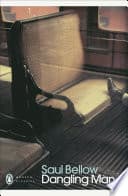
Sign in to track this book
Trapped in an unforeseen year of civilian limbo while war rages, Joseph grapples with the suffocating weight of unwanted freedom and the unraveling of his identity on the restless streets of 1940s Chicago.
Joseph starts his journal on December 15th, writing about his life in Chicago as he waits to join the army. He has already left his job at an export company, sold many belongings, and moved into a smaller apartment with his wife, Iva. His preparations for war have left him in a state of limbo, as the expected call to service is repeatedly delayed. This early period includes a feeling of unease and an effort to bring order to his sudden idleness. He thinks about society's expectation to be busy and his own difficulty with forced inactivity, feeling more and more separate from the world that continues around him.
As weeks turn into months, Joseph's forced idleness starts to strain his home life with Iva. His introspection and irritability cause tension, and Iva, though supportive, struggles to understand his growing psychological state. Joseph feels increasingly isolated from his friends, especially his old group, as he senses their lives moving forward while his is stuck. He resents their casual questions about his induction, seeing them as not truly understanding his situation. His walks through Chicago become less about exploring and more about escaping his apartment and the growing awkwardness of his social interactions.
Joseph writes much in his journal about his thoughts on freedom. He first believes his unburdened state, free from work or social duties, should offer a deep sense of liberation. However, he quickly finds that this 'freedom' is a weight, leading to an oppressive self-awareness and an inability to find meaning. He questions if true freedom is real or an illusion, and if people can truly decide their own path without outside pressure. This intellectual struggle is a main idea, as he tries to make sense of his emotional distress.
Joseph occasionally contacts old friends, or they seek him out, but these meetings often show his growing isolation. He visits his friends Morris and Kitty, but finds he cannot truly connect, feeling an unspoken judgment or a lack of understanding from them. His talks with his former mentor, Professor Wulpy, are similarly unfulfilling. Joseph feels that his friends, busy with their own lives, cannot grasp the unique psychological burden of his 'dangling' state. These meetings often leave him feeling more misunderstood and alone, pushing him further into his journal and his own thoughts.
Joseph recalls a past intellectual disagreement with an old friend, a 'neoclassicist' who valued order, reason, and control. Joseph, in contrast, identifies more with the 'romantic' view, valuing passion, intuition, and individual experience. This memory acts as a comparison for his current internal conflict: his desire for structure and purpose (the neoclassicist ideal) clashing with his current chaotic, unbound life (the romantic's struggle). He re-examines these opposing ideas, trying to decide which worldview offers a better way through his current problem, ultimately finding neither fully helpful in easing his existential worry.
The growing tensions between Joseph and Iva end in a big argument. Joseph, increasingly irritable and self-absorbed, lashes out at Iva for what he sees as her lack of understanding or her attempts to 'manage' his mood. Iva, in turn, expresses her frustration with his withdrawal and his inability to engage constructively with their shared life. This confrontation is a painful but necessary release of pent-up emotions, showing how much his idleness has strained their relationship. While they make up, the incident highlights the deep impact of his 'dangling' state on those closest to him.
To understand his internal conflicts, Joseph invents an imaginary voice he calls the 'Spirit of Alternatives.' This internal voice acts as a challenger, questioning his assumptions, exploring his motives, and doubting his self-pity. Through these imagined talks, Joseph tries to gain perspective on his situation, to understand why he is unhappy, and to face his own intellectual and emotional avoidance. The 'Spirit of Alternatives' represents Joseph's critical self, pushing him to confront uncomfortable truths about his character and how he responds to difficulty.
Joseph reluctantly visits his brother, Amos, and his family. While he feels a sense of family duty, he also resents the expectations and the superficiality he sees in their interactions. His brother, a more conventional and successful man, represents the kind of life Joseph has temporarily given up. Joseph feels judged and misunderstood by his family, sensing their unspoken disapproval of his idleness and his philosophical thoughts. These family encounters further highlight his feeling of being an outsider, reinforcing his preference for solitude and the introspective world of his journal.
As his waiting period continues, Joseph's self-control begins to break down. He becomes more irritable, prone to sudden outbursts, and struggles to maintain his intellectual discipline. His philosophical thoughts become darker, more nihilistic, as he questions the value of human effort and the meaning of existence itself. The initial intellectual challenge of his idleness gives way to a deeper psychological decline, marked by a sense of futility and a growing inability to find joy or purpose in anything. He becomes more aware of his own flaws and the limits of his self-imposed intellectualism.
After nearly a year of difficult waiting, Joseph finally receives his induction notice. The news, though long-expected, comes with a surprising mix of relief and resignation. The end of his 'dangling' period means both an escape from his debilitating idleness and an entry into a new, uncertain chapter. He prepares to close his journal, thinking about the year that has passed and the deep internal changes it has caused. The army, which once seemed a distant, abstract duty, now becomes a concrete reality, offering a definite end to his state of existential limbo.
In his last journal entries, Joseph expresses a surprisingly strong desire for the discipline and structure of army life. He sees it as a welcome relief from the overwhelming burden of his self-imposed freedom and the constant demand for self-determination that has troubled him. He wants external authority to guide his actions and decisions, believing this will free him from the paralyzing introspection and the endless cycle of alternatives that have defined his year of waiting. This final feeling highlights the main irony of his 'freedom'—it ultimately led him to crave the very limits he first tried to escape.
The Protagonist
Joseph begins seeking meaning in his freedom but ends up craving the discipline of the army, realizing the burden of unchecked self-determination.
The Supporting
Iva endures Joseph's difficult temperament, her patience eventually giving way to frustration, highlighting the strain of his idleness on their marriage.
The Supporting
Morris remains largely static, serving as a foil to Joseph's internal struggles, representing the 'normal' world Joseph has temporarily left behind.
The Mentioned
Wulpy's role is static, serving as a sounding board for Joseph's thoughts and a symbol of practical wisdom Joseph cannot fully embrace.
The Supporting
Amos remains a consistent representation of conventional life, serving as a point of contrast and occasional friction for Joseph.
The Mentioned
Kitty remains a minor character, serving to illustrate the social world Joseph observes.
The main theme explores how unexpected freedom, especially from work and social duties, can become a deep burden. Joseph first expects liberation but finds himself unable to act due to too many choices and a lack of outside structure. His journal entries repeatedly question what true freedom is, showing how a lack of limits can lead to an oppressive self-awareness and existential worry. This is clear in his philosophical thoughts on the 'Spirit of Alternatives' and his eventual desire for army discipline, as seen in his final journal entries.
“What did I want? I wanted to be free. I wanted to be in a condition of mind that allowed me to be more myself.”
Joseph's long idleness and intense self-reflection lead to a deep sense of separation from society, his friends, and even his wife. He feels disconnected from the world that continues its routines while he is stalled. His attempts to interact with friends like Morris often result in feelings of misunderstanding and more isolation, as he believes they cannot grasp his unique psychological situation. This theme appears in his retreat into his journal, his walks through the city as an observer rather than a participant, and the growing strain on his marriage with Iva.
“I am an idler, I am a loafer, I am a dangling man.”
Joseph's forced inactivity makes him relentlessly examine his own identity, character, and reasons. Without his professional role and social purpose, he struggles to define himself. His journal becomes a tool for self-analysis, but this introspection often reveals an uncomfortable, irritable, and self-absorbed person. The 'Spirit of Alternatives' directly shows this theme, representing his internal struggle to understand and confront his own 'character' and the different selves he sees within him, ending in a breakdown of his perceived self-control.
“I must get to the bottom of this character of mine.”
During his year of waiting, Joseph desperately seeks meaning and purpose in his life, especially without outside direction. He turns to philosophy, intellectual discussions, and self-analysis to fill the void left by his lack of work or military service. However, his search often leads to frustration and a sense of futility, as he finds no easy answers. The war outside contrasts sharply with his internal, abstract struggles, highlighting his inability to find a concrete purpose in his 'dangling' state.
“It is a good thing to be a man, but it is a difficult thing to be a man.”
The entire novel is presented as Joseph's personal journal entries.
This device offers an intimate and unfiltered look into Joseph's mind, allowing the reader direct access to his thoughts, philosophical musings, and emotional fluctuations. It emphasizes his isolation, as the journal becomes his primary confidant and outlet for his internal struggles. The subjective nature of the narration means the reader experiences events and characters solely through Joseph's often biased and self-absorbed perspective, highlighting his introspection and unreliable self-assessment. The journal structure also reinforces the theme of idleness, as writing becomes Joseph's main activity.
Joseph's imaginary interlocutor, embodying his critical self and internal conflicts.
This unique device is an imagined character Joseph invents to externalize his internal debates and self-criticism. The 'Spirit' challenges Joseph's assumptions, questions his motives, and forces him to confront his own flaws and intellectual evasions. It serves as a psychological mirror, allowing Joseph to engage in a dialectical process that reveals deeper layers of his character and the complexities of his situation. This device highlights Joseph's intellectualism and his struggle to find objective truth amidst his subjective experience.
World War II serves as a constant, yet distant, presence, contrasting with Joseph's internal struggles.
The ongoing World War II provides a significant contextual backdrop, even though it is rarely directly experienced by Joseph. It represents a world of action, purpose, and collective struggle, standing in stark contrast to Joseph's personal idleness and introspective angst. The war's delay in claiming Joseph's service is the catalyst for his 'dangling' state. Its presence highlights Joseph's alienation and makes his internal philosophical battles seem both profound and, at times, self-indulgent when compared to the global conflict.
The urban landscape of Chicago reflects Joseph's internal state and provides a stage for his observations.
Chicago functions as more than just a physical location; it mirrors Joseph's internal state. His aimless walks through the city reflect his psychological wandering and his feeling of being disconnected from the vibrant life around him. The city's indifference to his personal crisis emphasizes his isolation. Specific neighborhoods and observations of city dwellers provide concrete details that ground his abstract musings, showing how he attempts to find meaning or distraction in his immediate environment, even as he feels increasingly estranged from it.
“I am an American, and I am a Chicagoan, and I am a Jew, and I have been a soldier, and I am a writer. I have been a lot of things.”
— Early in the novel, Joseph reflects on his identity and experiences.
“How, to begin with, does one's own existence strike one? In the midst of all this, I still want to live. What is the meaning of it?”
— Joseph grapples with existential questions while waiting for his draft notice.
“I have been trying to live life, to taste it, to feel it, to make it yield its secrets, and this is what I have found: mostly boredom.”
— Joseph expresses his disillusionment with life and his current state.
“A man's life is his own work of art. And I am not doing a very good job of it.”
— Joseph critiques his own life and choices, feeling a lack of agency.
“There was a time when I thought I could solve the problems of the world. Now I can't even solve my own.”
— Joseph reflects on his youthful idealism contrasted with his current helplessness.
“It is because I have taken my own side, and I have done so with a clear conscience, that I feel so isolated.”
— Joseph explains his feeling of isolation stemming from his firm stance on his own beliefs.
“One can't live without a theory of existence, and if one doesn't have one, one has to invent one.”
— Joseph muses on the human need for a framework to understand life.
“I am not a hero. I am not a martyr. I am a man who is waiting.”
— Joseph defines himself by his current state of suspended animation.
“The greatest punishment for a man is to be left to himself.”
— Joseph expresses the torment of his enforced idleness and introspection.
“I must get out of this room. I must get out of this state. I must get out of this self.”
— Joseph's desperate desire to escape his current mental and physical confinement.
“What is it that I want? I want to be bound. I want to be commanded. I want to be given tasks, reasons, grievances, and objectives.”
— Joseph yearns for the structure and purpose that military service might provide.
“I am a man of the age, and I am subject to its diseases. The disease of solitude, of the self.”
— Joseph connects his personal struggles to the broader issues of his time.
“The world is too much with us; late and soon, getting and spending, we lay waste our powers.”
— Joseph, quoting Wordsworth, laments the distraction and consumerism of modern life.
“I have been dangling in the air, a man waiting for the end of a war, waiting for the beginning of a life.”
— Joseph's ultimate summary of his suspended existence at the novel's close.
Ready to see how well you understood this book? Take our interactive quiz with 10 questions.
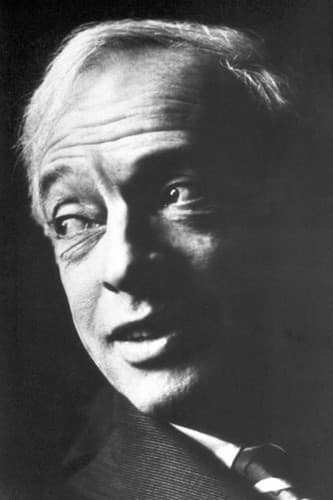
Saul Bellow was a Canadian–American writer. For his literary work, Bellow was awarded the Pulitzer Prize, the Nobel Prize for Literature, and the National Medal of Arts. He is the only writer to win the National Book Award for Fiction three times, and he received the National Book Foundation's lifetime Medal for Distinguished Contribution to American Letters in 1990.

Ashley Antoinette
4.6

Mark McDonald
4.4
Luo Guanzhong
4.4

Mia McKenzie
4.3
Dorothy Parker
4.3

Joaquim Maria Machado de Assis
4.3
James Thurber
4.2

Terry Kay
4.2