“Indian kids don't run away from home. They run to home. They run to the reserve, to their family, to their own kind.”
— Frank Fencepost explaining a cultural difference to Silas.

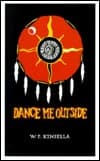
W.P. Kinsella (1977)
Genre
Fiction
Reading Time
150 min
Key Themes
See below
Sign in to track this book
Through Silas Ermineskin's eyes, 'Dance Me Outside' shows the humor, daily struggles, and spirit of a Cree Indian reserve in Central Alberta.
Silas Ermineskin tells about the yearly 'Dance Me Outside' contest on the Hobbema reserve. In this event, people dance while facing physical challenges, and the last one dancing wins. Frank Fencepost, Silas's best friend, wants to win this year to impress Sadie One-Wound. The crowd harasses contestants by throwing things and shouting insults. Frank, despite his usual behavior, shows surprising endurance. As fewer people remain, Frank and Bertha Blind-Woman are the last two. Bertha, known for her quiet strength, outlasts Frank, who collapses from exhaustion. Silas watches the community's reaction, a mix of amusement and respect for Bertha's unexpected win, showing the resilience and humor on the reserve.
Silas and Frank Fencepost care a lot about the Hobbema reserve's baseball team, the Hobbema Hawks. The team is not doing well, and the boys think getting a real major league pennant will inspire them. They plan to go to Edmonton to steal a pennant from a sports store. Their trip involves hitchhiking and trying to trick store clerks. They do not succeed at first. Eventually, they get a pennant through a mix of cleverness and luck, though they do not exactly steal it. They return to the reserve, giving the pennant to the team with a big ceremony, hoping it will help them win. This shows their naive but sincere dedication to their community's morale.
Silas and Frank Fencepost worry about Martha, a woman on the reserve with a serious alcohol addiction. She is called 'The Bottle Queen' because she drinks constantly and has empty bottles around her shack. The boys, with their mix of compassion and unusual methods, decide to help. They try different ways to get Martha to stop drinking, from hiding her bottles to distracting her. Their efforts are often clumsy and funny, but they come from a real wish to help. Despite their efforts, Martha's addiction is deep, and the boys learn the limits of their influence. This highlights the widespread challenges some community members face.
Silas shares stories about 'the Uncle,' a respected elder on the Hobbema reserve who keeps traditional knowledge and stories. The Uncle is wise, often quiet, but understands people and the world deeply. He often gives cryptic advice or observations that, later, show important truths. Silas and Frank often ask for his advice, though they do not always understand him at first. The Uncle connects them to the past and offers guidance, showing the lasting strength of Cree culture and the importance of oral tradition in the community, even as it changes with modern influences.
Silas and Frank decide to throw a huge party on the Hobbema reserve, aiming for an event bigger and more exciting than any before, which they call the 'Grand Alliance.' Their planning is, as usual, more enthusiastic than organized. They try to get supplies, invite everyone, and create a wild celebration. The preparations are messy, involving various plans to get food and drink, and many last-minute changes. When the party happens, it becomes a typical Hobbema gathering: lively, a bit disorganized, but ultimately joyful and communal. The story shows the boys' endless energy and their ability to create fun and bring people together, even if their methods are unusual and often lead to funny problems.
Silas tells the story of a night when a bear caused a big disturbance on the Hobbema reserve, involving a dog named Goombaw. The story is full of tension, suspense, and Kinsella's humor. The bear's presence causes panic and excitement, as the community deals with the unexpected visitor. Frank Fencepost, always a showman, tries to lead the effort to confront the bear, often with more bravery than sense. The event becomes a memorable tale among reserve residents, showing their resilience when nature is unpredictable and their ability to find humor even in dangerous situations. Goombaw's fate is a central, and comically exaggerated, part of the story.
Silas thinks about the strong community and shared identity that connects the people of the Hobbema reserve, calling it the 'Indian Nation.' He describes how, despite individual quirks and occasional arguments, there is an underlying unity and support system. This sense of nationhood is not about political lines but about cultural heritage, shared experiences, and a collective spirit. The stories show how residents look out for each other, celebrate together, and face challenges as a group. Silas emphasizes the unique ways of life, humor, and quiet dignity that define his people, showing the lasting strength and distinctness of Cree culture despite outside pressures and modern challenges.
Silas and Frank become involved in a plan about an old car, which they call 'Caraway.' The car represents both hope and frustration on the reserve, as reliable transportation is often rare. The boys, with their usual entrepreneurial spirit, try to fix it, sell it, or use it for various purposes. Their efforts usually have limited success and many mechanical failures. The car becomes a source of endless funny bad luck, leading them into trouble and misunderstandings. The story shows the resourcefulness of the reserve residents, their ability to make do with what they have, and the constant struggle against practical limits, all told with Kinsella's humor and realism.
Silas tells about a time when he and Frank Fencepost decide to 'fix' a problem on the reserve in their own unique and often mistaken way. The 'burning at the stake' is not a literal execution but a metaphorical one, involving public shaming or exclusion of someone who has wronged the community or broken an unspoken rule. The boys, in their vigilante-like efforts, often misunderstand situations or go to extreme lengths, leading to funny and sometimes absurd results. This story explores community justice, gossip, and how information and opinions spread quickly on the reserve. It shows the boys' sense of right and wrong, however flawed, and their commitment to upholding what they see as right in their community.
Silas and Frank have another memorable encounter with a bear, showing that wildlife encounters are a regular part of life on the Hobbema reserve. This event is different from the 'Goombaw' story, offering new challenges and funny situations. The bear's presence disrupts daily life, leading the boys to come up with a new plan to deal with it. Their methods are, as always, unusual and lead to a series of increasing problems. The story further develops the theme of humans living with nature, often in surprising and humorous ways. It reinforces the boys' adventurous spirit and their talent for turning ordinary events into extraordinary tales.
Silas tells the story of a very clever and smart young person on the Hobbema reserve, whom he describes as 'having brains.' This person, often a minor character, outsmarts others, sometimes including Silas and Frank, through cleverness and ingenuity. The stories about this character show the different talents and personalities in the community. It shows that intelligence comes in many forms, not always those recognized by formal education. Silas and Frank, despite their own street smarts, are often impressed, and sometimes frustrated, by the cleverness shown, adding another layer to the reserve's social fabric.
Silas and Frank decide to look for 'real jobs' off the Hobbema reserve, a venture that, predictably, goes wrong. Their attempts at work are marked by misunderstandings, cultural differences, and their natural inability to fit into typical workplace expectations. They might try working in construction, on a farm, or in some other temporary job, but their unique approach to life and work always leads to funny firings or resignations. The story illustrates the challenges of fitting into mainstream society while keeping their distinct cultural identity and free-spirited nature. It is a humorous look at the clash between two worlds and the boys' lasting preference for their own way of life on the reserve.
Silas tells about another bear encounter, but this one is more personal and surprising, emphasizing the unpredictable nature of living close to the wilderness. Unlike previous, more chaotic encounters, this story might involve an unexpected close moment or a less confrontational interaction. The bear's 'hello' is a metaphor for a moment of connection or surprising realization about their shared home. Frank Fencepost likely plays a role, perhaps trying to talk to the bear or reacting in an exaggerated way. This story further explores nature's presence in their lives and the unique, often humorous, ways the reserve residents interpret and interact with the wildlife around them, reinforcing their deep connection to the land.
In a rare change, Frank Fencepost temporarily takes over the narration from Silas, giving readers a direct look into his loud and often exaggerated view of the world. Frank's story is likely an account of an adventure or mishap from his perspective, full of his usual bravado, colorful language, and a slightly distorted view of events. This change in narrator offers insight into Frank's personality, his reasons, and how he sees himself and the world. It highlights his role as the instigator and storyteller, and allows a different comedic voice to appear, contrasting with Silas's more grounded, though still humorous, observations. This story shows the unique bond between the two friends.
Silas discusses the presence and importance of a traditional medicine man on the Hobbema reserve. This character represents the lasting spiritual and cultural practices that exist with modern life. The medicine man is sought for various problems, both physical and spiritual, and his methods come from old Cree traditions. Silas describes the respect given to him and the community's belief in his powers. The stories might involve times when the medicine man's help is sought, sometimes with funny results when compared with Silas and Frank's more practical or mischievous approaches. This story highlights the importance of cultural heritage, traditional knowledge, and the spiritual side of life on the reserve, showing the richness of their belief system.
The Protagonist/Narrator
Silas matures in his understanding of his community and himself, deepening his appreciation for his culture and the complexities of human nature.
The Supporting/Co-protagonist
Frank remains largely consistent in his boisterous personality, but his schemes occasionally show a deeper understanding of consequences and community dynamics.
The Supporting
Her character remains fairly consistent, serving as a grounded presence amidst the boys' chaos.
The Supporting
He remains a steadfast source of wisdom, embodying the unchanging spirit of the ancestors.
The Supporting
Her brief appearance reveals her enduring strength, showcasing the quiet power within the community.
The Supporting
Her struggle remains a poignant challenge, highlighting the ongoing impact of addiction within the community.
The Mentioned
Goombaw's story becomes a part of the reserve's folklore, immortalized by Frank.
The Supporting
He remains a consistent symbol of traditional knowledge and spiritual guidance.
The stories are deeply rooted in the strong sense of community on the Hobbema reserve. Silas consistently highlights the shared experiences, mutual support, and unique identity of the Cree people. Despite individual struggles or quirky characters, there is a strong feeling of belonging and collective spirit. This is clear in events like the 'Dance Me Outside' contest, where the whole community participates, or in the shared concern for Martha in 'The Bottle Queen.' The 'Indian Nation' story directly addresses this theme, emphasizing that their identity is not just geographical but cultural and relational.
“Us Indians, we got our own ways of doin' things. Might not make sense to white people, but they make sense to us.”
A common theme is the ability of the reserve residents to find humor and stay resilient when facing challenges, both everyday and serious. Silas and Frank's adventures, while often leading to funny problems, also show their resourcefulness and refusal to be defeated. Stories like 'The Night the Bear Ate Goombaw' or the various schemes in 'Caraway' show how laughter and a lighthearted approach are key ways to cope. Even when facing poverty or addiction, as with Martha, there is an underlying human spirit that lasts, often shown through witty dialogue and ironic observations.
“Sometimes, I think the only way to get through life is to laugh at it, even when it ain't funny.”
The book explores the tension and interaction between traditional Cree culture and the growing influences of mainstream Canadian society. While the reserve keeps its distinct ways, parts of the outside world, like jobs, technology, and social services, are present. Stories like 'The Job' clearly show the difficulties Silas and Frank face when trying to adapt to non-reserve work environments. This theme is not presented as a fight between good and evil, but rather as a natural dynamic of two different worldviews existing together, sometimes awkwardly, sometimes with surprising harmony. The presence of figures like The Uncle and The Medicine Man further emphasizes the lasting strength of traditional ways amid these changes.
“White people got their ways, we got ours. Sometimes they mix, sometimes they don't.”
The entire collection shows the power of oral tradition and storytelling in the Cree community. Silas, as the narrator, is a skilled storyteller, mixing everyday events, personal thoughts, and exaggerated tales. Frank Fencepost is also a key storyteller in the book, often adding to events for dramatic effect. The stories themselves, whether about bears, baseball, or community antics, become part of the shared history and identity of the reserve. This theme highlights how stories are used to entertain, teach, preserve culture, and build community bonds, reflecting the rich oral heritage of Indigenous peoples.
“A good story, it's like a warm fire on a cold night. Keeps you going, keeps you rememberin'.”
The natural environment of Central Alberta is not just a background but an active part of the lives of the Hobbema residents. Bears, in particular, appear prominently in several stories ('The Night the Bear Ate Goombaw,' 'The Bear Went Over the Mountain,' 'The Bear Said Hello'), symbolizing both the beauty and unpredictability of nature. The stories show a relationship with the land that is respectful, practical, and sometimes full of funny tension. This theme highlights the deep connection the Cree people have to their environment and how their daily lives are shaped by the wilderness around the reserve.
“The land, it knows us. And we know it. Just gotta remember that sometimes.”
The entire collection is narrated through the eyes and voice of Silas Ermineskin.
This device is central to the book's charm and effectiveness. By using Silas as the narrator, Kinsella provides an intimate, authentic, and often humorous perspective on life on the Hobbema reserve. Silas's unique voice, combining dry wit with poignant observation, allows readers to experience the cultural nuances, daily struggles, and joyful moments directly. His perspective shapes the reader's understanding of events, characters, and the underlying themes, fostering empathy and immersion. It also allows for the selective sharing of information, building anticipation and revealing character through his subjective lens.
Silas and Frank serve as contrasting personalities that highlight each other's traits.
Silas and Frank Fencepost function as classic foil characters. Silas is the more observant, thoughtful, and often understated narrator, while Frank is the impulsive, boisterous, and often exaggerated instigator of their adventures. This dynamic creates much of the book's humor and drives many of the plots. Frank's outlandish schemes and bravado are balanced by Silas's more grounded, though still mischievous, reactions and reflections. Their contrasting personalities allow Kinsella to explore different facets of Cree identity and experience, providing both comedic relief and deeper insights into their friendship and community.
The book is a collection of distinct, self-contained short stories, each an anecdote from reserve life.
Each story in 'Dance Me Outside' functions as a self-contained anecdote, offering a snapshot of life on the Hobbema reserve. While the characters (Silas, Frank, Sadie, etc.) recur, there isn't a single overarching plot arc spanning the entire book. Instead, the collection builds a cumulative portrait of the community through individual incidents, observations, and character sketches. This structure mimics traditional oral storytelling, where individual tales contribute to a larger cultural narrative, allowing Kinsella to explore a wide range of themes and situations without being constrained by a linear plot.
Events often unfold in unexpected or contrary ways to what is intended or expected.
Situational irony is a frequent source of humor and insight in the stories. Characters, particularly Frank, often have grand plans or expectations, only for events to take an entirely different, often more comical or poignant, turn. For example, Frank's determination to win the 'Dance Me Outside' contest is met with the unexpected victory of Bertha Blind-Woman. These ironic twists highlight the unpredictability of life, the often-flawed nature of human endeavors, and the unique logic that sometimes prevails on the reserve, providing both amusement and a subtle commentary on expectations versus reality.
“Indian kids don't run away from home. They run to home. They run to the reserve, to their family, to their own kind.”
— Frank Fencepost explaining a cultural difference to Silas.
“A white man's a fool if he thinks he can understand an Indian, and an Indian's a fool if he thinks he can understand a white man.”
— Frank Fencepost reflecting on the divide between cultures.
“There's a lot of things you don't learn in school, Silas. Things you learn by watching, by listening, by living.”
— Frank Fencepost imparting wisdom to Silas about practical knowledge.
“Sometimes you got to make your own luck. Sometimes you got to go out and grab it by the tail.”
— Frank Fencepost's philosophy on taking initiative.
“The government gives us everything except what we want. What we want is to be left alone.”
— A character expressing frustration with government intervention.
“You can't eat money, Silas. But you can eat a good story.”
— Frank Fencepost valuing storytelling over material wealth.
“Every time a white man tries to help an Indian, he just messes things up worse.”
— A cynical view on well-intentioned but misguided assistance.
“We got our own ways. Maybe they ain't your ways, but they work for us.”
— A character asserting the validity of Indigenous traditions.
“The wind talks to me sometimes. Tells me things I need to know.”
— An example of a character's connection to nature and spiritual beliefs.
“There's a lot of sadness on the reserve, but there's a lot of laughter too. You just got to know where to look.”
— Silas observing the complexities of life on the reserve.
“Sometimes the best way to get what you want is to pretend you don't want it.”
— Frank Fencepost offering a manipulative piece of advice.
“White men got watches, Indians got time.”
— A common saying within the book highlighting different perceptions of time.
“You can't change the past, Silas, but you can sure as hell make a different future.”
— A character offering a hopeful outlook despite past hardships.
“A good joke is like a good meal. It fills you up and makes you feel warm inside.”
— Frank Fencepost's appreciation for humor and its role in life.
Ready to see how well you understood this book? Take our interactive quiz with 10 questions.

Biography coming soon.

Ashley Antoinette
4.6

Mark McDonald
4.4
Luo Guanzhong
4.4

Mia McKenzie
4.3

Dorothy Parker
4.3

Joaquim Maria Machado de Assis
4.3
James Thurber
4.2
Terry Kay
4.2