“The secret of happiness, you see, is never to have to work.”
— Mr. Scogan's view on an ideal life.

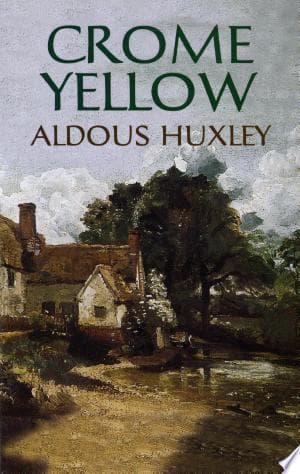
Aldous Huxley (2013)
Genre
Fiction
Reading Time
150 min
Key Themes
See below
Sign in to track this book
At a country house party, a poet confronts prophecy, lost innocence, and unrequited love, all while Jazz Age fads face sharp satire.
Denis Stone, a sensitive and shy young poet, appears on a train, consumed by his unrequited love for Anne and his worries about his own artistic worth. He is going to Crome Yellow, the country house of Henry Wimbush, a careful amateur historian, and his wife Priscilla, who likes spiritualism and social maneuvering. When he arrives, Denis is immediately struck by Anne's beauty and the varied mix of guests, including the cynical Mr. Scogan, the flirtatious Mary Bracegirdle, and the naive Gombauld. Denis feels his usual social awkwardness and artistic inadequacy, setting up his inner struggles during his stay.
Henry Wimbush, the host of Crome Yellow, often changes conversations to give long, dull accounts of the estate's complex and often strange history. He tells stories of odd ancestors, their scandalous love affairs, their peculiar science experiments, and their architectural mistakes, often linking them to the house itself. He tells these stories with a serious, almost academic detachment, to the guests' amusement or boredom. These historical diversions are a repeated theme, sharply contrasting with the immediate, often silly, concerns of the present party-goers and showing Wimbush's escape into the past.
During his time at Crome, Denis is consumed by his desire for Anne. He constantly tries to write poems to show his feelings and impress her, but he struggles with self-doubt and writer's block. He often goes to his room to write, only to tear up his efforts in frustration. When he does manage to show a poem, it often fails to impress or is misunderstood. Anne, meanwhile, seems unaware of his feelings, treating him more as a friend or a source of mild amusement. Denis's romantic efforts are clumsy and indirect, further hurting his chances, and he finds himself always on the edge of her attention, watching her with other men, especially the more confident Gombauld.
Mr. Scogan, a sharp and opinionated guest, acts as a self-appointed intellectual guide, giving long speeches on society and humanity's future. He often explains his theories of a logical, tech-driven future where feelings are suppressed, and people are categorized and controlled for efficiency. He predicts a scientifically managed society, without art, individuality, or passion, driven only by logic and usefulness. His statements, though often satirical, are deeply cynical and disturbing, serving as a strong contrast to the romantic and artistic views of Denis and others. He enjoys intellectual debates and often challenges the usual views of his fellow guests.
Mary Bracegirdle, a determined and curious young woman, arrives at Crome with a clear goal: to gain experience. Having read Freud, she approaches relationships and sex with a detached, almost scientific curiosity. She engages in a series of planned flirtations and observations, especially with Denis, whom she finds a suitable, if somewhat unwilling, subject for her romance experiments. She tries to seduce him, not out of deep feeling, but from a desire to understand and experience the psychological and physical parts of love. Her approach is logical and analytical, contrasting with Denis's more emotional and idealized view of love, and she often openly shares her thoughts on sex and psychology.
Jenny Mullion is a quiet, modest young woman who spends much of her time observing the other guests at Crome. Her shyness makes her seem reserved, but underneath, she has a keen artistic eye and sharp wit. She secretly draws satirical caricatures of the other party-goers, capturing their essence and flaws with notable accuracy and often a touch of harsh humor. These drawings are her main way of expressing herself, allowing her to comment on the social dynamics and individual quirks she finds both amusing and sometimes frustrating. Her art provides a silent, yet strong, commentary on the superficiality and self-absorption she sees around her.
Priscilla Wimbush, Henry's wife, is deeply interested in spiritualism and the occult. She often consults a medium, Madame Sesostris, and tries to talk with spirits, especially that of her dead child. Her beliefs are sincere, if a little strange, and she often tries to involve the other guests in her spiritual efforts, to the amusement of some and the polite tolerance of others. She sees signs and omens in everyday events and believes a spiritual realm influences human events. Her spiritual pursuits add another layer of oddness to the Crome household, contrasting with Henry's historical obsessions and Scogan's scientific logic.
The Crome party attends a local village fair, an event that brings together the rural community and the more sophisticated guests. Denis sees this as a chance to spend time with Anne and perhaps finally tell her his feelings. He tries to talk to her and join in the fair's activities with her. However, Anne stays distant and preoccupied, showing more interest in the general fun or other guests. Denis's attempts at romantic connection are met with polite indifference, leaving him feeling even more sad and convinced his feelings are useless. The lively atmosphere of the fair only highlights his inner sadness and sense of isolation.
Mr. Scogan, with his usual mix of cynicism and cleverness, creates a fake oracle, a talking tube he calls the 'Little Friend,' to entertain the guests. He uses this device to give cryptic, often disturbing, pronouncements. When Denis asks the oracle about his future, the 'Little Friend' gives a particularly harsh and personal message, essentially telling him he is destined for mediocrity, that his poetic hopes are pointless, and that his romantic hopes are misplaced. This experience deeply affects Denis, confirming his existing self-doubts and pushing him further into despair, making him question his life's purpose and art.
Feeling completely defeated by Anne's indifference, the 'Little Friend's' bleak prediction, and his inability to make any real artistic progress, Denis reaches his limit. The intellectual debates, the social posing, and the general silliness of the Crome house party have become unbearable for his sensitive nature. He feels a deep sense of disappointment and failure. He decides suddenly to leave Crome Yellow, packing his bags quickly and making his excuses to his hosts. His departure is a retreat from a world he feels has rejected his romantic ideals and artistic goals, seeking comfort in solitude away from the satirical gaze of his fellow guests.
The Protagonist
Denis begins as an optimistic, if anxious, romantic and poet, but leaves Crome disillusioned with love, art, and himself, retreating from a world that doesn't align with his ideals.
The Supporting
Anne remains largely unchanged, serving as a catalyst for Denis's emotional and artistic struggles without undergoing significant personal development herself.
The Supporting
Scogan remains consistent in his cynical worldview, serving as a static intellectual force whose pronouncements influence the protagonist's disillusionment.
The Supporting
Mary is actively seeking 'experience' and uses her time at Crome to further her understanding of human psychology and sexuality.
The Supporting
Henry remains consistent in his historical obsessions, providing a stable, if eccentric, backdrop to the house party.
The Supporting
Priscilla's interest in spiritualism remains a defining characteristic throughout the narrative.
The Supporting
Jenny's role as a silent observer and satirical artist remains consistent, her art providing a hidden commentary on the events.
The Supporting
Gombauld remains a static character, serving primarily as a romantic rival and a foil to Denis's insecurities.
The novel shows how romantic and artistic idealism, seen in Denis Stone, struggles and fails when it meets the cynicism, practicality, and intellectual detachment of the modern world. Denis's attempts to show his love for Anne through poetry are ignored, and his artistic hopes are mocked by figures like Mr. Scogan. The Crome Yellow house party, full of self-absorbed intellectuals and social experimenters, offers little comfort or approval for his sensitive soul, leading to his deep disappointment and retreat. His idealism is shown to be unprepared for the harsh realities of human nature and society.
“''Oh, why doesn't one's own heart speak out, instead of hiding behind a mask of conventions?'”
Huxley explores the tension between pursuing art and the demands or distractions of real life. Denis, as a poet, constantly tries to turn his feelings and observations into meaningful verse, often finding his creative process hindered by his romantic worries, self-doubt, and the superficiality of his surroundings. The novel suggests that an artist's sensitivity, while key for creation, can also make them vulnerable and ineffective socially. The other characters, with their intellectual debates and casual flirtations, often seem to downplay or misunderstand Denis's artistic efforts, highlighting the artist's isolation.
“''But poetry, after all, isn't a profession. It's a way of living.'”
The Crome Yellow house party is a small version of intellectual and social posing. Characters like Mr. Scogan give long, often self-serving, intellectual speeches, while others like Mary Bracegirdle approach human relationships with detached, almost scientific curiosity. Conversations often focus on abstract ideas rather than real human connection, and emotions are often intellectualized or satirized. The novel criticizes the tendency of the educated class to engage in clever but ultimately empty talk, using wit and theory to avoid real feeling or to show social dominance. This creates a superficial atmosphere that Denis finds stifling.
“''The world is full of people who are forever talking, but never saying anything.'”
The novel captures a sense of modern disappointment, especially among the younger generation, with old values and systems. Denis's struggles reflect a wider feeling of separation in a world that is becoming more logical, cynical, and less open to romance and idealism. The characters at Crome, though physically together, often seem emotionally disconnected, each following their own unique interests or intellectual plans. The coming sense of a future without passion, as Scogan predicts, adds to this feeling of unease and a loss of meaning, leaving people like Denis feeling alone and lost.
“''The future, as I see it, will be a world of well-fed, healthy, and psychologically balanced individuals, but without the slightest notion of what it means to be human.'”
A confined social environment for character interaction and satirical observation.
The country house party at Crome Yellow serves as a classic literary device, creating a confined, artificial environment where a diverse group of characters are forced into close proximity. This setting allows Huxley to bring together various archetypes representing different intellectual and social trends of the era, facilitating sharp dialogue, satirical observations, and the clashing of ideologies. The isolation of the house from the outside world intensifies the internal dramas and intellectual debates, making it a perfect stage for the protagonist's emotional journey and the author's social commentary. It highlights the artificiality of their interactions.
Long, pedantic historical narratives that provide ironic counterpoint and thematic depth.
Henry Wimbush's frequent and lengthy recitations of Crome's past serve as a recurring narrative device. These historical digressions, often irrelevant to the immediate plot, provide a rich, often absurd, background to the house. They function as an ironic counterpoint to the present-day follies of the guests, highlighting the cyclical nature of human eccentricity and the contrast between the romanticized past and the cynical present. They also allow Huxley to subtly inject commentary on historical scholarship, the passage of time, and the enduring peculiarities of human nature, while also serving as a humorous interruption to the main action.
A mock oracle delivering harsh, personalized prophecies.
The 'Little Friend,' devised by Mr. Scogan, is a satirical plot device used to deliver a direct and devastating blow to Denis's self-esteem and aspirations. This mock oracle, a talking tube, serves as a mouthpiece for the novel's overarching cynical view of Denis's future. It functions as an externalization of Denis's deepest fears and the harsh realities of the world he inhabits. By delivering a personalized prophecy of mediocrity and failure, it acts as a catalyst for Denis's final disillusionment and his decision to leave Crome, effectively bringing his arc to a crisis point.
Hidden satirical drawings that offer a silent, artistic commentary on the characters.
Jenny Mullion's secret caricatures of the other guests are a subtle but effective plot device. These drawings, created in secret, serve as a visual, artistic commentary on the characters' foibles, vanities, and eccentricities, often revealing a sharper insight than the spoken words. They highlight Jenny's role as a keen observer and provide an alternative, non-verbal form of satire within the narrative. The fact that they are hidden underscores Jenny's shyness but also her artistic integrity, allowing her to express truths that she cannot voice directly in the social setting.
“The secret of happiness, you see, is never to have to work.”
— Mr. Scogan's view on an ideal life.
“It's always the man who doesn't know what to do with his life that wants to make the world a better place.”
— Denis Stone's cynical observation.
“The world is an oyster, but you don't crack it with a pickaxe, you open it with a penknife.”
— Mr. Barbecue-Smith discussing the approach to life.
“That's the worst of women, they're so terribly subjective.”
— Mr. Bodiham's generalization about women.
“All civilization is based on a series of elaborate conventions.”
— Mr. Scogan's philosophical reflection.
“Art is a disease. It's a disease of the imagination.”
— Denis's internal thought on the nature of art.
“One must have a system, a philosophy, a point of view.”
— Mr. Scogan's emphasis on intellectual structure.
“The great defect of the world is that it is not a work of art.”
— Mr. Wimbush's lament.
“To be intelligent is to be unhappy, for it is to be aware.”
— Denis's melancholic conclusion.
“The higher the culture, the lower the birth-rate.”
— Mr. Scogan's observation on societal trends.
“Life is a game, and the only way to win is to play it.”
— Mr. Barbecue-Smith's pragmatic view.
“One must always be a little mad to be happy.”
— Attributed to a character, suggesting a need for eccentricity.
“The past is a foreign country; they do things differently there.”
— While famously associated with L.P. Hartley, this sentiment about historical difference is present in Crome Yellow's discussions of the past.
“Youth is a wonderful thing; what a crime to waste it on children.”
— A humorous, cynical remark on the nature of youth.
Ready to see how well you understood this book? Take our interactive quiz with 10 questions.
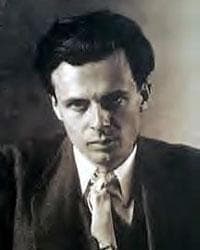
Aldous Leonard Huxley was an English writer and philosopher. His bibliography spans nearly 50 books, including novels and non-fiction works, as well as essays, narratives, and poems.

Ashley Antoinette
4.6

Mark McDonald
4.4
Luo Guanzhong
4.4
Mia McKenzie
4.3
Dorothy Parker
4.3
Joaquim Maria Machado de Assis
4.3
James Thurber
4.2
Terry Kay
4.2