“I was born to be a spectator, a critic, a judge, not a participant.”
— Early self-reflection on his detached observation of life.

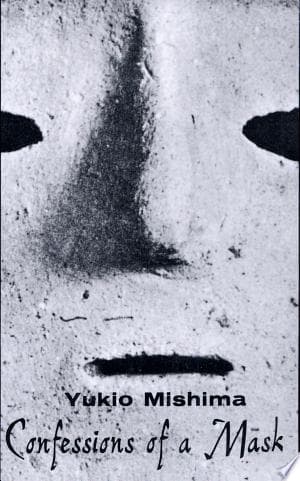
Yukio Mishima (1958)
Genre
Fiction
Reading Time
260 min
Key Themes
See below
Sign in to track this book
In post-war Japan, a young man's growing homosexuality becomes a stifling secret, forcing him to face the divide between his inner desires and the life he feels forced to live.
The narrator, Kochan, tells of his earliest memories, marked by a fascination with death and blood. He recalls a picture book with a knight being beheaded, feeling a strange thrill and a sense of beauty instead of fear. This early attraction extends to the story of Saint Sebastian, whose martyrdom, especially the arrows piercing his body, deeply captivates him, stirring an aesthetic and sensual response. He pretends to be sick to avoid school, preferring to spend time in his imaginative world, where these dark fantasies grow. His grandmother dotes on him, partly shielding him from harsh realities, but also letting his inner world develop freely. This early period sets a lifelong pattern of internalizing and making his desires beautiful.
As Kochan grows, his sexual desires appear, but not in the usual ways expected of boys his age. He finds himself drawn to the muscular bodies of men, especially in uniforms, and to scenes of violence and suffering. He recalls seeing a young ruffian, whose rough manner and physical presence ignite a powerful, confusing desire in him. At the same time, he tries to fit in by pretending interest in girls, even imagining himself in love with a girl named Sonoko. This pretense is a desperate attempt to create a 'normal' facade, a mask to hide his true feelings from himself and others. He struggles to reconcile his inner world with society's external demands.
The image of Saint Sebastian, pierced by arrows, remains important to Kochan. He describes in detail his emotional and physical response to Guido Reni's painting of the saint, finding in it the perfect blend of beauty, suffering, and masculine form. This image becomes a guide for his emerging homosexual identity, offering a visual representation of desires he cannot put into words. He studies reproductions of the painting, fantasizing about the saint's body and martyrdom. This obsession is not just aesthetic; it is personal and sensual, forming a key part of his inner world and his understanding of his unique sexuality, which he sees as linked to a love of death and pain.
During his school years, Kochan continues to wear his 'mask' of normalcy. He watches his peers engaging in typical adolescent behaviors and talking about girls, and he carefully copies their reactions and interests. He takes part in school activities, trying to appear ordinary and well-adjusted. However, beneath this surface, his inner life is busy and restless, filled with fantasies of male bodies, violence, and death. He feels a deep sense of separation, understanding that his true desires are different from those of his classmates. He becomes skilled at acting, creating a believable persona that lets him move through society without revealing his 'perversion,' as he sees it. This period shows his growing skill in self-deception and social performance.
Kochan describes specific times when his homosexual desires are directly engaged. He details his strong attraction to a classmate named Omi, a strong and athletic boy. He fantasizes about Omi, watching him with a mix of longing and appreciation for his physical form. He even arranges situations to be near Omi, feeling a strong, unspoken desire. Another encounter happens with a street vendor who sells candy, whose rough, masculine appearance captivates Kochan. He lingers, trying to extend the interaction, feeling the pull of an attraction he cannot name or act on. These experiences confirm his understanding of his sexual orientation, even as he continues to suppress and hide it from the outside world.
World War II begins, and Kochan, now a young man, faces military service. His fascination with death and violence, which had been mostly aesthetic and imaginative, now meets a real-world context. He imagines himself dying heroically in battle, finding a romantic appeal in the idea of a beautiful death. However, when he has his physical examination for conscription, he fakes an illness (bronchial catarrh), successfully avoiding active duty. This act of self-preservation, despite his earlier fantasies, shows a disconnect between his inner world of romanticized death and the practical fear of real physical harm. He observes the war from a distance, continuing his inner life of fantasy and self-reflection.
Kochan starts a relationship with Sonoko, the sister of a school friend. He consciously tries to develop romantic feelings for her, believing that a heterosexual relationship is the only way to a 'normal' life and social acceptance. He goes through the motions of courtship, trying to convince himself that he is in love. He even proposes marriage, driven by a deep wish to overcome his perceived 'abnormality.' However, he finds he cannot feel genuine sexual desire for her. His attempts at physical intimacy are met with emptiness and disgust, reinforcing his understanding of his true sexual orientation. Sonoko, sensing his emotional distance, eventually ends the engagement, leaving Kochan to face the failure of his mask.
The end of his engagement to Sonoko is a turning point for Kochan. It shows the failure of his most significant attempt to live a 'normal' life and escape his true self. He is left with the clear realization that his homosexual desires are not a phase or something he can simply overcome. This realization comes with a sense of isolation and a deeper understanding of his unique place in a society that does not acknowledge or accept his sexuality. While he accepts his homosexuality intellectually, there is still a deep sense of alienation and a continued struggle with the shame and guilt tied to his desires. He remains caught between his authentic self and the social pressure to conform.
Kochan often observes the heterosexual relationships and sexual behaviors of those around him, comparing them to his own experience. He sees how easily others seem to find and express conventional love and desire, further highlighting his own sense of being an outsider. He carefully analyzes their interactions, trying to understand what he lacks or what makes him different. These observations often have a detached, almost scientific curiosity, as if he is studying a foreign species. He notices the subtle cues and rituals of heterosexual courtship, which feel strange and performative to him. This constant comparison reinforces his isolation and the understanding that his 'mask' is necessary for navigating society.
Kochan goes into a gay bar, a place where his desires are openly, though discreetly, acknowledged. He observes the men there, some of whom embody the masculine ideals he finds attractive. While there, he sees a brawl, and the sight of men fighting, of bodies in violent contact, ignites a powerful, almost ecstatic response in him. His long-standing fascination with death, violence, and male beauty culminates in a fantasy: he imagines himself as a young man, a 'ruffian,' who murders a beautiful boy, driven by an overwhelming sexual and destructive urge. This fantasy shows the deep, unsettling link in his mind between desire, violence, and death, suggesting that his sexual gratification is tied to these darker impulses.
Toward the end of the narrative, Kochan reflects on the 'mask' he has worn throughout his life. He recognizes that his entire existence has been a performance, a continuous effort to hide his true self from a world he believes would condemn him. He understands that this mask, initially a conscious choice, has become an intrinsic part of his identity, making it hard to tell where the performance ends and his authentic self begins. Despite this self-awareness, he finds he cannot discard the mask completely. The social pressures and his internalized shame are too strong, leaving him in a perpetual state of inner conflict, always confessing his true nature only to himself, behind the facade he has so carefully built.
The Protagonist
Kochan moves from a confused, nascent awareness of his desires to a reluctant, intellectual acceptance of his homosexuality, though he remains unable to fully integrate this truth into his public life, forever trapped behind his self-constructed mask.
The Supporting
Sonoko begins as a potential partner for Kochan, embodying his hope for normalcy, but ultimately becomes the catalyst for his realization that he cannot force heterosexual desire, leading to the dissolution of their engagement.
The Supporting
Omi remains a static figure, serving as an early, idealized object of desire who helps Kochan understand his sexual orientation.
The Supporting
Her role is largely confined to Kochan's childhood, providing a context for his early development and initial withdrawal into fantasy.
The Mentioned
A brief, static figure who serves as an object of Kochan's early, unacted-upon desires.
The main theme centers on Kochan's lifelong effort to hide his true self, especially his homosexuality, behind a 'mask' of normalcy. From pretending interest in girls to attempting marriage with Sonoko, Kochan carefully performs a socially acceptable identity. This performance is a survival tactic in a society that would condemn his true nature. The mask becomes so ingrained that he struggles to tell the difference between his authentic self and the persona he shows, leading to deep alienation and self-deception. This theme is clear in his constant inner thoughts contrasting his outward actions with his inner desires, such as his forced smiles and feigned enthusiasm during dates with Sonoko, or his choice to avoid military service despite his fantasies of heroic death.
“What was a mask, what was a face? Where did the mask end and the face begin? The mask was the face.”
The novel explores homosexuality in a society where it is not openly acknowledged or accepted. Kochan's 'perversion' (as he often calls it) forces him into a life of secrecy and inner conflict. The constant social pressure to conform to heterosexual expectations shapes almost every decision he makes, from his friends to his romantic pursuits. The fear of exposure and the internalized shame prevent him from forming real connections, leaving him isolated. This theme is clearly shown through his strong attraction to male figures like Omi and the candy vendor, contrasted with his inability to feel desire for Sonoko, highlighting the deep gap between his inner truth and external social demands.
“I was a connoisseur of masks. My own mask was a thing of the most exquisite craftsmanship.”
A common theme is Kochan's unsettling way of making death and violence beautiful, which is tied to his sexual awakening. He finds beauty and eroticism in images of suffering, martyrdom, and destruction, most notably in his obsession with Saint Sebastian. This fascination extends to real-world violence, as seen in his reaction to the street brawl in the gay bar, where violence and male bodies merge into a potent, disturbing fantasy. This theme suggests a deep psychological link between desire, suffering, and the act of annihilation within Kochan's mind, blurring the lines between creation and destruction, beauty and horror. His early attraction to the beheaded knight in the picture book hints at this lifelong obsession.
“The beauty of suffering, the beauty of wounds, the beauty of death. My first erotic stirrings were connected with these.”
Kochan experiences a deep sense of alienation from early childhood, stemming from his unique desires and his inability to connect genuinely with others. His 'mask' is a barrier, preventing real intimacy and leaving him isolated in his rich, but often dark, inner world. He constantly feels like an outsider, observing the 'normal' lives of others with a mix of curiosity and detachment. This isolation is made worse by his inability to share his true self with anyone, leading to deep loneliness. The failure of his relationship with Sonoko further confirms his understanding of his fundamental difference and his lasting solitude. His inner thoughts show this isolation, as he confesses his truths only to himself.
“I could not, after all, be loved by anyone. I was not meant for love. I was meant to exist in a solitary hell, and to admire it.”
The novel closely examines the male body as an object of desire and a place of both aesthetic appreciation and sexual arousal for Kochan. His desires are intensely physical, focusing on the muscles, strength, and form of men, often uniformed or in states of physical exertion or suffering. This theme is clear in his detailed descriptions of Omi's body, Saint Sebastian's pierced body, and the rough masculinity of the candy vendor or the brawlers. The body is not just a vessel but a source of strong, often conflicting, sensations and an embodiment of his 'perversion.' His inability to respond physically to Sonoko, despite his mental efforts, highlights the specific and unwavering nature of his carnal desires.
“What was it that attracted me to the male body? It was not merely its strength, but its vulnerability, its capacity for suffering.”
Allows direct access to the protagonist's complex internal world and hidden desires.
The novel is told entirely from Kochan's first-person perspective, providing an intimate and unfiltered view into his thoughts, fantasies, and self-analyses. This device is crucial for exploring his internal conflicts, his construction of a 'mask,' and his deeply personal and often unsettling desires. The reader experiences his isolation and self-deception directly, making the narrative a 'confession' in the truest sense. It allows for the intricate depiction of his psychological landscape, where the subjective experience of desire, shame, and aestheticism takes precedence over objective reality, creating a sense of claustrophobic introspection.
Represents the convergence of masculine beauty, suffering, and homosexual desire.
The figure of Saint Sebastian, particularly in Guido Reni's painting, serves as a powerful and recurring symbol throughout the novel. For Kochan, Sebastian embodies the ideal masculine form, suffering beautifully, pierced by arrows. This image perfectly encapsulates his aestheticization of death and violence, and more importantly, becomes a touchstone for his nascent and developing homosexual desires. Sebastian symbolizes the intersection of physical beauty, pain, and martyrdom, offering Kochan a visual and emotional framework for understanding his own 'perverse' attractions in a way that is both sacred and profane, confirming his unique sexual and artistic sensibilities.
A central metaphor for the protagonist's constructed public persona.
The 'mask' is a pervasive metaphor that represents Kochan's meticulously crafted facade of normalcy and heterosexuality, designed to conceal his true homosexual nature from society and often from himself. It signifies the gap between his inner reality and his outward presentation. The mask is not just a tool of deception but also becomes an integral part of his identity, raising questions about authenticity and self. This device highlights the societal pressures that force individuals to hide their true selves and the psychological cost of such concealment, as Kochan struggles to distinguish between his true face and the one he presents to the world.
Early childhood obsessions hint at the protagonist's future desires and psychological complexities.
Mishima employs subtle foreshadowing, particularly in Kochan's early childhood memories. His initial fascination with the decapitated knight, the bloodied warrior, and the suffering Saint Sebastian in picture books are not merely childhood curiosities but clear indicators of his future aesthetic and sexual obsessions with death, violence, and masculine bodies. These early inclinations hint at the deep-seated nature of his desires, suggesting they are not learned but innate, and prepare the reader for the complex and often disturbing psychological landscape that will define his adult life, reinforcing the idea that his 'perversion' has deep roots.
“I was born to be a spectator, a critic, a judge, not a participant.”
— Early self-reflection on his detached observation of life.
“Beauty is something that can be touched, grasped, possessed. And I wanted to possess it.”
— His burgeoning aesthetic appreciation and desire, particularly for male beauty.
“My greatest desire was to see a beautiful young man die a violent death.”
— His macabre fantasies and the intersection of beauty and death.
“I had to wear a mask, a mask of normality, to conceal the abnormality of my true self.”
— The central theme of his concealed identity and the facade he presents to the world.
“In my imagination, the only beautiful thing was death.”
— Further elaboration on his unique aesthetic and morbid fascinations.
“I was always trying to find something that would destroy me.”
— His subconscious drive towards self-destruction or intense experience.
“True beauty, for me, was not in the softness of a woman, but in the hardness of a man.”
— His emerging homosexual desires and the rejection of conventional beauty standards.
“I discovered that the greatest pleasure in life was to pretend.”
— His realization of the satisfaction derived from maintaining his facade.
“My very existence was a lie.”
— A stark summary of his internal conflict and the inauthenticity of his public life.
“My heart was a graveyard, where all my true emotions lay buried.”
— Metaphorical description of his suppressed feelings and emotional state.
“I felt a strange kinship with the condemned, with those who stood outside the ordinary.”
— His identification with outcasts and those who defy societal norms.
“The world was a stage, and I was merely an actor, playing a role I despised.”
— His sense of being trapped in a performance, echoing Shakespeare.
“To be understood was to be exposed, and to be exposed was to be destroyed.”
— His fear of vulnerability and the consequences of revealing his true self.
“I was always searching for something more extreme, something that would tear me apart.”
— His constant yearning for intense experiences, even if destructive.
Ready to see how well you understood this book? Take our interactive quiz with 10 questions.
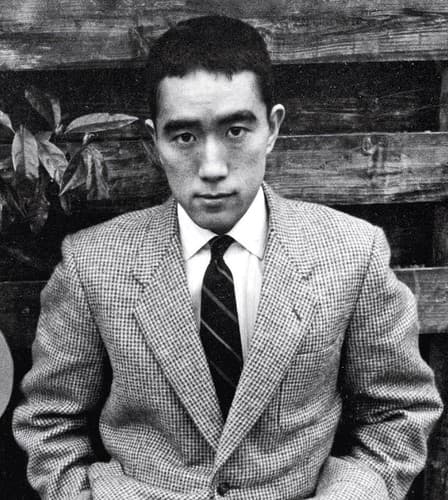
Kimitake Hiraoka , also known as Yukio Mishima , was a Japanese author, poet, playwright, actor, model, Shintoist, nationalist, and founder of the Tatenokai , an unarmed civilian militia. Mishima is considered one of the most important writers of the 20th century. He was considered for the Nobel Prize in Literature in 1968, but the award went to his countryman and benefactor Yasunari Kawabata. His works include the novels Confessions of a Mask and The Temple of the Golden Pavilion , and the autobiographical essay Sun and Steel . Mishima's work is characterized by "its luxurious vocabulary and decadent metaphors, its fusion of traditional Japanese and modern Western literary styles, and its obsessive assertions of the unity of beauty, eroticism and death", according to author Andrew Rankin.

Ashley Antoinette
4.6

Mark McDonald
4.4
Luo Guanzhong
4.4

Mia McKenzie
4.3
Dorothy Parker
4.3

Joaquim Maria Machado de Assis
4.3
James Thurber
4.2

Terry Kay
4.2