“The past is never dead. It's not even past.”
— From the story 'Requiem for a Nun', reflecting on the enduring impact of history.

William Faulkner (1934)
Genre
Fiction
Reading Time
900 min
Key Themes
See below
Sign in to track this book
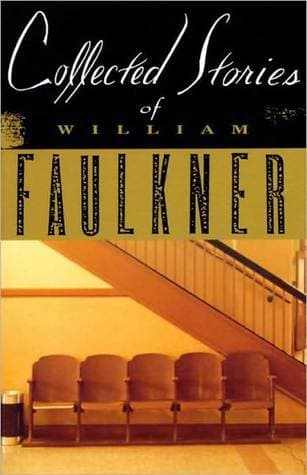
Faulkner shows the American South through tales of human cruelty, kindness, and history with sharp detail and deep meaning.
Abner Snopes, a poor sharecropper, burns barns and scares those he feels have wronged him. His young son, Sarty, feels torn between loyalty to his family and a growing sense of right and wrong. After Abner is accused of burning a barn and told to leave his community, the family moves to a new farm. Abner immediately argues with his new landlord, Major de Spain, over a ruined rug. Abner purposefully makes the rug dirty and then tries to burn de Spain's barn. This is a pattern of destruction for him. Sarty sees his father's constant meanness and must make a hard choice. He decides to warn de Spain, an act that leads to a sad and unclear result for his family.
Emily Grierson, a single woman from a once-important Southern family, comes to represent a past era in Jefferson. After her father dies, she lives alone, holding onto her old status and refusing to pay taxes. The townspeople, feeling pity and curiosity, both allow and watch her strange behavior. When a Northern foreman, Homer Barron, courts her, it seems Emily might be happy, but he disappears. Years pass. A bad smell comes from her house, and she becomes more isolated. After her death, the townspeople finally go into her home. They find a shocking secret she kept for decades: Homer Barron's perfectly preserved body in her bed, with a single strand of her gray hair on the pillow next to him.
Quentin Compson tells this story, remembering events from his childhood. Nancy Mannigoe, a Black laundress for the Compson family, is pregnant by a white man. She fears her husband, Jesus, will kill her. Jesus, a farm worker, is angry about Nancy's cheating and threatens her life. The Compson children, especially Quentin, see Nancy's growing fear and her desperate pleas for help. Their parents, while kind, do little. They are caught in the racial and social issues of the time. Nancy stays at the Compson house at night, but her fear eventually makes her leave. She returns to her cabin, where her fate is sadly uncertain, likely violent at Jesus's hands.
The Chickasaw chief Issetibbeha has died. Tribal custom says his favorite horse, dog, and most importantly, his body servant must be killed and buried with him. The story follows the body servant as he tries to avoid his fate, hiding in the swamp. The other Chickasaw men, including Issetibbeha's son Moketubbe and the old chief's brother, look for him with grim resolve. They do this not out of cruelty but to follow tradition. The servant is found, weak from hunger and fear. The story shows the conflict between old customs and a person's will. It ends with the servant accepting his death, a sacrifice to honor his dead chief and keep the tribe's beliefs.
Pete, an older brother, decides to join the army after the attack on Pearl Harbor. He leaves his younger brother, the unnamed narrator, and their family on their Mississippi farm. The younger brother, very loyal to Pete, is upset by his leaving. He tries to follow Pete, walking and hitchhiking to Memphis, where Pete is stationed. Though underage and turned away many times, his strong will and love for his brother are clear. He tries to enlist, hoping to go to the same unit. Pete, moved by his brother's loyalty but firm in protecting him, eventually sends the boy home. The younger brother feels a deep loss and sees the reality of war.
Quentin Compson narrates this story, recalling his grandfather's tale. It looks at the complex racial and historical setting of Yoknapatawpha. It is about an old Chickasaw chief, Doom (also called Ikkemotubbe), who trades his land to a white man, Louis Grenier, for a plantation and a Black enslaved woman named Eunice. Eunice later has a son, who Grenier claims as his own. The story explores the unclear fatherhood and the racial dynamics that result. It particularly looks at 'justice' in this context. It shows the early interactions between white settlers and the Chickasaw, and the basic unfairness of slavery that would affect generations, as Quentin thinks about it.
In the hot Mississippi summer, a rumor spreads in Jefferson: Minnie Cooper, an unmarried white woman, was attacked by Will Mayes, a Black man. The rumor, fed by racial bias and the heavy atmosphere, causes a group of white men, led by McLendon, to act on their own. McLendon, a violent man, gathers the men to find Mayes. There is no proof, and a barber, Hawkshaw, tries to reason with them, but the mob catches Mayes. The story ends with Mayes's brutal lynching. It shows racial violence and how rumors and mob anger were destructive in the Jim Crow South. Minnie Cooper's role in starting the rumor remains unclear. Perhaps it was a desperate call for attention.
This story, about Flem Snopes, describes his cold and planned rise in Frenchman's Bend. Flem seems quiet and does not talk much. He uses his wife's family connections and his own smart, immoral business ways to get power. He tricks local people, especially those who are innocent and trusting, for his own gain. The 'centaur in brass' is a brass spittoon, representing Flem's strong, unfeeling nature. It shows his ability to stay calm while causing others' ruin. The story shows Flem's cleverness and his constant search for money and power, often harming those around him. This confirms his reputation as a powerful and dangerous person in Yoknapatawpha County.
This story is set during World War I. It follows American naval officer Lieutenant Grier, who is with a British Royal Air Force squadron. Grier is first confused by the British pilots' easy bravery and fatalism, especially the young Captain Bogard and Lieutenant Sempringham. He goes on a risky air mission, seeing the harsh reality of dogfights and the constant threat of death. Despite their different countries and the war, the men respect and understand each other. The story emphasizes the shared humanity and courage of soldiers on both sides. It goes beyond the conflict and shows the bonds made in extreme situations, as Grier experiences the unique closeness of the airmen.
Judge Howard, a seemingly proper and normal man, finds himself in a strange afterlife after he dies. He is with a 'negro' and a 'madman.' Together, they move through a place that is both familiar and very strange. This place is not a usual heaven or hell. It is where time and what people see are not fixed. The Judge talks about existence, what sin means, and if people can be saved. His journey through this 'beyond' makes him face his own life, his decisions, and what he understands about faith and death. It leads to a deep, though unsettling, new look at his life on Earth and the universe's mysteries.
The Protagonist
Sarty moves from blind loyalty to his father to a decisive act of defiance, choosing justice over family allegiance, signaling his break from the Snopes' cycle of violence.
The Protagonist
Emily descends further into isolation and delusion, culminating in her final, horrifying act of preserving her dead lover, a desperate attempt to control her own narrative against the forces of time and change.
The Antagonist
Abner remains static in his destructive patterns, never learning or changing, ultimately facing the consequences of his unyielding vengeance.
The Antagonist
Flem systematically and ruthlessly rises from poverty to a position of significant power, consistently outmaneuvering and exploiting those around him without ever facing true comeuppance within the short stories.
The Supporting/Narrator
Quentin's arc in the stories shows him grappling with the moral decay and historical injustices of the South, deepening his internal conflict and foreshadowing his tragic future.
The Supporting
Nancy's arc is one of escalating fear and desperation, culminating in her implied violent death, a stark portrayal of vulnerability in a racially unjust society.
The Supporting
Pete transitions from a farm boy to a soldier, embodying duty and sacrifice while maintaining his protective love for his younger brother.
The Antagonist
McLendon remains a static character, consumed by racial hatred and violence, leading a mob to commit a horrific act without remorse.
The Protagonist
Judge Howard's arc sees him transition from a conventional earthly life to a philosophical journey in the afterlife, challenging his prior understandings of morality and existence.
The Supporting
Ikkemotubbe transitions from a tribal chief to a landowner, making decisions that profoundly impact racial dynamics and set the stage for future injustices.
Faulkner's stories always show how the past, especially slavery, the Civil War, and the fall of the Old South, deeply affects the present. Characters like Emily Grierson ('A Rose for Emily') are stuck by their family history and the expectations of a past time. They cannot move forward. Quentin Compson ('That Evening Sun,' 'A Justice') is troubled by his ancestors' historical wrongs and moral unclear situations. The weight of tradition and the inability to escape past sins are key. This shows how the past is not just a beginning but a strong, heavy force.
“For a moment, he could not remember where he was, or what he was doing. Then it came back to him: his father, the barn, the smell of the kerosene. It was not just a memory, but a living presence, a shadow on his soul.”
Racial bias, unfair treatment, and violence are common themes throughout the collection. 'Dry September' chillingly shows a false rumor leading to the brutal killing of a Black man, Will Mayes. This highlights the widespread racism and mob behavior of the Jim Crow South. 'That Evening Sun' shows the fear of Nancy Mannigoe, a Black woman at risk of violence because of her race and gender. The white Compson family cannot or will not help her effectively. 'A Justice' looks at the historical roots of slavery and unclear racial identity. It shows how these wrongs are part of society.
“Then they all stopped, as if they had been shot. They stood there, looking at him. He knew they were looking at him, but he could not see them. He could only feel them, like a weight on his chest.”
Many stories explore the strong conflict between loyalty to one's family, which often gives a sense of identity, and a person's growing moral sense. Sarty Snopes in 'Barn Burning' is the main example. He must choose between protecting his destructive father and doing what he feels is right. This theme looks at how hard such a choice is psychologically and the bravery needed to break away from harmful family patterns. It questions if family ties can excuse bad behavior and shows the often painful process of forming one's own moral identity.
“He knew that his father was going to burn the barn. He knew it, and he knew that he could not stop it. But he also knew that he could not let it happen.”
Faulkner often shows the decline of the Old South's wealthy families. This is shown by their falling-apart houses and their inability to change with modern times. Emily Grierson in 'A Rose for Emily' is the best example of this theme. She is a lonely woman holding onto her family's past while her house literally and figuratively breaks down. These characters often do not want change. They stubbornly stick to old social rules and cannot form a new identity after the Civil War. This leads to isolation and often strange outcomes.
“When Miss Emily Grierson died, our whole town went to her funeral: the men through a sort of respectful affection for a fallen monument, the women mostly out of curiosity to see the inside of her house, which no one save an old man-servant—a combined gardener and cook—had seen in at least ten years.”
Faulkner looks at the complexities of human nature. He shows characters who are both very good and very bad, often in the same community or family. Abner Snopes in 'Barn Burning' and Flem Snopes in 'Centaur in Brass' are examples of pure meanness and cleverness. Characters like the unnamed boy in 'Two Soldiers' show strong loyalty and innocent dedication. The stories often explore how bad things happen, whether through careful manipulation, violent prejudice, or the slow decay of the human spirit. They also show how people react to it. This theme often blurs the lines, showing how social pressures can corrupt or how small acts of resistance can appear.
“It was the cold, implacable face of a man who would never be surprised, never be shocked, never be moved. It was the face of Flem Snopes.”
Varying viewpoints create a multifaceted, often ambiguous, understanding of events.
Faulkner frequently employs multiple narrators, often shifting between first-person and third-person perspectives, and sometimes using a collective 'we' of the community ('A Rose for Emily'). This technique allows for a fragmented, subjective, and often unreliable portrayal of events, mirroring the complexities of human memory and perception. It deepens the psychological realism, provides different angles on character motivations, and highlights the collective consciousness and biases of a community, forcing the reader to piece together the truth from conflicting accounts. The use of Quentin Compson as a recurring narrator ('That Evening Sun,' 'A Justice') links different stories and provides a consistent, albeit troubled, lens on Yoknapatawpha's history.
Flashbacks and chronological shifts disrupt the timeline, reflecting the burden of memory.
Many of Faulkner's stories do not follow a strict chronological order. Instead, they frequently employ flashbacks, sudden shifts in time, and an associative narrative style that mirrors the way memory functions. 'A Rose for Emily,' for instance, begins with Emily's death and then moves backward and forward through her life, revealing secrets gradually. This non-linear approach emphasizes the enduring presence of the past in the present, highlighting how historical events and personal memories continue to shape characters' lives and the community's identity. It creates suspense and allows for a deeper exploration of cause and effect over extended periods.
Narrative technique that captures the unfiltered flow of a character's thoughts and feelings.
While not as pervasive as in his novels, elements of stream of consciousness appear in Faulkner's stories, particularly in the internal monologues and fragmented thoughts of characters like Sarty Snopes in 'Barn Burning.' This technique allows the reader direct access to a character's inner world, revealing their fears, desires, and moral struggles in an unfiltered manner. It often involves long, complex sentences and a free association of ideas, reflecting the chaotic and often subconscious nature of thought. It is particularly effective in conveying the psychological intensity and moral dilemmas faced by his characters, immersing the reader in their subjective experience.
A fictional Mississippi county serving as a microcosm for the American South.
Yoknapatawpha County, 'William Faulkner, Sole Owner and Proprietor,' is the fictional setting for a majority of the stories in this collection. It is a richly detailed, self-contained world that functions as a microcosm for the American South, particularly Mississippi. The county, with its towns like Jefferson and communities like Frenchman's Bend, serves as a consistent backdrop, allowing Faulkner to explore the intergenerational histories, social hierarchies, racial tensions, and moral decay endemic to the region. Characters from different stories often reappear, creating a complex, interconnected tapestry of human experience and reinforcing the sense of a shared, evolving history. It provides a unique blend of realism and myth, elevating local struggles to universal themes.
The use of grotesque characters, decaying settings, and macabre events to explore Southern themes.
Faulkner's stories are steeped in Southern Gothic elements, characterized by decaying settings ('A Rose for Emily's' crumbling mansion), grotesque or eccentric characters (Emily Grierson herself, Abner Snopes), and macabre or violent events (lynchings, murders, barn burnings). This literary tradition uses these elements not for mere shock value, but to explore deeper psychological, social, and historical themes unique to the American South. It highlights the region's dark past, its lingering guilt, and the often-distorted realities arising from isolation, prejudice, and a resistance to change. The gothic atmosphere amplifies the moral decay and psychological torment experienced by characters.
“The past is never dead. It's not even past.”
— From the story 'Requiem for a Nun', reflecting on the enduring impact of history.
“Between grief and nothing I will take grief.”
— From 'The Wild Palms', expressing a character's choice in the face of despair.
“They endured.”
— From 'The Bear', summarizing the resilience of characters in the face of hardship.
“Memory believes before knowing remembers.”
— From 'Light in August', exploring the subconscious nature of memory.
“I give you the mausoleum of all hope and desire... I give it to you not that you may remember time, but that you might forget it now and then for a moment and not spend all your breath trying to conquer it.”
— From 'The Sound and the Fury', Quentin Compson's reflection on time and existence.
“He is the sum of his misfortunes.”
— From 'As I Lay Dying', describing a character's identity shaped by suffering.
“The aim of every artist is to arrest motion, which is life, by artificial means and hold it fixed so that a hundred years later, when a stranger looks at it, it moves again since it is life.”
— From an essay in the collection, discussing the purpose of art.
“Clocks slay time... time is dead as long as it is being clicked off by little wheels; only when the clock stops does time come to life.”
— From 'The Sound and the Fury', a philosophical musing on time's nature.
“I'm bad and I'm going to hell, and I don't care. I'd rather be in hell than anywhere where you are.”
— From 'That Evening Sun', a character's defiant and bitter declaration.
“The saddest thing about love, Joe, is that not only the love cannot last forever, but even the heartbreak is soon forgotten.”
— From 'The Wild Palms', reflecting on the transient nature of emotions.
“There is no such thing as was—only is.”
— From 'Requiem for a Nun', emphasizing the continuous presence of the past.
“He had a word, too. Love, he called it. But I had been used to words for a long time. I knew that that word was like the others: just a shape to fill a lack.”
— From 'As I Lay Dying', a skeptical view of language and emotion.
“It is not the past which is dead, but the present which is dying.”
— From 'Light in August', a lesser-known reflection on temporal existence.
“Man knows so little about his fellows. In his eyes all men or women act upon what he believes would motivate him if he were mad enough to do what that other man or woman is doing.”
— From 'The Hamlet', exploring human misunderstanding and projection.
Ready to see how well you understood this book? Take our interactive quiz with 10 questions.
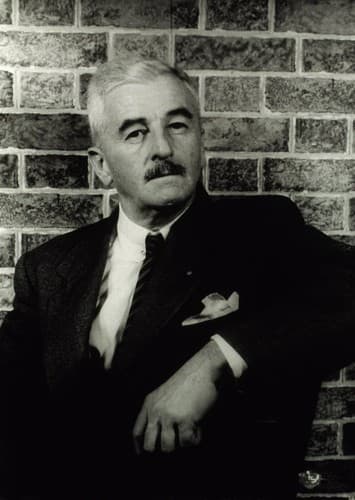
William Cuthbert Faulkner was an American writer known for his novels and short stories set in the fictional Yoknapatawpha County, based on Lafayette County, Mississippi, where Faulkner spent most of his life. A Nobel laureate, Faulkner is one of the most celebrated writers of American literature and often is considered the greatest writer of Southern literature.

Ashley Antoinette
4.6

Mark McDonald
4.4
Luo Guanzhong
4.4

Mia McKenzie
4.3

Dorothy Parker
4.3

Joaquim Maria Machado de Assis
4.3

James Thurber
4.2

Terry Kay
4.2