BookBrief
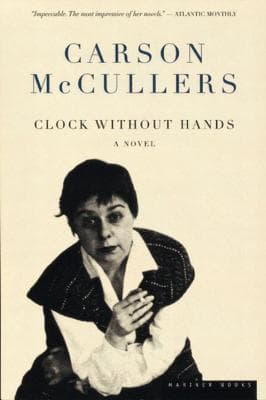
Clock Without Hands cover
Archivist's Choice

Clock Without Hands

Carson McCullers (1961)

Genre

Fiction

Reading Time

240 min

Key Themes

See below

Track Your Reading

Sign in to track this book

A small-town Georgia druggist faces his own death from leukemia, forcing his community to confront its prejudices and the cost of hate, as court-ordered integration begins.

Synopsis

In the 1950s American South, J.T. Malone, a respected druggist, learns he has terminal leukemia. This news makes him face his own death and the moral failures of his community just as court-ordered integration starts. His coming death causes him to rethink his life and the quiet racism he has always accepted. At the same time, Judge Clane, a powerful and unusual man, becomes set on finding a candidate to represent 'white purity' against integration, choosing his grandson, Jester. Jester, a sensitive and artistic young man, struggles under his grandfather's harsh expectations and forms an unlikely, gentle friendship with Sherman, a mixed-race orphan living with the Clanes. Sherman, smart and driven, faces more and more isolation and hate from the town because of his race and Judge Clane's inflammatory talk. Malone's self-reflection leads him to understand the 'death-in-life' of hate, which he shares with his wife, Martha. The rising racial tensions end in a tragic fight that kills Sherman, a direct result of the town's deep-seated prejudices and Judge Clane's manipulation. After this, Judge Clane's health quickly worsens, while Jester, deeply changed by Sherman's death, starts to find his own way, realizing he must make his own path away from his grandfather's influence. Malone dies, but not before finding some moral clarity and human connection, leaving Jester to deal with his community's complicated past and the start of a new, uncertain time.
Reading time
240 min
Difficulty
Medium
Pacing
Slow
Mood
Melancholy, Reflective, Thought-provoking, Dark
✓ Read this if...
You appreciate deep character studies and explorations of societal prejudice and personal morality in the American South during a pivotal historical moment.
✗ Skip this if...
You prefer fast-paced plots or lighthearted themes, or find emotionally heavy narratives challenging.

Plot Summary

J.T. Malone's Diagnosis

J.T. Malone, a respected but ordinary druggist in a small Southern town, receives a devastating diagnosis of incurable leukemia from Dr. Copeland. The doctor gives him a year at most to live. This news shatters Malone's comfortable life, forcing him to confront his death and the parts of his life that are unfulfilled. He struggles to accept the information, at first keeping it from his family, especially his wife, Martha. The diagnosis pushes him to rethink his values and choices, setting the stage for deep self-reflection and a subtle change in how he interacts with others, especially his grandson, Jester. His fear of death mixes with a growing awareness of the 'clock without hands' – the random nature of time and fate.

Jester and Sherman's Friendship

Jester, a sensitive and artistic young man living with his grandparents, forms a deep and complex friendship with Sherman Russell, a light-skinned Black boy. Sherman is the grandson of Dr. Copeland, a well-known Black doctor. Their bond is unusual and somewhat secret in the racially segregated Southern town. They share secrets, dreams, and an understanding that goes beyond the social barriers of their time. Jester is drawn to Sherman's quiet intelligence and strength, while Sherman finds rare acceptance in Jester. Their friendship becomes a central, though often unspoken, challenge to the town's strict racial rules, hinting at the coming societal changes brought by integration. This relationship is both a comfort and a source of tension for Jester, as he balances his loyalty to Sherman against his family's and community's expectations.

Judge Clane's Obsession

Judge Fox Clane, Malone's landlord and a powerful, unusual figure in town, becomes set on an odd political plan: to elect a 'pure-blooded' white man to Congress as a symbolic stand against racial integration. He sees this candidate as a leader to preserve the traditional Southern way of life. The Judge, a widower haunted by his son's death, dedicates himself to this cause with an almost fanatical passion, spending his days planning and speaking to anyone who will listen, including Malone and Jester. His plan comes from a deep-seated, though outdated, racism and a desperate clinging to the past. He involves Jester in his plans, often using him to bounce ideas off, further exposing Jester to the town's racial tensions and the Judge's increasingly desperate efforts to resist change.

Malone's Revelation to Martha

After days of inner struggle, J.T. Malone finally tells his wife, Martha, about his leukemia diagnosis. Martha, a practical and somewhat stoic woman, is devastated by the news. Their conversation is full of unspoken worries and a sense of shared weakness. Martha reacts with a mix of grief, fear, and a quiet resolve to support her husband through his remaining time. The news brings a new dynamic to their long marriage, forcing them to face their death together. Malone's confession, though hard, brings a measure of intimacy and honesty to their relationship that may have been missing. The coming death casts a shadow over their home life, making their daily interactions more intense and showing the value of their remaining time.

The Search for a Candidate

Judge Clane's search for a suitable candidate for his political plan becomes more and more frustrating. He imagines a man who embodies a specific, perfect Southern heritage, someone untouched by what he sees as the impurities of modern society. He interviews many townsmen, looking closely at their family lines and character with almost obsessive detail, but none meet his strict, often conflicting, standards. His search shows his deep-seated prejudices and his inability to match his romanticized view of the past with the realities of the present. The pointlessness of his search highlights the broader idea of a changing world that no longer fits his old-fashioned ideals. Jester often watches these interviews, learning about the Judge's reasons and the widespread racial worries of the community.

Sherman's Increasing Isolation

As the town deals with the coming integration, Sherman Russell finds himself more and more alone. His light skin, which once offered some unclear status, now puts him in a risky spot. He is not fully accepted by some in the Black community, who view him with suspicion or resentment because of his lighter skin and his friendship with Jester. At the same time, he faces open racism and hate from white residents. His quiet manner and intellectual pursuits further set him apart. This growing isolation deeply affects Sherman, adding to his inner struggles and a feeling of not belonging anywhere. The pressures of his racial identity and society's expectations on him grow stronger, making him a sad symbol of the racial tensions simmering under the town's surface.

Malone's Changing Perspective

J.T. Malone's terminal illness greatly changes how he sees life, death, and his own existence. He starts to care less about the everyday worries that once filled his mind, finding a strange clarity and peace as he faces his coming death. His fear slowly lessens, replaced by a quiet acceptance. He observes the world around him with a new intensity, appreciating small details and thinking about the meaning of his life. He develops a deeper connection with Jester, offering him quiet wisdom and a gentle presence. Malone's change shows the novel's exploration of 'livingness' – the idea that facing death can lead to a deeper involvement with life itself. He becomes a silent observer of the societal changes happening, his personal journey reflecting the town's uncertain future.

The Confrontation and Aftermath

One evening, while walking alone, Sherman Russell is brutally attacked by a group of white youths. The attack is racially motivated, a violent expression of the town's simmering prejudices. Sherman is severely beaten and left injured. This incident shocks the Black community and further increases racial tensions in the town. Dr. Copeland, Sherman's grandfather, is deeply affected and angered by the injustice, feeling both protective of Sherman and frustrated by the widespread racism. The attack forces the town to confront the ugliness of its deep-seated prejudices, making the abstract idea of integration a harsh and violent reality. Jester is devastated by the news of his friend's assault, feeling helpless and angry at the injustice.

Judge Clane's Decline

As the deadline for his political plan nears and his search for a candidate remains unsuccessful, Judge Clane's mental and emotional state visibly declines. His obsession with his 'pure-blooded' candidate becomes more frantic and his statements more erratic. He struggles with the realization that his vision of the past cannot last and that the world is moving on without him. The Judge's inability to adapt to change and his desperate clinging to an outdated idea lead to a deep sense of disappointment and despair. His decline symbolizes the fading power of the old Southern guard and the unavoidable march of progress, however painful. Jester sees this decline firsthand, observing the Judge's increasing isolation and the futility of his efforts.

Sherman's Departure

Following the brutal attack and the continued racial hostility, Sherman Russell makes the hard decision to leave town. He realizes that he cannot thrive or even be safe in a community so deeply rooted in prejudice. His departure is a sad moment, meaning the loss of his friendship with Jester and the lost hopes for a more integrated future in that specific place. Sherman's decision comes from a desire for self-preservation and the pursuit of a life where he can be accepted for who he is, free from the constant threat of racial violence. His leaving emphasizes the harsh realities of racism and the personal sacrifices needed to escape it, leaving Jester with a deep sense of sadness and longing.

J.T. Malone's Death

J.T. Malone's health steadily worsens until he finally dies from leukemia. His death, while expected, is handled with quiet dignity. In his final moments, he seems to have found a sense of peace and acceptance, having come to terms with his death and the random nature of life's end. His journey from fear and denial to a deep understanding of his 'livingness' is complete. His death, though a personal tragedy for his family, also acts as a quiet contrast to the dramatic societal changes happening around them. He dies having navigated his personal 'clock without hands,' finding meaning in his final months by simply observing and existing, leaving behind a legacy of quiet self-reflection for Jester.

Jester's Coming of Age

After Sherman leaves and Malone dies, Jester is left to deal with a time of deep loss and change. He struggles with the complexities of racial injustice, the fragility of life, and the unstoppable passage of time. These experiences force him to grow up, deepening his understanding of the world and his place in it. He carries the weight of his friendship with Sherman and the memory of his grandfather's quiet wisdom. Jester's artistic nature becomes a way for him to deal with these difficult realities, and he begins to make his own path, separate from his family's expectations and his town's traditions. His coming of age is marked by a heightened awareness of societal injustices and a new desire to understand the human condition, even in its most painful forms.

Principal Figures

J.T. Malone

The Protagonist

Malone transforms from a man terrified of death to one who achieves a profound sense of peace and understanding, accepting his mortality with quiet dignity.

Jester

The Protagonist

Jester matures from an innocent, somewhat sheltered youth into a more aware and empathetic individual, shaped by personal loss and societal upheaval.

Sherman Russell

The Supporting

Sherman is forced to leave his home due to racial prejudice, seeking safety and acceptance elsewhere, symbolizing the displacement caused by systemic racism.

Judge Fox Clane

The Antagonist/Supporting

Judge Clane's fervent resistance to change leads to his increasing isolation and mental deterioration, as his outdated ideals crumble.

Dr. Copeland

The Supporting

Dr. Copeland maintains his dignity and commitment to justice despite facing personal tragedy and societal prejudice.

Martha Malone

The Supporting

Martha confronts the impending loss of her husband with practical strength and quiet grief, maintaining her role as a steadfast partner.

Judge Clane's Son (mentioned)

The Mentioned

N/A (already deceased)

Themes & Insights

Mortality and 'Livingness'

The novel deeply explores how a terminal illness affects one's view of life and death. J.T. Malone's leukemia diagnosis forces him to face his death, leading him to a deeper appreciation for 'livingness' – not just existing, but actively engaging with life. His journey from fear and denial to quiet acceptance shows how knowing an end is near can give daily life new meaning. This appears in Malone's increased observation of small details and his detachment from trivial worries, as he finds peace in simply being, rather than doing. He becomes a 'clock without hands,' existing beyond the usual measure of time.

“A clock without hands. It was the way he felt. The way his life was now. He was a clock without hands.”

Narrator about J.T. Malone

Racial Prejudice and Social Change

Set just before court-ordered integration, the novel clearly shows the deep-seated racial prejudices of the American South. The friendship between Jester and Sherman, a white and a light-skinned Black boy, challenges these norms, while Judge Clane's desperate political plans show the strong resistance to change. The brutal attack on Sherman highlights the violence within the system. This theme shows the personal cost of racism and the painful, unavoidable move towards a more integrated society, where old ways of thinking must face new realities.

“They were children, and children are the only ones who can truly understand a clock without hands.”

Narrator (referring to Jester and Sherman's innocent bond)

The Nature of Time and Memory

The idea of time is central, especially through the metaphor of the 'clock without hands.' This represents not only Malone's detachment from a linear future but also the town's struggle with its past. Judge Clane lives in a past era, desperately trying to stop progress, while Jester and Sherman live in a present that is quickly changing. The novel explores how people deal with personal and shared history, how memory shapes identity, and how the past strongly, sometimes suffocatingly, influences the present and future. Time is shown as both a relentless force and a flowing, subjective experience.

“The past was still there, but it was like a photograph that had faded, and the colors were dim.”

Narrator

Identity and Belonging

Characters in the novel struggle with their sense of self and their place in the world. Sherman Russell's light skin puts him in an in-between space, not fully belonging to either the Black or white community, leading to deep isolation. Jester also struggles with his identity as a sensitive, artistic young man in a traditional Southern setting, and his friendship with Sherman further complicates his understanding of where he belongs. Malone, in his final months, sheds external identities to find his core 'livingness.' This theme examines the search for self-acceptance amid societal expectations and the painful realities of being excluded.

“He was not black, not white. He was something else. A color not yet named.”

Narrator about Sherman Russell

Response and Responsibility

As McCullers herself noted, the novel examines a person's response and responsibility towards their own life and community. Malone's illness forces him to take responsibility for his life's meaning. Judge Clane's actions highlight the responsibility that comes with power and the results of holding onto prejudice. Jester's growing awareness and his loyalty to Sherman show a developing sense of social responsibility. The theme explores the moral choices people make when facing personal crises and societal injustices, emphasizing the active role one must take in shaping one's own life and the world around them.

“He had to answer to his own livingness. To what he was, and what he would become.”

Narrator about J.T. Malone

Plot Devices & Literary Techniques

The Clock Without Hands

A central metaphor for time, mortality, and the arbitrary nature of existence.

The 'clock without hands' serves as the novel's overarching metaphor. For J.T. Malone, it symbolizes his terminal illness and the subjective, unmeasurable nature of his remaining time. It also represents a detachment from conventional, linear time, allowing him to experience a deeper 'livingness.' More broadly, it reflects the town's position on the brink of profound social change – a period where the old order (the clock) has lost its ability to dictate the future (its hands). It highlights the arbitrary nature of destiny and the sense of powerlessness in the face of inevitable change, both personal and societal.

Foreshadowing of Integration

Subtle and overt hints of the impending Civil Rights movement and its impact.

The novel is set 'on the eve of court-ordered integration,' a historical context that permeates the narrative. This impending change is foreshadowed through the racial tensions, Judge Clane's desperate political schemes, and the very existence of Jester and Sherman's friendship. The attack on Sherman is a stark realization of the violent resistance to integration. This device creates a palpable sense of historical inevitability and looming conflict, framing the characters' personal struggles within a larger societal upheaval. It underscores the idea that individual lives are inextricably linked to broader historical currents.

The Illness as Catalyst

J.T. Malone's leukemia diagnosis as the central trigger for introspection and change.

Malone's terminal leukemia diagnosis is not merely a plot point but a powerful catalyst for his profound personal transformation. It shatters his complacency and forces him to confront existential questions about life, death, and meaning. Without this diagnosis, Malone would likely have continued his ordinary, unexamined life. The illness serves as a lens through which the novel explores themes of mortality, 'livingness,' and the human response to an ultimate deadline. It also subtly mirrors the town's own 'illness' of prejudice, which forces a confrontation with its own impending demise or transformation.

The Southern Gothic Atmosphere

Elements of the grotesque, decay, and psychological intensity characteristic of Southern Gothic literature.

McCullers employs elements of Southern Gothic, creating a distinct atmosphere. This includes the decaying grandeur of Judge Clane's house, his eccentric and increasingly irrational behavior, and the pervasive sense of racial tension and violence simmering beneath the surface of the seemingly placid town. The focus on psychological states, moral decay, and the grotesque aspects of human nature (like the Judge's bigotry) are hallmarks of this genre. This atmosphere amplifies the themes of societal decay, the burden of the past, and the psychological weight of prejudice, providing a rich, often disturbing, backdrop for the characters' struggles.

Critical analysis

Notable Quotes

Perhaps there is a time in life when children are not children any longer, but have not yet become men and women. They are like a country in between, and sometimes they get lost there.

Reflecting on the liminal space of adolescence experienced by Jester and Sherman.

The heart is a lonely hunter.

While not directly stated in this book, the theme of loneliness and the individual's search for connection is central to all McCullers' work and is implicitly present in the isolated lives of the characters.

A man must be responsible for his own life, and for his own death.

Judge Clane's philosophical reflections on individual responsibility as he faces his impending death.

The greatest love affair in the world is the one you have with yourself.

Malone's cynical and self-absorbed worldview, though he struggles with his own identity.

There are times when a person can feel so much, that it hurts to feel anything at all.

Jester's intense emotional experience and his struggle to process complex feelings.

Life is a clock without hands, always ticking, but never telling the time.

The central metaphor of the novel, reflecting the characters' sense of timelessness, a lack of direction, and the arbitrary nature of fate.

The world is full of people who are waiting for something to happen, and nothing ever does.

A reflection on the passivity and unfulfilled desires of many characters in the town.

It is not death that a man fears, but the moment before death.

Judge Clane's contemplation of his mortality and the psychological burden of anticipation.

Sometimes the things you don't say are louder than the things you do.

The unexpressed feelings and unspoken tensions between characters, particularly between Sherman and Jester.

Love is not a comfortable thing. It is a terrible thing, a wonderful terrible thing.

Malone's cynical and complex view of love, reflecting its capacity for both joy and pain.

Every man has his own secret life, which he guards more carefully than his visible one.

Exploring the hidden desires and private struggles of the characters, especially Jester and Judge Clane.

To be truly free, one must be willing to lose everything.

Judge Clane's reflections on freedom and the sacrifices required to achieve it, particularly in the face of death.

The past is never dead. It's not even past.

While a famous Faulkner quote, this sentiment resonates deeply with the novel's exploration of how past events and societal structures (like racism) continue to influence the present lives of the characters.

There is a dignity in suffering, if one knows how to bear it.

Judge Clane's stoic acceptance of his illness and his attempts to face death with composure.

Quiz

Test Your Knowledge

Ready to see how well you understood this book? Take our interactive quiz with 10 questions.

10
Questions
~5
Minutes
?
Best Score

Key Questions (FAQ)

'Clock Without Hands' centers on J.T. Malone, a small-town druggist in Milan, Georgia, who receives a terminal leukemia diagnosis. This impending death forces him to confront his life, his community's deeply ingrained racial prejudices, and his own complicity just as the town grapples with court-ordered integration.

About the author

Carson McCullers

Carson McCullers was an American novelist, short-story writer, playwright, essayist, and poet. Her first novel, The Heart Is a Lonely Hunter (1940), explores the spiritual isolation of misfits and outcasts in a small town of the Southern United States. Her other novels have similar themes and most are set in the Deep South.