“O, what a tangled web we weave, when first we practise to deceive!”
— Clarissa reflects on the consequences of Lovelace's deceptions, particularly his use of accomplices and elaborate schemes.

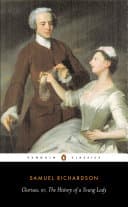
Samuel Richardson (2004)
Genre
Fiction
Reading Time
1500 min
Key Themes
See below
Sign in to track this book
In a torrent of desperate letters, a virtuous woman's flight from a forced marriage leads her into the seductive and ultimately brutal clutches of a charming rake, blurring the lines between protection, desire, and devastating betrayal.
Clarissa Harlowe, a young woman of virtue and considerable fortune, finds herself at odds with her entire family – her parents, Mr. and Mrs. Harlowe, her brother James, and her sister Arabella. They are determined to force her into a marriage with Roger Solmes, a wealthy but unappealing man, primarily to consolidate family estates and prevent Clarissa's portion from being alienated. Clarissa, valuing personal merit and affection over wealth and status, steadfastly refuses Solmes's suit. Her defiance infuriates her family, leading to increasing isolation and harsh treatment within her own home. She seeks solace in correspondence with her confidante, Miss Anna Howe, and, inadvertently, with the charming but notorious rake, Robert Lovelace, who has previously been rejected by Arabella and harbors a grudge against the Harlowes.
As her family's persecution intensifies, confining her to her room and threatening her with Solmes's imminent arrival, Clarissa becomes increasingly desperate. Lovelace, feigning concern and offering assistance, cleverly exploits her distress. He orchestrates a supposed rescue, convincing Clarissa that her only escape from the forced marriage is to flee with him. Despite her misgivings and her deep-seated moral principles, Clarissa, cornered and seeing no other option, agrees to meet Lovelace. She leaves her family home, believing she is merely seeking a temporary refuge and Lovelace's protection, with a vague understanding of future marriage, though she has no true intention of marrying him at this point.
Upon fleeing, Clarissa finds herself in St. Albans with Lovelace, who immediately begins to delay their proposed marriage on various pretexts. He introduces her to a group of his associates, including his friend Belford, and subtly undermines her reputation. He then convinces her to move to London, taking her to a house run by Mrs. Sinclair, which Clarissa soon realizes is a brothel disguised as a respectable lodging. Clarissa's letters to Anna Howe express her growing unease and suspicion regarding Lovelace's true intentions and the nature of her surroundings. She tries to maintain her virtue and dignity despite her compromised situation, constantly pressing Lovelace for marriage, which he continuously evades.
Clarissa makes several earnest attempts to escape Mrs. Sinclair's house and Lovelace's clutches. She tries to enlist the help of a maid, Sally, and even attempts to contact her family, though her letters are intercepted by Lovelace. He employs various stratagems, including impersonating her family members and staging elaborate ruses, to prevent her from leaving. He manipulates her fears, guilt, and sense of propriety, always promising marriage but never delivering. Lovelace's intention is not just to seduce her, but to break her spirit and bend her to his will, believing that her virtue is a challenge to be conquered.
In a particularly cruel and elaborate scheme, Lovelace stages a fire at Mrs. Sinclair's house. During the ensuing panic, he forcibly carries Clarissa away to a secluded house in Hampstead, further isolating her from any potential help or communication with the outside world. This incident deeply traumatizes Clarissa, confirming her worst fears about Lovelace's manipulative and dangerous nature. She feels utterly trapped and violated, her sense of security completely shattered. Lovelace continues his psychological torment, alternating between feigned affection and veiled threats, always pushing her towards a forced submission.
After relentless psychological torment and the failure of all her escape attempts, Clarissa is finally drugged by Lovelace and the women of Mrs. Sinclair's house, and then raped. This act shatters her physically and mentally, leaving her in a state of profound despair and shock. Her subsequent letters reflect her utter devastation and the feeling that her virtue, which she valued above all else, has been irrevocably destroyed. Despite the horror, the rape steelifies Clarissa's resolve to escape Lovelace and reclaim her moral integrity, even if it means facing death. This event marks a turning point, transforming her from a victim into a figure of tragic resilience.
Following the rape, Clarissa manages to escape Mrs. Sinclair's house during a moment of lax surveillance. She seeks refuge with a kind shopkeeper, Mrs. Smith, and her husband, but her fragile health and mental state are severely compromised. Lovelace, enraged by her escape, orchestrates her arrest and imprisonment for a fabricated debt, using the complicity of Mrs. Sinclair and her associates. Clarissa is thrown into a debtors' prison, further degrading her and isolating her from any sympathetic contact. This act demonstrates Lovelace's continued cruelty and his determination to punish Clarissa for resisting him, even after his ultimate violation.
John Belford, one of Lovelace's former libertine companions, is tasked by Lovelace to observe Clarissa during her imprisonment. Witnessing her profound suffering, unwavering piety, and unyielding virtue, Belford undergoes a gradual but significant change of heart. He is deeply moved by Clarissa's plight and begins to advocate for her, eventually helping to secure her release from prison. He becomes her protector and confidant, relaying her story to Lovelace and Anna Howe. Clarissa's health, however, continues to deteriorate rapidly, both from the trauma she endured and the physical hardships of her imprisonment.
As her health declines, Clarissa accepts her impending death with remarkable serenity and piety. She dedicates her remaining time to preparing for the afterlife, writing her will, and dictating letters that serve as her final testament. She forgives her family and even Lovelace, expressing a profound understanding of Christian charity and resignation. She meticulously arranges her own funeral, designing her coffin with inscriptions that reflect her suffering and her faith. Her dignified acceptance of death, contrasted with the anguish of those around her, highlights her spiritual triumph over her earthly tormentors.
Clarissa Harlowe dies peacefully, surrounded by Belford, Mrs. Smith, and other sympathetic individuals. Her death has a profound impact on all who witnessed her suffering and her final, virtuous conduct. Her family is consumed by guilt and regret, realizing too late the treasure they lost. Anna Howe is heartbroken but remains a fierce defender of Clarissa's memory. Lovelace, upon hearing of her death, is plunged into a fit of remorse and madness, finally understanding the irreparable harm he inflicted. Clarissa's story, as recounted in the letters, serves as a powerful moral lesson about virtue, tyranny, and the consequences of libertinism.
After Clarissa's death, Lovelace is tormented by guilt and regret, experiencing periods of near-madness. He travels abroad, unable to escape the memory of his actions. Clarissa's cousin, Colonel Morden, returns to England and, learning the full extent of Lovelace's villainy, resolves to avenge Clarissa. Morden challenges Lovelace to a duel in Italy. Lovelace, seemingly indifferent to his own life and perhaps welcoming death as a penance, is mortally wounded by Morden. His final words, 'Let this expiate!', express a desire for atonement, though his repentance comes too late to save Clarissa or himself.
The Harlowe family is utterly devastated by Clarissa's death. Her parents, Mr. and Mrs. Harlowe, live out their days in profound grief and regret, their once-proud family now broken and disgraced. James and Arabella Harlowe are also consumed by guilt and bitterness, their lives shadowed by their cruelty towards their sister. The family's wealth and status cannot compensate for the moral ruin they inflicted upon themselves. Anna Howe, Clarissa's devoted friend, eventually marries Mr. Hickman, but she remains fiercely loyal to Clarissa's memory, ensuring her story and virtue are not forgotten, and diligently manages Clarissa's posthumous affairs and reputation.
The Protagonist
Clarissa transforms from a sheltered, somewhat naive young woman into a figure of tragic spiritual triumph, finding ultimate solace and vindication in her faith through immense suffering and death.
The Antagonist
Lovelace descends from a confident, amoral rake to a man tormented by guilt and madness, ultimately meeting a violent end that serves as a form of poetic justice.
The Supporting
Anna remains steadfast in her loyalty and grief, eventually marrying but dedicating herself to preserving Clarissa's memory and ensuring her story's moral message is understood.
The Supporting
Belford transforms from a cynical rake into a morally reformed man, becoming Clarissa's posthumous executor and the primary chronicler of her story and Lovelace's demise.
The Antagonist
James remains unrepentant and consumed by bitterness and guilt, living a life overshadowed by the tragedy he helped create.
The Supporting
Arabella remains embittered and unforgiving, living with the guilt of her part in Clarissa's downfall.
The Antagonists
They experience profound, belated remorse and grief, living out their lives in sorrow for their role in Clarissa's death.
The Supporting
Colonel Morden fulfills his duty to Clarissa's memory by exacting justice on Lovelace, thereby restoring a measure of honor to the family name.
The Mentioned
Solmes remains a static character, a symbol of the arbitrary and materialistic values of the Harlowe family.
The novel profoundly explores the meaning and resilience of virtue in a corrupt world. Clarissa embodies an almost idealized form of virtue, marked by piety, integrity, and a strong moral compass. Her suffering tests the very limits of this virtue, questioning whether it can survive in the face of relentless evil. Ultimately, her virtue is not preserved physically but triumphs spiritually through her unwavering faith and dignified acceptance of death, as seen in her meticulous preparation for her end and her serene passing. Her story suggests that true virtue resides not in an untouched state, but in the steadfastness of one's moral convictions despite external defilement.
“What, after all, is the world to me? I have wrestled with it, and it has overcome me. But I have a hope beyond it.”
The novel vividly portrays the oppressive power of the patriarchal family structure in 18th-century society. Clarissa's tragedy begins with her family's tyrannical insistence on forcing her into an unwanted marriage for financial and social gain, overriding her personal autonomy and happiness. Her brother, James, and her parents, Mr. and Mrs. Harlowe, exert immense pressure, isolating her and denying her basic rights. This theme highlights the vulnerability of women within such systems and the devastating consequences when familial duty is prioritized over individual conscience and affection, ultimately leading to Clarissa's desperate flight and subsequent downfall.
“Oh, the dreadful consequences of a child's being left to the mercy of a family, who, instead of cherishing, seek to destroy her!”
Robert Lovelace represents the epitome of 18th-century libertinism, characterized by a cynical disregard for moral conventions, a pursuit of sensual pleasure, and a delight in manipulation and conquest. His character explores the destructive nature of unchecked ego and a philosophy that views others, particularly women, as mere objects for gratification. Lovelace's elaborate schemes, deceptions, and ultimate act of rape illustrate the profound moral decay inherent in such a worldview. The novel condemns libertinism through its tragic consequences, showing how it not only destroys its victims but ultimately leads to the perpetrator's own ruin and despair, as evidenced by Lovelace's tormented end.
“I was born to be a torment to myself, and to others.”
As an epistolary novel, 'Clarissa' inherently explores the power and limitations of written communication. Letters serve as the primary means of conveying plot, character, and emotion, allowing for multiple perspectives and a deep dive into the characters' inner lives. However, the novel also demonstrates how letters can be intercepted, forged, misinterpreted, or used for manipulation, as Lovelace frequently does. Clarissa's inability to effectively communicate her plight to her family, or to summon help through her letters, highlights the limitations of language in overcoming physical barriers and deliberate deceit. Yet, her final letters become her most powerful legacy, articulating her virtue and shaping the narrative after her death.
“Oh, what a world is this, and what is there in it worth living for, when such a spirit as Clarissa's can be so persecuted!”
The novel meticulously examines the precarious position of women in 18th-century society, particularly concerning their limited agency and extreme vulnerability. Clarissa's every attempt to assert her will—whether refusing an unwanted marriage or trying to escape Lovelace—is met with overwhelming resistance from both her family and her tormentor. Her fate underscores the lack of legal and social protection for women, whose honor and reputation could be easily destroyed by male malice. Despite her profound virtue and intellect, Clarissa's choices are severely constrained, highlighting how a woman's entire existence could be dictated by patriarchal expectations and male actions, ultimately leading to her tragic demise.
“A woman has no business to be in the right, when all the world is against her.”
The entire novel is told through an exchange of letters between characters.
The epistolary format is central to 'Clarissa,' allowing for deep psychological insight into the characters' thoughts, feelings, and motivations. It creates a sense of immediacy and intimacy, as readers experience events and reactions as they unfold. The multiple perspectives, particularly between Clarissa, Anna Howe, Lovelace, and Belford, offer a complex and often contradictory view of the narrative, highlighting the subjective nature of truth and the characters' self-deception or genuine understanding. This format also builds suspense, as readers piece together the story from fragmented accounts, and underscores the theme of communication's power and limitations.
The reader is aware of information that characters are not, particularly regarding Lovelace's schemes.
Dramatic irony is frequently employed, especially concerning Lovelace's elaborate deceptions. The reader is often privy to Lovelace's true intentions through his letters to Belford, while Clarissa remains unaware of the full extent of his villainy. This creates a heightened sense of tension and dread, as the reader anticipates Clarissa's inevitable suffering. For example, when Clarissa writes of her hopes for escape or her trust in Lovelace's vague promises, the reader's knowledge of Lovelace's machinations amplifies the tragic impact of her naivety and vulnerability, making her downfall more agonizing to witness.
Clarissa's initial, protected life in her garden contrasts with her subsequent 'wilderness' experience with Lovelace.
The Harlowe family's estate, particularly Clarissa's beloved garden, symbolizes her initial state of innocence, virtue, and controlled beauty. It represents a sanctuary and a reflection of her ordered, moral world. Her forced flight from this garden into the 'wilderness' of the outside world, particularly with Lovelace, symbolizes her loss of protection, her descent into a chaotic and dangerous environment, and the violation of her inner purity. The contrast between these settings underscores her transition from a state of sheltered virtue to one of profound vulnerability and eventual spiritual transcendence amidst earthly degradation.
Lovelace frequently uses disguises and impersonations to deceive Clarissa and others.
Lovelace's use of disguises and impersonations is a key plot device illustrating his manipulative nature and his theatrical approach to villainy. He employs various aliases and costumes, such as impersonating a sea captain or a relative, to trick Clarissa into his power, prevent her escape, or intercept her correspondence. These deceptions highlight his mastery of deceit and his ability to exploit social conventions and Clarissa's trust. Each disguise serves to further entrap Clarissa, eroding her sense of reality and security, and demonstrating the profound psychological warfare he wages against her, blurring the lines between truth and illusion.
“O, what a tangled web we weave, when first we practise to deceive!”
— Clarissa reflects on the consequences of Lovelace's deceptions, particularly his use of accomplices and elaborate schemes.
“The man who can treat a woman ill, whatever may be his station, can have no claim to be a gentleman.”
— Clarissa, in a letter, expresses her strong disapproval of Lovelace's abusive behavior and challenges his claim to gentility.
“To be able to say, 'I have done my duty,' is a greater satisfaction than to receive the applause of the whole world.”
— Clarissa, facing immense suffering, finds solace and strength in her own conscience and sense of integrity.
“For a woman to be happy in marriage, there must be a reasonable equality of minds, and a mutual esteem.”
— Clarissa, before her troubles escalate, discusses her views on what constitutes a successful and fulfilling marriage.
“The greatest trial of a woman's virtue is in her power to resist the solicitations of a man whom she loves.”
— This reflects a prevailing societal view of female virtue, which Clarissa exemplifies in her struggles with Lovelace.
“One day, my dear, you will be sensible of the value of a friend, when the world, perhaps, shall frown upon you.”
— Anna Howe, in a moment of foresight, warns Clarissa about the fickle nature of society and the importance of true friendship.
“A good name is better than precious ointment.”
— Clarissa often references this biblical proverb, emphasizing the supreme importance she places on her reputation and honor.
“He who thinks he can deceive God, deceives himself only.”
— Clarissa, in her pious reflections, asserts the ultimate accountability of one's actions before a higher power.
“My family, my dear, has been my ruin.”
— Clarissa bitterly reflects on the relentless persecution and manipulation she suffered at the hands of her own relatives.
“The most artful of men is often the most unhappy.”
— Clarissa observes the eventual misery and self-inflicted torment of Lovelace, despite his cunning.
“There is no true greatness but in goodness.”
— Clarissa's unwavering moral compass leads her to define true worth not by status or power, but by virtuous conduct.
“To be beloved, for being good, is the greatest of all blessings.”
— Clarissa expresses her deepest desire for love to be founded on genuine esteem for her character, rather than superficial attractions.
“Every man has it in his power to be virtuous; but few have it in their power to be rich.”
— This quote, often discussed in the novel, highlights the accessibility of virtue as opposed to the arbitrary nature of wealth.
“My only hope is in death.”
— Clarissa, having endured unspeakable suffering and feeling utterly abandoned, expresses her profound despair and longing for release.
Ready to see how well you understood this book? Take our interactive quiz with 10 questions.
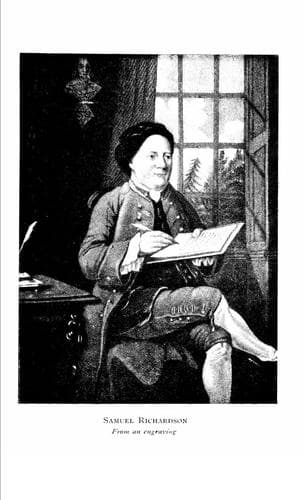
Samuel Richardson was an English writer and printer known for three epistolary novels: Pamela; or, Virtue Rewarded (1740), Clarissa: Or the History of a Young Lady (1748) and The History of Sir Charles Grandison (1753). He printed almost 500 works, including journals and magazines, working periodically with the London bookseller Andrew Millar. Richardson had been apprenticed to a printer, whose daughter he eventually married. He lost her along with their six children, but remarried and had six more children, of which four daughters reached adulthood, leaving no male heirs to continue the print shop. As it ran down, he wrote his first novel at the age of 51 and joined the admired writers of his day. Leading acquaintances included Samuel Johnson and Sarah Fielding, the physician and Behmenist George Cheyne, and the theologian and writer William Law, whose books he printed. At Law's request, Richardson printed some poems by John Byrom. In literature, he rivalled Henry Fielding; the two responded to each other's literary styles.

Ashley Antoinette
4.6

Mark McDonald
4.4
Luo Guanzhong
4.4
Mia McKenzie
4.3
Dorothy Parker
4.3
Joaquim Maria Machado de Assis
4.3
James Thurber
4.2

Terry Kay
4.2