“What is the victory of a cat on a hot tin roof? I wish I knew. . . . Just staying on it, I guess, wouldn't you say?”
— Maggie is talking about her precarious position and resilience in life.


Tennessee Williams (1944)
Genre
Fiction
Reading Time
120 min
Key Themes
See below
Sign in to track this book
On a sweltering Mississippi Delta plantation, a dying patriarch's birthday ignites a brutal family battle for inheritance, exposing the raw wounds of a marriage suffocated by unspoken desires and the scorching heat of mendacity.
The play opens in the Pollitt family's Mississippi plantation home, in Maggie 'the Cat' Pollitt's bedroom. Maggie, beautiful and lively, dresses for Big Daddy's 65th birthday party while talking to her husband, Brick. Brick, a former football hero, is depressed and relies heavily on alcohol, nursing a broken ankle. He mostly ignores Maggie, his responses short or dismissive. Maggie fears being childless and losing their share of Big Daddy's inheritance to Brick's brother Gooper and his wife Mae, who have five 'no-neck monster' children. She hints at Brick's perceived homosexuality and his strained relationship with his deceased friend, Skipper, accusing him of being disgusted by her sexually. Brick remains emotionally distant, primarily concerned with pouring another drink.
Mae and Gooper enter Maggie and Brick's bedroom, pretending to check on Brick. Their true intention is to subtly highlight their reproductive success and Maggie's failure to produce an heir. They bring their loud, disruptive children, further emphasizing the contrast between their bustling family and Brick and Maggie's sterile marriage. Mae constantly makes veiled remarks about Maggie's childless state and Brick's drinking. Gooper, a lawyer, tries to discuss estate matters, clearly positioning himself as the favored son. Maggie, despite her outward confidence, feels intense pressure to conceive, understanding it is her only leverage in the family power struggle for Big Daddy's fortune. Brick remains largely aloof, observing the family's schemes with detached cynicism.
Big Daddy returns from the Ochsner Clinic in New Orleans, supposedly having received a clean bill of health. The family, including Big Mama, Mae, Gooper, and their children, gathers to celebrate his 65th birthday, feigning joy and relief. However, the doctor has privately informed Big Mama and Gooper that Big Daddy is dying of terminal cancer. The 'clean bill of health' is a lie to spare him pain during his final months. Big Mama, unaware of the deeper family dynamics, is overjoyed by Big Daddy's supposed recovery, while Mae and Gooper see it as an opportunity to solidify their claim on the inheritance. Brick, though seemingly detached, observes the hypocrisy around him.
Big Daddy enters Brick's room, dismissing the others, determined to have a frank conversation with his favorite son. He expresses disappointment in Brick's alcoholism and lack of ambition, urging him to stop drinking and take an interest in the plantation. Big Daddy believes Brick's problem stems from his disgust with Maggie and his grief over Skipper's death. He tries to uncover the nature of Brick and Skipper's relationship, hinting at a suppressed truth. Brick, initially resistant and defensive, eventually opens up, revealing his profound disgust with the 'mendacity' and hypocrisy he perceives in the world, especially within his own family. This conversation is a raw exploration of their fractured relationship and Brick's inner torment, with Big Daddy trying desperately to connect.
During their intense conversation, Big Daddy continues to press Brick about his issues, dismissing Brick's claims of 'mendacity' as an excuse. Frustrated by his father's denial and the family's conspiracy of silence, Brick brutally reveals the truth: Big Daddy is dying of cancer, and the 'clean bill of health' is a lie. The revelation shatters Big Daddy's celebratory mood and forces him to confront his mortality. He reacts with shock, anger, and profound disbelief, initially lashing out at Brick for his cruelty. This moment is a turning point, as the veneer of happiness and denial is ripped away, exposing the raw fear and desperation beneath the family's surface.
Big Mama enters the room, still believing Big Daddy is well, only to be confronted with the devastating truth of his terminal illness. Her initial reaction is hysterical grief and denial, followed by a fierce protectiveness over Big Daddy. Meanwhile, Mae and Gooper, ever opportunistic, immediately begin to press their claims for Big Daddy's estate, presenting carefully prepared legal documents for him to sign. They argue that as the only son with children, Gooper is the natural heir, and Brick's alcoholism makes him unfit. Big Mama vehemently defends Brick and Big Daddy's wishes, leading to a bitter family quarrel over money and loyalty, further highlighting the deep-seated avarice and emotional dysfunction within the Pollitt family.
Amidst the chaotic family argument over Big Daddy's will, Maggie, seeing her and Brick's inheritance slipping away, makes a desperate and dramatic announcement: she is pregnant. This declaration immediately shifts the family's focus. Big Mama is overjoyed at the prospect of a grandchild, seeing it as a symbol of hope and continuity. Mae and Gooper are visibly stunned and suspicious, accusing Maggie of lying, but they cannot publicly refute her without appearing heartless. Brick, though initially shocked, remains silent, neither confirming nor denying Maggie's claim. This bold lie is Maggie's final, desperate attempt to secure their financial future and win Big Daddy's favor, demonstrating her fierce determination and strategic manipulation.
Later, after the family commotion subsides, Brick confronts Maggie about her pregnancy lie. He is disgusted by her manipulation and her continuous attempts to force intimacy upon him. Maggie, in turn, presses him about his relationship with Skipper, suggesting it was more than just friendship and that Brick's inability to accept this truth led to Skipper's self-destruction and Brick's own alcoholism. Brick confesses his profound 'disgust' with Skipper's homosexual advances and his own subsequent feelings of guilt. Maggie, however, declares her unwavering love for Brick and her intention to make her lie a reality. She locks away Brick's liquor, promising to sleep with him and conceive a child, asserting her will to save their marriage and secure their future, even if it means forcing the issue.
The play concludes with Big Daddy's fate sealed, the family's mendacity exposed, and Maggie's lie hanging in the air. Big Daddy grapples with his impending death, and the true nature of Brick and Skipper's relationship remains a source of torment for Brick. Maggie is determined to fulfill her promise of having a child with Brick, even against his will, believing it is the only way to save them both. The final scene leaves the audience with unresolved tension and the lingering question of whether Maggie's forceful love can truly break through Brick's wall of indifference and self-disgust, or if the family's cycle of lies and unspoken truths will continue indefinitely. The 'cat on a hot tin roof' continues to walk a precarious path.
The Protagonist
Maggie begins isolated and frustrated, fighting against Brick's indifference and Mae's machinations, and ends by asserting her will to save her marriage and secure their future, even if it means forcing the issue.
The Protagonist
Brick begins in a state of alcoholic stupor and emotional paralysis, and through confrontations with Big Daddy and Maggie, he is forced to acknowledge, though not fully resolve, the sources of his self-disgust and grief.
The Supporting
Big Daddy begins as a forceful, seemingly healthy patriarch, unaware of his impending death, and ends confronting his mortality and the truth about his family's avarice.
The Supporting
Big Mama begins as an overly optimistic and somewhat oblivious matriarch, celebrating Big Daddy's supposed recovery, and ends shattered by the truth of his illness but fiercely protective of his legacy and Brick.
The Antagonist
Gooper remains largely static, consistently driven by avarice and a desire for control over the family estate, never truly understanding the emotional complexities of his father or brother.
The Antagonist
Mae remains a static character, consistently driven by her desire for wealth and status for her family, employing manipulative tactics throughout the play.
The Mentioned
Skipper's arc is completed before the play begins, but his posthumous influence on Brick drives much of Brick's internal conflict and self-destruction.
Mendacity, or untruthfulness, is central to the play, with Brick frequently using the word to describe the pervasive hypocrisy and deceit within his family and society. The Pollitt family is riddled with lies: Big Daddy's terminal illness is initially concealed, Maggie fabricates a pregnancy, and Brick's true feelings about Skipper and his own sexuality are repressed. The play explores the destructive nature of these lies, how they poison relationships, and the painful consequences of confronting or avoiding the truth. Big Daddy's raw conversation with Brick, where Brick forces him to face his impending death, highlights the brutal necessity of truth, even when it is devastating.
“What is the victory of a cat on a hot tin roof? I wish I knew... Just staying on it, I guess, as long as she can.”
Repression, especially of sexual desire and identity, is a dominant theme. Brick's self-disgust stems from his inability to confront his complex feelings for Skipper, which Maggie suggests had a homosexual undertone. His rejection of Maggie's sexual advances, coupled with his alcoholism, is a direct manifestation of this repression. Maggie, in contrast, is overflowing with desire – for Brick, for a child, for security – but her desires are constantly thwarted. The play suggests that denying one's true nature or desires leads to unhappiness and destructive coping mechanisms, highlighting the societal pressures that force individuals to conform to prescribed roles, especially regarding sexuality and masculinity.
“I'm not living with you. We occupy the same cage.”
The Pollitt family is a microcosm of dysfunction, driven by avarice, resentment, and a desperate struggle for Big Daddy's vast fortune. The impending death of Big Daddy brings out the worst in Mae and Gooper, who shamelessly scheme to secure their inheritance, contrasting sharply with Brick's indifference to money. Big Mama's loyalty is tested, and Maggie's lie about her pregnancy is a direct response to the pressure of securing their share. The play shows how wealth and the expectation of inheritance can corrupt family bonds, turning love and loyalty into calculated maneuvers, and revealing the corrosive effects of greed on human relationships, where emotional needs are secondary to financial gain.
“Mendacity is a system that we live in. Liquor is one way out an' death's the other.”
The Pollitt family maintains a fragile facade of happiness and normalcy, especially during Big Daddy's birthday celebration and the initial lie about his health. Big Mama's forced cheerfulness, Mae and Gooper's performative concern, and Maggie's relentless optimism all contribute to this illusion. Brick, however, sees through it all, his 'disgust' stemming from the 'mendacity' of pretending things are fine when they are fundamentally broken. The play meticulously strips away these layers of pretense, revealing the raw pain, fear, and desperation beneath. It suggests that true happiness cannot exist where truth is suppressed and genuine connection is absent, highlighting the emotional cost of maintaining social illusions.
“You can't buy back your life, but you can buy back the illusion of it.”
A physical manifestation of Brick's emotional paralysis.
Brick's broken ankle, sustained while drunkenly attempting to jump hurdles, serves as a powerful symbol of his emotional and psychological paralysis. It physically confines him to the bedroom, forcing him to confront Maggie and Big Daddy, and preventing him from escaping his problems through physical activity or simply walking away. The injury is a constant reminder of his self-destructive behavior and his inability to move forward, mirroring his arrested development and his deep-seated psychological wounds. It grounds the play in a single location and forces the characters into intense, unavoidable confrontations.
Brick's primary escape mechanism and a symbol of his repression.
Brick's relentless drinking is not merely a habit but a deliberate coping mechanism. He drinks until he feels the 'click' of peace, a temporary escape from his profound 'disgust' with life's mendacity and his own unresolved grief and guilt over Skipper. The alcohol serves as a barrier between him and Maggie, and between him and his own emotions. It represents his refusal to engage with his problems and his self-destructive path. The presence of the liquor cabinet and Brick's constant need for a drink underscore his addiction and his desperate search for oblivion, making it a central element in the play's exploration of escape and reality.
Mae and Gooper's children, symbolizing their crass ambition.
Mae and Gooper's five children, derogatorily called 'no-neck monsters' by Maggie, serve as a stark contrast to Maggie and Brick's childless state. They are loud, disruptive, and often used by Mae and Gooper as pawns to highlight their fertility and claim on the inheritance. These children symbolize the materialistic and superficial aspects of the Pollitt family, reflecting the parents' ambition and lack of genuine warmth. Their presence emphasizes the pressure on Maggie to produce an heir and underscores the avarice that pervades the family dynamics, demonstrating how even children can be weaponized in the fight for wealth and status.
Maggie's precarious and uncomfortable existence.
The titular 'cat on a hot tin roof' is a metaphor Maggie uses to describe her own desperate and precarious situation. She is constantly on edge, fighting for her survival, her marriage, and her position within the family, all while enduring Brick's coldness and the family's scrutiny. The 'hot tin roof' represents the intense pressure, discomfort, and danger of her existence, where she must constantly balance her desires with the hostile environment around her. It encapsulates her resilience, her vulnerability, and her fierce determination to hold on, even when everything seems to be burning beneath her.
“What is the victory of a cat on a hot tin roof? I wish I knew. . . . Just staying on it, I guess, wouldn't you say?”
— Maggie is talking about her precarious position and resilience in life.
“Ignorance—of morality—is a misfortune, not a sin.”
— Brick says this to Big Daddy, reflecting on his own struggles.
“I'm not living with you. We occupy the same cage, that's all.”
— Maggie's bitter remark to Brick about their marriage.
“We're all liars, God damn it, all liars!”
— Big Daddy's outburst about the dishonesty within his family.
“A man can't live with a woman he don't love.”
— Brick states this as a reason for his emotional distance from Maggie.
“Time is short. And it don't make sense to waste what little there is on things you don't care about.”
— Big Daddy reflecting on his life and priorities.
“You can be young without money but you can't be old without it.”
— Big Mama's pragmatic view on the importance of wealth.
“Truth, truth, what is truth?”
— A philosophical question posed by Big Daddy, reflecting on the evasiveness of truth.
“You don't live in a glass house if you're throwing stones.”
— A common saying, used here by Mae, implying hypocrisy.
“The human animal is a beast that dies and dies and dies and the knowledge that he's going to die makes him die a million times before he's dead.”
— Big Daddy's dark rumination on mortality and fear.
“I'm not going to be some childless woman!”
— Maggie's desperate declaration, highlighting her desire for a child.
“Mendacity is a system that we live in. Liquor is one way out an' death's the other.”
— Brick's cynical view on life, connecting mendacity with his coping mechanisms.
“I can't stand liars. Can't stand 'em, can't stand 'em!”
— Big Daddy's repeated complaint about the dishonesty around him.
“You can't buy love, you can't buy health, you can't buy happiness, but you can buy a heap of comfort.”
— Big Mama's practical understanding of what money can and cannot achieve.
Ready to see how well you understood this book? Take our interactive quiz with 10 questions.
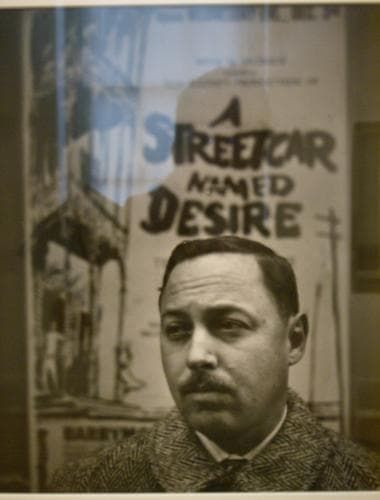
Thomas Lanier Williams III, known by his pen name Tennessee Williams, was an American playwright and screenwriter. Along with contemporaries Eugene O'Neill and Arthur Miller, he is considered among the three foremost playwrights of 20th-century American drama.

Ashley Antoinette
4.6

Mark McDonald
4.4
Luo Guanzhong
4.4

Mia McKenzie
4.3

Dorothy Parker
4.3

Joaquim Maria Machado de Assis
4.3
James Thurber
4.2

Terry Kay
4.2