BookBrief
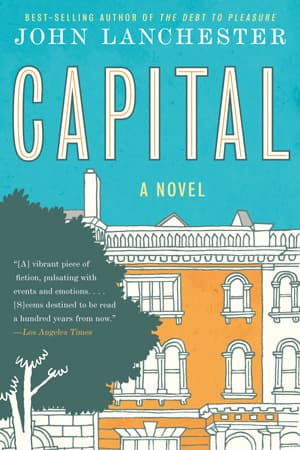
Capital cover
Archivist's Choice

Capital

John Lanchester (2012)

Genre

Literary Fiction / Economics

Reading Time

10-12 hours

Key Themes

See below

Track Your Reading

Sign in to track this book

As London's Pepys Road faces financial meltdown in 2008, an anonymous campaign of "We Want What You Have" postcards exposes class, greed, and fear among its diverse residents, from bankers to refugees, whose lives connect through a city on the brink.

Synopsis

In 2008 London, the residents of Pepys Road, a diverse cast including banker Roger Yount and his shopaholic wife Arabella, the elderly Petunia and her street artist grandson Smitty, Pakistani shop owners Ahmed and Shahid Anwar, Senegalese football star Freddy Kamo, and Zimbabwean refugee and meter maid, Zbigniew, all begin receiving anonymous postcards stating, "We Want What You Have." This unsettling message connects their disparate lives against the backdrop of the global financial crisis. Roger faces ruin as his bank nears collapse, while Petunia grapples with a terminal illness and Smitty uses her home as a canvas for his art. The Anwars navigate cultural tensions and business challenges, and Freddy confronts the pressures of fame. The postcards, initially a source of unease, become a deeper mystery, hinting at resentment and possibly a more sinister plot. The story explores the motivations behind the messages, ultimately revealing Smitty as the anonymous sender. He is driven by a desire to provoke thought and highlight societal inequalities rather than malice. As the financial world collapses around them, the characters must confront their own values, desires, and the fragile nature of their fortunes. This leads to a reckoning with their individual circumstances and the questions of wealth and ownership in a rapidly changing city.
Reading time
10-12 hours
Difficulty
Medium
Pacing
Moderate
Mood
Observational, Socially critical, Interconnected, Reflective
✓ Read this if...
You enjoy sprawling, character-driven literary fiction that dissects contemporary society through a mosaic of interconnected lives, especially with themes of wealth, class, and urban living.
✗ Skip this if...
You prefer fast-paced thrillers or stories with a single, tightly focused plot and clear heroes/villains.

Plot Summary

Pepys Road, 2008: Postcards and Unease

The novel opens in 2008 on Pepys Road, a London street where property values have soared. It is a small version of contemporary urban life. Residents from various backgrounds begin receiving anonymous postcards with the unsettling message: 'We Want What You Have.' Roger Yount, a high-flying banker, lives with his extravagant wife Arabella and their two children. Across the street, Petunia Howe, an elderly woman with a brain tumor, lives alone, her life slowly fading. Her grandson, Smitty, a street artist, visits occasionally. The Pakistani-immigrant Anwar family runs the local convenience store; their son Ahmed navigates his adolescence. Zbigniew, a Polish builder, works on renovations, while a Senegalese footballer, Quentins, lives nearby with his minder, Freddy Kamo. The postcards create paranoia and suspicion among these different individuals, hinting at the financial anxieties and social divisions beneath their seemingly prosperous lives.

Roger's Financial Precipice

Roger Yount, a bond trader at a major investment bank, finds his world increasingly uncertain. The global financial crisis, initially a distant rumble, begins to directly impact his job and the bank's stability. His wife, Arabella, unaware of the impending doom, continues her extravagant spending, further straining their finances. Roger's bonuses, once astronomical, are now threatened, and work pressure becomes immense. He grapples with his profession's ethical dilemmas and the growing fear of losing everything. His daily commute and interactions with colleagues show the widespread panic and uncertainty within the financial sector, reflecting the broader economic collapse around them. The postcards, though still a mystery, seem to taunt him with the very wealth he fears losing.

Petunia's Last Days and Smitty's Art

Petunia Howe, a long-time resident of Pepys Road, is in the final stages of a brain tumor. Her memories often drift to her late husband and the changing face of her beloved street. Her grandson, Smitty (real name Graham), a talented but struggling street artist, visits her regularly. Smitty feels a deep connection to his grandmother and a growing disillusionment with the wealth and inequality he sees around him. He uses his art, often politically charged graffiti, as a form of social commentary, reflecting the 'We Want What You Have' sentiment in his own way. His art appears in various public spaces, sometimes drawing the attention of law enforcement and other times sparking local conversations. Petunia's declining health is a poignant contrast to her neighbors' material anxieties, showing the fragility of life regardless of wealth.

The Anwars and Cultural Tensions

The Anwar family, who own the local convenience store, face their own challenges. Mr. and Mrs. Anwar work tirelessly, striving to maintain their business and provide for their children. Their son, Ahmed, struggles with his identity, caught between his parents' traditional expectations and the pull of Western culture. He develops a crush on a local girl, sparking internal conflict. The family also experiences subtle and overt forms of prejudice, particularly from some of the wealthier residents of Pepys Road who view them as 'outsiders.' The postcards add another layer of anxiety, as they wonder if the message is directed at them or if they are simply caught in the crossfire of others' resentments. Mrs. Anwar's sister, who is a meter maid, also becomes an unwitting participant in the unfolding drama.

Quentins and the Illusions of Fame

Quentins, a young Senegalese football prodigy, lives a life of isolated luxury on Pepys Road, managed by his shrewd and controlling minder, Freddy Kamo. Quentins is a valuable asset, and Freddy carefully manages his diet, training, and public appearances, aiming to maximize his potential and financial returns. Quentins often feels lonely and disconnected, despite his fame and wealth. He sends money back to his family in Senegal, feeling the weight of their expectations. His interactions are largely limited to Freddy and his teammates. The postcards, when they arrive at his address, are a strange intrusion into his carefully constructed bubble, a reminder of the world outside his gilded cage. Freddy, ever vigilant, dismisses them as a nuisance, focused solely on Quentins' career trajectory.

The Meter Maid and the Suspect

Ms. Kamal, an Iraqi refugee working as a meter maid on Pepys Road, observes the residents with a keen, often detached, eye. She is a quiet, intelligent woman with a traumatic past, and her job gives her a unique vantage point on the lives of others. She notices patterns, behaviors, and the subtle shifts in the street's atmosphere. Her sister is Mrs. Anwar. As the postcards continue to arrive, Ms. Kamal begins to piece together fragments of information. She spots Smitty's distinctive graffiti tags and starts to connect his art with the sentiments expressed on the postcards. Her observations make her an accidental detective, slowly narrowing down the potential perpetrator of the anonymous messages, though she keeps her suspicions largely to herself.

Roger's Downfall and Arabella's Reckoning

The inevitable happens for Roger Yount: he is made redundant, a casualty of the financial crisis. His dismissal plunges him into despair and forces a harsh reckoning with Arabella. Their lavish lifestyle, built on Roger's inflated salary and bonuses, is no longer sustainable. Arabella, initially in denial, is forced to confront the reality of their situation, including their substantial debt. Her shopping addiction, once a source of pleasure, now becomes a symbol of their financial ruin. The couple's relationship strains under the pressure, and they must consider drastic changes, including selling their expensive house on Pepys Road. Roger, stripped of his professional identity, struggles with feelings of failure and irrelevance.

Smitty's Motivation Revealed

Through Ms. Kamal's astute observations and Smitty's increasing boldness with his graffiti, his role in the postcard campaign is gradually revealed. It becomes clear that Smitty is the one sending the postcards, using them as a form of artistic protest against the perceived greed and inequality he witnesses on Pepys Road. His motivation comes from a genuine frustration with the disparities between his own struggling existence and the opulent lives of his neighbors, made worse by his grandmother Petunia's quiet decline. He sees the postcards as a way to provoke thought and highlight the hidden resentments bubbling beneath the surface of London's affluent areas, though his actions cause fear and anxiety among the recipients.

Life After the Crash

In the aftermath of the financial crisis and the postcard mystery, life on Pepys Road slowly finds a new rhythm. Roger and Arabella are forced to significantly downsize, moving to a smaller house outside London. Roger struggles to find a new job, eventually taking a less prestigious role. Arabella, surprisingly, begins to find a new sense of purpose without the pressure of maintaining a lavish lifestyle. Petunia Howe passes away peacefully, leaving Smitty to process his grief and continue his artistic endeavors, perhaps with a newfound maturity. The Anwar family continues to run their shop, adapting to the changing economic climate, while Ahmed explores his own path. Quentins' football career continues, but the underlying loneliness remains, and Freddy Kamo remains his watchful guardian.

The Enduring Questions of 'Capital'

The novel concludes without neat resolutions, reflecting the ongoing complexities of modern urban life. The 'We Want What You Have' sentiment, though the source is known, continues to resonate, highlighting persistent social and economic divisions. The financial crisis leaves a mark on all characters, forcing them to re-evaluate their values, ambitions, and relationships. Some find resilience and adaptation, while others grapple with loss and uncertainty. The diverse community of Pepys Road, though shaken, endures. The novel ultimately poses questions about the nature of capital – not just financial, but social and cultural – and what it truly means to have or to lack in a rapidly changing world.

Principal Figures

Roger Yount

The Protagonist

Roger's arc is one of dramatic downfall and reluctant adaptation, moving from hubris to humility as he loses his job and re-evaluates his life.

Arabella Yount

The Supporting

Arabella transitions from a superficial, spendthrift wife to a more grounded individual, adapting to reduced circumstances with surprising resilience.

Petunia Howe

The Supporting

Petunia's arc is one of quiet decline and peaceful acceptance, serving as a nostalgic anchor for the street's history.

Smitty (Graham)

The Supporting/Antagonist (of sorts)

Smitty acts as a catalyst for the plot, his actions driven by a desire to challenge social norms and expose inequality through art.

Ahmed Anwar

The Supporting

Ahmed's arc involves navigating his bicultural identity and coming of age amidst the social complexities of Pepys Road.

Ms. Kamal

The Supporting

Ms. Kamal's arc is one of quiet observation and gradual integration into her new society, while still carrying her past.

Quentins

The Supporting

Quentins' arc is one of maintaining his career and coping with the isolation that comes with fame and wealth.

Freddy Kamo

The Supporting

Freddy's arc remains consistent, driven by his singular focus on Quentins' career and financial success.

Zbigniew

The Mentioned

Zbigniew's arc is less about personal development and more about representing the immigrant workforce.

Themes & Insights

Wealth, Inequality, and Resentment

The central theme is about the stark differences in wealth and the resentments simmering beneath the surface of affluent London. The 'We Want What You Have' postcards directly show this tension, challenging the comfortable lives of the Pepys Road residents. Roger and Arabella Yount show the excesses of financial wealth, while characters like Smitty and the Anwar family represent those who feel left behind or exploited. The financial crisis further shows the fragility of this wealth and the systemic inequalities that support it, leading to a deeper examination of who truly 'has' and who 'wants'.

What had happened in London was that the rich had got richer and the poor had got richer, but the rich had got much, much richer.

Narrator

The Global Financial Crisis of 2008

The economic meltdown of 2008 is the main backdrop and a major cause for the plot. It directly impacts Roger Yount's career and the Younts' financial stability, forcing them to confront their unsustainable lifestyle. The crisis affects the lives of all characters, influencing property values, business prospects for the Anwars, and the general atmosphere of uncertainty. The novel uses the specific events of the crisis (e.g., Bear Stearns, Lehman Brothers) to ground its narrative in a historical moment, exploring its human cost beyond abstract economic figures.

The credit crunch was like a big, invisible, slow-motion car crash, and everyone was in it, whether they knew it or not.

Narrator

Identity and Belonging

Many characters deal with their sense of identity and where they belong in a rapidly changing, multicultural London. Ahmed Anwar struggles to reconcile his Pakistani heritage with his desire for a Western adolescence. Ms. Kamal, an Iraqi refugee, navigates her new life while carrying the weight of her past. Quentins, the Senegalese footballer, is a global citizen but feels isolated. Even Roger Yount's identity is deeply tied to his profession, leading to a crisis when he loses his job. The anonymous postcards challenge the residents' sense of security and belonging on their street, forcing them to question who truly belongs and who is an 'other'.

He was a Londoner, but sometimes he felt like a tourist in his own city.

Ahmed Anwar's thoughts

Community and Isolation

Despite living on the same street, many residents of Pepys Road live largely isolated lives, separated by wealth, culture, and personal circumstance. The novel explores the paradox of urban living, where close proximity does not necessarily mean community. Petunia Howe's quiet decline, Quentins' gilded cage, and Roger's professional anxieties highlight individual struggles. The postcards, while creating fear, also make residents more aware of their neighbors and the underlying tensions that connect them, even if negatively.

They lived on the same street, but their worlds were miles apart.

Narrator

Consumption and Materialism

The novel examines the culture of consumption and materialism, particularly through Arabella Yount's character. Her compulsive shopping and desire for luxury goods symbolize the pre-crisis economic boom and the societal pressure to acquire. The pursuit of material wealth drives many characters, from Roger's banking career to the Anwars' desire for a better life for their children. The financial crash forces a re-evaluation of these values, showing the emptiness of purely material aspirations and the instability of a life built on excessive spending.

She bought things not because she needed them, but because she could. Or, rather, because she thought she could.

Narrator about Arabella

Plot Devices & Literary Techniques

The Anonymous Postcards

A mysterious recurring motif that drives suspense and highlights social tensions.

The anonymous postcards bearing the message 'We Want What You Have' serve as the central inciting incident and a recurring plot device. They create suspense, fear, and paranoia among the residents of Pepys Road, acting as a tangible manifestation of underlying social resentments and anxieties about wealth inequality. The postcards force characters to confront their own privilege and vulnerability. Their eventual revelation as Smitty's artistic protest transforms them from a vague threat to a pointed social commentary, revealing the novel's core themes of class, envy, and the desire for justice.

Multiple Perspectives/Omniscient Narrator

A narrative technique providing intimate access to the diverse lives on Pepys Road.

The novel employs an omniscient narrator who shifts between the perspectives of numerous characters living on Pepys Road. This device allows Lanchester to present a panoramic view of contemporary London society, showcasing a wide range of socio-economic backgrounds, cultures, and personal struggles. By moving between characters like Roger the banker, Petunia the elderly resident, Ahmed the shopkeeper's son, and Ms. Kamal the meter maid, the narrative creates a rich tapestry of interconnected yet often isolated lives, emphasizing the diversity and complexity of the urban environment and highlighting shared human experiences amidst disparate circumstances.

The Financial Crisis of 2008 as a Catalyst

A real-world historical event that provides the primary structural framework and drives character arcs.

The 2008 financial crisis is not merely a backdrop but a fundamental plot device that actively shapes the characters' destinies and the overall narrative trajectory. It serves as a powerful external force that disrupts established lives, forces difficult choices, and accelerates character development. Roger Yount's downfall, Arabella's forced reckoning, and the general atmosphere of uncertainty on Pepys Road are all direct consequences of the crisis. By anchoring the fictional lives to a real and impactful historical event, the novel gains a sense of urgency, relevance, and social commentary, making the characters' struggles resonate with broader societal experiences.

Pepys Road as a Microcosm

The street functions as a symbolic representation of London's diverse social strata.

Pepys Road itself acts as a significant plot device, serving as a microcosm of London's diverse social and economic landscape. By concentrating a wide array of characters – from ultra-wealthy bankers to immigrant shopkeepers, refugees, and artists – within a single, geographically defined space, the novel can explore themes of class, race, and community in a concentrated manner. The changing property values and the influx of new residents reflect broader urban transformations. The street becomes a stage where different lives intersect and clash, allowing the author to examine the forces of globalization, capitalism, and social change in a localized, intimate setting.

Critical analysis

Notable Quotes

The greatest trick the devil ever pulled was convincing the world he didn't exist. The greatest trick the modern economy ever pulled was convincing us it was natural.

A character reflects on the pervasive, almost invisible nature of economic systems.

Money was a language, and like any language, it could be used to say many things, some beautiful, some terrible, some utterly meaningless.

An observation on the multifaceted nature and power of currency.

London was like a vast, complex organism, constantly regenerating, constantly consuming, its heart a pulsing mass of money and desire.

Describing the city of London as a living entity driven by economic forces.

Every transaction, however small, was a miniature act of faith. Or, if you preferred, a miniature act of delusion.

Contemplating the underlying trust, or lack thereof, in economic exchanges.

The market didn't care about your feelings, your history, your good intentions. It only cared about numbers.

A stark reminder of the impersonal and objective nature of financial markets.

Wealth, it turned out, was not just about having money; it was about the freedom from thinking about money.

Exploring the psychological impact of true wealth beyond mere accumulation.

The past was a foreign country; the future was an unwritten spreadsheet.

A modern take on a classic saying, emphasizing the forward-looking, data-driven nature of contemporary life.

There was a certain kind of person who saw the world as a series of opportunities, and another who saw it as a series of threats. The former often ended up with more money.

Reflecting on different mindsets towards risk and reward in a capitalist society.

Debt was not just a financial instrument; it was a relationship, a bond, sometimes a shackle.

Examining the deeper, more personal implications of being in debt.

The city was full of people trying to get rich, and people trying not to get poor.

A concise summary of the two primary motivations driving many inhabitants of London.

What was wealth for, if not to insulate you from the consequences of your own mistakes?

A cynical view on the protective bubble that wealth can provide.

The internet had made the world smaller, but it had also made the gulfs between people wider.

Observing the paradoxical effects of modern technology on human connection.

Everyone had a story about money, because money was the story of how we lived.

Highlighting the centrality of economics to individual human experience.

The greatest illusion was that money was real. It was just a promise, a collective agreement, a hallucination we all shared.

A philosophical take on the abstract and socially constructed nature of money.

Quiz

Test Your Knowledge

Ready to see how well you understood this book? Take our interactive quiz with 10 questions.

10
Questions
~5
Minutes
?
Best Score

Key Questions (FAQ)

"Capital" is an ensemble novel set in Pepys Road, London, during the 2008 financial crisis. It explores the interconnected lives of diverse residents, from bankers and shop owners to refugees and artists, as they grapple with the economic downturn and a mysterious campaign of anonymous postcards reading 'We Want What You Have.' The narrative weaves together personal dramas with broader societal anxieties and the impending financial collapse.

About the author