“Pine-needles are smooth and soft to the feet. The red soil of Georgia is a delight to the eye.”
— Opening lines of 'Karintha', setting a sensory tone for the natural environment.

Sign in to track this book
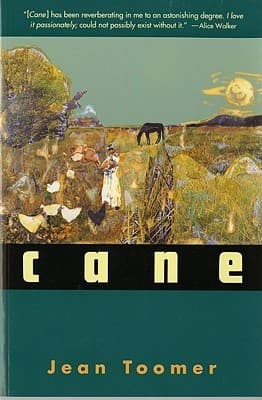
Jean Toomer's "Cane" is a collection of interconnected stories and poems that blends the rural Black South with the urban North, echoing the rhythms of nature and Africa.
Karintha is a woman of striking beauty in the rural South. She is so captivating that men are drawn to her from childhood. Her beauty, however, becomes a burden, as she is constantly desired and seen as an object. The story hints at her inner trouble and a deep, unfulfilled longing, perhaps for freedom or understanding beyond her situation. She had a child at fifteen, and in a disturbing scene, she throws the baby into a fire. This desperate act shows her deep psychological distress and the tragic results of her inability to find control or comfort in her life. This first sketch sets a tone of beauty mixed with pain and destructive forces in the Southern landscape.
Fern is another beautiful woman in the South. Her eyes have a deep, almost spiritual quality that mesmerizes men. They are drawn to her, seeking something they cannot name, often wanting physical intimacy. However, Fern remains distant and emotionally unattached, never finding true connection or satisfaction in these encounters. She longs for a deeper, perhaps spiritual, fulfillment that her suitors cannot give. The story suggests that her beauty, like Karintha's, is both a source of power and isolation. It leaves her always searching for an unknown comfort, her eyes showing a deep, almost cosmic sadness that men mistake for an invitation.
Rhobert is a deeply religious Black man, weighed down by his sins and a strong desire for salvation. He is always seeking purification, spending his life in prayer and self-denial. He believes that only through extreme devotion can he achieve grace. His wife, who is not named, quietly observes his spiritual struggles. The story shows him as so consumed by his religious fervor that he neglects worldly matters, including his own well-being and perhaps his family. His journey is one of intense spiritual search, almost to the point of obsession, highlighting the complex link between faith, suffering, and the search for meaning in the lives of Black Southerners.
This story focuses on a tragic love triangle involving Louisa, a Black woman, and two men: Tom Burwell, a Black man, and Bob Stone, a white man. Louisa is drawn to both, but their rivalry grows stronger under the oppressive Southern night. Tom, driven by jealousy and a sense of ownership, confronts Bob. The tension rises, fueled by racial hatred and the simmering violence of the Jim Crow South. The conflict ends in a brutal fight where Tom kills Bob. Tom is then lynched by a white mob, his body burned under the blood-red moon. Louisa is left to deal with the devastating results, symbolizing the destructive impact of racial and sexual tensions in the South.
Esther is a young Black woman in a Southern town, working in her father's store. From childhood, she is fascinated by Barlo, a charismatic, almost mystical preacher. As she gets older, her fascination with Barlo deepens, mixing with a new sexual awakening and confusion about her own identity and desires. She idealizes him, seeing him as a powerful, almost divine presence. Years later, she visits Barlo, now a disheveled and seemingly ordinary man, in a juke joint. The meeting shatters her idealized image, leaving her disappointed and unable to match her youthful dreams with the harsh reality. This highlights the challenges of self-discovery and the disappointment that can come with growing up.
Ralph Kabnis, a Northern-educated Black man, comes to a Black industrial school in rural Georgia as a teacher. He is deeply troubled, haunted by spiritual unease and an inability to connect with the Southern Black experience he finds. He struggles with his identity, feeling separate from both the white world and his ancestors' traditions. Kabnis is troubled by guilt, fear, and a sense of artistic paralysis. He seeks comfort in drinking and philosophical talks with the local Black community, including Father John, an old, almost mythical figure representing the suffering and endurance of the past. The story explores his internal fight to balance his intellect with his emotional and racial heritage, often through fragmented, poetic prose.
This section shifts from the rural South to the urban North, specifically Washington D.C.'s Seventh Street. It presents a vivid picture of Black urban life, marked by its energy, music, and a sense of both opportunity and struggle. The street is described as a 'brawling, sprawling, wide-awake' place, where Black culture thrives amid the realities of city life. The story highlights the differences between the perceived freedom of the city and the struggles of poverty, racial discrimination, and the search for identity. It acts as a bridge, showing the migration of Black people from the agricultural South to the industrial North and the new forms of expression and challenges they faced.
The poem uses stark, disturbing images to describe a Black woman's features by comparing them to instruments of racial violence. Her hair is like 'pine needles' and 'charred wood,' her lips like 'blood-burning' and 'gashed.' Her body is described with images of a 'lynching rope' and 'bleeding trees.' The poem is a chilling comment on how racial prejudice and violence twist perception, turning beauty into something brutalized and scarred. It captures the constant threat and psychological impact of lynching and racial terror on Black women in the South, even without explicitly stating a violent act.
The poem 'Beehive' uses the metaphor of a beehive to describe the busy activity and collective experience of Black people in a city. It evokes a sense of shared work, purpose, and perhaps a loss of individual identity within the larger community. The sounds and movements described are those of a busy, enclosed space, suggesting both productivity and confinement. It hints at the complex social structures and the constant hum of life in the city, where individuals contribute to a larger whole, yet their distinct voices might be lost in the collective drone. This piece continues to explore urban Black life, contrasting it with the more isolated, natural settings of the South.
Dan Moore is a Black man living in Washington D.C., deeply alienated and searching for meaning. He is drawn to Muriel, a young woman who attends a revival meeting. Dan feels a deep disconnect from the urban environment and the superficiality he sees around him. He struggles with his masculinity, his intellect, and his place in the world. He attends the revival meeting, watching Muriel and the fervent preacher, but he remains an outsider. He cannot fully take part or find the spiritual comfort he wants. His internal thoughts show a deep frustration and a longing for a more authentic life, highlighting the psychological cost of urban alienation and racial identity.
Paul, a light-skinned Black man, and Bona, a white woman, attend a university in Chicago. Their relationship faces racial tension and societal judgment, which Paul struggles to handle. Bona is deeply in love with Paul, but he is reserved and intellectually distant, always aware of the racial implications of their bond. The story explores the anxieties and desires within their interracial romance, set in a Northern city that, while seemingly more liberal than the South, still holds deep-seated prejudices. Paul's internal conflict reflects the broader challenges of identity and belonging for Black individuals in a racially divided society, and the pressure of navigating such a relationship.
In the final section, 'Kabnis,' Karintha from the opening story is mentioned, though not directly present. Her tragic beauty and unfulfilled desires echo through Kabnis's own spiritual and existential struggles. As Kabnis deals with the past and the weight of his racial heritage in the rural South, Karintha becomes a symbol of the suffering and lost potential of Black women. Her story, along with those of Fern and Esther, highlights the themes of beauty, desire, and destructive forces in the Southern landscape, showing how the past continues to affect the present experiences of Black individuals.
Within 'Kabnis,' Father John, an ancient, blind Black man who works at the industrial school, represents the deep historical memory of slavery and the Black experience. He delivers a powerful, almost prophetic sermon to Kabnis and others. He speaks in fragmented, mystical language about his people's suffering, resilience, and spiritual depth. His words are a direct link to the past, filled with images of bondage, toil, and the enduring spirit of Black Americans. Father John's presence and sermon offer a deep, rooted understanding of Black identity and spirituality. This contrasts with Kabnis's intellectual anxieties, even as Kabnis struggles to fully grasp it.
The Supporting
Karintha's arc is tragic and static, her beauty leading to her downfall and a desperate, violent act, symbolizing a lost potential.
The Supporting
Fern's arc is one of perpetual yearning and emotional detachment, never finding the true connection she subconsciously seeks.
The Supporting
Louisa's arc is one of a victim caught in a larger web of racial and sexual violence, left to bear the consequences of others' actions.
The Protagonist
Kabnis grapples with his identity and spiritual alienation, seeking connection to his roots but ultimately remaining a figure of unresolved tension.
The Supporting
Father John's arc is static, serving as a timeless embodiment of historical memory and spiritual endurance.
The Protagonist
Dan's arc is one of internal struggle and alienation, seeking but not finding true connection or resolution in the urban setting.
The Protagonist
Paul's arc involves navigating the complexities of an interracial relationship and his own racial identity, leaving him in a state of unresolved tension.
The Supporting
Barlo's arc is seen through Esther's eyes, transforming from an idealized, powerful figure to a disappointing, ordinary man.
Toomer often explores how the beauty of Black women, especially in the South, becomes a source of both allure and great suffering. Characters like Karintha and Fern are objectified and desired, but this attention often leads to their isolation, exploitation, or tragic ends. Their beauty is not empowering but a burden, drawing a destructive gaze that ignores their inner lives and agency. 'Blood-Burning Moon' further shows this, as Louisa's desirability to both Black and white men leads to a violent, racially charged climax. This theme highlights the unique pressures and dangers faced by Black women in a society that both fetishizes and devalues them.
“Karintha, at twelve, was a wild flash that could not be caught. Lord, she was beautiful!”
'Cane' deeply examines the complexities of Black identity, especially for those moving from the rural South to the urban North. Characters like Ralph Kabnis and Dan Moore struggle with a deep sense of alienation—from their heritage, their communities, and often themselves. Kabnis, a Northern-educated Black man in the South, feels separate from his ancestors' spiritual depth and the realities of Southern Black life, yet also separate from the white intellectual world. Paul, in 'Bona and Paul,' deals with his light-skinned identity and the pressures of an interracial relationship in Chicago. This theme emphasizes the psychological cost of racial prejudice and the search for an authentic self in a racially fragmented society.
“Ralph Kabnis, looking at the stars, saw not stars, but God's eyes. God, he thought, is a ghost. The world is a ghost. I am a ghost.”
A main theme is the rural South as a fading, yet spiritually strong, landscape, and the urban North as a harsh, often isolating reality. The Southern sections are rich with natural images, spiritual longing, and a sense of deep, though tragic, history. Toomer suggests that the unique Black culture and spirituality nurtured in the South are slowly being lost to modernization and migration. The Northern sections, like 'Seventh Street' and 'Box Seat,' show a landscape of asphalt and steel, where individuals like Dan Moore struggle with anonymity and a loss of connection. The book implicitly asks what is lost and gained in this migration, and whether true spiritual or cultural fulfillment can be found in the urban environment.
“Seventh Street is a brawling, sprawling, wide-awake strumpet. ... The Dixie Pike has grown from a goat path in Georgia to a highway through the Carolinas.”
Many characters in 'Cane' are on a spiritual quest, often seeking a deeper meaning or connection that they cannot find. Rhobert is consumed by his strong desire for salvation, while Fern and Karintha long for an unnamed spiritual comfort. Esther idealizes Barlo as a spiritual figure, only to be disappointed by his ordinary reality. Ralph Kabnis's struggles are deeply spiritual, a search for a 'soul' that he feels he lacks. This theme highlights the longing for transcendence and meaning in the face of suffering, and the often unfulfilled nature of these quests. It suggests that true spiritual fulfillment is complex and not easily found, especially within societal pressures.
“Her eyes, unusually long, and drawn into a sort of almond shape, rested on men with a strange stillness... It was as if the soul of her came up to sit in the pupils of her eyes and yearn at the men.”
The lasting impact of slavery and widespread racial violence is a fundamental theme, particularly in the Southern sections. The land itself seems to hold the echoes of past suffering, and the threat of lynching and racial terror is always present, as tragically shown in 'Blood-Burning Moon.' Father John, in 'Kabnis,' embodies the historical memory of this suffering. His words powerfully show the endurance of a people scarred by generations of oppression. The poem 'Portrait in Georgia' chillingly illustrates how racial violence distorts perception, turning Black beauty into images of brutality. This theme underscores the deep historical wounds that continue to shape the lives and minds of Black Americans.
“White blood and black blood, song of the cane. The sun, moon, and stars, and the earth, and the seasons—they are all in the cane.”
Toomer uses evocative, sensory language to create vivid, dreamlike descriptions rather than straightforward narrative.
Toomer's prose is highly impressionistic and poetic, relying heavily on imagery, symbolism, and sensory details to convey mood and meaning. Rather than linear storytelling, he crafts 'sketches' that evoke emotions, landscapes, and character states of mind. This device allows him to explore complex themes of race, identity, and spirituality through suggestion and atmosphere, creating a rich, almost musical quality in the text. It blurs the lines between poetry and prose, inviting the reader to experience the world of 'Cane' emotionally and intuitively rather than purely logically, reflecting the subjective inner lives of his characters.
The book seamlessly transitions between short stories, vignettes, and poems to create a multifaceted narrative.
One of the most distinctive plot devices in 'Cane' is its hybrid form, moving fluidly between short stories, poetic interludes, and dramatic sketches. This interweaving allows Toomer to explore similar themes and motifs from different angles, enriching the overall tapestry of the black experience he portrays. The poems often distill the emotional essence of the preceding or following prose, providing moments of lyrical reflection or stark commentary. This structure reflects the fragmented yet interconnected nature of black life in America, and prevents a single, monolithic narrative from dominating, instead presenting a mosaic of voices and experiences.
Natural elements like cane, dusk, and fire are imbued with symbolic meaning, reflecting human emotions and societal conditions.
Toomer extensively uses natural imagery, particularly elements of the Southern landscape, as powerful symbols. Sugarcane, for instance, represents the beauty, sweetness, and labor of the South, but also the pain and exploitation associated with its history. Dusk and twilight often symbolize transitions, ambiguity, and the merging of different states of being, reflecting the characters' internal conflicts. Fire can represent both destruction and purification, as seen in Karintha's tragic act and the lynching in 'Blood-Burning Moon.' These natural symbols connect the characters' inner lives to their environment, grounding their experiences in the rich, often violent, Southern soil.
Characters and events often take on larger-than-life, almost legendary qualities, blurring the line between reality and myth.
Many characters in 'Cane,' particularly in the Southern sections, are presented with a folkloric or mythic quality. Karintha and Fern, with their mesmerizing beauty and enigmatic presence, feel less like ordinary individuals and more like archetypes or legends. Figures like Barlo and Father John possess a mystical aura, embodying ancestral wisdom or spiritual power. This device elevates the personal struggles of the characters to a broader, more universal level, connecting them to the deep cultural and spiritual traditions of black oral storytelling. It imbues the narrative with a timeless quality, suggesting that these experiences are part of a larger, enduring human and racial saga.
“Pine-needles are smooth and soft to the feet. The red soil of Georgia is a delight to the eye.”
— Opening lines of 'Karintha', setting a sensory tone for the natural environment.
“Karintha, at fifteen, an enigma. . . . She was a beautiful embodiment of the symbol, flesh, and the word.”
— Describing the elusive and captivating nature of Karintha, a central figure in the first story.
“Her body was a song. . . . Her soul a growing thing, reaching for the light.”
— Part of the lyrical description of Fern, emphasizing her spiritual and physical allure.
“Face flowing into her hair, her eyes into the soft clouds, her lips into the red earth.”
— A poetic description of Fern's connection to nature and her almost mystical presence.
“Money burned the pockets of the men, and restlessly they stirred, and grew angry.”
— Depicting the frustration and economic hardship of black men in 'Blood-Burning Moon'.
“Men were walking in the cane. . . . They were going to burn her, to burn her, to burn her.”
— The chilling climax of 'Blood-Burning Moon', foreshadowing the lynching.
“The cane-brake is a mile long. It is a mile wide. It is a mile high.”
— A recurring image in 'Kabnis', emphasizing the overwhelming and oppressive nature of the cane fields.
“White faces, pain-paled, and dark faces, pain-paled, and faces that were neither white nor dark, but a blend of both.”
— Describing the diverse and suffering faces in the South, hinting at racial ambiguity.
“Cotton-bolls like white birds flying. . . . The sun a red ball. . . . Sky, a blue bowl.”
— Sensory imagery from 'Cotton Song', evoking the agricultural landscape and the labor within it.
“Her soul is like a little flower, that has sprung up in the midst of a great desert.”
— A metaphor used to describe the fragility and resilience of a woman's spirit.
“The earth is a mother. She is a lover. She is a friend.”
— A poetic reflection on the profound connection between humanity and the natural world.
“Come, brother, let us walk in the cane. Let us walk in the cane and sing.”
— An invitation to embrace and find solace within the difficult Southern landscape, from 'Harvest Song'.
“He saw the South as a land of spiritual decay, of beauty and brutality, of ancient wrongs and new hopes.”
— A summary of the complex and often contradictory vision of the American South in the novel.
“The cane-brake, it is a mystery. . . . It is a song. It is a dream.”
— Reflecting on the multifaceted symbolism of the cane fields, a central motif of the book.
Ready to see how well you understood this book? Take our interactive quiz with 10 questions.
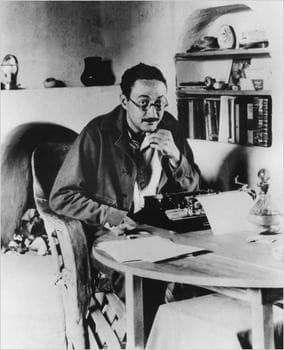
Biography coming soon.

Ashley Antoinette
4.6

Mark McDonald
4.4
Luo Guanzhong
4.4
Mia McKenzie
4.3

Dorothy Parker
4.3

Joaquim Maria Machado de Assis
4.3

James Thurber
4.2

Terry Kay
4.2