“The problem is that I cannot be the person I was, and I cannot be the person I am. I am stuck in the middle, and it is a terrible place to be.”
— Peter contemplating his mid-life crisis and professional stagnation.

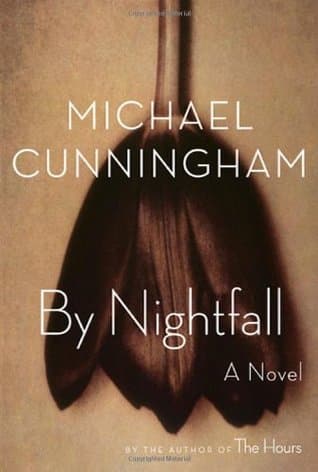
Michael Cunningham (2010)
Genre
Literary Fiction / Creativity
Reading Time
240 min
Key Themes
See below
Sign in to track this book
A Manhattan art dealer's ordered life and idea of beauty unravels with the arrival of his wife's younger brother, forcing him to confront the nature of his own desires.
Peter Harris, a successful art dealer in his mid-forties, lives a comfortable and seemingly content life in a SoHo loft with his wife, Rebecca, a respected literary editor. Their daughter, Bea, is away at college. Their routine and carefully arranged existence are suddenly upended when Rebecca's younger brother, Ethan, whom they call Mizzy, arrives for an extended visit. Mizzy, a beautiful but troubled twenty-three-year-old, has a history of drug problems and is currently adrift, having recently left art school. His presence immediately introduces tension and an unsettling energy into the Harris household, challenging Peter's perception of his own life and the beauty he values.
As Mizzy settles into their loft, Peter finds himself drawn to and repulsed by the young man. Mizzy's striking good looks, his raw, unpolished artistic talent (he doodles incessantly), and his general aimlessness begin to consume Peter's thoughts. Peter projects onto Mizzy an idealized version of lost youth and artistic purity, seeing him as a living embodiment of the kind of uncorrupted beauty he seeks in the art world but rarely finds. This fascination quickly borders on obsession, causing Peter to constantly observe Mizzy, interpret his every move, and question his own desires and the choices he's made in his life and career.
Peter and Rebecca host a dinner party for their circle of sophisticated, arts-oriented friends. The conversation revolves around art, literature, and the compromises of adulthood. Mizzy is present, mostly quiet but observant, his youthful energy a stark contrast to the comfortable cynicism of the older guests. Peter finds himself acutely aware of Mizzy's presence, constantly trying to gauge his reactions and shield him from potential judgment. The evening highlights the cracks in Peter and Rebecca's seemingly perfect marriage, as their interactions with each other and with Mizzy expose underlying resentments and unspoken desires, particularly Peter's growing preoccupation with his brother-in-law.
Peter takes Mizzy to a museum, hoping to bond with him over art and perhaps steer him towards a more defined artistic path. Peter, the art dealer, points out masterpieces, explaining their significance and market value. Mizzy, however, seems more interested in the raw, immediate impact of certain pieces, drawing quickly in his sketchbook, capturing essence rather than analyzing technique or historical context. This interaction further highlights the generational and philosophical gap between them. Peter sees Mizzy's unrefined talent as both promising and frustrating, a stark reminder of the artistic purity he feels he has lost or compromised in his own commercial career, intensifying his internal conflict about the meaning of art and beauty.
Rebecca, while loving her brother, is more practical about Mizzy's situation. She is concerned about his lack of direction and his history of instability, fearing he might relapse into drug use or simply remain aimless. She also notices Peter's unusual intensity and preoccupation with Mizzy, finding it unsettling. While she initially dismisses it as a kind of mentorship or paternal concern, she begins to pick up on a deeper, more complicated undercurrent in Peter's gaze and behavior towards her brother. Her concern for Mizzy is genuine, but she also senses a shift in Peter's attention away from their shared life and towards this new, intoxicating presence.
In a moment of vulnerability and confusion, Peter confesses his overwhelming attraction to Mizzy to his close friend, David. This confession is not explicitly sexual but rather an admission of profound captivation and longing for the youth, beauty, and unburdened potential he perceives in Mizzy. David listens with a mix of understanding and concern, recognizing the dangerous territory Peter is entering. This admission, even to a friend, makes Peter's feelings more real and tangible, further entangling him in his obsession. He grapples with the ethical implications of his attraction, particularly given Mizzy's vulnerability and his relationship as Rebecca's brother, intensifying his internal turmoil.
One evening, Mizzy leaves the loft without telling anyone and doesn't return for several hours. Peter is thrown into a state of intense panic and anxiety, far beyond what might be expected from a brother-in-law's temporary absence. He imagines the worst, convinced Mizzy has relapsed or is in danger. Rebecca, though worried, is more composed, having dealt with Mizzy's unpredictability before. Peter's disproportionate reaction makes it clear, even to himself, that his feelings for Mizzy are not merely paternal or artistic admiration, but something far more potent and personally destabilizing. When Mizzy eventually returns, unharmed and oblivious to the turmoil he caused, Peter feels a profound relief mixed with lingering unease about his own emotional state.
Peter eventually sees a collection of Mizzy's drawings and paintings, beyond the casual doodles. He is stunned by their raw power, honesty, and emotional depth. Mizzy's art is not merely derivative but possesses a unique, compelling voice. This discovery both validates Peter's initial intuition about Mizzy's specialness and further complicates his feelings. He sees the potential for genuine genius, confirming Mizzy's status as a true artist, unburdened by commercial concerns — everything Peter feels he has lost. This revelation deepens Peter's sense of longing and regret, intensifying his identification with Mizzy as a symbol of uncorrupted artistic spirit.
One evening, Peter finds Mizzy alone in the loft. They share an intimate, charged conversation about art, life, and vulnerability. The air between them is thick with unspoken desire and emotional intensity. Peter is on the verge of expressing his feelings, or perhaps acting on them, recognizing the dangerous precipice he stands on. Mizzy, while perhaps aware of the undertones, remains innocent and open, his vulnerability only heightening Peter's internal struggle. In this moment, Peter consciously pulls back, choosing restraint over indulgence, realizing the potential for irreparable harm. This decision marks a significant internal shift, as he confronts the boundaries of his desires.
Mizzy eventually decides to leave New York, having found a new direction or simply needing to move on. His departure is quiet and somewhat abrupt, leaving Peter with a profound sense of emptiness and loss. The loft feels different, the air less charged. Peter processes the intense emotional journey he has undergone. Mizzy's visit has irrevocably altered Peter's perception of himself, his marriage, his career, and the very nature of beauty and desire. He is forced to confront the compromises he has made, the parts of himself he has suppressed, and the true cost of his carefully constructed life. The novel concludes with Peter contemplating the lingering effects of Mizzy's presence, forever changed by the encounter.
The Protagonist
Peter begins as a man seemingly content but subtly dissatisfied; Mizzy's arrival forces him to confront his suppressed desires, leading to a profound re-evaluation of his life, marriage, and artistic ideals.
The Supporting
Rebecca starts as outwardly content but grows increasingly aware of her husband's emotional distance and the unspoken tensions Mizzy's presence brings to their marriage.
The Catalyst/Supporting
Mizzy arrives as a lost young man and leaves with a slightly clearer sense of direction, but his primary arc is as a catalyst for Peter's transformation.
The Mentioned
Bea's presence is static; she functions primarily as a symbol.
The Supporting
David's character remains largely static, serving as a catalyst for Peter's self-reflection through their conversations.
The novel explores the subjective and often unsettling nature of beauty, particularly in art and youth. Peter, an art dealer, constantly grapples with the commercialization of art versus its intrinsic value and authenticity. Mizzy, with his raw talent and striking appearance, becomes a living embodiment of 'pure' beauty, untainted by the market. Peter's obsession with Mizzy is as much about an idealized form of beauty and artistic potential as it is about physical attraction, forcing him to question the 'beauty' he curates in his gallery versus the disruptive beauty he finds in Mizzy. This theme is central to Peter's internal conflict, especially during the museum visit where he tries to explain art to Mizzy, only to realize Mizzy experiences it more viscerally.
“He wants art to be dangerous again, if only for him. He wants it to be a force that threatens the elegant, carefully constructed architecture of his life.”
Peter's story is an examination of midlife disillusionment. Approaching fifty, he questions the choices he's made, the compromises of his career, and the emptiness of his comfortable, affluent life. Mizzy's youthful energy, potential, and perceived freedom from responsibility act as a mirror, reflecting Peter's own regrets and unfulfilled desires. This theme appears in Peter's constant introspection, his internal monologues about the meaning of success, and his yearning for a lost sense of purpose or passion. His attraction to Mizzy is deeply intertwined with his longing to recapture a sense of youth and possibility he feels has slipped away.
“He thinks about the ways in which his life has become a beautiful, well-appointed cage.”
The novel explores the complexities of desire, particularly Peter's intense and ethically fraught attraction to Mizzy. This is not merely a physical attraction but a deep, overwhelming fascination that blurs the lines between admiration, envy, and forbidden longing. The narrative explores the internal struggle of a man confronting desires he considers inappropriate and dangerous, especially given Mizzy's vulnerability and his relationship to Rebecca. Peter's obsession forces him to confront his own moral compass, the boundaries of acceptable behavior, and the potential for self-destruction. The tension between his desire and his restraint forms the emotional core of the novel, particularly during moments of intense proximity with Mizzy.
“It is not sexual, not precisely. It is something deeper, more elemental: a desire to merge, to reclaim some lost part of himself.”
Peter and Rebecca's life initially appears ideal: successful careers, a beautiful loft, a college-age daughter, and a social circle. However, Mizzy's arrival exposes the underlying cracks and discontents within their seemingly perfect existence. The novel reveals how carefully constructed such lives can be, and how easily they can be destabilized by external forces or internal desires. Their marriage, while comfortable, lacks emotional depth, and Peter's internal monologue reveals a profound sense of dissatisfaction beneath the surface. This theme highlights the often-hidden realities behind outwardly successful lives and the compromises people make to maintain an illusion of happiness.
“They had built a beautiful house, and now the wind was beginning to blow through it.”
Mizzy's arrival precipitates Peter's profound internal crisis.
Mizzy functions as a classic catalyst character. He is not the protagonist, nor does he undergo a significant personal arc in the traditional sense, but his mere presence and inherent qualities (youth, beauty, artistic potential, vulnerability) trigger the central conflict within Peter. He acts as a mirror, reflecting Peter's anxieties about aging, authenticity, and unfulfilled desires. Mizzy's lack of clear direction and his raw, unpolished nature stand in stark contrast to Peter's carefully curated life, forcing Peter to confront the compromises he has made and the true nature of his own desires.
Peter's stream of consciousness reveals his complex inner world.
The novel relies heavily on Peter's rich and detailed internal monologue. Much of the story unfolds within his mind, as he observes Mizzy, dissects his own feelings, analyzes art, and reflects on his life. This allows the reader deep access to Peter's complex thoughts, his intellectualizations, his desires, and his moral struggles. The internal monologue is crucial for conveying the nuances of his obsession, the depth of his disillusionment, and the ethical tightrope he walks, often contrasting with the seemingly calm exterior he presents to the world.
Art and beauty are used as symbolic representations of Peter's internal state and desires.
Throughout the novel, art and beauty are not merely subjects of discussion but powerful symbols. Mizzy himself becomes a living symbol of uncorrupted beauty and artistic purity, representing everything Peter feels he has lost or compromised. The art Peter deals in, often commercially successful but lacking soul, symbolizes his own professional disillusionment. Mizzy's raw drawings, in contrast, symbolize authentic, unbridled creativity. This pervasive symbolism allows the author to explore themes of authenticity, desire, and the search for meaning beyond the literal narrative, deepening the emotional and intellectual impact of Peter's journey.
Rebecca and Mizzy serve as foils, highlighting different aspects of Peter's character.
Rebecca and Mizzy function as foils to Peter, each highlighting different facets of his personality and internal conflict. Rebecca, with her pragmatism, stability, and adult responsibilities, represents the life Peter has chosen and the compromises he has made. Mizzy, on the other hand, embodies youth, raw potential, and an almost dangerous freedom from convention, representing Peter's lost youth and suppressed desires. The contrast between these two figures, and Peter's relationship to each, effectively emphasizes his midlife crisis, his longing for authenticity, and the ethical dilemmas he faces.
“The problem is that I cannot be the person I was, and I cannot be the person I am. I am stuck in the middle, and it is a terrible place to be.”
— Peter contemplating his mid-life crisis and professional stagnation.
“Art, Peter thinks, is really about the attempt to make sense of the world, to give it form and meaning, even if it has none.”
— Peter reflecting on his work as an art dealer and his brother-in-law's art.
“He misses the days when he could simply look at a painting and feel something, without having to analyze its market value, its provenance, its place in the grand narrative of art history.”
— Peter's lament about his professional jadedness.
“Maybe love is just the act of seeing another person, truly seeing them, and accepting what you see.”
— Peter's evolving understanding of his relationship with his wife, Rebecca.
“The city, at night, is a different animal. It breathes, it hums, it holds secrets.”
— Peter observing New York City from his apartment window at night.
“He wonders if everyone feels this way, this slow erosion of the self, this gradual slipping away of the person they thought they were.”
— Peter's internal monologue about aging and self-doubt.
“To be an artist, he thinks, is to live with a certain amount of delusion, a necessary and often beautiful delusion, that what you are doing matters.”
— Peter's thoughts on his brother-in-law's artistic ambition.
“It's a particular kind of torture, to love someone who is slipping away, to watch them become someone else, and to be powerless to stop it.”
— Peter's feelings about his brother-in-law's drug addiction and decline.
“Beauty is not always comforting. Sometimes it's a reminder of what you've lost, or what you can never have.”
— Peter's complex reaction to a beautiful piece of art.
“He thought he knew who he was, but then the light shifted, and suddenly everything looked different.”
— Peter's realization about his self-perception changing as he ages and experiences new challenges.
“The past is never really past. It's always there, humming just beneath the surface, waiting for a chance to reassert itself.”
— Peter reflecting on old memories and their persistent influence.
“There are times when you just have to surrender to the chaos, let it wash over you, and hope you come out on the other side.”
— Peter grappling with the unpredictable nature of life and relationships.
“Maybe the secret to happiness isn't finding what you want, but wanting what you have.”
— Peter's quiet contemplation on contentment and desire.
Ready to see how well you understood this book? Take our interactive quiz with 10 questions.

Biography coming soon.