“The world is so complicated that it's simple.”
— A reflection on the baffling yet straightforward nature of existence.


Chester Himes (2011)
Genre
Fiction
Reading Time
250 min
Key Themes
See below
Sign in to track this book
In a Harlem on the verge of collapse, two seasoned detectives confront a maze of violence and racial tension, where a blind man's shot sparks a city's descent into madness.
The novel begins with a seemingly random act of violence on a busy Harlem street. A blind man, later identified as Robert Jones, pulls out a pistol and fires it, injuring a young white man named Larry. The incident immediately causes panic and a riot among onlookers, who are already tense from the hot summer and racial conflicts. Detectives Coffin Ed Johnson and Grave Digger Jones, nearby, are called to the scene, but the initial chaos makes it hard to know exactly what happened or why. The blind man is caught, but his reason remains a mystery, setting the stage for the complex and often absurd investigations that follow.
While Coffin Ed handles the aftermath of the blind man's shooting, Grave Digger Jones gets a separate, equally confusing case. A worried church member reports her husband, Reverend Samuel Short, missing. At the same time, the detectives learn of a white woman, Mrs. Emily Mae Perkins, who has run away from her husband, Reverend Henry Perkins, a white minister from the South. These two seemingly unrelated disappearances, one Black and one white, begin to connect as the detectives look deeper, suggesting a more complex set of relationships and reasons than first thought. The racial dynamics of Harlem are immediately clear as the police deal with the community's distrust.
Robert Jones, the blind man, is questioned, but his story of the shooting is unclear and contradictory. He claims he was trying to shoot a white man who was bothering a Black woman, but his description does not fully match witness accounts. His blindness makes his reasons even more vague; was it a random act, a mistaken attempt at heroism, or something else? Coffin Ed and Grave Digger struggle to understand his statements, adding to the growing frustration and the feeling that Harlem itself is becoming irrational. The victim, Larry, is stable, but the reason for the attack is still unknown.
The investigation into Mrs. Emily Mae Perkins's disappearance leads Grave Digger and Coffin Ed to a hippie commune in Harlem, a stark contrast to her husband's traditional church. They find she has been living there, seemingly adopting a free-spirited lifestyle. This discovery further complicates the case, bringing in elements of counter-culture, drug use, and sexual freedom into Harlem's already tense racial atmosphere. The detectives find themselves in a world that challenges their usual understanding of right and wrong, making it harder to predict the reasons and actions of those involved.
As the detectives continue their separate investigations, subtle links start to appear between the missing Reverend Samuel Short and Mrs. Emily Mae Perkins. It becomes clear that Reverend Short was involved in some illegal activities, possibly related to prostitution or drug dealing, and that Mrs. Perkins might have been connected to him or his operations. The lines between the two cases blur, suggesting a deeper plot or a series of bad coincidences that connect the Black minister's disappearance with the white minister's runaway wife. The detectives realize their cases are not as separate as they first seemed.
The underlying racial tensions and the general feeling of unrest in Harlem finally explode into widespread rioting. The initial incident with the blind man, along with other small provocations and the extreme heat, fuels the outburst of violence. Coffin Ed and Grave Digger are caught in the middle, trying to keep order amidst the chaos. The streets become battlegrounds, with looting, fires, and clashes between residents and police. The detectives' main focus shifts from solving individual crimes to simply surviving and trying to calm the growing violence, showing Harlem's fragile state.
During a more intense questioning, Robert Jones, the blind man, finally shares a clearer and more personal reason for his actions. He admits he was trying to shoot a white man, but not just any white man. He believed he was shooting the man who had wronged a Black woman he knew, a woman who had been used and abused. His blindness, rather than being a hindrance, becomes a symbol of his anger and his desire for justice, however misguided. His confession adds a layer of tragic irony to the initial shooting, making it a desperate act of revenge rather than a random incident.
The detectives uncover the full extent of Reverend Samuel Short's criminal business. He was not just a missing minister but a pimp and drug dealer who exploited vulnerable women, both Black and white, including Mrs. Emily Mae Perkins. His disappearance is revealed to be a result of his own dangerous dealings, rather than a simple missing person case. The discovery shows the hypocrisy and corruption that can exist even within seemingly respectable groups, further blurring the lines between good and evil in Harlem's chaotic setting. His death is eventually found, a result of his illegal activities.
Mrs. Emily Mae Perkins's story is fully revealed. She was not just a runaway wife but had become caught up with Reverend Short through his illegal activities. She had sought refuge and perhaps excitement in the commune, but her connection to Short led her into a dangerous world. Her initial flight from her husband was partly due to her disappointment with her life and her desire for something more, but her later involvement with Short put her in grave danger. The detectives piece together how she became a victim of Short's schemes and how her presence complicated the overall investigation.
As the riots eventually die down, Harlem is left in ruins. Buildings are burned, lives are lost, and the community is deeply hurt. Coffin Ed and Grave Digger look at the damage, thinking about the widespread madness that seems to have taken over the city. Despite solving individual cases, the larger issues of racial injustice, poverty, and systemic corruption remain. The detectives are left feeling useless, realizing that their efforts to keep order are often overwhelmed by the deeper social problems that trouble Harlem. The blind man's shot, in a way, represented society's wider blindness to these issues.
In the novel's end, Coffin Ed and Grave Digger finish their investigations, but many questions remain about the true reasons behind various actions and the final impact of the chaos. The blind man's actions, Reverend Short's death, and Mrs. Perkins's journey all come together to show a society on the edge. The detectives, despite solving the crimes, are left with a strong sense of the absurdity and irrationality of human behavior, especially when driven by desperation, prejudice, and systemic failures. Harlem's "madness" continues, even after the cases are closed.
The Protagonist
Coffin Ed remains largely consistent in his methods, but the sheer chaos of this case pushes him to the brink of his endurance and questions the efficacy of his violent justice.
The Protagonist
Grave Digger's arc sees him grappling with the increasing absurdity and irrationality of Harlem, forcing him to confront the limits of his ability to impose order.
The Supporting
Robert's arc moves from an enigma to a tragic figure whose confused actions are revealed to stem from a desperate, albeit misguided, desire for justice.
The Antagonist/Mentioned
Reverend Short's character is revealed retrospectively, exposing his descent from a respected figure to a criminal whose actions lead to his demise.
The Supporting
Mrs. Perkins's arc sees her seeking freedom but inadvertently falling into a dangerous world, revealing the consequences of her choices and vulnerability.
The Mentioned
Reverend Perkins's arc is less about personal development and more about his reaction to his wife's disappearance, which exposes the widening gap between his world and Harlem's.
The Mentioned
Larry's role is primarily as a catalyst, his injury setting off the chain of events without a significant personal arc.
The Supporting
Lieutenant Anderson's arc involves managing the chaos of Harlem while trying to support his black detectives, often caught between their street justice and official protocol.
The novel shows Harlem as a place where logic and order have broken down, replaced by a widespread sense of madness and absurdity. From the blind man's random shooting to the convoluted intertwining of the two missing persons cases, events often defy rational explanation. Coffin Ed and Grave Digger constantly deal with the irrationality of the crimes and the people they meet, reflecting a world where human behavior is driven by desperation, confusion, and a lack of clear purpose. The escalating riots are the ultimate sign of this societal breakdown, where violence becomes a senseless, self-perpetuating cycle, as seen in the widespread looting and burning.
“It was getting so crazy in Harlem that a blind man with a pistol was just another everyday occurrence.”
Beneath the chaos and absurdity is a deep current of racial injustice and the systemic oppression faced by the Black community in Harlem. The novel subtly, and sometimes openly, criticizes the conditions that lead to such desperation and violence. The blind man's reason, however misguided, comes from a desire for justice against a white man he believes wronged a Black woman. The riots themselves are an explosion of long-held racial tensions and frustrations with a society that offers little hope or opportunity. The detectives, as Black men in a white-dominated police force, constantly navigate racial prejudice from both inside and outside the community.
“The white folks didn't care what happened in Harlem so long as it stayed in Harlem.”
The characters and groups in the novel often operate in a morally gray area, blurring the lines between good and evil. Reverend Samuel Short, a supposed man of God, is revealed to be a pimp and drug dealer, showing the hypocrisy that can exist within respected community figures. Even Coffin Ed and Grave Digger, while committed to justice, often use violent and illegal methods, suggesting that in Harlem's chaotic environment, conventional morality is a luxury. The novel questions whether true 'good' can exist when society itself is so corrupt and broken, forcing characters to make difficult, often morally compromised choices.
“In Harlem, good and evil were just two sides of the same crooked nickel.”
A main theme is the difficulty, if not impossibility, of finding objective truth in a world full of unreliable storytellers, conflicting accounts, and personal biases. The blind man's story of the shooting is unclear because of his physical condition and emotional state. The various characters involved in the disappearances offer fragmented and often self-serving versions of events. Coffin Ed and Grave Digger are constantly forced to piece together a coherent story from different and contradictory information, showing how subjective and elusive reality can be, especially in a community where trust is scarce and reasons are often hidden. The novel suggests that the 'truth' is often less important than the story people choose to believe.
“Truth was like a ghost in Harlem; everybody talked about it, but nobody ever saw it plain.”
A literal and symbolic catalyst for chaos and a metaphor for societal blindness.
The titular 'blind man with a pistol' is a potent symbol that drives the initial plot and encapsulates the novel's themes. Literally, Robert Jones's blindness makes his actions seem random and absurd, challenging the detectives to understand his motives beyond simple sight. Symbolically, he represents the blindness of society to its own injustices, prejudices, and the underlying causes of the chaos. His act of firing a pistol, a tool of sight-dependent violence, highlights the irony and futility of trying to achieve justice without true understanding or vision, setting off a chain reaction of events that expose Harlem's deeper madness.
Two seemingly unrelated cases merge, revealing deeper connections and complexity.
The plot device of intertwining two seemingly separate cases—the disappearance of Reverend Samuel Short and the runaway Mrs. Emily Mae Perkins—serves to demonstrate the interconnectedness of Harlem's underworld and the often-hidden relationships between its inhabitants. This narrative structure allows the detectives to uncover a broader network of crime and corruption than they might have if the cases were treated in isolation. It also emphasizes the idea that individual events are rarely isolated, but rather symptoms of a larger, more complex societal fabric, where racial, social, and criminal elements are constantly interacting and influencing one another.
The oppressive environmental conditions mirror and exacerbate the social unrest.
The oppressive summer heatwave is not merely a setting but a crucial plot device that mirrors and amplifies the rising social and racial tensions in Harlem. The physical discomfort of the heat acts as a catalyst for frayed nerves, short tempers, and ultimately, the explosion of widespread riots. This device creates a palpable sense of claustrophobia and impending doom, suggesting that the environment itself is conspiring to push the community to its breaking point. The riots, in turn, serve as a chaotic backdrop against which the individual crimes are investigated, making the detectives' work even more challenging and dangerous, while highlighting the systemic issues at play.
The detectives' iconic revolvers symbolize their brutal brand of justice.
Coffin Ed and Grave Digger's nickel-plated Colts are more than just weapons; they are iconic symbols of the detectives' distinctive brand of justice. These highly visible revolvers represent their willingness to use force and their reputation for swift, often brutal, retribution. The Colts serve as a constant reminder of the violent world they inhabit and their readiness to meet violence with violence. As a plot device, they underscore the detectives' methods and their role as enforcers of a harsh, street-level justice, often operating outside the conventional norms of law enforcement in a desperate attempt to maintain order.
“The world is so complicated that it's simple.”
— A reflection on the baffling yet straightforward nature of existence.
“It’s not what you do, it’s what people think you do.”
— A comment on perception versus reality in societal judgment.
“Everybody wants to be somebody, but nobody wants to be nobody.”
— A cynical observation about human ambition and the fear of insignificance.
“Sometimes a man can be too smart for his own good.”
— A warning about the pitfalls of overthinking or excessive cleverness.
“The only thing worse than a blind man with a pistol is a blind man with a pistol who thinks he can see.”
— A metaphorical statement about self-deception and the dangers of ignorance.
“Justice is a joke in this town, and the punchline is always on the poor.”
— A scathing critique of systemic injustice and inequality in the legal system.
“You can't solve a mystery if you don't know what you're looking for.”
— A detective's pragmatic insight into the challenges of investigation.
“Chaos is just order waiting to happen.”
— A philosophical take on the underlying patterns within apparent disorder.
“Hope is a dangerous thing, especially when you ain't got nothing else.”
— A somber reflection on the double-edged nature of hope in desperate circumstances.
“The truth ain't always pretty, but it's always the truth.”
— A straightforward declaration about the uncompromising nature of reality.
“Everybody got a secret, even if they don't know it themselves.”
— A comment on the hidden complexities and unspoken aspects of human lives.
“Sometimes you gotta make your own luck.”
— An encouragement for proactive action and self-reliance.
“The harder you look, the less you see.”
— A paradoxical observation about the limitations of intense focus, sometimes obscuring the obvious.
“Life's a bitch, and then you die. But sometimes, it's a bitch and you just keep on living.”
— A grim yet resilient perspective on enduring hardship.
Ready to see how well you understood this book? Take our interactive quiz with 10 questions.
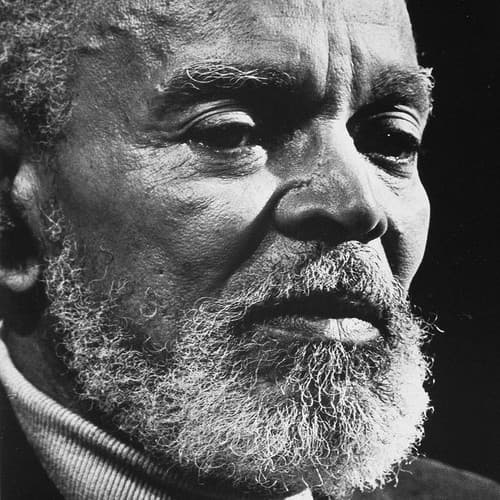
Chester Bomar Himes was an American writer. His works, some of which have been filmed, include If He Hollers Let Him Go, published in 1945, and the Harlem Detective series of novels for which he is best known, set in the 1950s and early 1960s and featuring two black policemen called Grave Digger Jones and Coffin Ed Johnson. In 1958 Himes won France's Grand Prix de Littérature Policière.

Ashley Antoinette
4.6

Mark McDonald
4.4
Luo Guanzhong
4.4
Mia McKenzie
4.3

Dorothy Parker
4.3

Joaquim Maria Machado de Assis
4.3
James Thurber
4.2

Terry Kay
4.2