BookBrief
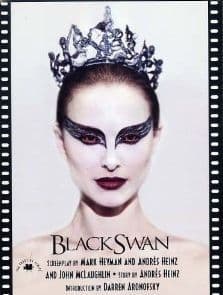
Black Swan cover
Archivist's Choice

Black Swan

Mark Heyman (2010)

Genre

Fiction

Reading Time

135 min

Key Themes

See below

Track Your Reading

Sign in to track this book

A ballerina's relentless pursuit of perfection for the dual role of the White and Black Swan blurs the line between reality and a terrifying descent into madness.

Synopsis

Nina Sayers, a demure and perfectionist ballerina, gets the lead role in 'Swan Lake.' Her director, Thomas Leroy, believes she embodies the innocent White Swan but lacks the sensuality and fire for the Black Swan. The pressure to portray both roles perfectly, combined with the arrival of a free-spirited new dancer, Lily, begins to unravel Nina's fragile mind. As Nina gets deeper into the role, she experiences increasingly vivid and disturbing hallucinations, blurring the lines between reality and delusion. Her obsession with perfection and her fear of being replaced by Lily drive her to extreme measures, leading to a climactic and tragic performance where she achieves ultimate artistic purity at a devastating personal cost.
Reading time
135 min
Difficulty
Medium
Pacing
Fast
Mood
Dark, Intense, Suspenseful, Psychological
✓ Read this if...
You enjoy psychological thrillers, stories about artistic obsession, or ballet narratives.
✗ Skip this if...
You are sensitive to dark themes, body horror, or intense psychological distress.

Plot Summary

The Audition

Nina Sayers, a meticulous and technically brilliant ballerina, auditions for the lead role of the Swan Queen in a new production of 'Swan Lake' directed by the demanding Thomas Leroy. The previous prima ballerina, Beth Macintyre, has been forced into retirement. Thomas challenges Nina, stating she embodies the innocent White Swan but lacks the sensuality and darkness required for the Black Swan. During her audition, Nina is distracted by Lily, a new, uninhibited dancer who has just arrived from San Francisco. Thomas criticizes Nina's performance, but later, after she confronts him about the role, he unexpectedly kisses her, then announces she has earned the part, much to her mother Erica's delight and her own contained excitement.

The Pressure Mounts

Nina throws herself into rehearsals, determined to prove herself worthy of the dual role. Thomas constantly pushes her to shed her inhibitions, particularly when embodying the Black Swan. He criticizes her lack of passion and urges her to 'lose herself' in the music. The pressure intensifies as Nina struggles to connect with the darker, seductive aspects of the character. She starts experiencing unsettling hallucinations: a rash appearing on her back, her reflection moving independently, and brief, distorted visions of herself. Her mother, Erica, a former ballerina who gave up her career for Nina, hovers over her, offering both support and suffocating control, further exacerbating Nina's anxiety.

Lily's Arrival and Influence

Lily, the new dancer, quickly establishes herself as a formidable presence in the company. She possesses a natural sensuality and freedom that Nina lacks, effortlessly embodying the Black Swan's allure. Thomas encourages Nina to observe Lily, suggesting she learn from her spontaneity. Nina finds herself both drawn to and threatened by Lily. She sees Lily as a rival for the lead role and a symbol of the uninhibited self she yearns to become. Lily's presence intensifies Nina's paranoia and hallucinations, as she begins to believe Lily is deliberately trying to sabotage her, even seeing Lily's face superimposed onto her own in the mirror.

Sexual Awakening and Confusion

Thomas's constant prodding for Nina to access her sexuality for the Black Swan role, combined with Lily's overt confidence, begins to unlock Nina's suppressed desires. She has a vivid, confusing dream where she is intimate with Lily, which further blurs her perception of reality. The next day, Lily invites Nina out, and they go to a club where Nina experiments with drugs and alcohol, leading to a night of reckless abandon. Nina wakes up in her bed, believing she had a passionate encounter with Lily, only for Lily to later deny it, claiming Nina was too drunk to remember. This fuels Nina's self-doubt and makes her question her own sanity, as the line between what happened and what she imagined becomes indistinguishable.

Beth's Breakdown

Beth Macintyre, the former prima ballerina, appears increasingly unstable after being replaced by Nina. Nina visits her in the hospital after Beth is struck by a taxi, an apparent suicide attempt. Beth, disfigured and bitter, accuses Nina of stealing her role and warns her about Thomas's manipulative nature. She even bites Nina's finger in a moment of rage. This encounter deeply disturbs Nina, who sees a potential future for herself in Beth's tragic state. The incident reinforces Nina's fear of failure and the brutal, disposable nature of the ballet world, further intensifying her psychological breakdown as she internalizes Beth's despair.

Escalating Hallucinations

As opening night approaches, Nina's hallucinations escalate dramatically. She sees monstrous versions of herself, feathers sprouting from her skin, and her own reflection mocking her. The rash on her back seems to worsen, she constantly scratches it. She becomes convinced that Lily is actively trying to undermine her, seeing Lily's face in her own reflections and believing Lily is talking about her behind her back. Her mother, Erica, grows increasingly concerned, but Nina pushes her away, becoming more withdrawn and paranoid. The pressure of the role and her internal struggles are manifesting physically and psychologically, pushing her to the brink of a complete mental break.

The Confrontation with Thomas

During a particularly intense rehearsal, Thomas continues to criticize Nina's Black Swan, calling her a 'prude' and insisting she needs to 'sleep with the audience.' In a moment of defiant anger, Nina confronts him, pushing back against his manipulative tactics. She slaps him, shocking both herself and Thomas. This act of rebellion, though momentary, gives Nina a taste of the power and aggression she needs for the Black Swan. It's a brief flicker of agency amidst her growing madness, demonstrating her struggle to break free from external control and find her own inner strength, even if it's fueled by rage.

Opening Night: White Swan

Opening night arrives, and Nina's performance as the White Swan is technically perfect and emotionally resonant, earning thunderous applause. However, backstage, her anxiety and hallucinations intensify as she prepares for the Black Swan. She struggles to transform, feeling Lily's presence as a threat. In her dressing room, she believes Lily has come to take her place, leading to a violent confrontation. Nina, in a fit of rage, shoves Lily into a mirror, seemingly stabbing her with a shard of glass. Believing she has killed Lily, Nina hides the body and rushes back to the stage, covered in blood that she attempts to conceal.

Opening Night: Black Swan

Fueled by the perceived murder and her complete surrender to her dark side, Nina's Black Swan performance is breathtaking. She dances with a raw, uninhibited passion and seductive power that electrifies the audience and Thomas alike. Her movements are fluid, confident, and utterly captivating, embodying the character's evil and allure perfectly. She achieves the 'perfection' Thomas demanded, losing herself entirely in the role. The feathers that she imagined sprouting earlier now seem to become a reality, completing her transformation into the Black Swan, a symbol of her descent into madness and artistic triumph.

The Revelation and Final Act

After her transcendent Black Swan performance, Nina returns backstage for the final act. She sees Lily, alive and well, congratulating her. Nina, disoriented, realizes the entire confrontation with Lily was a hallucination. The blood on her costume is her own, from a self-inflicted wound sustained during her psychotic break. For the final scene of 'Swan Lake,' where the Swan Queen sacrifices herself, Nina dances with a deep, almost spiritual intensity. As the scene concludes, she collapses on stage, bleeding profusely. Thomas and the company rush to her side. She looks up, smiling, and declares, 'I felt it. I was perfect.' She dies on stage, having achieved artistic perfection at the cost of her life.

Principal Figures

Nina Sayers

The Protagonist

Nina transforms from a timid, innocent dancer into a confident, uninhibited artist who achieves perfection, but at the cost of her sanity and life.

Thomas Leroy

The Antagonist/Supporting

Thomas remains a consistent force, a catalyst for Nina's transformation, never changing his ruthless pursuit of art.

Lily

The Supporting

Lily remains a consistent representation of uninhibited desire and freedom, acting as a catalyst for Nina's internal conflict.

Erica Sayers

The Supporting

Erica remains a static force of maternal control, unable to fully grasp the depth of Nina's psychological unraveling until it's too late.

Beth Macintyre

The Mentioned/Supporting

Beth's arc is already complete before the story begins, serving as a warning to Nina.

Tom

The Supporting

Tom's role is largely static, providing background and context for the ballet company's social environment.

Themes & Insights

The Pursuit of Perfection and Self-Destruction

The film explores the relentless and often self-destructive quest for perfection in art. Nina's entire life is dedicated to achieving flawless ballet technique, but Thomas's demand for her to embody the Black Swan pushes her beyond technical skill into emotional and psychological extremes. Her obsession with perfection leads her to sacrifice her sanity, her relationships, and ultimately, her life. The film suggests that true artistic genius, especially in a demanding art form like ballet, often requires a complete surrender of self, blurring the lines between creation and self-annihilation, as seen when Nina declares 'I was perfect' in her dying moments.

The only person standing in your way is you.

Thomas Leroy

Duality and the Shadow Self

A central theme is the duality within human nature, specifically the struggle between innocence and experience, light and dark. Nina embodies the pure White Swan, but her inability to access her 'shadow self' – her sensuality, aggression, and darkness – prevents her from fully embodying the Black Swan. Lily serves as Nina's alter-ego, representing the uninhibited qualities Nina represses. Nina's psychological breakdown is her desperate attempt to integrate these opposing forces, leading to hallucinations where her reflections and even Lily become distorted versions of her own repressed desires. Her transformation into the Black Swan is the ultimate manifestation of her embracing and being consumed by her shadow.

We all have a dark side. It's time you met yours.

Thomas Leroy (implied)

Maternal Control and Repression

Erica's overbearing and suffocating maternal control is a significant factor in Nina's arrested development and repression. Erica, a former ballerina who gave up her career, lives vicariously through Nina, keeping her in a childlike state with a pink-dominated room and strict monitoring. This stifling environment prevents Nina from exploring her own identity, particularly her sexuality, and contributes to her deep insecurity and inability to express herself freely. Her mother's constant presence and subtle manipulations reinforce Nina's fears and make it incredibly difficult for her to break free and find her own voice, thereby intensifying her internal conflict and psychological fragility.

My sweet girl. My beautiful girl. You're the best.

Erica Sayers

The Nature of Art and Sacrifice

The film examines the brutal and demanding nature of high art, particularly ballet, and the sacrifices artists make. Thomas Leroy's philosophy—that true art requires suffering and total self-immolation—is exemplified by Nina's journey. The film portrays the ballet world as competitive, unforgiving, and psychologically draining, where dancers are pushed to their physical and mental limits, often at the cost of their well-being, as seen with Beth Macintyre. Nina's ultimate act of achieving 'perfection' through her own death suggests that for some artists, the creation of transcendent art demands nothing less than their complete being, a tragic but perhaps necessary sacrifice.

Perfection is not just about control. It's also about letting go.

Thomas Leroy

Plot Devices & Literary Techniques

Hallucinations and Delusions

Nina's increasingly vivid and disturbing visions that blur reality and fantasy.

Nina's hallucinations are a primary plot device, serving to externalize her internal psychological breakdown. They begin subtly with a rash and moving reflections, then escalate to monstrous self-images, feathers growing on her skin, and violent confrontations that only exist in her mind. These delusions are crucial for showing her descent into madness, reflecting her repressed desires (e.g., the sexual encounter with Lily) and her paranoia (e.g., Lily trying to sabotage her). They are central to the film's climax, making the audience question what is real and ultimately driving Nina to achieve her transcendent, albeit self-destructive, performance.

The Mirror Motif

Mirrors reflecting Nina's fragmented self and psychological state.

Mirrors are a recurring visual motif throughout the film, representing Nina's fractured identity and her deteriorating mental state. Initially, they show her striving for technical perfection. As her psychological unraveling progresses, her reflection starts to move independently, mock her, or transform into Lily, symbolizing the emergence of her repressed 'shadow self' and her inability to reconcile her dual nature. The violent shattering of a mirror during her imagined confrontation with Lily is a pivotal moment, signifying the complete breakdown of her self-perception and the destructive integration of her dark side.

The Black Swan/White Swan Metaphor

The dual roles in 'Swan Lake' as a metaphor for Nina's psychological struggle.

The roles of the innocent White Swan (Odette) and the seductive Black Swan (Odile) are a powerful, overarching metaphor for Nina's internal conflict. Nina naturally embodies the White Swan's purity and technical precision but struggles profoundly with the Black Swan's sensuality, darkness, and manipulative power. Her journey to embody both roles mirrors her psychological battle to integrate her repressed desires and her 'shadow self.' The ballet itself becomes a stage for her personal transformation, where her artistic performance and her mental state become inextricably linked, culminating in her physical transformation and ultimate sacrifice for the Black Swan.

Beth Macintyre as a Foil/Warning

The former prima ballerina serving as a cautionary tale for Nina.

Beth Macintyre functions as a crucial plot device by serving as a tragic foil and a stark warning for Nina. Her discarded status, mental breakdown, and disfigured appearance after her accident (or suicide attempt) illustrate the brutal, disposable nature of the ballet world and the devastating cost of artistic ambition. Beth's bitterness and accusations against Thomas directly feed into Nina's paranoia and fear of being replaced, intensifying Nina's psychological pressure and providing a terrifying glimpse into her potential future. Her character underscores the theme of self-destruction in the pursuit of perfection.

Critical analysis

Notable Quotes

There are known knowns; there are things we know we know. We also know there are known unknowns; that is to say we know there are some things we do not know. But there are also unknown unknowns—the ones we don't know we don't know.

A character's reflection on the nature of knowledge and the unpredictable.

The greatest enemy of knowledge is not ignorance, it is the illusion of knowledge.

A philosophical musing on human overconfidence.

What if everything we thought we knew about the world was wrong?

A character questioning fundamental assumptions after a shocking discovery.

Sometimes the most important things are the ones you can't see, the ones that are hidden in plain sight.

A detective's insight into solving a complex case.

We build our lives on certainties, but it's the uncertainties that truly define us.

A character contemplating the role of unpredictability in human experience.

The past is never dead. It's not even past.

A character reflecting on the lingering influence of historical events.

Every secret has a shelf life. Eventually, it spoils.

A character discussing the inevitable revelation of concealed information.

Fear is a powerful motivator, but it can also blind us to the truth.

A character analyzing the psychological impact of fear on decision-making.

The world is not what it seems. It's far more complex, and far more dangerous.

A character expressing a newfound understanding of the world's hidden complexities.

We are all just trying to make sense of a world that doesn't always make sense.

A character's empathetic observation about the human condition.

Sometimes the answers you're looking for are not the ones you want to find.

A character facing a difficult and unwelcome truth.

The true measure of a man is not how he stands in moments of comfort and convenience, but where he stands at times of challenge and controversy.

A character's reflection on resilience and character.

We are all connected, in ways we can't even begin to imagine.

A character realizing the intricate web of relationships and consequences.

The only way to truly understand something is to experience it yourself.

A character emphasizing the importance of firsthand experience over abstract knowledge.

Quiz

Test Your Knowledge

Ready to see how well you understood this book? Take our interactive quiz with 10 questions.

10
Questions
~5
Minutes
?
Best Score

Key Questions (FAQ)

Nina Sayers, a dedicated but fragile ballerina, achieves her dream role as the Swan Queen in a production of 'Swan Lake.' However, her director, Thomas Leroy, challenges her to embody both the innocent White Swan and the seductive Black Swan, pushing her to psychological extremes as she struggles with perfectionism and identity.

About the author