“He lived in a great city, now he's out on the street.”
— Describing Franz Biberkopf's release from prison and immediate disorientation.


Alfred Doblin (2018)
Genre
Fiction
Reading Time
10-12 hours
Key Themes
See below
Sign in to track this book
Fresh from prison and vowing to go straight, Franz Biberkopf is repeatedly battered by the brutal, indifferent forces of Weimar Berlin, each blow chipping away at his resolve until fate itself seems to conspire against his very soul.
Franz Biberkopf, a former cement worker and haulier, is released from Tegel Prison after serving four years for killing his girlfriend, Ida, in a fit of jealousy. The bustling, overwhelming streets of Berlin immediately disorient him. Overwhelmed by the city's sensory assault, he struggles to adapt to freedom. He makes a solemn vow to himself and to God that he will live an honest, respectable life from now on, determined to avoid the pitfalls that led him to prison. He initially finds lodging with a Jewish family, the Mecklers, and tries to sell shoelaces and newspapers, but his attempts at honest work prove difficult and unfulfilling in the competitive urban landscape. The city itself seems to challenge his resolve, with its constant temptations and moral ambiguities.
Despite his good intentions, Franz finds himself drawn back into Berlin's criminal underworld. He befriends Reinhold, a manipulative and depraved pimp, and his circle of petty criminals. Reinhold, a complex character with a penchant for abandoning women, exploits Franz's naive desire for companionship and belonging. Franz, trying to prove his worth and avoid loneliness, gets involved in their schemes, primarily acting as a lookout or muscle. He briefly finds a more stable relationship with Lina, a kind-hearted woman, but Reinhold's influence and Franz's own weaknesses lead him to abandon her. This marks Franz's first significant deviation from his path of honesty, as he succumbs to the pressures and allure of illicit activities, proving his vulnerability to external influences.
Franz's involvement with Reinhold's gang escalates. During a planned fur robbery, Franz, driving the getaway car, finds himself betrayed. Reinhold and the others deliberately push him out of the moving vehicle, abandoning him to the mercy of the street. In the ensuing chaos, a car runs over his right arm, severing it. He is rushed to the hospital, where he undergoes surgery and struggles with the profound physical and psychological trauma of losing a limb. This brutal event is a devastating blow, both literally and symbolically, reinforcing the novel's theme of an indifferent, almost malicious fate working against Franz. His physical disfigurement marks him as a victim and further complicates his already difficult path.
After a long and painful recovery in the hospital, Franz Biberkopf is released, now a one-armed man. He struggles with his disability, both practically and emotionally, his sense of self shattered. During this period, he meets Micaela, a prostitute who shows him genuine kindness and affection. She offers him comfort and a sense of belonging, and for a time, Franz experiences a semblance of peace and stability. He works as a street hawker, selling shoelaces and other small goods, trying to make an honest living despite his handicap. Micaela represents a fleeting opportunity for redemption and a return to a simpler, more loving existence, but the shadows of his past and the city's dangers loom large.
Franz's fragile stability is once again disrupted when he reconnects with Eva, a woman from his past who now works as a prostitute, and her pimp, Lüders. Eva, though initially wary, is drawn back to Franz. However, Lüders proves to be another dangerous influence, manipulating Franz and involving him in more illicit activities. Franz, still emotionally vulnerable and seeking a sense of purpose, becomes involved in a scheme where Lüders extorts money from a wealthy widow. This new entanglement pulls Franz deeper into the criminal underworld, demonstrating his continued inability to escape the cycle of bad company and morally compromising situations, despite his earlier resolutions. His relationship with Eva becomes complicated by Lüders's presence.
Franz's life takes a significant turn with the introduction of Mieze (Minna), a young, kind-hearted prostitute. She falls deeply in love with Franz, seeing beyond his past and his physical disability. Mieze brings a ray of hope and genuine affection into Franz's bleak existence. She is devoted to him, financially supporting him through her work and offering him unwavering emotional support. Their relationship, though unconventional, is portrayed as the purest and most meaningful connection Franz experiences in the novel. For a period, Franz finds a profound sense of love and belonging with Mieze, suggesting that true human connection might be his only path to redemption, despite the harsh realities of their lives in Berlin.
The fragile happiness Franz finds with Mieze is shattered by the reappearance of Reinhold. Reinhold, still a malevolent force, becomes obsessed with Mieze, viewing her as a conquest. Despite Mieze's loyalty to Franz, Reinhold manipulates and ultimately seduces her. Franz, blinded by his trust in Reinhold and his own self-doubt, fails to protect Mieze from the encroaching danger. In a horrifying act of cruelty and jealousy, Reinhold takes Mieze on a walk in the woods outside Berlin and brutally murders her, stuffing her body into a trunk and throwing it into a lake. This event is the most devastating blow to Franz, stripping him of the only true love and hope he had found.
Mieze's murder pushes Franz Biberkopf to the brink of madness. Overwhelmed by grief, guilt, and the sheer injustice of her death, he descends into a profound state of despair. He wanders the streets of Berlin, hallucinating and engaging in self-destructive behavior, consumed by the loss of Mieze. His mind unravels, grappling with the senseless violence and his own complicity in allowing Reinhold back into their lives. The city, once a source of overwhelming stimuli, now mirrors his internal chaos. He ends up in an asylum, a broken man, experiencing visions and confronting his past actions and the relentless forces that have shaped his tragic life. This period is marked by intense psychological torment and a complete breakdown of his mental state.
The police begin investigating Mieze's disappearance. Through diligent detective work and the discovery of her body, they piece together the circumstances of her murder. Franz, despite his mental state, is initially a suspect but is eventually cleared. The investigation focuses on Reinhold, whose erratic behavior and past crimes make him a prime candidate. Ultimately, Reinhold is apprehended and brought to justice for Mieze's murder. His capture provides a sense of external order being restored, even as Franz remains in a state of internal turmoil. The legal process unfolds largely independently of Franz's immediate consciousness, highlighting the impersonal nature of justice in the face of individual suffering.
After his time in the asylum, where he experiences a symbolic death and rebirth, Franz Biberkopf slowly begins to heal. He confronts his past, his weaknesses, and the role he played in his own misfortunes. He emerges from the asylum a changed man, no longer naive or defiant against fate, but rather accepting of his limitations and the harsh realities of life. He has shed his old identity as 'Franz Biberkopf,' the man who always tried to go straight but always failed. He finds work as a porter at a factory, a humble but honest job. He has learned humility and resilience, understanding that while he cannot control fate, he can control his response to it. He is ready to live a life of quiet resignation, having finally found a measure of peace.
The Protagonist
Franz descends from hopeful reform into profound despair and madness, ultimately achieving a form of spiritual rebirth and acceptance of his place in the world.
The Antagonist
Reinhold remains consistently malevolent, serving as a destructive force until his eventual capture and conviction.
The Supporting
Mieze brings light and love into Franz's life but is tragically cut short, becoming a catalyst for Franz's final descent and eventual rebirth.
The Supporting
Eva remains a consistent, if morally ambiguous, presence in Franz's life, representing a connection to his past and the realities of the city.
The Supporting
Lüders serves as another negative influence on Franz, contributing to his entanglement in criminal activities without significant personal development.
The Supporting
Lina's role is brief, serving to illustrate Franz's initial attempts at stability and his failure to maintain it.
The Supporting
Micaela provides a temporary respite for Franz, helping him through a difficult recovery before he falls back into old patterns.
The Mentioned
The narrator's perspective remains consistent, offering a grand, often pessimistic, overview of human nature and society.
A central theme is the overwhelming, almost malevolent, force of fate or the city itself, relentlessly working against Franz Biberkopf's attempts at an honest life. Berlin is not merely a backdrop but an active character, a monstrous entity that swallows individuals. The sensory overload Franz experiences upon release, the constant temptations, and the way he is repeatedly drawn into crime by external forces (like Reinhold pushing him from the car, leading to his arm's loss) illustrate this. The novel suggests that individual will is often powerless against the larger societal and environmental pressures of the modern metropolis. Franz's struggles are symbolic of the common man's battle against an impersonal, brutal world.
“Man proposes, God disposes. The individual is a mere speck in the great swirl of the city.”
Franz's journey is a constant struggle between his desire for redemption and his repeated falls back into sin. He vows to go straight after prison, but his good intentions are consistently undermined by his own weaknesses and the corrupting influences around him. Each time he tries to build an honest life (with Lina, Micaela, Mieze), he is pulled back into the underworld. The novel explores whether true redemption is possible for someone like Franz, who seems fated to repeat his mistakes. His eventual 'rebirth' in the asylum suggests that redemption might not be a clean slate, but rather a painful acceptance of one's past and limitations.
“He wanted to be decent, he wanted to be good. But the world didn't want him to be.”
The novel vividly portrays the alienating and disorienting effects of modern urban life in Weimar Berlin. The city is depicted as a chaotic, fragmented, and overwhelming place where individuals struggle to find meaning and connection. Franz's initial disorientation upon release, the fleeting nature of his relationships, and the moral ambiguity of his surroundings highlight this theme. The constant barrage of sensory information (newspaper headlines, advertisements, street sounds) reflects the fragmentation of experience. People are reduced to cogs in a machine, easily exploited or discarded, leading to a profound sense of loneliness and detachment despite the crowds.
“Berlin, the great stone beast, devouring its children.”
Franz Biberkopf's journey is fundamentally a search for identity and a place where he belongs. After prison, he sheds his old criminal identity but struggles to forge a new, honest one. He seeks companionship and acceptance, often falling in with the wrong crowd (Reinhold's gang) out of a desperate need to not be alone. His relationships, particularly with Mieze, represent his yearning for genuine connection and a stable sense of self. The loss of his arm is a literal disfigurement that mirrors his internal struggle with identity. Ultimately, his 'rebirth' in the asylum involves a painful reconstruction of his self, accepting his past and finding a humble new identity.
“Who was he, Franz Biberkopf? A man without an arm, a man without a soul?”
The novel unflinchingly portrays the darker aspects of human nature, including pervasive sexuality, violence, and exploitation within Berlin's underworld. Prostitution is a common profession, and women like Mieze, Eva, and Micaela navigate a world where they are often objects of desire and control. Violence is sudden and brutal, from Franz's initial murder of Ida to the shocking loss of his arm and Mieze's horrific death. Reinhold embodies the most extreme forms of sexual and violent exploitation. These elements are not sensationalized but presented as stark realities of the environment, highlighting the vulnerability of individuals and the moral degradation that can occur.
“Life was cheap, and bodies cheaper still, in the dark corners of the city.”
A narrative style mimicking the chaotic flow of thought and urban life.
Döblin employs a radical stream-of-consciousness and montage technique, juxtaposing Franz's internal thoughts with external sensory input like newspaper headlines, advertisements, songs, biblical passages, and medical reports. This creates a fragmented, multi-layered narrative that mirrors the overwhelming and disorienting experience of modern Berlin. It immerses the reader in Franz's subjective reality while also providing a panoramic view of the city, blurring the lines between objective reality and psychological experience. This technique emphasizes the chaotic nature of urban life and the individual's struggle to process it.
A multi-voiced narrator who offers commentary, philosophical insights, and biblical allusions.
The novel features a highly distinctive, often intrusive, omniscient narrator who frequently breaks the fourth wall. This narrator is not a character but a guiding voice that provides social commentary, philosophical reflections, historical context, and even direct addresses to the reader. The narrator often uses biblical language and allusions, particularly from the Book of Job, to frame Franz's suffering in a larger, almost mythical context. This device emphasizes the deterministic forces at play and elevates Franz's personal tragedy to a universal human struggle against fate, giving the narrative an epic, almost prophetic tone.
Franz's lost arm symbolizes his vulnerability, emasculation, and the irreversible consequences of his choices.
The loss of Franz Biberkopf's right arm is a profound symbolic event. It represents his physical emasculation and vulnerability, stripping him of his primary tool as a manual laborer and street fighter. More deeply, it symbolizes the irreversible consequences of his entanglement with the criminal underworld and the arbitrary brutality of fate. It marks him as a victim and visually sets him apart, a constant reminder of his past and his inability to escape the city's destructive forces. The missing limb is a physical manifestation of his fragmented self and the sacrifices he makes on his journey.
Berlin is portrayed as a living, breathing, and often malevolent entity.
Berlin is far more than a setting; it functions as a central character in the novel. It is a vibrant, overwhelming, and often predatory force that shapes Franz's destiny. Döblin imbues the city with its own will and personality, depicting it through its sounds, smells, advertisements, and social strata. The city's constant movement, its temptations, its opportunities, and its dangers all act upon Franz, pulling him in different directions. It is a symbol of modernity's chaos and indifference, a 'stone beast' that consumes its inhabitants, directly influencing the plot through its various districts, institutions, and denizens.
Frequent references to the Bible, particularly the Book of Job, to frame Franz's suffering.
Throughout the novel, Döblin heavily incorporates biblical allusions, most notably to the Book of Job. Franz Biberkopf's trials and tribulations are often paralleled with Job's suffering, casting Franz as a modern-day Job enduring immense hardship and injustice at the hands of an indifferent or even cruel higher power (fate/the city). These allusions elevate Franz's personal story to a universal parable about human suffering, resilience, and the search for meaning in the face of overwhelming adversity. They provide a moral and philosophical framework for interpreting Franz's journey and his ultimate spiritual transformation.
“He lived in a great city, now he's out on the street.”
— Describing Franz Biberkopf's release from prison and immediate disorientation.
“The city stands there, enormous, indifferent.”
— Narrator's observation on Berlin's overwhelming presence as Biberkopf tries to reintegrate.
“Man proposes, God disposes.”
— A recurring proverb reflecting Biberkopf's struggles against fate and external forces.
“He didn't want to become a thief, but necessity knows no law.”
— Biberkopf's internal justification for his turn to crime after legitimate work fails.
“Life is a struggle, and the strongest wins.”
— A harsh philosophy prevalent among the criminal underworld Biberkopf encounters.
“The world is a jungle, and man is a beast.”
— A cynical view of human nature and society, often voiced by Biberkopf's associates.
“He was a good-for-nothing, but he had a heart of gold.”
— A paradoxical description of Biberkopf, highlighting his flaws and underlying decency.
“Time passes, and everything changes.”
— A reflection on the relentless march of time and its effect on individuals and the city.
“Berlin, the great whore, devours her children.”
— A critical and vivid personification of the city's destructive power over its inhabitants.
“One day you're up, the next day you're down.”
— Biberkopf's experience of the unpredictable swings of fortune in his life.
“He wanted to be honest, but the world wouldn't let him.”
— Biberkopf's repeated attempts to lead a straight life are thwarted by circumstances and others.
“The streets of Berlin are paved with good intentions and broken dreams.”
— A metaphorical description of the city as a place where hopes are often crushed.
“What does a man do when he's lost everything?”
— Biberkopf's desperate contemplation after a series of personal tragedies.
“He was a puppet, and fate pulled the strings.”
— A profound statement on Biberkopf's perceived lack of control over his own destiny.
Ready to see how well you understood this book? Take our interactive quiz with 10 questions.
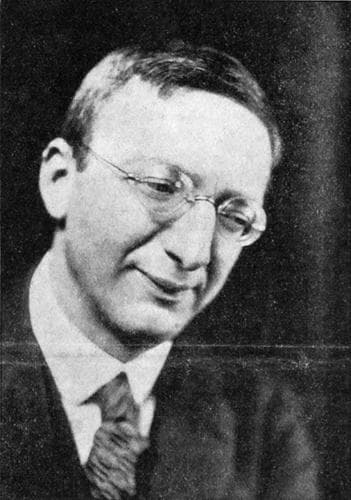
Bruno Alfred Döblin was a German novelist, essayist, and doctor, best known for his novel Berlin Alexanderplatz (1929). A prolific writer whose œuvre spans more than half a century and a wide variety of literary movements and styles, Döblin is one of the most important figures of German literary modernism. His complete works comprise over a dozen novels ranging in genre from historical novels to science fiction to novels about the modern metropolis; several dramas, radio plays, and screenplays; a true crime story; a travel account; two book-length philosophical treatises; scores of essays on politics, religion, art, and society; and numerous letters—his complete works, republished by Deutscher Taschenbuch Verlag and Fischer Verlag, span more than thirty volumes. His first published novel, Die drei Sprünge des Wang-lung, appeared in 1915 and his final novel, Hamlet oder Die lange Nacht nimmt ein Ende was published in 1956, one year before his death.

Ashley Antoinette
4.6

Mark McDonald
4.4
Luo Guanzhong
4.4

Mia McKenzie
4.3

Dorothy Parker
4.3

Joaquim Maria Machado de Assis
4.3

James Thurber
4.2

Terry Kay
4.2