“It’s not enough to just be there. You have to *see* it. Really see it.”
— Gus reflecting on his photography and how it relates to truly experiencing life.

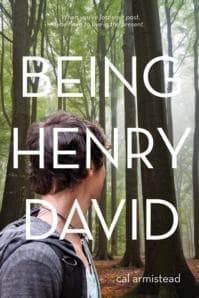
Cal Armistead (2013)
Genre
Mystery / Young Adult / Romance
Reading Time
320 min
Key Themes
See below
Sign in to track this book
An amnesiac teen renames himself after Thoreau and travels to Walden Pond, hoping the retreat will unlock his tragic memories and reveal his identity.
Seventeen-year-old Hank wakes up on a bench in Penn Station, New York City, with no memory of who he is or how he got there. He feels lost and scared, with only a copy of Henry David Thoreau's 'Walden' and a backpack of clothes and cash. He feels a strong pull toward the book. Calling himself Henry David, or 'Hank,' he walks around the city, trying to understand his situation and avoid attention. He has brief, broken memories, but none give clear clues.
After days of wandering and sleeping outside, Hank makes a choice. The 'Walden' book, his only link to a past he cannot recall, becomes his guide. He thinks that if he is Henry David, or connected to him, then Walden Pond in Concord, Massachusetts, must be his destination. He uses his limited money for a bus ticket, hoping the place will bring back his memories and reveal his identity. The journey is a mix of worry and hope, each mile bringing him closer to a possible truth or more confusion.
Hank arrives in Concord, Massachusetts, feeling both familiar and strange. He goes to the local library, where he meets Ms. Agnes, a kind librarian. She offers help and a safe place, noticing his distress but respecting his silence. At the library, he also meets Willow, a girl who is initially distant but interesting. He learns about the town and its connection to Thoreau, feeling a stronger pull toward the pond. His interactions are hesitant as he tries to keep up his act while looking for information.
Following his gut, Hank goes to Walden Pond. He finds a quiet spot in the woods near the pond, like Thoreau's cabin site, and starts living simply. He spends his days reading 'Walden,' watching nature, and thinking, hoping the environment will help his memory. He avoids people, fearing exposure, but sometimes goes to town for supplies. The quiet allows him to process the broken memories and emotions that surface, which often involve a sense of loss and unresolved sadness, though the details remain unclear.
Willow, a local girl, notices Hank around Walden Pond and in town. Curious about his quiet manner and obvious distress, she starts watching him from a distance. Despite Hank's attempts to stay isolated, Willow's gentle curiosity slowly breaks down his walls. She starts leaving him food and books, beginning conversations that become more open. Her presence gives Hank a sense of connection he had not realized he missed, and he finds himself drawn to her understanding. Their talks become a source of comfort.
As Hank spends more time at Walden and with Willow, his memory fragments become more frequent and strong. He has vivid, often upsetting, flashes that include images of a car accident, a hospital room, and a girl's face, always with a deep sense of guilt and loss. These visions are confusing and scary, making him doubt his sanity and his past. He tells Willow about some of these experiences, and she listens patiently, encouraging him to face them, seeing the pain beneath his amnesia.
Driven by the clearer but still broken memories, Willow suggests they actively look for clues. They use the library's resources, with Ms. Agnes's quiet help, to search for news articles or missing person reports that might match Hank's visions. They focus on local events, especially car accidents involving teenagers. This search is emotionally draining for Hank, as each possible lead brings him closer to a painful truth. Willow's support is vital, keeping him grounded when the fear of what he might find threatens to overwhelm him.
Through their careful research, Hank and Willow find a news article about a tragic car accident from months before. The details match Hank's broken memories: a single-car crash, a driver named Ethan, and a passenger, Chloe, who died. The article shows a picture of Ethan, revealing Hank's true identity. The shock of this discovery is huge. Hank realizes he is Ethan, and the guilt he has carried is for his part in Chloe's death. This revelation brings both clarity and deep sadness, as his past crashes down on him.
The truth shatters Ethan's fragile peace. He remembers Chloe, their friendship, and the events leading to the accident. The weight of his guilt and grief becomes almost unbearable. He struggles to connect the 'Hank' he invented with the 'Ethan' who caused such tragedy. Willow stays by his side, helping him process the raw emotions. He realizes his amnesia was a psychological defense, a way to escape unbearable pain. He must now decide whether to keep running or face the consequences and seek forgiveness.
With Willow's encouragement and Ms. Agnes's support, Ethan makes the hard decision to contact his family. He calls the number from the old news article, feeling both fear and longing. The conversation is emotional, filled with relief and sorrow from his parents, who had believed him lost or worse. This call marks the start of his journey back to his real life, away from his isolated existence at Walden Pond. It is a painful but necessary step toward healing and accepting his past, instead of hiding from it.
Ethan returns to his hometown, a place now filled with memories of the accident. He reunites with his grieving family, facing their relief and unspoken pain. He also prepares to face the legal and social results of the accident. The community's reactions are mixed, some offering sympathy, others judgment. This return is not easy; it forces him to confront the real impact of his actions and the emptiness Chloe left. However, he is no longer running, and he has Willow's promise of continued support, symbolizing hope for his future.
The novel ends with Ethan starting the difficult process of healing and rebuilding his life. He commits to facing legal proceedings and seeking therapy for his trauma and grief. He learns to live with Chloe's memory, honoring her by trying to live a meaningful life. His time at Walden Pond, inspired by Thoreau, gives him a new view on self-reliance, truth, and living mindfully. While his journey is not over, he has found a way forward, accepting his identity as Ethan, not just 'Hank,' and seeking redemption.
The Protagonist
Hank transforms from a lost, amnesiac boy running from an unknown past into Ethan, a young man who confronts his trauma, accepts responsibility, and begins the difficult journey of healing and self-forgiveness.
The Supporting
Willow grows from an observant stranger into a deeply supportive and loving companion, finding her own strength and purpose in helping Hank.
The Supporting
Ms. Agnes remains a consistent source of adult support and wisdom, her role evolving as Hank's needs change.
The Mentioned
Chloe's character remains a tragic memory, serving as the catalyst for Ethan's entire journey of discovery and healing.
The Mentioned
Thoreau's influence remains constant, providing a philosophical backdrop and a symbolic identity for Hank.
The Mentioned
Their character arc involves moving from desperate worry to immense relief and then facing the difficult task of reuniting with their traumatized son.
The main theme is Hank's search for who he is. His amnesia forces him to create a new identity ('Henry David') based on his only clue, 'Walden.' As he remembers his past, he struggles with the truth of being Ethan, a boy responsible for a friend's death. The journey is about remembering his name, putting his broken self back together, accepting his past, and deciding who he will be in the face of guilt and loss. His time at Walden Pond reflects Thoreau's search for self.
“I was 'Henry David' because that was all I had. But who was I before that?”
A constant theme is the heavy weight of grief and guilt, even when its cause is unknown. Hank's amnesia is a direct mental reaction to the trauma of causing Chloe's death. As memories return, the raw feelings of loss and responsibility overwhelm him. The story looks at how people deal with immense tragedy, the mental toll it takes, and the long process of confronting and accepting one's part in a painful event. His struggle is not just to remember, but to forgive himself.
“The feeling wasn't just sadness, it was a hollow ache, a gaping wound that I knew, somehow, I had caused.”
Inspired by Thoreau, Hank seeks comfort and clarity in nature, specifically at Walden Pond. His time living deliberately in the woods gives him a space for reflection, allowing broken memories to surface without outside distractions. The quiet beauty of nature acts as a soothing balm, bringing peace and helping him process his inner turmoil. This theme shows how disconnecting from society and reconnecting with nature helps with mental recovery and self-reflection.
“I went to the woods because I wished to live deliberately, to front only the essential facts of life...”
Despite his initial wish to be alone, Hank's journey is shaped by the connections he makes. Willow's strong empathy and practical help are essential to his recovery, breaking through his guardedness and helping him face the truth. Ms. Agnes offers a safe place and quiet adult guidance. These relationships show that while self-discovery is a personal journey, the support of others is often necessary for healing from trauma. It highlights that real strength comes from being vulnerable and letting others help.
“I didn't know I needed her until she was there, a steady hand in the storm inside my head.”
Total memory loss as a psychological defense mechanism.
The central plot device is Hank's dissociative amnesia, which serves as both the catalyst for the entire story and a major source of suspense. It drives his quest for identity and hides the traumatic truth of his past. The amnesia is not merely a convenient plot point but a psychological defense mechanism, protecting him from the unbearable guilt of Chloe's death. As his memories slowly return, the device allows for a gradual reveal of the tragic backstory, building tension and emotional impact.
A physical object symbolizing guidance, identity, and philosophical influence.
The worn copy of Henry David Thoreau's 'Walden' is more than just a book; it's Hank's only tangible link to his past and his primary guide. It gives him his adopted name, directs him to Walden Pond, and provides philosophical solace and a framework for his initial existence. The book symbolizes the quest for self-reliance and deliberate living, mirroring Hank's journey to find himself. It acts as a constant reminder of his purpose and the themes he grapples with, making it a powerful symbolic and practical plot device.
Brief, unsettling visions that slowly reveal the traumatic past.
Fragmented flashbacks are used to drip-feed the audience clues about Hank's past, building suspense and hinting at the underlying trauma. These are not coherent memories but quick, disorienting images and sensations (a car, a hospital, a girl's face) that are emotionally charged but lack context. This device effectively mirrors Hank's own confusion and fear, allowing the reader to experience his unraveling memories alongside him, making the eventual reveal of the accident and Chloe's death more impactful and emotionally resonant.
A symbolic and literal refuge that facilitates introspection and healing.
Walden Pond is not just a location; it's a character in itself and a crucial plot device. It provides Hank with a literal refuge from the outside world and a symbolic space for self-discovery, mirroring Thoreau's experiment in deliberate living. Its natural solitude allows Hank the mental space to process his trauma and for his fragmented memories to surface. The pond's historical significance deepens the thematic resonance, making it an ideal backdrop for a story about identity, nature, and the search for truth.
“It’s not enough to just be there. You have to *see* it. Really see it.”
— Gus reflecting on his photography and how it relates to truly experiencing life.
“Walden Pond wasn't just a place; it was an idea. An experiment. And maybe, for me, it could be too.”
— Gus contemplating the significance of Walden Pond and Thoreau's experiment.
“The past isn't just behind us. Sometimes it's right in front of us, waiting to be understood.”
— Gus grappling with the mystery surrounding his father's death and Thoreau's journal.
“You can't live someone else's life, no matter how much you admire them. You have to live your own.”
— A realization Gus has about emulating Thoreau versus finding his own path.
“Sometimes the biggest mysteries aren't about what happened, but why.”
— Gus pondering the deeper motivations behind the events he's uncovering.
“Silence isn't empty. It's full of everything you usually miss.”
— Gus experiencing the quiet of Walden and learning to listen to his surroundings and himself.
“Love isn't always easy, and it definitely isn't always logical. But it's real.”
— Gus reflecting on his feelings for Kay and the complexities of their relationship.
“The truth is rarely simple, and often, it's inconvenient.”
— Gus uncovering difficult truths about his family and the community.
“We all build walls, sometimes to keep others out, sometimes to keep ourselves in.”
— A metaphor Gus considers in relation to his own guardedness and others' secrets.
“Being alone isn't the same as being lonely. Sometimes, it's necessary for growth.”
— Gus embracing his time for solitude at Walden Pond, distinct from his past loneliness.
“Every secret has a weight, and eventually, that weight becomes too heavy to bear.”
— Gus observing the toll that hidden truths take on various characters.
“You can find adventure anywhere, even in your own backyard, if you just know how to look.”
— Gus realizing that the mystery and self-discovery he sought were closer than he thought.
“Sometimes, the greatest freedom is simply knowing who you are, and being okay with that.”
— Gus's ultimate understanding of self-acceptance and authenticity.
“A photograph can capture a moment, but it can't capture a life. Only living it can do that.”
— Gus, a photographer, understanding the limitations of his art compared to lived experience.
Ready to see how well you understood this book? Take our interactive quiz with 10 questions.