“The war is over, now the real war begins.”
— A recurring sentiment among various characters, reflecting the shift from fighting the Germans to the internal struggle for Poland's future.

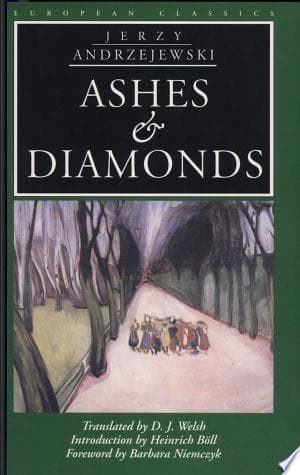
Jerzy Andrzejewski (1996)
Genre
Fiction
Reading Time
6-8 hours
Key Themes
See below
Sign in to track this book
In a provincial Polish hotel in 1945, a young anti-communist assassin struggles with love, duty, and a world ending as a new, uncertain future begins.
On May 8, 1945, in the town of Ostrowiec, Maciek Chelmicki, a young Home Army (AK) soldier, and his leader, Andrzej Kossecki, ambush a car. They believe it carries Szczuka, a high-ranking Communist official. However, they kill two innocent cement workers instead. This failed assassination is a stark opening, showing the chaos and moral confusion of post-war Poland. This event makes Maciek face the harsh truth of his mission and its unintended results, while Andrzej deals with the operational failure and wider political issues for their underground group.
After the failed attempt, Szczuka, the communist target, arrives safely at the Monopol Hotel in Ostrowiec. He is there for a victory celebration for the war's end and to secure the new Communist power. The hotel becomes a central place, a small version of fractured Polish society. Many characters gather, including Pieniążek, the hotel owner; Drewnowski, Szczuka's opportunistic secretary; and other local officials and citizens, all dealing with the changing political scene. This gathering creates a tense mood, as different ideas and personal goals clash.
After the failed ambush, Maciek and Andrzej return to the hotel and get rooms. Maciek is deeply troubled by the senseless killing of the workers and starts to question if their resistance is effective or right. He feels more and more separate from his comrades' enthusiasm, wanting a normal life away from the constant threat of violence. This inner struggle is a main theme, as Maciek's youthful ideals meet the harsh realities of a war that has become an uncertain peace, making him rethink his loyalties and future.
At the Monopol Hotel, Maciek meets Krystyna, a barmaid. Their meeting quickly turns into a tender, though short, romance. Krystyna represents a possible escape for Maciek – a glimpse of a future free from the violence and political plots that have shaped his life. Their talks often move away from the immediate political tension, focusing instead on personal wishes, dreams, and the chance of a shared future. This relationship strongly contrasts Maciek's grim mission, showing his desire for normalcy and love, and deepening his inner conflict between duty and personal happiness.
Andrzej receives new, clear orders from his superiors to complete Szczuka's assassination. This new command puts great pressure on both him and Maciek. Andrzej, though perhaps also tired, stays committed to his duty, seeing it as part of their fight for an independent Poland. Maciek, however, feels more and more conflicted. The new order forces him to face his moral doubts again, increasing his desire to drop the mission and live with Krystyna, but also reminding him of the strong bonds of loyalty and duty that connect him to his past.
The victory banquet for the war's end happens in the hotel. It is a scene of forced celebration, with speeches, toasts, and music, but underneath, political tensions remain. Szczuka, though seemingly victorious, is a target. Drewnowski, his secretary, tries to gain favor with the new government, showing his opportunistic nature. Various local officials and citizens attend, some truly celebrating, others just adapting. The banquet serves as a stage where the new order tries to show its power, while the old order, through Maciek and Andrzej, waits in the shadows, ready to disrupt it.
Maciek's inner struggle grows as he weighs his love for Krystyna and his desire for a peaceful future against his strong sense of duty to his comrades and his past. He spends time with Krystyna, imagining a life with her, which makes more violence even more terrible. Yet, the pressure from Andrzej and the deep-seated discipline of a soldier's life are strong forces. He tries to find a way out, perhaps by just leaving, but the weight of his commitment to his cause and his comrades is hard to shake, pushing him closer to the inevitable act.
Despite his deep hesitation, Maciek follows orders. He confronts Szczuka and shoots him. The act is quick and brutal, without the clumsiness of the earlier failed attempt. Szczuka dies, a victim of the ongoing conflict. This assassination is a key moment, marking Maciek's firm commitment to his past and his tragic inability to escape the cycle of violence. It is a somber and unavoidable end to his inner struggle, showing the destructive power of ideological conflict and the personal cost of such actions.
Right after killing Szczuka, Maciek tries to flee Ostrowiec. He is desperate to escape the results of his actions and the oppressive mood of the town. However, his escape is quickly noticed. A chase begins, involving Soviet soldiers and Polish militia. Maciek, confused and wounded, finds himself trapped. This pursuit is a frantic and chaotic sequence, showing the relentless grip of the political forces at play and Maciek's ultimate inability to outrun his fate, emphasizing the tragic certainty of his death.
Maciek, wounded and tired from the chase, stumbles into a field of garbage and dies. He is shot by a random burst of machine-gun fire from a passing patrol, a meaningless and almost accidental end to a life consumed by ideological conflict. His death is not heroic but tragically useless, a symbol of the many lives lost in the chaotic aftermath of war. Bleeding out in the trash, Maciek represents the 'ashes' of a generation, their sacrifices seemingly forgotten or made meaningless by the 'diamonds' of a new, uncertain future.
After Maciek's death, life in Ostrowiec continues, though with the lingering memory of the recent violence. Andrzej Kossecki, Maciek's commander, deals with the loss of his subordinate and the uncertain future of their cause. Krystyna, the barmaid, is heartbroken and alone, her brief hope for a different future shattered. Drewnowski continues his opportunistic actions, adapting to the new political climate. The other characters in the hotel leave, each returning to their own struggles and compromises, showing that while one man's tragedy ends, the larger societal and political conflicts continue.
The Protagonist
Maciek begins as a loyal, if weary, soldier, but his encounter with Krystyna and the senselessness of his mission lead him to question his purpose, ultimately culminating in a tragic, futile death.
The Supporting
Andrzej remains largely committed to his ideology, acting as a foil to Maciek's growing disillusionment, and is left to carry on the struggle after Maciek's death.
The Antagonist/Target
Szczuka arrives as a confident representative of the new power but ultimately becomes a victim of the lingering violence of the old guard, his death marking a tragic end to his political mission.
The Supporting
Krystyna offers Maciek a brief hope for a future, but ultimately witnesses the tragic futility of his actions, left alone with her shattered dreams.
The Supporting
Drewnowski consistently maneuvers to secure his own position, demonstrating a complete lack of moral compass and adapting seamlessly to the new political order.
The Supporting
Pieniążek remains a pragmatic survivor, focused on his business and adapting to the new political climate, a silent witness to the unfolding tragedy.
The Mentioned
Their deaths trigger Maciek's initial moral crisis, setting him on a path of doubt and questioning.
The novel powerfully shows how pointless and exhausting continued armed struggle is in a changed political situation. Maciek's journey is a path to disillusionment, as his violent acts, first based on patriotic duty, become more and more senseless and disconnected from any clear, achievable goal. The failed first assassination of innocent workers, and Maciek's own undignified death in a garbage heap, show that the 'heroic' resistance of the past now only creates more suffering, with no meaningful result. The 'ashes' of war leave only destruction, not victory.
“What had been heroic in the forests and in the underground now seemed merely desperate, futile, and destructive.”
Andrzejewski expertly shows a world where good and evil are not clear. Characters like Maciek are driven by duty and patriotism, yet their actions cause innocent deaths and continued bloodshed. Conversely, the 'enemy' – Szczuka – is not a simple villain but a man of conviction, though his ideas are seen as oppressive by others. Drewnowski's opportunism and Pieniążek's quiet compromises further show how people navigate a world where loyalty changes and survival often beats strict rules, forcing a re-evaluation of ethical choices after the war.
“In this new world, it was hard to tell who was truly a hero and who was simply a killer.”
Maciek is a tragic figure caught between the heroic, though violent, past of the Home Army and a desperate wish for a peaceful future with Krystyna. The 'ashes' of his past commitments and wartime experiences constantly pull him back, stopping him from embracing the 'diamonds' of a new, ordinary life. His short romance with Krystyna symbolizes this hope for normalcy, but his strong sense of duty and the inescapable cycle of violence ultimately keep him from it. The novel suggests that for some, the past's hold is too strong for a clean break into a new future.
“He longed for a life where love was not a fleeting moment between acts of death.”
The novel is set precisely when Poland changes from Nazi occupation to Soviet-backed Communist rule. The Monopol Hotel becomes a small version of this big political shift. The victory celebration, meant to show the triumph of the new order, is full of tension and the lingering presence of the old resistance. Characters like Szczuka represent the rising power, while Maciek embodies the dying parts of the old order. The novel explores the anxieties, compromises, and brutal realities of this change, showing how a new government asserts its power and tries to erase its opposition.
“The war was over, but a new war had just begun, a war for the soul of Poland.”
The hotel serves as a condensed representation of postwar Polish society.
The Monopol Hotel is not merely a setting but a crucial plot device. It acts as a microcosm, bringing together diverse characters from all strata of postwar Polish society – Communists, former resistance fighters, opportunists, ordinary citizens, and the innocent. This confined space allows for intense interactions, ideological clashes, and personal dramas to unfold, reflecting the larger political and social turmoil gripping the nation. The hotel's various rooms and common areas symbolize the different factions and their struggles, making it a vivid stage for the novel's central conflicts.
The title itself acts as a central metaphor for the novel's themes.
The title 'Ashes and Diamonds' is a potent symbol. 'Ashes' represent the destruction, futility, and moral debris left by war and the dying resistance, embodied by Maciek's tragic fate and the senselessness of his actions. 'Diamonds' symbolize the hard, unyielding reality of the new Communist order, the future being forged, or perhaps the fleeting moments of beauty and hope (like Maciek's love for Krystyna) that are crushed by the surrounding chaos. The interplay of these two elements encapsulates the novel's central themes of loss, transition, and the search for meaning in a broken world.
The audience is often aware of dangers and outcomes unknown to the characters.
Dramatic irony is frequently employed to heighten tension and underscore the tragic inevitability of events. For instance, the audience knows from the outset that Maciek and Andrzej have mistakenly killed innocent men, while they believe they've hit their target. Later, the audience is aware of Maciek's mission to kill Szczuka, while Szczuka himself is oblivious to the immediate danger. This device builds suspense and emphasizes the characters' limited perspectives within a larger, predetermined narrative of violence and political change, making their struggles more poignant as their fates unfold.
A recurring visual motif symbolizing the relentless march of time and fate.
The clock tower in Ostrowiec appears at significant moments, often subtly, but its presence is impactful. It symbolizes the relentless march of time, particularly the transition from one era to another, and the inevitability of fate. Its chimes mark crucial moments, such as the initial assassination attempt and Maciek's final hours. The clock's indifferent ticking contrasts sharply with the frantic human struggles below, suggesting that despite all the political upheaval and personal tragedy, time moves on, ushering in the new order whether individuals are ready or not.
“The war is over, now the real war begins.”
— A recurring sentiment among various characters, reflecting the shift from fighting the Germans to the internal struggle for Poland's future.
“Each of us carries his own cross. Some carry it for themselves, others for others, and still others for an idea.”
— Maciek Chełmicki's internal reflection on the burdens and motivations of individuals in the tumultuous post-war period.
“There are times when one must simply choose: either you are with us or against us. There is no middle ground.”
— A statement reflecting the stark political polarization and the pressure to align with one side or another in the immediate aftermath of the war.
“What is freedom? For some, it's the right to choose their own chains.”
— A cynical observation by a character, questioning the true nature of freedom in a society transitioning under new political control.
“History is not made by saints, but by men who are often flawed, often cruel, but always human.”
— A reflection on the messy and often morally ambiguous nature of historical events and the people who shape them.
“We are like ashes and diamonds. The ashes are all that remains of the past, and the diamonds are what we hope to build for the future. But sometimes, the diamonds are just more ashes.”
— A metaphorical musing, likely by Maciek, on the destruction of the past and the uncertain, often disappointing, prospects for the future.
“One can kill a man, but one cannot kill an idea.”
— A statement highlighting the enduring power of ideology even in the face of violence and repression.
“The greatest tragedy is not to die, but to live without a purpose.”
— A character's reflection on the importance of having a cause or meaning in life, especially in times of great upheaval.
“Everyone wants to be right, but few want to understand.”
— An observation on the human tendency towards conviction over empathy or genuine comprehension, particularly in political disputes.
“The weight of the past is often heavier than the promise of the future.”
— A character grappling with the lingering effects of historical events and personal memories, which can overshadow new beginnings.
“We are all caught in a trap, and there is no way out.”
— A feeling of fatalism expressed by some characters, trapped by circumstances beyond their control in the post-war political landscape.
“Sometimes, the most dangerous enemy is not the one you fight, but the one you become.”
— A warning about the corrupting influence of conflict and the danger of losing one's moral compass in the pursuit of a cause.
“To forget is a luxury we cannot afford.”
— A statement emphasizing the importance of remembering historical events and their lessons, even if painful.
Ready to see how well you understood this book? Take our interactive quiz with 10 questions.
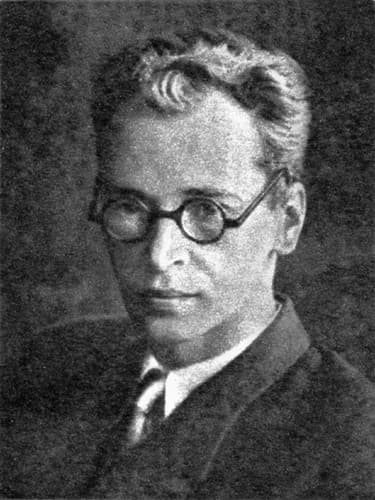
Jerzy Andrzejewski was a prolific Polish writer. His works confront controversial moral issues such as betrayal, the Jews and Auschwitz in the wartime. His novels, Ashes and Diamonds, and Holy Week, have been made into film adaptations by the Oscar-winning Polish director Andrzej Wajda. Holy Week and Ashes and Diamonds have both been translated into English. His novel The Gates of Paradise was translated into English by James Kirkup and published by Panther Books with the anglicised spelling "George Andrzeyevski".

Ashley Antoinette
4.6

Mark McDonald
4.4
Luo Guanzhong
4.4

Mia McKenzie
4.3
Dorothy Parker
4.3

Joaquim Maria Machado de Assis
4.3

James Thurber
4.2

Terry Kay
4.2