“I've been living with a corpse for three days.”
— Mortimer realizes what his aunts have been doing.

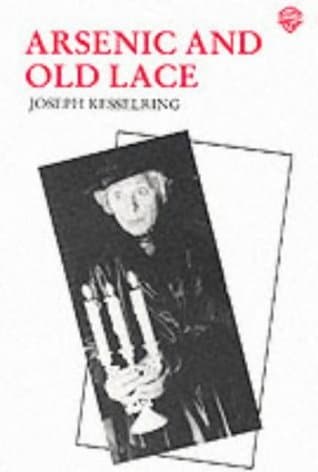
Joseph Kesselring (1941)
Genre
Mystery
Reading Time
120 min
Key Themes
See below
Sign in to track this book
Two kind, elderly sisters in Brooklyn poison lonely old men with elderberry wine, much to the horror of their nephew who uncovers their deadly secret.
Mortimer Brewster, a drama critic who dislikes marriage, visits his two elderly maiden aunts, Abby and Martha Brewster, in their Brooklyn home. He just got engaged to Elaine Harper, the minister's daughter next door, and has come to share the news. The aunts, known for their charity, are happy for him. However, Mortimer's joy ends quickly when he finds a dead body in the window seat. He first suspects his mentally unstable brother, Teddy, who thinks he is Theodore Roosevelt and is always digging 'locks for the Panama Canal' in the cellar. Mortimer confronts his aunts, who calmly say they have been poisoning lonely old men with elderberry wine laced with arsenic, strychnine, and 'a pinch of cyanide' as a kind act to end their suffering.
Abby and Martha explain their reasons to a horrified Mortimer. They believe they are being kind by ending the loneliness and suffering of these men. They choose men who are alone and have no family. They then hold a small funeral service for each victim before Teddy, in his delusion, 'buries' them in the cellar, thinking he is digging graves for yellow fever victims in the Panama Canal Zone. The aunts are careful, keeping a mental count of their victims, which is currently twelve. Mortimer is upset, caught between his love for his aunts and the awful truth of their actions. He tries to plan how to protect them and stop more murders.
As Mortimer deals with his aunts' revelations, his other brother, Jonathan Brewster, arrives unexpectedly. Jonathan is a serial killer, whose appearance has been changed by many plastic surgeries from his accomplice, Dr. Einstein, to avoid being caught. He looks a lot like Boris Karloff. Jonathan, with Dr. Einstein, is on the run and needs a place to hide. To Mortimer's horror, Jonathan has a fresh body in the trunk of his car, a victim he killed in a fight. He plans to bury his victim in the cellar, not knowing about the aunts' own collection of bodies already there. The presence of two kinds of murderers, one 'kind' and one purely evil, creates a dark, funny tension.
Jonathan and Dr. Einstein find the aunts' 'graveyard' in the cellar. Jonathan is angry that his aunts have been burying bodies in 'his' cellar, feeling a strange sense of ownership over the space. A dark, funny argument starts between Jonathan and his aunts about who has the right to bury their victims in the cellar and the right way to do it. The aunts are upset that Jonathan would bring such a 'common' corpse into their clean home, while Jonathan is offended by their amateur methods. This argument shows the strange moral differences the characters make about murder, with the aunts seeing theirs as charity and Jonathan's as purely criminal.
Mortimer's main goal changes to getting Teddy committed to an asylum, believing this will stop any more 'burials' in the cellar and cover for the existing ones. He contacts a local institution, Happy Dale Sanitarium, and tries to get the commitment papers signed. Meanwhile, he must deal with Jonathan's increasingly threatening presence and his plans to kill Mortimer, partly because of a childhood grudge. Dr. Einstein, though involved in Jonathan's crimes, is a bit more understanding and tries to lessen Jonathan's extreme behavior. Mortimer constantly tries to keep Elaine, who is becoming suspicious of his odd behavior, away from the house and the unfolding horrors.
Two police officers, Brophy and O'Hara, arrive at the house. O'Hara, who wants to be a playwright, asks Mortimer's opinion on his play, while Brophy is just making a routine check. Their presence creates great tension for Mortimer, who fears they will find the bodies. Jonathan, always manipulative, tries to frame Mortimer for his own crimes and the aunts'. The situation gets more complicated with Teddy's loud claims about digging the Panama Canal, which the police ignore as harmless oddness. Mortimer tries hard to keep the officers away from the cellar and the window seat, leading to several close calls and funny misunderstandings.
Jonathan, determined to kill Mortimer, tries to do so, but his plan fails because of Dr. Einstein's hesitation and Mortimer's quick thinking. During the struggle, the police, who have been sidetracked by O'Hara's play and Teddy's actions, finally become suspicious of Jonathan's behavior and his resemblance to a wanted criminal. Jonathan is caught and arrested, along with Dr. Einstein. This removes one immediate threat, but Mortimer still deals with the aunts' secret and the bodies in the cellar. The house is briefly clear of one type of murderer, but the more 'benevolent' ones remain.
With Jonathan gone, Mortimer gets the commitment papers for Teddy. However, a new issue comes up when the aunts, in their typical sweetness, announce that they also want to go to Happy Dale, especially when they learn Teddy will be there. Before they leave, they casually reveal that they have actually poisoned thirteen men, including the latest victim they found that morning. They offer Mortimer a glass of their elderberry wine, which he carefully refuses. Mortimer, relieved but still horrified, gets them to sign the commitment papers, ensuring they will be cared for and stopped from committing more 'charitable' murders.
Just before the aunts and Teddy leave for Happy Dale, Mortimer makes a surprising discovery about his own parents. The aunts reveal that he is not a biological Brewster, but was adopted. This brings him great relief, as it means he is not genetically prone to their homicidal tendencies. This frees him to marry Elaine without fear. As the play ends, the aunts, even in their last moments before going to the sanitarium, offer a new, unsuspecting superintendent of Happy Dale a glass of their poisoned elderberry wine, suggesting their 'charitable' work will continue even in the asylum. The play ends with a mix of relief and lingering dark humor.
The Protagonist
Starts as a cynical, rational man, descends into panicked chaos, and ends relieved and free from familial madness.
The Antagonist/Supporting
Remains consistently sweet and unrepentantly murderous throughout, never questioning her actions.
The Antagonist/Supporting
Like Abby, she remains consistent in her benevolent murderous nature, seeing no wrong in her actions.
The Supporting
Remains in his delusion throughout, serving as a catalyst for plot points rather than undergoing personal change.
The Antagonist
Arrives as a menacing villain, attempts murder, and is ultimately captured.
The Supporting
Starts as Jonathan's accomplice, but shows moments of conscience before ultimately being captured with him.
The Supporting
Remains a loving fiancée, growing increasingly perplexed by Mortimer's actions until the truth is revealed.
The Supporting
Remains focused on his playwriting aspirations, oblivious to the crimes around him until the very end.
The main idea is a dark, funny reversal of morality, where murder is shown as an act of kindness. Abby and Martha truly believe they are helping lonely old men by ending their suffering. Their sweet behavior, religious reasons, and careful record-keeping show this idea. The play makes the audience face the strangeness of defining 'good' and 'evil' when actions come from seemingly kind intentions, creating a chilling yet funny contradiction that runs through the whole story.
““We feel it's a charity. It's a rather sweet way of putting it, I think.””
The play looks at the idea of a family keeping deep, troubling secrets and having a widespread strain of madness. Mortimer constantly fears he has inherited the 'Brewster madness,' seen in Teddy's delusions and Jonathan's psychopathy, and unknowingly, his aunts' killing tendencies. The entire plot is driven by Mortimer's desperate attempts to hide his family's secrets from the outside world and from his fiancée, Elaine, showing the social pressure to seem normal despite inner chaos. His eventual relief at finding out he is adopted highlights this idea.
““Insanity runs in my family. It practically gallops.””
A clear idea is the sharp difference between how things appear and how they really are. The Brewster sisters seem charming, charitable, and pillars of the community, yet they are serial murderers. Their quaint Victorian home, a symbol of peaceful domestic life, hides a cellar full of bodies. Jonathan, with his surgically changed face, shows this idea literally. Mortimer's struggle to accept the sweet appearance of his aunts with their murderous reality creates much of the play's tension and humor, constantly challenging the audience's ideas of normal and abnormal.
““But you're such sweet old ladies.””
The play explores evil by comparing two different types: the 'kind' evil of Abby and Martha, driven by a twisted sense of pity, and the 'pure,' cruel evil of Jonathan, driven by malice and a wish for power. This comparison shows that evil can appear in many forms and for many reasons, from the seemingly harmless to the openly monstrous. The audience is asked to think about which form is more disturbing, or perhaps, more understandable, creating a complex discussion on human nature and moral limits.
““Oh, you don't know Jonathan. He's a monster.””
The audience and Mortimer are aware of the murders, while other characters are not.
Dramatic irony is heavily employed throughout the play. The audience is privy to the aunts' murderous activities from early on, while characters like Elaine, the police officers, and various visitors remain blissfully unaware. This creates tension and humor as Mortimer desperately tries to prevent discovery, and the other characters misinterpret the bizarre goings-on. For example, Teddy's 'Panama Canal' digging is seen as harmless eccentricity by the police, while the audience knows it's covering up murders, amplifying the comedic and suspenseful elements.
Exaggerated situations, mistaken identities, and rapid-fire dialogue for comedic effect.
The play relies heavily on farce, characterized by exaggerated situations, physical comedy, and rapid-fire dialogue. The constant discovery of bodies, the characters' extreme reactions (or lack thereof), and the frantic attempts to hide the truth lead to a series of absurd and improbable events. Examples include Mortimer's desperate attempts to get Teddy committed, the argument between Jonathan and the aunts over cellar space, and Officer O'Hara's persistent play-pitching amidst murder, all contributing to the play's unique brand of dark comedy and lighthearted chaos.
A seemingly innocent drink used as the murder weapon.
The elderberry wine acts as a central symbol and plot device. It represents the deceptive nature of appearances, as a seemingly comforting and traditional homemade beverage is, in fact, the means by which the aunts commit their 'benevolent' murders. It is offered with such sweetness and hospitality, making its true purpose all the more chilling and darkly humorous. The wine is a constant threat looming over any new visitor, and Mortimer's refusal of it becomes a running gag highlighting his awareness of the danger.
A mental illness that conveniently aids the murders.
Teddy's delusion that he is Theodore Roosevelt and is digging the Panama Canal in the cellar serves as a crucial plot device. It provides a plausible, albeit eccentric, explanation for the constant digging and noise from the cellar, allowing the aunts to bury their victims without suspicion. His belief that the bodies are yellow fever victims for the canal further reinforces the aunts' ability to operate undetected. This delusion is both a source of physical comedy and a convenient cover for the macabre activities, highlighting the fine line between madness and utility in the play's world.
“I've been living with a corpse for three days.”
— Mortimer realizes what his aunts have been doing.
“But Mortimer, you're not a Brewster. You're a Jonathan.”
— Aunt Abby reveals Mortimer's true parentage.
“We've given them something to remember.”
— Aunt Martha after a funeral service.
“Well, there's a body in the window seat.”
— Mortimer's blunt statement to Elaine.
“He looks so peaceful.”
— Aunt Abby admiring their latest 'guest'.
“Oh, we don't like to have strangers in the house.”
— Aunt Martha explaining their selective hospitality.
“Insanity runs in my family. It practically gallops.”
— Mortimer reflecting on his family's eccentricities.
“He was a Methodist. That's all we know.”
— Aunt Abby describing a victim's background.
“Jonathan, your face! What have you done to your face?”
— Aunt Martha seeing Jonathan's altered appearance.
“Now, Teddy, you go right upstairs and blow your bugle.”
— Aunt Martha directing Teddy's 'Panama Canal' activities.
“It's a beautiful way to go.”
— Aunt Abby discussing their method of 'charity'.
“Well, I certainly wouldn't want to live in a house where there weren't any bodies.”
— Jonathan's perspective on a proper home.
“We were only trying to be kind.”
— Aunt Martha explaining their motivations.
“You wouldn't have to be worried about that, Mortimer, if you didn't have such a big mouth.”
— Jonathan' admonishing Mortimer.
“He's just Teddy. He's always been Teddy.”
— Aunt Abby reassuring Mortimer about Teddy's harmlessness.
Ready to see how well you understood this book? Take our interactive quiz with 10 questions.