“I was born to join in love, not hate—that is my nature.”
— Antigone's defiant response to Creon after being condemned for burying Polyneices.

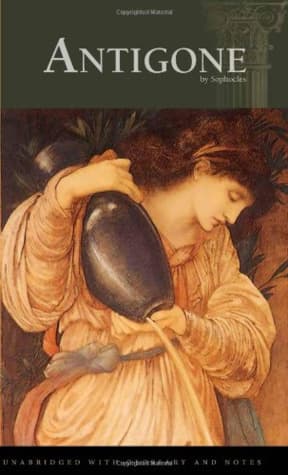
Sign in to track this book
In a city under a family curse, Antigone defies a king's order to bury her brother, sparking a conflict between divine law and human power that destroys them all.
The play starts before Creon's palace in Thebes. Antigone tells her sister Ismene her plan to bury their brother, Polyneices. Polyneices and Eteocles, Oedipus's sons, have killed each other fighting for the Theban throne. Creon, their uncle and the new king, has ordered that Eteocles, who fought for Thebes, get an honorable burial, while Polyneices, who attacked the city, be left unburied for scavengers. Antigone believes this order goes against divine law and family honor. She asks Ismene to help, but Ismene, afraid of Creon's punishment and believing women are too weak to defy men, refuses, urging caution and obedience to the state.
Creon speaks to the Chorus of Theban Elders, explaining his rules for governing. He says that loyalty to the state is most important and that he will severely punish any disloyalty. He repeats his order about Polyneices, stating that no one shall bury the traitor, under penalty of death by stoning. The Chorus, representing Theban citizens, first supports Creon's authority and his dedication to the city's well-being, agreeing with the new king's stern but seemingly fair rule. They acknowledge the importance of order and following the law, even if it means harsh actions.
A trembling sentry arrives with shocking news for Creon: Polyneices' body has been given a ritual burial. A light layer of earth covers the corpse, and libations have been poured, showing that someone defied the king's order. Creon is furious, immediately suspecting a plot and bribery. He accuses the sentry of being involved or paid off. The sentry, scared for his life, strongly denies involvement and expresses relief at just delivering the message. Creon, sure that powerful, corrupt men are behind this defiance, threatens the sentry with torture if he does not find the culprit.
The sentry returns, overjoyed and relieved, having caught the culprit: Antigone. He tells how, after uncovering the body as Creon ordered, they waited. When Antigone returned to perform the burial rites again, crying and wailing at the exposed corpse, they seized her. Antigone does not deny her actions. She openly admits to burying her brother, saying she knew Creon's order but chose to follow the gods' unwritten laws, which she believes are above human laws. Her defiance is clear and firm, putting her directly against Creon's authority.
Creon confronts Antigone, angry at her disrespect. Antigone bravely defends her actions, arguing that the divine laws of burial are above any mortal order, and that she would rather please the dead than the living. Creon remains unyielding, declaring she will pay the highest price. He then calls for Ismene, believing she must have been an accomplice. Ismene, in a moment of loyalty and regret, tries to share the blame, claiming she helped Antigone. However, Antigone strongly rejects Ismene's attempt, saying Ismene had her chance to help and refused, and now should not claim a share in the glory or the punishment. Creon orders both sisters imprisoned.
Haemon, Creon's son and Antigone's fiancé, comes to speak with his father. First, he assures Creon of his loyalty, but then subtly tries to persuade him to reconsider Antigone's sentence. He reports that Theban citizens secretly sympathize with Antigone and believe her act was noble, not criminal. Haemon urges Creon to listen to reason and be flexible, comparing a stubborn ruler to a rigid tree that breaks in a flood. Creon, however, dismisses his son's advice as weakness, accusing Haemon of being swayed by a woman. Their argument grows, with Haemon warning Creon of bad results if he goes through with Antigone's execution.
Despite Haemon's strong plea, Creon stays firm in his decision. He declares that Antigone will not be publicly stoned but will instead be sealed alive in a rocky cave, with just enough food to free the city from responsibility for her death, leaving her fate to the gods. This punishment is cruel, ensuring a slow, painful death. Haemon, heartbroken and enraged by his father's stubbornness, declares that Creon will never see him again and storms out, leaving Creon to think about his son's dark words. The Chorus expresses sadness for Antigone's tragic fate.
Antigone is led away to her death, regretting her sad fate. She mourns her unfulfilled life, her coming death without marriage or children, and the curse that has troubled her family. She asks the gods to judge the fairness of her punishment. While she does not regret her actions, she expresses deep sorrow for losing her life and the pain it causes. The Chorus tries to offer some comfort, acknowledging her nobility but also reminding her of the results of defying the state. Antigone remains firm in her belief that she acted correctly, but deeply saddened by her isolation and coming doom.
The blind prophet Tiresias, guided by a boy, arrives to warn Creon. He reports terrible signs: the altars are polluted by birds of prey that have eaten Polyneices' unburied body, and the sacrificial fires will not light. Tiresias interprets these signs as clear indications of the gods' anger against Creon's refusal to bury Polyneices and his unfair punishment of Antigone. He urges Creon to change his mind, bury the dead, and free Antigone, warning that if he does not, Creon will lose his own son for his crimes. Creon first dismisses Tiresias as a corrupt prophet seeking money, but the prophet's grim predictions begin to trouble him.
After Tiresias's frightening prophecy, the alarmed Chorus of Elders advises Creon to listen to the prophet's words, reminding him that Tiresias has never been wrong. Overwhelmed by fear and the weight of the signs, Creon finally gives in. He declares he will reverse his orders: he will go himself to bury Polyneices and release Antigone from her cave. He rushes off, with his attendants, hoping to calm the gods and prevent the coming disaster. His change of heart comes too late, however, as the tragic events already set in motion are irreversible.
A messenger arrives, announcing a series of terrible events. He reports that Creon first went to bury Polyneices, performing the proper rites. However, when they reached Antigone's cave, they found her dead, having hanged herself. Haemon was also there, mourning Antigone, and when Creon appeared, Haemon attacked his father with a sword. Missing Creon, he then turned the sword on himself, dying in Antigone's arms. The messenger tells these horrifying details, emphasizing the terrible results of Creon's stubborn pride and his refusal to listen to wisdom, leading to his own family's destruction.
As the messenger finishes his story, Creon's wife, Eurydice, who had been listening silently, slips away into the palace. A second messenger soon emerges to report that Eurydice has also killed herself, stabbing herself at the altar. Her last words were a curse on Creon, blaming him for the deaths of both her sons (she had an elder son, Megareus, who also died in battle) and for their family's destruction. Creon enters, carrying Haemon's body, utterly broken by grief and guilt. He is now left completely alone, having lost his entire family because of his pride and rigid rule.
Creon enters, a shattered man, holding his son Haemon's body. He is overcome with grief and regret, admitting that his own stubbornness and pride caused the deaths of Antigone, Haemon, and Eurydice. He wishes for death himself, begging the Chorus to take him away. The Chorus offers sad thoughts on the gods' power and the importance of wisdom. Creon, completely humbled, accepts his fate and the tragic results of his actions, understanding too late the devastating cost of defying divine law and refusing wise advice. He is led away, a broken and ruined king.
The Protagonist
Antigone remains steadfast in her convictions from beginning to end, her resolve never wavering, even in the face of death.
The Antagonist
Creon begins as a proud and unyielding ruler, convinced of his own righteousness, but is utterly broken and humbled by the end, realizing his tragic error.
The Supporting
Ismene begins as fearful and submissive, but later displays a flicker of courage and loyalty, though it's ultimately rejected.
The Supporting
Haemon transforms from a loyal son seeking compromise to a heartbroken and defiant lover, ultimately sacrificing his life for Antigone and in protest against his father's tyranny.
The Supporting
The Chorus shifts from initial support of Creon's authority to increasingly dire warnings and finally to urging Creon to heed the gods and reverse his actions.
The Supporting
Tiresias maintains his role as a steadfast messenger of divine truth, his warnings proving accurate and ultimately breaking Creon's resolve.
The Supporting
Eurydice's arc is brief but impactful, moving from a silent presence to a tragic victim who brings Creon's punishment to its devastating climax.
The Supporting
The Sentry moves from a state of intense fear and relief at merely delivering news to a momentary triumph in capturing Antigone, only to be dismissed from the narrative.
This is the play's main conflict. Antigone believes in the gods' unwritten, eternal laws, which say the dead must be buried to find peace, no matter their earthly actions. Creon, on the other hand, supports the power of human law and the state, believing his order against burying a traitor like Polyneices is vital for keeping order and his authority. The tragedy comes from Creon's refusal to accept any law higher than his own, leading to the gods' anger and his family's destruction. Antigone's firm commitment to divine law, even to death, shows its perceived superiority.
“For it was not Zeus who published this decree, nor has Justice, who dwells with the gods below, established any law of this kind among men. Nor did I think that your decrees were of such force, that a mortal could override the unwritten and unfailing statutes of heaven.”
Creon's main flaw is his excessive pride and stubbornness. He refuses to listen to anyone – Antigone, Haemon, or even the prophet Tiresias – believing his own judgment is perfect and his authority unquestionable. His inability to admit error or compromise, even when warned and facing public disagreement, directly causes the deaths of Antigone, Haemon, and Eurydice. The play serves as a strong warning about the dangers of unchecked power and the terrible results of pride that blinds a ruler to reason and divine will.
“The greatest griefs are those we cause ourselves.”
The play explores women's limited power in ancient Greek society through Antigone and Ismene. Ismene shows the traditional female role, submissive and afraid to defy male authority, saying, "We must remember that we are women, that we are not meant to fight against men." Antigone, however, breaks these rules, asserting her will and moral belief against the king. Her defiance, though leading to her death, challenges the patriarchal norms and highlights the strength women can have, even when held back by society.
“I will bury him; and if I die for doing it, I shall rest content. I shall be a criminal, but a religious one.”
The play deals with how fate and individual choice interact. The lingering curse on Oedipus's family, a theme from earlier plays, suggests a predetermined tragic destiny for Antigone. Yet, Antigone's conscious decision to bury Polyneices, and Creon's stubborn refusal to give in, are acts of free will that directly drive the plot. While the characters are born into a cursed family, their specific choices and their reactions to moral problems ultimately seal their individual fates. The tragedy implies that while fate may set the stage, human actions and character flaws cause the specific disasters.
“And now once more, the ancient curse of Oedipus has burst forth upon this race, and stalks through the house like a storm, scattering dust and tears.”
Antigone deeply explores morality and justice. Antigone's actions come from a moral code based on family duty and divine respect, which she sees as just. Creon, conversely, defines justice as strict obedience to state laws, believing that punishing a traitor is just for Thebes' good. The play asks if state law can truly be just if it violates basic moral or divine principles. The tragic outcome suggests that true justice needs a balance between human authority and higher moral rules, and that a purely legal or authoritarian view of justice can lead to deep unfairness.
“For me, the doer, the deed was holy.”
Situations where the audience knows more than the characters, or events turn out contrary to expectations.
Tragic irony is prevalent in Antigone, enhancing the sense of inevitable doom. For instance, Creon, in his effort to assert absolute authority and punish Antigone, believes he is securing his reign and the stability of Thebes. However, his actions directly lead to the deaths of his son and wife, shattering his family and his power. The audience understands the implications of Tiresias's prophecy long before Creon does, creating a palpable tension as Creon unwittingly seals his own tragic fate. The irony underscores the destructive nature of his hubris.
Hints or warnings about future events.
Foreshadowing is used extensively to build suspense and convey the sense of an inescapable tragic destiny. Ismene's initial fears about defying Creon's law, and her warnings to Antigone, hint at the severe consequences to come. Haemon's ominous warning to Creon that his son's death will be a direct result of Creon's actions clearly foreshadows Haemon's suicide. Most powerfully, Tiresias's detailed prophecy explicitly outlines the disasters that will befall Creon if he does not relent, directly foreshadowing the deaths of Haemon and Eurydice. These hints create a sense of dramatic inevitability.
A group of masked performers who comment on the action and provide moral reflection.
The Chorus of Theban Elders plays a crucial role as both a participant and commentator. They articulate public opinion, offer advice to Creon, and provide moral and philosophical reflections on the unfolding tragedy. Through their odes, they contextualize the events within broader themes of fate, divine justice, and human suffering. Initially supportive of Creon, their growing apprehension and eventual plea for him to heed Tiresias's prophecy highlight the shift in public sentiment and underscore the gravity of Creon's decisions, guiding the audience's moral judgment.
A detailed, often dramatic, report of offstage events.
Sophocles utilizes messenger speeches to convey critical, violent, or complex events that occur offstage, adhering to the conventions of Greek tragedy. The messenger's vivid descriptions of Antigone's suicide, Haemon's desperate attack on Creon, and his subsequent self-inflicted death, and Eurydice's suicide, are powerful and emotionally charged. This device allows the playwright to present horrific events without staging them directly, while still conveying their full dramatic impact and the devastating consequences of the characters' actions.
“I was born to join in love, not hate—that is my nature.”
— Antigone's defiant response to Creon after being condemned for burying Polyneices.
“The greatest griefs are those we cause ourselves.”
— The Chorus reflecting on the tragic consequences of human pride and stubbornness.
“It is not right that a woman should rule over men.”
— Creon's pronouncement, reflecting the patriarchal views of his time, as he asserts his authority.
“But if I am to die for it, I am content.”
— Antigone's acceptance of her fate, prioritizing divine law over human law.
“The only crime is pride.”
— Haemon's warning to Creon about the dangers of his unyielding arrogance.
“A city which belongs to one man is no city at all.”
— Haemon's argument to Creon, advocating for a ruler who listens to his people.
“The laws of the gods are not of yesterday or today, but everlasting.”
— Antigone justifying her actions by appealing to a higher, eternal moral code.
“It is hard to give in, but it is worse to risk everything and lose.”
— The Chorus advising Creon to heed Teiresias's prophecy and change his mind.
“You can learn from others, can't you? Don't cling to your anger.”
— Haemon pleading with his father, Creon, to be open to different perspectives.
“No man loves life like an old man.”
— Teiresias, the blind prophet, attempting to persuade Creon to reverse his decree, highlighting the preciousness of life.
“There is no evil like the refusal to listen.”
— Teiresias's direct condemnation of Creon's obstinacy and refusal to accept guidance.
“But a good man, when he is in the wrong, should be able to change.”
— The Chorus appealing to Creon's sense of duty and the importance of flexibility.
“Of all the wonders, none is more wonderful than man.”
— The opening lines of the Ode to Man, celebrating human ingenuity and power, but also foreshadowing its limits.
“The greatest curse on man is to have a mind and not to use it.”
— Implicitly, a theme throughout the play, as characters like Creon suffer from their inability to reason or listen.
Ready to see how well you understood this book? Take our interactive quiz with 10 questions.
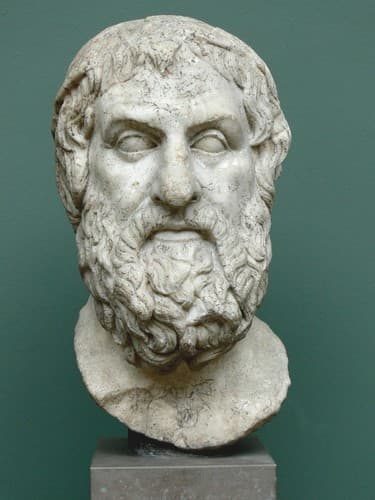
Sophocles was an ancient Greek tragedian, known as one of three from whom at least one play has survived in full. His first plays were written later than, or contemporary with, those of Aeschylus; and earlier than, or contemporary with, those of Euripides. Sophocles wrote over 120 plays, but only seven have survived in a complete form: Ajax, Antigone, Women of Trachis, Oedipus Rex, Electra, Philoctetes and Oedipus at Colonus. For almost fifty years, Sophocles was the most celebrated playwright in the dramatic competitions of the city-state of Athens which took place during the religious festivals of the Lenaea and the Dionysia. He competed in thirty competitions, won twenty-four, and was never judged lower than second place. Aeschylus won thirteen competitions, and was sometimes defeated by Sophocles; Euripides won four.

Ashley Antoinette
4.6

Mark McDonald
4.4
Luo Guanzhong
4.4

Mia McKenzie
4.3

Dorothy Parker
4.3

Joaquim Maria Machado de Assis
4.3

James Thurber
4.2

Terry Kay
4.2