“We don't live alone. We are members of one body. We are responsible for each other.”
— Inspector Goole's final speech to the Birling family, emphasizing social responsibility.

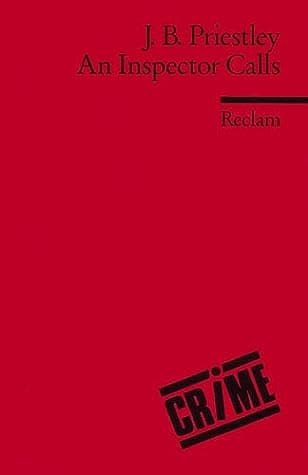
J.B. Priestley (1989)
Genre
Mystery
Reading Time
120 min
Key Themes
See below
Sign in to track this book
An inspector investigates a wealthy English family, revealing their shared blame in a young woman's suicide and upending their comfortable lives in one evening.
The play starts in the dining room of the Birling family in Brumley, an industrial city, in 1912. Arthur Birling, a factory owner and local figure, his wife Sybil, their son Eric, daughter Sheila, and Sheila's fiancé Gerald Croft celebrate Sheila and Gerald's engagement. Arthur gives a speech about capitalism, progress, and socialist ideas, dismissing community and predicting peace. The mood is happy and self-satisfied until Inspector Goole arrives. He says he is investigating the suicide of a young woman named Eva Smith. The family first thinks it has nothing to do with them.
Inspector Goole starts questioning Arthur Birling. He reveals that Eva Smith, a former worker at Birling and Co. factory, killed herself by drinking disinfectant. Goole shows Arthur a photo of Eva, which he recognizes. Arthur admits he fired Eva two years earlier for leading a strike for higher wages (25 shillings a week instead of 22 and 6 pence). He says he had the right to run his business as he wished and felt no responsibility for what happened to her. Sheila, however, is upset by her father's coldness and the inspector's questions.
Goole then turns to Sheila Birling, revealing that after her father fired her, Eva Smith changed her name to Daisy Renton. Sheila recognizes the name and becomes more troubled. She confesses that she had Eva (as Daisy Renton) fired from her job at Milwards department store. Out of jealousy and a bad mood, Sheila, while trying on a dress, felt mocked by Daisy's beauty. She complained to the manager, threatening to take her family's important business elsewhere, which led to Daisy's firing. Sheila feels guilty, understanding the effect of her actions, and warns Gerald that the Inspector knows everything.
The Inspector then involves Gerald Croft. Gerald first denies knowing an Eva Smith but admits to knowing Daisy Renton. He confesses that he met Daisy at the Palace Bar, where she was struggling, and they began an affair. He gave her a place to live in a friend's flat and supported her financially for several months the previous summer. Gerald says he cared for her but ended the relationship because it was inconvenient and he was to marry Sheila. Sheila is deeply hurt by Gerald's lies and returns his engagement ring, feeling she cannot trust him after this.
The Inspector then confronts Mrs. Sybil Birling, a leader in the Brumley Women's Charity Organization. She first acts superior and unhelpful. Goole reveals that Eva Smith, pregnant and desperate, asked the charity for help, using the name 'Mrs. Birling' as a joke. Sybil, prejudiced against her and upset by her 'rudeness' in using a respected name, used her influence to make the committee deny her aid. Sybil remains unrepentant, blaming the 'father of the child' for Eva's situation and demanding he pay.
As Mrs. Birling blames the unknown father, Eric Birling, who has been agitated and absent, returns to the room and breaks down. He confesses that he met Eva Smith (as Daisy Renton) at the Palace Bar, got her pregnant during a drunken meeting, and then left her. He says he tried to help her financially by stealing money from his father's business, which Eva first refused but later accepted when desperate. Eric feels regret and anger towards his parents for not understanding and for their part in Eva's death.
After each family member has admitted their part in Eva Smith's troubles, Inspector Goole gives a final speech. He emphasizes that all people are connected and share responsibility for each other, especially the vulnerable. He warns them about ignoring social duty, saying that if people do not learn this lesson, they will be taught it in 'fire and blood and anguish.' With his message delivered, Goole leaves suddenly, leaving the Birlings to deal with their individual and shared guilt.
Immediately after Goole leaves, the family starts to recover from their shock. Arthur Birling, Gerald Croft, and Sybil Birling quickly question the Inspector's truthfulness. Gerald calls the Chief Constable and confirms there is no Inspector Goole on the force. They also question if the same girl was involved in all the incidents, suggesting Goole might have used different photos or stories. Arthur and Sybil are relieved, hoping to see the whole experience as a trick, while Sheila and Eric remain affected by their confessions and the moral issues.
To strengthen their belief in a trick, Gerald Croft suggests calling the infirmary to confirm if any girl has died by drinking disinfectant. When he returns, he announces that no such suicide has been reported at the infirmary that night. This news further convinces Arthur and Sybil that they were tricked. They mock Sheila and Eric for being fooled, suggesting they should forget the unpleasant business and resume their celebration. Gerald even offers Sheila her engagement ring back, but she refuses, still feeling the weight of their actions.
As Arthur Birling congratulates himself on seeing through the 'trick' and lectures his children about being easily fooled, the telephone rings. Arthur answers it, and his face shows horror. He tells the family that a police inspector is coming to their house to investigate the suicide of a young woman who just died at the infirmary after drinking disinfectant. The play ends with this shocking news, making the audience think about Inspector Goole and the Birlings' inescapable fate, suggesting their first questioning was a warning or a supernatural event.
The Mysterious Investigator
He arrives, exposes the truth and delivers a moral lesson, then departs, leaving the family to face a potential real-world consequence.
The Head of the Birling Family, Capitalist
He begins confident and self-satisfied, is shaken by the investigation, but quickly reverts to his self-preserving, unrepentant nature, only concerned with appearances.
The Matriarch of the Birling Family, Socialite
She maintains her self-righteous, unrepentant stance throughout, refusing to acknowledge any fault, even when directly implicated.
The Daughter of the Birlings, Protagonist of Change
She transforms from a frivolous, self-absorbed young woman into a morally aware and remorseful individual, accepting her responsibility.
The Son of the Birlings, Troubled Youth
He moves from a state of hidden guilt and irresponsibility to a raw, emotional confession and acceptance of his culpability.
The Sheila's Fiancé, Socially Ambitious
He initially shows some remorse for his actions but ultimately sides with the older generation, seeking to discredit the Inspector and avoid scandal.
The Victim, Catalyst for Change
Her unseen life tragically spirals downwards due to the actions of the Birlings and Gerald, culminating in her suicide, which acts as a posthumous catalyst for the family's interrogation.
This is the play's main idea. Priestley contrasts Arthur Birling's capitalist view of 'every man for himself' with Inspector Goole's strong call for shared social responsibility. Each Birling family member, driven by self-interest, class bias, or small jealousies, contributes to Eva Smith's sad death. The play argues that individuals, especially those with power and money, have a duty to care for others in society. Goole's final speech clearly states this, warning of 'fire and blood and anguish' if people do not learn this lesson.
“We are members of one body. We are responsible for each other.”
The play clearly shows the big gap between the wealthy upper-middle class (the Birlings and Gerald) and the working class (Eva Smith). Eva's repeated firings and troubles result from the Birlings' misuse of their social and economic power. Arthur uses her for cheap labor, Sheila uses her influence to get her fired, Gerald takes advantage of her weakness, and Sybil denies her charity based on class bias. Priestley shows how the strict class system of 1912 England let the powerful exploit the powerless without punishment, leading to terrible results for the latter.
“She was a lively good-looking girl – country-bred, I fancy – and she'd been working in one of our shops for some time.”
The play looks at how different people react to guilt and their conscience. Sheila and Eric, the younger generation, are deeply affected by their actions and show real regret, accepting their part. In contrast, Arthur and Sybil Birling, the older generation, remain mostly unrepentant, focusing instead on avoiding public shame and denying any wrong. Gerald Croft first shows regret but quickly sides with the older Birlings in trying to dismiss the event as a trick. The Inspector makes each character face their conscience, with different levels of success.
“You're beginning to pretend now that nothing's really happened at all. And I can't see it like that. This girl's still dead, isn't she?”
A key idea is the clear difference in attitudes between the older generation (Arthur and Sybil Birling) and the younger generation (Sheila and Eric Birling). The older ones are set in their traditional, self-focused, and class-aware views, resisting change and refusing to accept responsibility. They care most about reputation and money. The younger generation, though flawed at first, shows more empathy, regret, and social conscience. Sheila and Eric are deeply bothered by their involvement and the Inspector's message, suggesting hope for a more socially responsible future, or at least a chance for change their parents lack.
“We often do, on the young ones. They're more impressionable.”
The whole play slowly reveals the truth, as the Inspector systematically removes the layers of lies and self-deception the Birling family maintains. Each character tries to hide their involvement or make it seem less important, but Goole's steady questioning makes them face the reality of their actions. The uncertainty about Goole's identity and whether Eva Smith was one person or many, further blurs the lines between objective truth and personal view, making the audience consider the moral truth even if the facts are unclear. The final twist about a 'real' inspector questions what truth the family will accept.
“Public men, Mr Birling, have responsibilities as well as privileges.”
An enigmatic figure whose true identity is never confirmed, serving as a moral arbiter.
Inspector Goole is a pivotal plot device. His ambiguous identity – not a real police inspector, possibly supernatural or symbolic – allows Priestley to deliver his socialist message without being constrained by realism. He acts as a deus ex machina, arriving precisely to expose the family's flaws. His omniscience and calm authority compel confessions, and his departure leaves the family in a moral vacuum, forcing them and the audience to consider the implications of his visit beyond a simple police inquiry. He serves as Priestley's mouthpiece for the play's central themes of social responsibility and collective guilt.
The audience's awareness of future events or deeper truths unknown to the characters.
Priestley extensively uses dramatic irony, particularly through Arthur Birling's opening speeches. Birling's confident predictions of peace and prosperity, dismissal of war, and his belief that the Titanic is 'unsinkable' are all profoundly ironic, as the audience knows these predictions are false (the play is set in 1912, but performed in 1945, after two world wars and the Titanic disaster). This device immediately establishes Birling as a flawed, deluded character and undermines his credibility, making his subsequent moral pronouncements seem even more foolish and prejudiced to the audience.
A visual prop used to control the narrative and maintain the family's individual focus on Eva Smith.
The photograph of Eva Smith is a crucial prop. Inspector Goole ensures that only one person sees the photograph at a time. This prevents the Birlings from immediately realizing that they might be talking about different girls or that Goole might be fabricating parts of the story. It allows Goole to manipulate their individual confessions and maintain the illusion that they are all connected to the same victim. It's a clever theatrical device that controls the flow of information and heightens the tension, keeping each character isolated in their guilt until their turn comes.
A classical dramatic structure that intensifies the play's focus and impact.
Priestley adheres to the classical unities of time, place, and action, which contribute significantly to the play's intensity and claustrophobic atmosphere. The entire play takes place in a single setting (the Birling dining room), over a single evening, and revolves around a single central plot (the investigation into Eva Smith's death). This concentrated structure prevents any escape or distraction for the characters, forcing them to confront their actions and each other without respite, mirroring the inescapable nature of their guilt and responsibility.
A shocking twist that re-establishes the reality of the suicide and the Birlings' culpability.
The play ends with a startling anagnorisis – the phone call announcing that a real police inspector is on his way to investigate the suicide of a young woman. This device shatters the Birlings' complacent belief that the Inspector Goole was a hoax and their confessions were meaningless. It creates a terrifying sense of inevitability and justice, suggesting that even if Goole was not 'real,' the consequences of their actions are very much so. It leaves the audience with a powerful sense of dramatic irony and moral vindication, forcing them to consider the true weight of the Birlings' actions.
“We don't live alone. We are members of one body. We are responsible for each other.”
— Inspector Goole's final speech to the Birling family, emphasizing social responsibility.
“If men will not learn that lesson, then they will be taught it in fire and blood and anguish.”
— Inspector Goole's warning about the consequences of ignoring social duty.
“But these girls aren't cheap labour - they're people.”
— Sheila Birling challenging her father's capitalist views about factory workers.
“You seem to have made a great impression on this child, Inspector.”
— Mrs. Birling's sarcastic remark about Eva Smith, showing her lack of empathy.
“I'm not a child, don't forget. I've a right to know.”
— Sheila asserting her maturity and demanding transparency from her family.
“Public men, Mr. Birling, have responsibilities as well as privileges.”
— Inspector Goole criticizing Birling's self-serving attitude as a businessman.
“You're not the kind of father a chap could go to when he's in trouble.”
— Eric Birling confronting his father about their dysfunctional relationship.
“It's better to ask for the earth than to take it.”
— Inspector Goole commenting on the Birlings' entitlement versus Eva's modest requests.
“I was in that state when a chap easily turns nasty.”
— Eric admitting his drunken behavior that led to his involvement with Eva.
“You're beginning to pretend now that nothing's really happened at all.”
— Sheila criticizing her family's attempt to return to normal after the Inspector's visit.
“We are all responsible for each other.”
— A repeated theme in the Inspector's message, summarizing the play's moral.
“I don't dislike you as I did half an hour ago, Gerald.”
— Sheila showing forgiveness and growth after learning Gerald's role in Eva's life.
“You slammed the door in her face.”
— Inspector Goole accusing Mrs. Birling of refusing help to Eva when she was most desperate.
“There are millions and millions and millions of Eva Smiths and John Smiths still left with us.”
— Inspector Goole highlighting that the issues faced by Eva are widespread in society.
Ready to see how well you understood this book? Take our interactive quiz with 10 questions.

Biography coming soon.