“The wind was a constant, a presence, an invisible hand on your back, always pushing you somewhere you didn't want to go.”
— Describing the oppressive atmosphere of Buell, Pennsylvania.

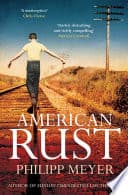
Philipp Meyer (2009)
Genre
Fiction
Reading Time
12-14 hours
Key Themes
See below
Sign in to track this book
In a decaying Pennsylvania steel town, two inseparable friends are caught in a violent act, forcing them to confront the realities of their fading American dream and the desperate loyalty that binds them.
Isaac English, a bright but socially awkward young man, works at his father's scrap metal business in Buell, Pennsylvania. His mother recently died by suicide, and his sister, Lee, escaped to Yale, leaving Isaac to care for his ailing father. Isaac dreams of leaving Buell, a town devastated by the collapse of the steel industry. He has saved money and plans to leave for California, hoping to study physics. He confides in his best friend, Billy Poe, a former high school football star now working odd jobs. Billy, restless and impulsive, agrees to go with Isaac, seeing it as his own chance to escape the suffocating grip of their hometown and the expectations placed on him as a former local hero.
On the night they are supposed to leave, Isaac and Billy encounter a group of drifters in an abandoned park in the neighboring town of Fayette. A confrontation escalates. One of the drifters, a man named Jimmy, makes a crude remark about Billy's girlfriend, Sarah. Billy, fueled by alcohol and his volatility, attacks Jimmy. Isaac tries to intervene, but in the chaos, Jimmy falls and hits his head on a rock. Panicked, and believing Jimmy is dead, Isaac and Billy flee the scene, leaving the other drifters to discover the body. This single act changes their planned escape and their lives.
The next morning, Jimmy's body is discovered by the authorities. Chief Harris, an experienced and morally conflicted police chief in Buell, begins the investigation. He quickly focuses on Billy Poe due to his reputation for fighting and his known association with Isaac. Sarah, Billy's girlfriend, is questioned. To protect Billy, she provides a false alibi, claiming they were together all night. This lie, meant to shield Billy, complicates the investigation, as Chief Harris is a shrewd investigator and senses her deception.
Based on circumstantial evidence and witness statements from the other drifters, Billy Poe is arrested for Jimmy's murder. He is taken into custody, and the gravity of their situation begins to sink in. Isaac, consumed by guilt and fear, struggles with the knowledge that he was also present and played a role in the incident. He knows that Billy is taking the fall for a crime they both committed, though Billy was the primary aggressor. Isaac's moral compass is tested as he weighs confessing and implicating himself against letting his best friend bear the full brunt of the legal system.
Overwhelmed by his conscience, Isaac eventually confesses his involvement to Chief Harris. Harris, recognizing Isaac's intelligence and his family's standing in the community, sees an opportunity to secure a conviction without relying solely on Billy's volatile testimony. He offers Isaac a plea bargain: Isaac will testify against Billy, detailing Billy's role as the primary aggressor, in exchange for a lighter sentence or even immunity. This decision creates an agonizing rift between Isaac and Billy and further entangles Isaac in the legal and moral quagmire, forcing him to betray his friend to save himself.
Billy Poe's trial proceeds, with Isaac's testimony forming a crucial part of the prosecution's case. Despite the efforts of his public defender, Billy is unable to articulate a convincing defense, and his reputation for violence works against him. The jury finds him guilty of murder. Billy is sentenced to a lengthy prison term, effectively ending his dreams and his future. His conviction affects his family, especially his mother, Grace Poe, who becomes consumed with trying to appeal his case, and his sister, Lee, who returns from Yale to support her family.
Devastated by Billy's conviction, Grace Poe dedicates herself to proving his innocence. She researches the legal system, seeks new lawyers, and revisits the details of the night of the murder. Her pursuit of justice leads her to uncover inconsistencies in the original investigation and to question the motives of some witnesses. Grace's journey shows a mother's unwavering love, but also highlights the systemic failings and biases within the justice system in economically depressed regions. Her efforts put her at odds with Chief Harris and other local authorities.
After testifying against Billy, Isaac English is released, having received a lenient sentence or probation due to his cooperation. He tries to move on with his life, but the weight of his betrayal and the knowledge of Billy's fate haunt him. He continues to care for his father and works at the scrap yard, but his dreams of escaping Buell and pursuing a scientific career seem distant. Isaac grapples with guilt, isolation, and the moral compromises he made, struggling to reconcile his intelligence and desire for a better life with the realities of his past actions and their consequences.
Chief Harris, a seasoned lawman, is deeply involved in Buell. He understands the town's struggles and the desperation that fuels its residents. While he believes in the justice of Billy's conviction, he is not entirely at peace with the outcome. He sees the systemic issues at play and carries the burden of his role in sending a young man to prison. Harris's character reveals the complexities of law enforcement in a declining industrial town, where personal relationships and the need for closure often intertwine with the pursuit of truth, forcing him to confront his own moral ambiguities.
The novel concludes without a definitive resolution for all characters, emphasizing the lasting impact of the choices made and the pervasive decay of Buell. Billy remains in prison, Grace continues her fight, and Isaac lives with his guilt, tied to the town he so desperately wanted to escape. The landscape of Buell, with its abandoned factories and struggling residents, reflects the characters' internal states and the broader societal issues of economic decline and the erosion of the American dream. Their lives are permanently rusted by the events, mirroring the town's own fate.
The Protagonist
Isaac begins as an aspiring escapee but becomes deeply entangled in a crime, forced to betray his best friend, and ultimately remains tethered to the very town he wished to leave, haunted by his choices.
The Protagonist
Billy starts as a restless young man seeking escape but ends up imprisoned for a crime he committed with his friend, becoming a symbol of the lost potential and systemic failures in his community.
The Supporting
Grace evolves from a struggling mother to a fierce, self-taught legal advocate, driven by her son's wrongful conviction, and becomes a symbol of relentless maternal love and resistance against the system.
The Supporting
Chief Harris grapples with his conscience and the compromises he makes to maintain order and achieve convictions in a decaying town, ultimately settling into a resigned acceptance of his role.
The Supporting
Lee returns to Buell after escaping, confronting the painful realities of her past and family, and ultimately reaffirming her desire to live outside its confines.
The Supporting
Sarah's loyalty leads her to deceive authorities, causing her to face legal trouble and the painful reality of Billy's fate.
The Supporting
Henry remains a static character, symbolizing the decaying past and Isaac's inescapable responsibilities.
The Mentioned
Jimmy's arc is brief and tragic, serving solely as the catalyst for the central conflict.
The novel shows the collapse of the American Dream in post-industrial towns like Buell. The steel industry is gone, leaving unemployment, poverty, and hopelessness. Characters like Billy Poe, a former football star, find their potential lost due to a lack of opportunity. Isaac's desperation to escape signifies the vanishing prospects for the younger generation. The physical decay of the town, with its abandoned factories and rusted landscapes, mirrors the internal decay of its residents' hopes and the broader societal failure to provide a future.
““Rust never sleeps.””
The story is about the complex interplay of loyalty and betrayal between Isaac and Billy. Their friendship is tested when Isaac, to save himself, testifies against Billy. Isaac's subsequent guilt is a pervasive force throughout the novel, shaping his actions and internal struggles. Grace Poe's unwavering loyalty to her son, despite his flaws, contrasts with Isaac's betrayal. The novel explores the agonizing choices individuals make when faced with self-preservation versus protecting those they love, and the lasting psychological scars of such decisions.
““There were some things you couldn’t outrun, no matter how fast you went.””
Buell is more than just a setting; it is a decaying entity that traps its inhabitants. Both Isaac and Billy want to escape, but their attempts are thwarted by circumstance, violence, and the deep ties of family and community. Even those who leave, like Lee, are inevitably drawn back or haunted by its influence. The past, specifically the night in the park, casts a long shadow over the characters, dictating their present and future. The 'rust' of the title symbolizes not only the physical decay of the town but also the corrosive effects of their history and the inability to break free from its grip.
““The river carried the rust, and the rust ate everything.””
The novel critiques the justice system, especially its impact on the poor and marginalized. Billy Poe, with his reputation and lack of resources, becomes an easy target for conviction, while Isaac, with his intelligence and family connections, receives a plea bargain. Chief Harris, though not malicious, operates within a system that values expediency and closure over absolute truth. Grace Poe's struggle to appeal Billy's case highlights the systemic barriers and biases faced by those without power. The 'justice' served often feels arbitrary and unfair, reflecting broader societal inequalities and how poverty can determine one's fate in the legal system.
““Justice was a word they used, but it wasn’t what they meant.””
Hints at future tragic events and the characters' doomed fates.
The novel uses subtle and overt foreshadowing to build a sense of impending doom. Early descriptions of Buell's decay and the characters' desperation hint at the tragic events to come. Billy's volatile temper and Isaac's anxieties about leaving are established early, making their involvement in the park incident feel almost inevitable. This technique amplifies the emotional impact of the plot twists, as readers sense the characters are being drawn into an inescapable net, reinforcing the theme of the inescapability of fate and place.
Represents decay, stagnation, and the corrosive effects of the past.
The pervasive imagery of rust—in the abandoned steel mills, the color of the river, and even the title—is a powerful symbol. It represents the economic and social decay of Buell, the corrosion of dreams, and the irreversible damage inflicted by past choices and systemic failures. It also symbolizes the characters' internal states: their guilt, despair, and the way their lives are slowly eaten away by their circumstances and the consequences of their actions. The rust is a constant, tangible reminder of what has been lost and what cannot be undone.
Shifts focus between key characters to provide a multifaceted view of events and motivations.
The narrative often shifts its focus between Isaac, Billy, Grace, and Chief Harris. This allows the reader to understand the motivations, fears, and internal conflicts of each character involved in the central conflict. It highlights the subjective nature of truth and justice, showing how the same event is perceived and processed differently by each individual. This technique builds empathy for even morally ambiguous characters and provides a comprehensive, nuanced portrait of a community grappling with tragedy and its aftermath, rather than a simple good-versus-evil dichotomy.
“The wind was a constant, a presence, an invisible hand on your back, always pushing you somewhere you didn't want to go.”
— Describing the oppressive atmosphere of Buell, Pennsylvania.
“They were the last generation of their kind, the children of the mill, and the mill was gone.”
— Reflecting on the decline of the steel industry and its impact on the youth.
“He knew, with a certainty that chilled him to the bone, that some things, once broken, could never be put back together.”
— Isaac contemplating the irreversible consequences of their actions.
“The silence in the house was heavy, a living thing, full of unspoken words and unfulfilled dreams.”
— Describing the emotional weight within a family home.
“There was a kind of beauty in the decay, a testament to what had once been, and what now was not.”
— Observing the remnants of a once-thriving industrial town.
“He felt like a man trapped in a dream, watching his own life unfold from a distance, unable to intervene.”
— Thoughts of one of the main characters feeling powerless.
“The past was a weight, a chain around his ankle, dragging him down no matter how hard he tried to run.”
— A character struggling to escape their past actions and circumstances.
“Hope was a dangerous thing in a town like Buell, a thing that could get you killed, or worse, keep you alive when you should have given up.”
— Reflecting on the grim reality of life in Buell.
“He learned that day that there were no easy answers, only harder questions, and that sometimes, the truth was the most brutal thing of all.”
— A character's harsh realization about life's complexities.
“The river flowed on, indifferent to the lives played out on its banks, a constant reminder of time's relentless march.”
— The river as a symbol of nature's indifference to human struggles.
“Every man had his breaking point, a place where the world stopped making sense and all that was left was instinct.”
— Exploring the limits of human endurance and reason.
“The air itself seemed to carry the scent of rust and failure, a constant reminder of what had been and what would never be again.”
— Evoking the atmosphere of a decaying industrial town.
“He wondered if anyone ever really escaped their origins, or if they just carried them, like a hidden scar, wherever they went.”
— A character pondering the lasting influence of one's background.
Ready to see how well you understood this book? Take our interactive quiz with 10 questions.

Philipp Meyer is an American fiction writer, and is the author of the novels American Rust and The Son, as well as short stories published in The New Yorker and other places. Meyer also created and produced the AMC television show based on his novel. Meyer won the 2009 Los Angeles Times Book Prize, was the recipient of a 2010 Guggenheim Fellowship and was a finalist for the 2014 Pulitzer Prize. He won the 2014 Lucien Barrière prize in France and the 2015 Prix Littérature-Monde Prize in France. In 2017 he was named a Chevalier (Knight) in France's Ordre des Arts et des Lettres.

Ashley Antoinette
4.6

Mark McDonald
4.4
Luo Guanzhong
4.4
Mia McKenzie
4.3

Dorothy Parker
4.3

Joaquim Maria Machado de Assis
4.3

James Thurber
4.2

Terry Kay
4.2