“For the great evils of the world, no one can find a cure.”
— Spoken by the Chorus, reflecting on the Trojan War and its aftermath.

Sign in to track this book
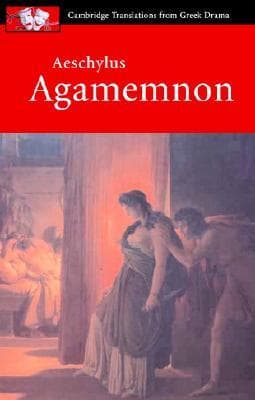
After the Trojan War, King Agamemnon returns home, unaware of his wife Clytemnestra's plan for revenge, which ends in his murder and a lasting curse on the House of Atreus.
The play begins with a Watchman on the palace roof in Argos, complaining about his long watch. For ten years, he has waited for a signal fire announcing Troy's fall, ever since Agamemnon and Menelaus went to war. He expresses his tiredness and fear of the ruling house, hinting at secrets within. Finally, he sees the beacon, signaling the Achaeans' victory. He celebrates but also hints at coming sorrow. He then leaves to tell Clytemnestra, the queen, quietly hoping for Agamemnon's safe return despite his bad feelings.
The Chorus of Argive Elders enters, saying they are too old to fight. They recount Helen's abduction by Paris, which led Agamemnon and Menelaus, 'the twin kings of Atreus' line,' to gather an army against Troy. They describe the omen of two eagles eating a pregnant hare, which the prophet Calchas interpreted as a sign of victory but also a warning of Artemis's anger and a demand for a sacrifice. This foreshadows future tragic events and introduces the theme of divine justice and suffering.
The Chorus continues, focusing on Iphigenia's terrible sacrifice. The fleet was stuck at Aulis, and Calchas declared that only the sacrifice of Agamemnon's daughter, Iphigenia, could calm Artemis and let the ships sail. Torn between his duty as a general and his love for his child, Agamemnon chose to sacrifice Iphigenia, lured to Aulis by the false promise of marriage to Achilles. The Chorus describes her pleas and the brutal act, showing the great suffering and moral compromise that set the stage for Clytemnestra's revenge.
Clytemnestra enters, announcing Troy's fall, which she learned from the beacon chain. The Chorus, at first doubtful of a woman's word and the speed of the news, questions her. Clytemnestra passionately describes the relay of fire signals from Troy to Argos, naming the mountains and islands that carried the message. She then imagines the scene in Troy, with the victors celebrating and the defeated mourning. Despite her certainty, the Chorus still expresses cautious hope, fearing the news might be false or that the gods might be unhappy with the Greeks' actions.
A Herald arrives, exhausted but joyful, confirming Troy's fall and the army's imminent return. He describes the war's hardships and the joy of victory. He praises Agamemnon and the gods for their triumph. However, he also reveals the terrible storms that scattered the Greek fleet during their return, mentioning Menelaus's possible loss. Clytemnestra, pretending joy, sends a message to Agamemnon, urging his quick return. The Herald's news confirms the victory but also brings discord and loss, hinting at more suffering.
Agamemnon arrives in a chariot with Cassandra, the Trojan princess and prophetess, now his captive. Clytemnestra gives a long, elaborate speech, claiming her love and loyalty, describing her lonely watch and anxieties during his absence. Her words are full of dramatic irony and hidden threats, as she feigns relief at his return. She then tells her attendants to spread purple tapestries, 'a path of crimson,' for Agamemnon to walk upon as he enters the palace. This is an honor but also a test of his pride and a symbolic trap.
Agamemnon first hesitates to walk on the purple tapestries, recognizing it as an act of excessive pride, usually for gods, and fearing divine punishment. He says such an act would invite envy and scorn. However, Clytemnestra skillfully persuades him with flattery and emotional manipulation, questioning his masculinity and suggesting that only a coward would refuse such an honor. Yielding to her persistence, Agamemnon finally steps onto the crimson path, sealing his fate as he enters the palace. The Chorus sees this as a serious wrongdoing.
After Agamemnon enters the palace, Clytemnestra returns to bring Cassandra inside. Cassandra, cursed by Apollo to see the future but never be believed, stays outside, overwhelmed by visions. She predicts her own death and Agamemnon's murder, describing the bloody history of the house of Atreus, including Thyestes's feast and the murder of children. She cries out against Clytemnestra, calling her a 'lioness' and a 'two-footed lioness,' and reveals Orestes's coming revenge. The Chorus, though disturbed, struggles to understand her frantic prophecies.
Cassandra, having described the horrors to come and lamenting her own death, sees that resistance is useless. She acknowledges Apollo's curse and accepts her fate. With a final, chilling lament for Troy and her own life, she bravely walks into the palace, knowing it is her tomb. Her entry marks a point of no return. The audience now knows the doom awaiting Agamemnon and her inside the palace, a place she calls a 'slaughterhouse' and a 'den of blood.'
Suddenly, Agamemnon's death cries are heard from inside the palace. The Chorus, in panic and confusion, debates what to do. The palace doors open to show Clytemnestra standing over the brutally murdered bodies of Agamemnon and Cassandra. She holds the blood-stained axe and defiantly confesses to the murders, describing in gruesome detail how she trapped Agamemnon in a net (or robe) and struck him many times. She justifies her actions as divine justice for Iphigenia's sacrifice and Agamemnon's infidelity with Cassandra, showing no remorse.
Aegisthus, Clytemnestra's lover and Agamemnon's cousin, enters, openly celebrating Agamemnon's death. He explains his motive for revenge: Agamemnon's father, Atreus, had murdered Aegisthus's brothers and fed them to his father, Thyestes, in a cannibalistic feast. Aegisthus sees Agamemnon's death as the just end of this long-standing blood feud and his own destiny to avenge his family. He proudly claims his role in the plot, saying he masterminded it, further solidifying the cycle of violence in the house of Atreus.
Aegisthus and the Chorus argue heatedly. The Chorus condemns Aegisthus as a coward who let a woman do his dirty work and threatens him with public stoning and exile. Aegisthus, in turn, asserts his authority as the new ruler, backed by his guards, and threatens the Chorus with imprisonment and hardship. Clytemnestra intervenes, urging Aegisthus to avoid more bloodshed and to rule wisely, suggesting they have done enough. The play ends with the Chorus lamenting the ongoing violence and anticipating Orestes's return for revenge, leaving the audience with a sense of unavoidable doom.
The Protagonist/Tragic Hero
From a triumphant, if morally compromised, warrior king, Agamemnon falls victim to the cycle of familial vengeance and his own hubris, culminating in his brutal murder.
The Antagonist/Avenging Figure
Clytemnestra transforms from a grieving mother into a calculated and defiant avenger, seizing power and justifying her actions as divine justice, only to set the stage for her own future downfall.
The Supporting/Prophetess
From a captive prophetess burdened by unheeded visions, Cassandra bravely accepts her tragic fate, serving as a powerful voice of impending doom.
The Antagonist/Avenging Figure
Aegisthus emerges from the shadows as the architect of Agamemnon's downfall, establishing himself as the new, albeit controversial, ruler of Argos, further cementing the cycle of vengeance.
The Supporting/Commentator
The Chorus begins with cautious hope and ultimately ends in despair and fear, powerless witnesses to the perpetuation of the cycle of violence.
The Mentioned/Minor
The Watchman's brief appearance serves to establish the play's atmosphere and foreshadow the tragic events.
The Supporting
The Herald delivers the news that both confirms victory and foreshadows further suffering, unknowingly facilitating Clytemnestra's plot.
The Mentioned/Victim
Her sacrifice, though occurring before the play, is the pivotal event that fuels the cycle of vengeance, making her a ghostly, yet powerful, presence.
The play explores the unclear line between justice and revenge, especially within the blood feud in the house of Atreus. Clytemnestra says her murder of Agamemnon is divine justice for Iphigenia's sacrifice, while Aegisthus justifies his part as payback for Atreus's crimes against his father, Thyestes. However, these acts only continue the cycle of violence, leading to the prophecy of Orestes's revenge. The play questions if true justice can come from acts of revenge, suggesting such actions only bring more suffering, not resolution. This is clear in Clytemnestra's defiant confession, where she frames her brutal act as righteous repayment.
“For the old wrongs, a new wrong now, for children slain, children's blood.”
Agamemnon examines the responsibilities and corrupting effects of power. Agamemnon, as a victorious king and military leader, makes the hard and morally questionable choice to sacrifice his daughter for his army and the war. His pride upon his return, especially when walking on the purple tapestries, shows the dangers of excessive pride in leadership. Clytemnestra, taking power after his death, shows an equally ruthless and manipulative form of leadership, though driven by different reasons. The play suggests that power, especially absolute power, often comes with a heavy moral cost and can lead to tyranny or more bloodshed, as seen in Aegisthus's immediate claim to control and threats to the Chorus.
“It is not for mortals to tread on embroidered splendors, to cast an eye of envy on the gods.”
The play deals with how fate and free will interact. The inherited curse on the house of Atreus, from the crimes of past generations (Thyestes and Atreus), seems to destine its members to a cycle of suffering and violence. Cassandra's prophecies, though ignored, clearly outline the unavoidable doom. However, characters like Agamemnon and Clytemnestra also make choices, such as Agamemnon sacrificing Iphigenia and Clytemnestra murdering him, that actively contribute to their tragic fates. This raises the question of how much control individuals have over their destiny when bound by a terrible past and divine will. The Chorus often reflects on human suffering as a result of both divine decree and personal actions.
“Man's prosperity, if it oversteps due measure, brings forth an offspring of ruin.”
Clytemnestra is a strong and unusual female character who goes against traditional gender roles. In a male-dominated society, she acts decisively, plans and carries out her husband's murder, and openly defies the male Chorus and Aegisthus. She shows intelligence, cunning, and a desire for power that challenges the submissive role typically given to women. Her actions make the audience confront the complexities of female agency, especially when driven by extreme grief and a desire for revenge. She is both hated and, in a twisted way, admired for her strength and determination. The Chorus's initial dismissal of her words as 'a woman's word' only highlights her eventual dominance.
“I spoke many words before to suit the moment—now I shall not be ashamed to speak their opposite.”
The audience knows more than the characters, creating tension.
Dramatic irony is a pervasive device, particularly through Clytemnestra's speeches and Cassandra's prophecies. Clytemnestra's declarations of love and loyalty to Agamemnon upon his return are chillingly ironic, as the audience is aware of her murderous intentions. Similarly, Cassandra's vivid predictions of the murders within the palace are understood by the audience, even as the Chorus struggles to comprehend them. This creates immense tension and suspense, as the audience anticipates the inevitable tragedy that the characters themselves are blind to or powerless to prevent.
Hints and signs that predict future events.
The play is rich with foreshadowing and omens that build a sense of inescapable doom. The Watchman's initial fear and 'song of sorrow' hint at coming tragedy. The omen of the eagles devouring the pregnant hare, interpreted by Calchas, warns of Artemis's wrath and the need for sacrifice, directly foreshadowing Iphigenia's death. Cassandra's prophecies, though disbelieved, explicitly detail Agamemnon's murder and the cycle of vengeance. Even the purple tapestries, while an honor, symbolize Agamemnon's hubris and his stepping onto a path of death, all serving to heighten the tragic inevitability.
A symbolic trap and test of Agamemnon's pride.
The crimson tapestries laid out by Clytemnestra for Agamemnon to walk on are a powerful symbolic device. They represent a test of Agamemnon's hubris, as walking on such rich cloth was considered an act reserved for gods, inviting divine wrath. Clytemnestra manipulates him into this act, knowing it will be perceived as a transgression. By stepping on them, Agamemnon symbolically seals his fate, demonstrating his excessive pride and blurring the line between mortal and divine, making him ripe for the vengeance Clytemnestra is about to unleash.
The literal and metaphorical trap used to ensnare Agamemnon.
Clytemnestra describes how she trapped Agamemnon in a 'net' or 'robe' (often interpreted as a bathing robe or a specially woven garment) before striking him down. This serves as both a literal plot device, as it physically incapacitates him, and a powerful metaphor. The 'net' symbolizes the intricate trap she has woven for him over years of planning and resentment. It also represents the inescapable web of fate and vengeance that has entangled the house of Atreus, from which Agamemnon cannot escape.
“For the great evils of the world, no one can find a cure.”
— Spoken by the Chorus, reflecting on the Trojan War and its aftermath.
“Justice, however, guides the scales of judgment.”
— The Chorus comments on the divine order and the eventual reckoning for deeds.
“Many a time, a man whose cause is just will fail, and he who is unjust will prosper.”
— The Chorus observes the often-unpredictable nature of human affairs and divine intervention.
“There are times when fear is good, and it must sit enthroned in the heart.”
— The Chorus discusses the necessary role of fear in maintaining order and preventing hubris.
“Who can say, with certainty, what is good for man?”
— The Chorus ponders the inherent uncertainty of human knowledge and foresight.
“The house itself, if it could speak, would tell a tale.”
— The Herald, arriving back in Argos, alludes to the dark history and impending doom of Agamemnon's palace.
“It is not for me to judge the works of men.”
— Agamemnon, upon his return, expresses a reluctance to be praised excessively or to judge others, perhaps with a touch of irony given his actions.
“Out of the darkness, a light will spring.”
— The Chorus expresses a glimmer of hope amidst the despair and foreshadowing of tragedy.
“The price of blood is blood.”
— A central theme of the play, emphasized by the Chorus and Clytemnestra, referring to the cycle of vengeance.
“When a man brings ruin on his house, he does so with open eyes.”
— The Chorus reflects on the conscious choices that lead to destruction, particularly in the case of Agamemnon.
“The stain of blood is hard to wash away.”
— The Chorus contemplates the lasting consequences of violent acts.
“I say that for the wicked there is no escape.”
— Clytemnestra, after killing Agamemnon, declares her belief in the justice of her actions and the inevitability of punishment for the guilty.
“There is a power that is greater than all others.”
— The Chorus refers to the overarching power of fate or the gods that governs human destiny.
“Woe to the house that harbors such a queen!”
— The Chorus laments the fate of the house of Atreus under Clytemnestra's rule.
Ready to see how well you understood this book? Take our interactive quiz with 10 questions.
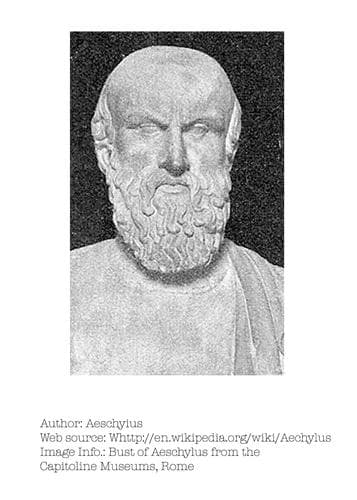
Aeschylus was an ancient Greek tragedian, and is often described as the father of tragedy. Academic knowledge of the genre begins with his work, and understanding of earlier Greek tragedy is largely based on inferences made from reading his surviving plays. According to Aristotle, he expanded the number of characters in the theatre and allowed conflict among them. Formerly, characters interacted only with the chorus.

Ashley Antoinette
4.6

Mark McDonald
4.4
Luo Guanzhong
4.4

Mia McKenzie
4.3

Dorothy Parker
4.3

Joaquim Maria Machado de Assis
4.3

James Thurber
4.2

Terry Kay
4.2