“It is not the most brilliant idea that is the most successful, but the one that is most accurately timed.”
— Spoken by Hercule Poirot, reflecting on the nature of crime and investigation.

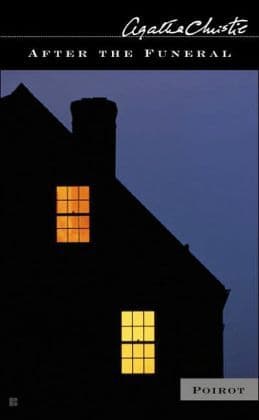
Agatha Christie (1953)
Genre
Mystery
Reading Time
240 min
Key Themes
See below
Sign in to track this book
When a seemingly accidental death is followed by a hatchet murder and a cryptic funeral remark, Hercule Poirot must untangle a web of Victorian secrets to expose the truth behind a family's deadly inheritance.
The wealthy Richard Abernethie dies suddenly at his country estate, Enderby Hall. His death seems natural. His solicitor, Mr. Entwhistle, gathers the family for the funeral and the will reading. Present are Richard's brother-in-law, Timothy Abernethie, and his wife, Maud; his nieces Rosamund Shane and Susan Banks; his nephew George Crossfield; and his eccentric sister, Cora Lansquenet. During the will reading, which divides Richard's money among the family, Cora startles everyone by loudly saying, 'It's been hushed up very nicely, hasn't it... But he was murdered, wasn't he?' Most people dismiss her comment, but it deeply disturbs Mr. Entwhistle.
The day after Richard Abernethie's funeral, Cora Lansquenet returns to her home in a quiet village, where she lives with her companion, Miss Gilchrist. That evening, while Miss Gilchrist is out, Cora is murdered with a hatchet in her sitting room. The discovery of her body shocks the family and the police, making her earlier declaration at the will reading seem like a premonition or an accusation. Inspector Morton is on the case, and Mr. Entwhistle, troubled by the events, asks his friend, Hercule Poirot, for help. He believes there is a connection between Richard's death and Cora's murder.
Hercule Poirot, at Mr. Entwhistle's request, takes the case. He starts by interviewing the Abernethie family and their close associates, including Miss Gilchrist. Poirot is interested in Cora's character, her relationship with Richard, and any motives for her murder. He learns that Cora was considered a harmless eccentric, often making dramatic statements. Family members offer different opinions on Cora's statement; some dismiss it as a morbid joke, others admit it made them uncomfortable. Poirot also focuses on the details of Richard Abernethie's death, looking for inconsistencies that might support Cora's claim of murder.
Poirot and Inspector Morton look into the financial implications of Richard Abernethie's will. Richard's money was to be divided among his nieces and nephews, with Cora receiving a large sum. Her death means her share will now go to the remaining heirs. This puts the family members under suspicion, as they all benefit from Cora's death. Poirot carefully checks the alibis of everyone involved for the time of Cora's murder. He also considers that Richard was murdered, and Cora was killed because she knew something or was about to expose the truth. The investigation uncovers family secrets and resentments.
Poirot focuses on the details of Richard Abernethie's death. Richard had a terminal illness, and his death was officially from natural causes. However, Cora's statement suggests otherwise. Poirot considers poison or a staged death. He questions Dr. Harrison, Richard's physician, and the household staff, including the butler, Lanscombe, and the housekeeper, Mrs. Jacks. While no immediate evidence of foul play is found, Poirot notes how efficiently the death was handled and the lack of suspicion at the time. He suspects that if Richard was murdered, it was done with great cleverness and planning.
During his interviews, Poirot learns about a painting Cora Lansquenet had recently bought and was proud of – a landscape by a lesser-known artist. After her murder, the painting is gone. This detail initially seems small, but it interests Poirot. He questions Miss Gilchrist about the painting, but she claims not to know where it is or if it existed. This difference makes Poirot suspicious, as he believes the painting might be key to understanding Cora's last days or the motive for her murder. The missing artwork becomes a focus of his inquiry.
Poirot pays close attention to Miss Gilchrist, Cora's companion. He notes her meek and devoted manner but also sees peculiar habits. She bakes often and makes elaborate cakes. Poirot also learns she has an interest in art and some knowledge of painting. Her alibi for the night of Cora's murder, visiting a friend, seems solid but Poirot has doubts. He senses a hidden strength or cunning beneath her quiet exterior. He also finds it odd that she 'discovered' the hatchet, supposedly used in the murder, hidden in a coal scuttle.
Through investigation, Poirot reveals a startling truth: the woman murdered in Cora's house was not Cora Lansquenet, but Miss Gilchrist. The real Cora Lansquenet was the murderer. Miss Gilchrist, a struggling artist whose career had failed, resented Cora's inheritance and casual success. She planned to murder Cora, impersonate her at the will reading, and then 'die' as Cora, thus inheriting her fortune. She drugged Cora, then killed her with a hatchet. She then assumed Cora's identity; the 'Cora' who made the shocking statement at the will reading was Miss Gilchrist.
Poirot further explains that Miss Gilchrist, while impersonating Cora, also murdered Richard Abernethie. She did so to start the will reading and the subsequent 'death' of Cora (herself) to claim the inheritance. She used a subtle poison, possibly in Richard's medication, to make his death seem natural. Her statement at the will reading – 'He was murdered, wasn't he?' – was a calculated risk. If dismissed, she was safe. If it sparked an investigation, she intended to be the 'murdered' Cora, diverting suspicion from herself and framing an innocent person. The missing painting was a fake, painted by Miss Gilchrist to establish her artistic credentials and create a distraction.
Poirot's final piece of evidence involves Miss Gilchrist's love for baking and her habit of leaving a small piece of marzipan or a cherry in the same place on her cakes. He realized that the 'Cora' who was murdered had not baked a specific cake found in the house, whereas the 'Cora' at the will reading had. This subtle detail, along with other inconsistencies in her story and her physical appearance (which she had altered slightly to resemble Cora), finally breaks Miss Gilchrist. Confronted with Poirot's logic and evidence, she confesses to both murders, driven by greed and a desire to escape poverty and anonymity.
The Protagonist
Poirot's arc is less about personal transformation and more about the application of his unique deductive process to restore order and justice.
The Victim/Deceased
Her 'death' is the catalyst for the investigation, and her true fate is a key twist in the narrative.
The Antagonist/Culprit
From seemingly innocuous companion to the reveal of a ruthless, calculating killer, her arc is one of shocking deception and exposure.
The First Victim/Catalyst
His death is the inciting incident, revealing a hidden murder and sparking the subsequent events.
The Supporting
He transitions from being a legal observer to a concerned individual who actively facilitates the investigation.
The Supporting
He remains largely static, his character serving to illustrate the family's diverse reactions to the events.
The Supporting
Her character remains consistent, providing a grounded perspective amidst the unfolding drama.
The Supporting
Her character remains relatively unchanged, serving to broaden the scope of family personalities.
The Supporting
She grapples with the implications of the murders, representing the moral compass of some family members.
The Supporting
His role is primarily to provide a practical, business-oriented perspective within the family.
This theme is central to the mystery, as almost everything is not what it seems. Richard Abernethie's death appears natural but is murder. Cora's murder appears to be the main crime, but the victim is actually Miss Gilchrist. Miss Gilchrist appears to be a meek companion but is a cunning killer. Poirot constantly emphasizes looking past the surface, questioning accepted truths, and finding the real nature of events and people. The missing painting, initially a small detail, is a fake, further blurring the lines between real and fabricated.
““It is the small things, the little inconsistencies, that often lead to the great truths.””
The large Abernethie fortune drives the entire murder plot. The desire for wealth motivates Miss Gilchrist to commit two murders and create a complex impersonation. The will reading, which details the distribution of Richard's money, directly precedes Cora's 'murder' and shows how each family member stands to gain or lose. Poirot carefully examines the financial motives of all the heirs, understanding that money often causes such crimes. The theme explores how the promise of wealth can corrupt and drive people to extreme actions.
““Money is a terrible thing. It has caused more misery than almost anything else in the world.””
The main twist of the novel involves identity. Miss Gilchrist's plan depends entirely on her ability to assume Cora Lansquenet's identity, first at the will reading and then by staging her own 'death' as Cora. The story constantly plays with who Cora truly is, and how easily one person can be mistaken for another, especially by those who don't know them well. Poirot's investigation looks into the subtle differences in mannerisms, habits, and even physical appearance that distinguish people, ultimately exposing the impersonation.
““It is not always the face that tells the truth, but the little habits, the way of doing things.””
As in many Poirot novels, the main theme is the pursuit of justice and the restoration of order from chaos. The murders disrupt the peace of the Abernethie family and society. Poirot, with his belief in logic and method, sees it as his duty to uncover the truth and ensure the guilty are held accountable. His methodical approach, sifting through lies and deceptions, shows his dedication to justice. The resolution of the crimes, despite their complexity, ultimately confirms the triumph of truth and order.
““It is the truth that matters, however ugly it may be. The truth will set us free, even from ourselves.””
Cora's declaration at the will reading, initially dismissed, becomes the central enigma.
Cora Lansquenet's startling remark, 'But he was murdered, wasn't he?' at Richard Abernethie's will reading, serves as the primary hook and plot device. It immediately establishes doubt about Richard's seemingly natural death and sets the stage for the subsequent murder. The statement is 'impossible' because Richard's death was officially natural, yet it holds a sinister truth. This device creates immediate tension and mystery, compelling both Mr. Entwhistle and the reader to question what truly happened, and why Cora would say such a thing. It's a classic Christie misdirection, making the reader focus on the 'who' of Cora's murder rather than the 'who' of her identity.
The killer assumes the identity of a victim, creating a complex layer of deception.
The revelation that the 'Cora' who made the incriminating statement and was subsequently murdered was actually Miss Gilchrist, while the real Cora was the first victim, is the novel's most significant plot device. This impersonation completely recontextualizes all preceding events, turning the expected victim into the perpetrator. It allows the murderer to control the narrative, deflect suspicion, and benefit from the inheritance. Poirot's task is to unravel this elaborate deception, relying on subtle clues rather than overt evidence to prove that the person everyone believed to be Cora was, in fact, someone else entirely.
Small, overlooked habits or objects prove crucial to solving the mystery.
Poirot famously relies on 'the little grey cells' to notice details others miss. In 'After the Funeral', several seemingly insignificant details become critical. The missing (and later revealed to be fake) painting by Cora, Miss Gilchrist's distinctive way of arranging marzipan on her cakes, and even the precise type of hatchet used for the murder all contribute to Poirot's deductions. These small observations allow him to build a case that transcends the obvious and exposes the intricate web of lies, demonstrating how minor inconsistencies can betray a meticulously planned crime.
The killer's seemingly airtight alibi for Cora's murder is meticulously deconstructed.
While not a literal 'locked room' mystery, the circumstances of Cora's murder present a strong alibi challenge. Miss Gilchrist, the perceived victim, had a seemingly perfect alibi for the time of the murder, having been out visiting a friend. Poirot must dismantle this alibi not by proving its falsity directly, but by revealing that the 'victim' was actually the perpetrator. This device forces the detective to look beyond the obvious timelines and alibis, instead focusing on the identity of the person who was supposedly 'murdered' and the true sequence of events. It's a clever subversion of the traditional alibi challenge.
“It is not the most brilliant idea that is the most successful, but the one that is most accurately timed.”
— Spoken by Hercule Poirot, reflecting on the nature of crime and investigation.
“Human nature is very odd. It is often the very thing we don't want to think about that we think about most.”
— A general observation on human psychology within the narrative.
“Everyone has something to hide, even if they don't know it themselves.”
— Poirot's cynical but often accurate view of people.
“The past is never dead. It's not even past.”
— A character's reflection on how past events influence the present.
“You can never tell what a person is really like until you see them in a crisis.”
— A comment on revealing true character under pressure.
“It is always the simple things that are the most difficult to see.”
— Poirot often finds that the obvious solution is overlooked.
“Truth, my friend, is a stubborn thing. It has a way of coming out, no matter how much you try to bury it.”
— Poirot's belief in the ultimate triumph of truth.
“Money is a terrible thing. It can make honest men dishonest.”
— A reflection on the corrupting power of wealth.
“The human heart is an abyss. Sometimes it is better not to look too closely.”
— A dark observation on the depths of human emotion and motive.
“There are some people who can't bear to be contradicted, and others who can't bear to be agreed with.”
— An insightful remark on different personality types.
“A lie, however artfully contrived, always leaves some small crack through which the truth can slip.”
— Poirot's confidence in finding flaws in deception.
“It is not enough to have a good mind. One must also know how to use it.”
— Poirot emphasizing the practical application of intelligence.
“The most dangerous people are often those who seem the most harmless.”
— A warning against underestimating seemingly innocuous individuals.
“Grief is a strange thing. It can make people do very unexpected things.”
— Observing the unpredictable impact of sorrow on human behavior.
Ready to see how well you understood this book? Take our interactive quiz with 10 questions.
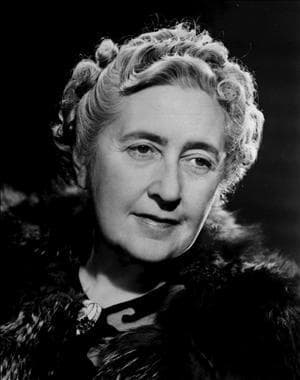
Dame Agatha Mary Clarissa Christie, Lady Mallowan, was an English writer known for her 66 detective novels and 14 short story collections, particularly those revolving around fictional detectives Hercule Poirot and Miss Marple. She also wrote the world's longest-running play, the murder mystery The Mousetrap, which has been performed in the West End since 1952. A writer during the "Golden Age of Detective Fiction", Christie has been called the "Queen of Crime". She also wrote six novels under the pseudonym Mary Westmacott. In 1971, she was made a Dame (DBE) by Queen Elizabeth II for her contributions to literature. Guinness World Records lists Christie as the best-selling fiction writer of all time, her novels having sold more than two billion copies.