“The only way a woman can ever reform a man is by boring him so completely that he loses all possible interest in life.”
— Lord Illingworth's cynical view on marital influence.

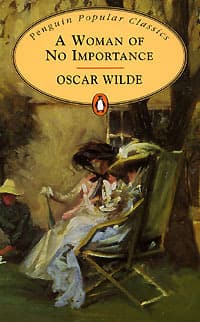
Oscar Wilde (1893)
Genre
Fiction
Reading Time
90-120 min
Key Themes
See below
Sign in to track this book
In a Victorian country estate, a mother's carefully constructed life unravels when her son's new patron is revealed to be the very man who fathered him and abandoned them both years ago, threatening to expose a scandal that could destroy them all.
The play opens at Lady Hunstanton's country estate, where a house party is happening. Guests, including the cynical Lord Illingworth, the charming Mrs. Allonby, the moralizing Lady Caroline Pontefract, and the earnest Miss Worsley, talk and comment on society. Lady Hunstanton, a kind but somewhat ditzy hostess, leads the gathering. The conversation is mainly about societal expectations, marriage, and the nature of men and women, with Lord Illingworth often giving provocative and cynical observations. Gerald Arbuthnot, a young and ambitious man, is also there, waiting for news about a potential secretarial position.
It is announced that Gerald Arbuthnot has been offered the position of private secretary to Lord Illingworth, a big step for the young man. Gerald is excited to start his new life. However, his mother, Mrs. Arbuthnot, arrives at the house party, called by Lady Hunstanton. Mrs. Arbuthnot is a woman of quiet dignity and clear sorrow. Her reaction to Gerald's appointment is one of dismay, almost horror. She tries to stop Gerald from taking the position but cannot tell him her true reasons, causing confusion and frustration.
Overwhelmed, Mrs. Arbuthnot meets privately with Lord Illingworth. In a tense and emotional talk, it is revealed that Lord Illingworth is Gerald's father, a fact he had hidden and Mrs. Arbuthnot had guarded. She asks him to release Gerald from the position, explaining the pain and shame she has endured as an unmarried mother. Lord Illingworth, at first dismissive and arrogant, faces the past, and Mrs. Arbuthnot's suffering becomes clear.
Gerald, confused and hurt by his mother's opposition to his career, eventually learns the truth about his parentage from Lord Illingworth himself, who, in a moment of cynical honesty, admits to being his father. Gerald is shocked and conflicted. He confronts his mother, asking why she kept such a secret. Mrs. Arbuthnot, forced to confess, tells the story of her abandonment and the social ostracism she faced as a single mother, sacrificing everything to raise him with honor despite the cost.
Initially torn, Gerald chooses to stand by his mother. He is disgusted by Lord Illingworth's casual attitude towards his past and his mother's suffering. He rejects the offer of a privileged life and career under his biological father, recognizing his mother's moral integrity. Gerald declares his love and respect for Mrs. Arbuthnot, vowing to protect her and uphold her honor, effectively disowning Lord Illingworth and all he represents. This decision marks a turning point in Gerald's character, as he prioritizes family loyalty and moral rightness over social advancement.
Lord Illingworth, perhaps moved by Gerald's rejection or a fleeting sense of guilt, proposes marriage to Mrs. Arbuthnot, offering to legitimize their son and restore her social standing. However, Mrs. Arbuthnot refuses. She explains that while she once loved him, his abandonment and her suffering have changed her. She cannot forgive his past actions or accept a marriage born out of convenience or duty instead of genuine love and respect. Her refusal shows her moral compass and her desire to live authentically.
Mrs. Arbuthnot confronts Lord Illingworth, detailing the suffering he caused by abandoning her when she was pregnant. She describes the societal scorn she faced and the sacrifice of her life and reputation to raise Gerald. She emphasizes that his offer of marriage now is too late and cannot undo the pain and shame she endured. Her words are a strong criticism of his past actions and show her resilience and strength, highlighting the consequences of his 'woman of no importance' mentality.
While the full details of the scandal are not broadcast to the entire house party, the guests gradually become aware of the tension and the drama. The sudden change in Gerald's plans, Mrs. Arbuthnot's distress, and Lord Illingworth's unusual demeanor all contribute to a shift in the atmosphere. The witty talk gives way to hushed conversations and knowing glances, as the society members, especially the astute Mrs. Allonby and the naive Miss Worsley, begin to understand the events, even if the precise nature of the relationships remains somewhat veiled to some.
Throughout the play, Miss Worsley, a young American woman, represents a fresh, idealistic view on life and morality. She admires Lord Illingworth's intellect but is troubled by his cynical statements on love, marriage, and societal values. Her innocent questions and genuine belief in goodness often highlight the moral decay and hypocrisy Lord Illingworth embodies. Their interactions contrast two opposing worldviews: one that seeks purity and truth, and another that enjoys superficiality and moral relativism, ultimately showing the play's central themes of virtue and vice.
In the final act, Mrs. Arbuthnot rejects Lord Illingworth's attempts to re-enter her life. When he reaches out to touch Gerald, she intervenes, striking him with his own glove, a symbol of her defiance and reclaiming her dignity. She declares that he is 'a man of no importance,' reversing the societal judgment that had been cast upon her. With Gerald by her side, Mrs. Arbuthnot leaves the house party, choosing a life of integrity and love with her son over the superficiality and moral compromise of high society. Her exit signifies her triumph over social ostracism and her assertion of self-worth.
The Protagonist
From a shamed, secretive figure, she rises to assert her self-worth and moral superiority, reclaiming her dignity.
The Antagonist
He remains largely unrepentant, though briefly confronted by the consequences of his past actions, ultimately revealed as 'a man of no importance'.
The Supporting
From naive ambition, he matures into a man of honor, choosing loyalty and moral integrity over social advancement.
The Supporting
She remains a consistent moral voice, observing and commenting on the events with unwavering idealism.
The Supporting
She remains a charming, if oblivious, hostess throughout the unfolding drama.
The Supporting
She remains a consistent voice of cynical wit, observing the unfolding drama with a detached amusement.
The Supporting
She remains a constant, if somewhat inflexible, voice of conservative social opinion.
The Supporting
He remains a passive, unchanging figure under his wife's influence.
The play shows the hypocrisy of Victorian society, which condemns women for moral transgressions while often overlooking similar actions by men. Mrs. Arbuthnot is ostracized for having an illegitimate child, while Lord Illingworth, the father, keeps his social standing and witty reputation. The witty banter among the upper-class characters, especially Lord Illingworth and Mrs. Allonby, often reveals a shallowness that hides deeper moral failings and a willingness to judge others harshly. Miss Worsley's idealism provides a contrast, highlighting the moral bankruptcy of the 'society' that calls Mrs. Arbuthnot a 'woman of no importance.'
“A man who desires to get a reputation for wit must never tell the truth.”
A central theme is the double standard applied to men and women in Victorian society, especially concerning sexual morality. Mrs. Arbuthnot's life is ruined by a single 'mistake,' leading to decades of social shame and isolation, simply because she had a child out of wedlock. Lord Illingworth, the father, suffers no such consequences; his reputation remains intact, and he continues to thrive in society, even making cynical remarks on marriage and morality. The play shows how society punishes the 'fallen woman' while excusing the 'fallen man,' causing suffering for one gender while granting impunity to the other. Mrs. Arbuthnot's final rejection of Illingworth is a strong statement against this injustice.
“A man's life is of more value than a woman's. It has a higher price, that is all.”
Mrs. Arbuthnot's character shows the sacrificial nature of maternal love. Despite social pressure and personal suffering, she chooses to raise her son, Gerald, with devotion and integrity. She sacrifices her reputation, social standing, and happiness to give him a moral upbringing. Her love contrasts with Lord Illingworth's casual disregard for his son and his mother's well-being. Gerald's choice to stand by his mother, rejecting his biological father's offer of a privileged life, shows the power and value of her selfless love and sacrifice.
“My son, my son! You are dearer to me than life itself.”
The theme of redemption and forgiveness is explored through Mrs. Arbuthnot's refusal to forgive Lord Illingworth and her own self-redemption. While Lord Illingworth makes a belated offer of marriage, it seems like a practical attempt to fix a social inconvenience rather than genuine remorse. Mrs. Arbuthnot, having endured decades of suffering, finds that forgiveness is not possible for such a betrayal. Instead, she finds her own redemption not through societal acceptance or marriage, but by asserting her self-worth and moral integrity, choosing to live authentically with her son rather than compromise her values. Her refusal to accept Illingworth's terms shows her reclaiming power and dignity.
“I will not forgive you. I will not forgive you!”
The play looks at how identity is shaped by personal choices and societal perception. Mrs. Arbuthnot's identity is defined by society as a 'fallen woman' due to her past, regardless of her present integrity. Lord Illingworth's identity is that of a charming wit, despite his moral failings. Gerald struggles with his identity upon discovering his true parentage, having to reconcile the image of his loving mother with the revelation of his cynical biological father. Ultimately, the play suggests that true identity and worth come from one's actions and moral character, rather than from social reputation or the judgments of others, as Mrs. Arbuthnot reclaims her identity by declaring Illingworth 'a man of no importance'.
“What is a cynic? A man who knows the price of everything and the value of nothing.”
The audience is aware of the characters' hidden relationships and pasts before they are revealed on stage.
Wilde masterfully uses dramatic irony, particularly regarding the relationship between Mrs. Arbuthnot, Gerald, and Lord Illingworth. The audience quickly infers the truth about Gerald's parentage, or at least the deep connection between Mrs. Arbuthnot and Lord Illingworth, long before the characters on stage explicitly state it. This creates tension and suspense, as the audience watches Mrs. Arbuthnot's distress and Lord Illingworth's casual cruelty with the full knowledge of the devastating impact of their shared past, anticipating the inevitable revelation and its fallout.
Witty, concise, and often paradoxical statements used to convey social commentary.
Wilde's signature use of epigrammatic dialogue is a key plot device. Characters, especially Lord Illingworth and Mrs. Allonby, frequently exchange clever, often cynical, one-liners that serve multiple purposes. They entertain the audience, establish the characters' personalities, and, crucially, function as a form of social commentary. These witty remarks often expose the superficiality, hypocrisy, and moral relativism of Victorian high society, while simultaneously advancing the plot by revealing character motivations and setting the tone for the unfolding drama.
A secret from the past that drives the central conflict and character motivations.
The entire plot hinges on Mrs. Arbuthnot's long-concealed secret: that Lord Illingworth is Gerald's father and that she bore him out of wedlock. This 'hidden past' creates the initial tension, fuels Mrs. Arbuthnot's desperate attempts to prevent Gerald from working for Illingworth, and ultimately leads to the dramatic revelations and confrontations. The gradual unveiling of this secret, and its profound impact on all involved, is the primary engine of the play's dramatic action, highlighting the lasting consequences of past choices and societal judgments.
An everyday object used to represent a powerful act of defiance and reclaiming of dignity.
The moment Mrs. Arbuthnot strikes Lord Illingworth with his own glove is a potent symbolic act. The glove, initially an item of his sophisticated attire, is turned against him, representing her rejection of his world and his values. It signifies her reclaiming of power, dignity, and agency after years of suffering in silence. This physical act, rather than mere words, visually underscores her defiance and her declaration that he is 'a man of no importance,' reversing the societal judgment that had long been cast upon her.
“The only way a woman can ever reform a man is by boring him so completely that he loses all possible interest in life.”
— Lord Illingworth's cynical view on marital influence.
“Children begin by loving their parents; as they grow older they judge them; sometimes they forgive them.”
— Mrs. Arbuthnot reflecting on the complex relationship between children and parents.
“To get into the best society nowadays, one has either to feed people, amuse people, or shock people—that is all.”
— Lady Caroline Pontefract discussing the strategies for social climbing.
“The world is a stage, but the play is badly cast.”
— Lord Illingworth's dismissive remark about life.
“A man's life is of more value than a woman's. It has a career.”
— Lord Illingworth expressing a common Victorian patriarchal sentiment.
“One should always be in love. That is the reason one should never marry.”
— Lord Illingworth's witty paradox on love and marriage.
“Fashion is what one wears oneself. What is unfashionable is what other people wear.”
— Lady Caroline Pontefract's definition of fashion.
“We are all in the gutter, but some of us are looking at the stars.”
— Gerald Arbuthnot quoting a famous Wildean line, though sometimes attributed to other characters.
“Scandal is gossip made tedious by morality.”
— Lord Illingworth's cynical view on scandal.
“The past is what one remembers. The future is what one hopes for. The present is what one lives.”
— Mrs. Arbuthnot's reflective statement on time.
“A man who desires to get a reputation for good taste at once announces that he dislikes something that is popular.”
— Lord Illingworth's observation on how people cultivate an image of good taste.
“It is always a silly thing to give advice, but to give good advice is absolutely fatal.”
— Lord Illingworth's playful cynicism about giving advice.
“The world has been made by men, and made for men.”
— Mrs. Arbuthnot lamenting the patriarchal structure of society.
“There are moments when one has to choose between living one's own life, fully, entirely, completely—or dragging out some false, shallow, degrading existence that the world chooses to call a life.”
— Mrs. Arbuthnot's passionate declaration about authenticity and societal expectations.
Ready to see how well you understood this book? Take our interactive quiz with 10 questions.
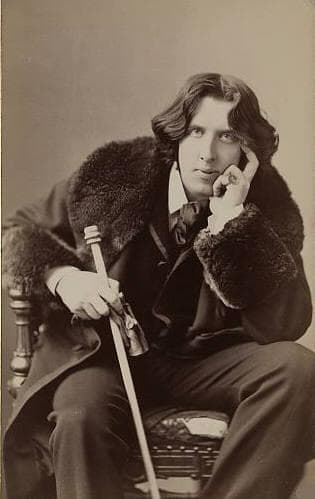
Oscar Fingal O'Fflahertie Wills Wilde was an Irish poet and playwright. After writing in different forms throughout the 1880s, he became one of the most popular playwrights in London in the early 1890s. He is best remembered for his epigrams and plays, his novel The Picture of Dorian Gray, and the circumstances of his criminal conviction for gross indecency for consensual homosexual acts in "one of the first celebrity trials", imprisonment, and early death from meningitis at the age of 46.

Ashley Antoinette
4.6

Mark McDonald
4.4
Luo Guanzhong
4.4

Mia McKenzie
4.3

Dorothy Parker
4.3

Joaquim Maria Machado de Assis
4.3

James Thurber
4.2

Terry Kay
4.2